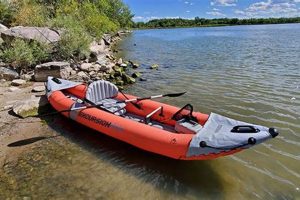
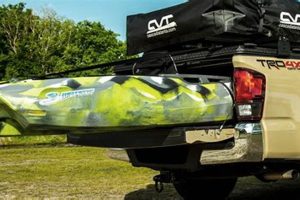
This pursuit involves anglers targeting a highly acrobatic and prized billfish species from a small, human-powered vessel. It combines the challenge and intimacy of kayak angling with the thrill of hooking a powerful, fast-moving pelagic fish known for its spectacular aerial displays. The angler typically employs specialized tackle and techniques tailored to the demands of both the quarry and the watercraft.
This specialized style of fishing offers a unique and rewarding experience. The minimal profile of the kayak allows for closer approaches to feeding fish and a more intimate connection with the marine environment. While demanding physical prowess and advanced angling skills, the potential rewards include not only the capture of a trophy fish, but also a heightened sense of accomplishment derived from the self-reliance inherent in this method. This practice has gained popularity in recent years as anglers seek more adventurous and environmentally conscious approaches to offshore sport fishing.
The following sections will delve into specific equipment recommendations, effective fishing techniques, important safety considerations, and relevant conservation efforts associated with this exciting and challenging pursuit.
Tips for Sailfish Pursuit from a Kayak
Successfully targeting sailfish from a kayak requires careful planning and execution. These tips offer guidance for a safe and productive experience.
Tip 1: Rigging Selection: Utilize specialized tackle designed for large pelagic species. Heavy-duty rods, reels with high line capacity, and strong, corrosion-resistant hooks and leaders are essential.
Tip 2: Employing Effective Bait and Lure Presentations: Live bait such as ballyhoo or mullet, rigged to swim naturally, often proves effective. Alternatively, skirted trolling lures or teasers can entice strikes.
Tip 3: Mastering Kayak Control and Positioning: Maintaining proper boat position relative to current and wind is crucial for optimal bait presentation and hookset. Practice maneuvering the kayak efficiently.
Tip 4: Implementing Appropriate Fighting Techniques: A hooked sailfish will test an angler’s strength and skill. Utilize proper drag settings and rod angles to manage the fish during extended fights.
Tip 5: Prioritizing Safety Precautions: Offshore kayaking presents inherent risks. Always wear a personal flotation device, carry communication equipment, and monitor weather conditions closely.
Tip 6: Adhering to Ethical Catch-and-Release Practices: Sailfish are a valuable resource. Handle captured fish with care, minimizing air exposure and ensuring a quick, healthy release.
Tip 7: Understanding Local Regulations and Best Practices: Familiarize oneself with all applicable fishing regulations and licensing requirements. Respect local boating etiquette and environmental guidelines.
By adhering to these guidelines, anglers can increase their chances of success while promoting responsible and sustainable fishing practices.
This information provides a foundation for a successful kayak fishing expedition targeting sailfish. Always prioritize safety and conservation while enjoying this challenging and rewarding pursuit.
1. Specialized Tackle

The unique challenges and rewards of kayak fishing for sailfish necessitate specialized tackle, distinct from gear used in other fishing disciplines or even other kayak fishing scenarios. Appropriate gear selection significantly impacts success and safety in this demanding pursuit.
- Rods and Reels
Heavy-duty saltwater rods, typically 7-8 feet in length, provide the necessary leverage and backbone to manage powerful sailfish. Reels should be robust, saltwater-resistant models with high line capacity (300+ yards) spooled with braided line for strength and sensitivity. Lever drag reels offer superior control during prolonged fights.
- Line and Leader
Braided fishing line, ranging from 50-80 lb test, offers superior strength and minimal stretch, crucial for setting the hook at a distance and maintaining control. A heavy monofilament or fluorocarbon leader (80-100 lb test) provides abrasion resistance against the sailfish’s bill and sharp teeth. Double-line or wind-on leaders can aid in managing the heavy line involved.
- Hooks and Terminal Tackle
Circle hooks are essential for minimizing injury to sailfish and promoting successful catch-and-release. Sizes 7/0 to 9/0 are commonly used. Heavy-duty swivels and crimps ensure the integrity of the leader system. Specialized trolling lures and rigging components, such as dusters and dredges, can also be employed to attract sailfish.
- Accessories and Tools
A quality landing net or gaff facilitates safe and efficient boat-side handling of sailfish. A pair of fishing pliers with cutting and crimping capabilities is essential for rigging maintenance and hook removal. Other important accessories include a knife, gloves, and a harness for fighting large fish from the seated position of a kayak.
The careful selection and proper utilization of specialized tackle contributes significantly to a successful and ethical kayak fishing experience targeting sailfish. This specialized gear not only enhances the angler’s chances of landing these magnificent creatures but also ensures their safe release back into the ocean.
2. Ocean Kayak Selection

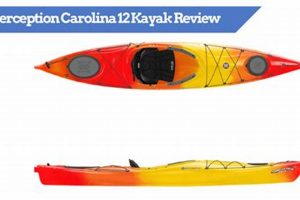
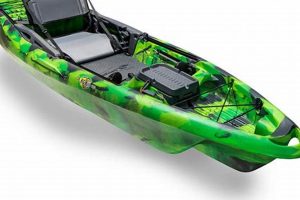
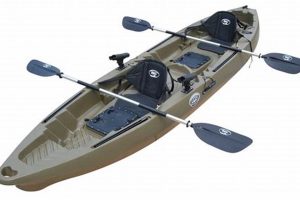
Ocean kayak selection plays a pivotal role in the success and safety of kayak fishing for sailfish. The demanding nature of offshore environments and the powerful nature of sailfish require specific kayak characteristics. Stability, speed, and storage capacity are critical factors influencing an angler’s ability to effectively target, fight, and land these pelagic predators. An inappropriate kayak choice can compromise safety and significantly reduce the chances of a successful outcome.
A longer, wider kayak generally offers greater stability, a crucial factor in rough seas and during the fight with a large sailfish. Enhanced stability reduces the risk of capsizing, especially during critical moments like hooking and landing the fish. Kayaks specifically designed for fishing often feature built-in rod holders, tackle storage compartments, and other amenities that streamline the angling experience. Examples of suitable kayak types include sit-on-top models designed for offshore use, often exceeding 12 feet in length. These provide ample storage for tackle and gear, along with features like rudder systems for enhanced maneuverability in challenging conditions. Conversely, shorter recreational kayaks lack the necessary stability and storage for offshore pursuits, posing significant safety risks and limiting fishing effectiveness. Consider a kayak with a higher weight capacity to accommodate the angler, gear, and potential catch.
Selecting the appropriate ocean kayak is fundamental to a safe and successful sailfish pursuit. Prioritizing stability, storage, and features specific to offshore fishing significantly contributes to angler safety and enhances the likelihood of landing a trophy fish. Careful consideration of these factors ensures anglers are adequately equipped to face the challenges and reap the rewards of kayak fishing for sailfish in demanding offshore environments.
3. Effective Bait/Lures

Bait and lure selection significantly influences success when kayak fishing for sailfish. These pelagic predators are opportunistic feeders, but their preferences can vary based on environmental factors such as water clarity, temperature, and prevailing currents. Understanding these influences and selecting appropriate bait or lures is crucial for enticing strikes.
Live bait, such as ballyhoo or mullet, rigged to swim naturally, often proves highly effective. These baitfish mimic the sailfish’s natural prey and their lifelike movement can trigger aggressive feeding responses. Alternatively, artificial lures, including skirted trolling lures and teasers, can effectively simulate the appearance and action of baitfish or squid. Specific colors and sizes may prove more productive depending on local conditions and the target species’ feeding patterns. For instance, brightly colored lures can be effective in murky water, while more natural colors might be preferred in clear conditions. The size of the lure should generally match the prevalent baitfish in the area. Understanding the prevailing forage base is essential for effective lure selection.
Matching bait or lure presentation to the specific conditions and target species behavior dramatically increases the probability of success. Furthermore, proper rigging techniques, such as ensuring the bait or lure swims naturally and employing appropriate hook sizes and leader materials, further enhances effectiveness. Careful attention to these details optimizes presentations, enticing sailfish and increasing the likelihood of a successful hookup. Ultimately, strategic bait and lure selection, informed by environmental awareness and species behavior, significantly contributes to a successful kayak fishing experience targeting sailfish.
4. Strategic Positioning

Strategic positioning plays a crucial role in kayak fishing for sailfish. Success hinges on understanding ocean currents, prevailing winds, and baitfish activity. Effective positioning maximizes opportunities for encountering sailfish while optimizing presentations. A kayak’s limited range necessitates precise placement to intercept migrating sailfish or locate areas where they congregate to feed. Positioning up-current of a suspected sailfish holding area allows a natural drift, presenting baits or lures effectively without spooking wary fish. Conversely, poor positioning, such as drifting too quickly or anchoring in a barren area, can significantly reduce chances of success. For instance, drifting across a current too rapidly may drag the bait unnaturally, hindering its effectiveness.
Consider a scenario where sailfish are known to hunt along a specific reef edge. Positioning the kayak just up-current of this zone allows a slow, controlled drift, presenting bait or lures naturally along the reef structure where sailfish are likely to ambush prey. This strategic approach maximizes the chances of a successful encounter. Alternatively, positioning too far down-current might cause the angler to miss the prime feeding zone entirely. Similarly, understanding tidal flows and their influence on baitfish movement can inform strategic positioning decisions, leading to more productive fishing outcomes. Areas where currents converge and concentrate baitfish often attract sailfish.
Strategic positioning, therefore, represents a critical element of successful kayak fishing for sailfish. Anglers must analyze environmental factors, including currents, winds, and baitfish behavior, to effectively position their kayaks for optimal presentations and increased opportunities for encounters. Failure to consider these factors can significantly hinder success, highlighting the practical significance of understanding and applying strategic positioning principles in this specialized fishing discipline.
5. Fighting Techniques

Fighting techniques specific to kayak fishing for sailfish are crucial for success and angler safety. These techniques differ significantly from those employed when fishing from larger vessels due to the kayak’s inherent instability and limited space. A hooked sailfish exerts tremendous pressure, and improper technique can lead to line breakage, equipment failure, or even capsizing. Effective fighting techniques leverage the kayak’s maneuverability while mitigating its limitations.
Maintaining proper rod angle and drag settings are fundamental. Keeping the rod tip low and pointed towards the fish helps absorb shock and prevents excessive pressure on the line. Adjusting the drag dynamically throughout the fight accommodates the fish’s runs and changes in direction. A common mistake is setting the drag too tight, increasing the risk of line breakage, especially when the fish makes a sudden surge or jumps. Conversely, a loose drag can prolong the fight unnecessarily, increasing the risk of the fish tiring or throwing the hook. For instance, during a powerful run, slightly loosening the drag allows line to pay out smoothly, reducing strain on the tackle. Once the run subsides, the drag can be tightened incrementally to regain control. Similarly, using the kayak’s maneuverability to follow the fish and maintain a favorable angle can significantly improve leverage and control, minimizing strain on both the angler and the tackle. This is particularly important when the fish jumps or changes direction quickly.
Mastering these specialized fighting techniques is essential for maximizing success and ensuring safety when kayak fishing for sailfish. The dynamic nature of the fight demands constant adaptation and adjustment of rod angle, drag, and kayak position. These techniques not only increase the likelihood of landing the fish but also contribute significantly to angler safety by maintaining stability and control throughout the encounter. Failure to employ proper technique can compromise both the success of the fishing trip and the well-being of the angler, underscoring the practical significance of understanding and applying these specialized fighting methods.
6. Safety Precautions

Safety precautions are paramount in kayak fishing for sailfish. The offshore environment presents inherent risks, magnified by the challenges of targeting large, powerful fish from a small vessel. Negligence in safety protocols can lead to severe consequences, ranging from equipment loss to life-threatening situations. Understanding and mitigating these risks is fundamental to a responsible and successful experience. The physical demands of battling a sailfish from a kayak, coupled with the potential for unpredictable weather changes and encounters with other marine life, necessitate meticulous preparation and adherence to safety guidelines. For example, encountering unexpected rough seas or sudden weather shifts far from shore can quickly create a hazardous situation if proper safety equipment and communication devices are not readily available.
Essential safety equipment includes a personal flotation device (PFD), a reliable communication device (VHF radio or satellite phone), a signaling device (flares or a whistle), and navigation equipment (GPS and charts). A first-aid kit equipped to handle potential injuries, including fish hooks and marine stings, is also crucial. Regularly checking weather forecasts before embarking and continuously monitoring conditions during the trip allows for proactive responses to changing circumstances. Informing someone on shore of the intended fishing location and estimated return time adds another layer of security. Consider, for instance, an angler hooking a large sailfish during deteriorating weather conditions. A pre-established communication plan allows for prompt notification of changing plans or requests for assistance if needed.
Implementing comprehensive safety precautions is not merely a recommendation, but a critical component of responsible kayak fishing for sailfish. These measures mitigate inherent risks associated with the offshore environment and the demanding nature of this fishing style. Diligent preparation and adherence to safety protocols significantly enhance the likelihood of a positive and safe experience, allowing anglers to focus on the thrill of the pursuit while minimizing potential dangers. Failure to prioritize safety can have dire consequences, underscoring the practical and ethical significance of incorporating these precautions into every aspect of kayak fishing for sailfish. Safety should never be compromised for the sake of convenience or the pursuit of a trophy.
7. Conservation Practices
Conservation practices are integral to the sustainability of kayak fishing for sailfish. This pursuit’s increasing popularity necessitates a responsible approach to minimize environmental impact and ensure the long-term health of sailfish populations. These magnificent creatures face numerous threats, including habitat degradation, overfishing, and bycatch. Kayak anglers, due to their close interaction with the marine environment, play a vital role in mitigating these threats through the adoption of ethical fishing practices and active participation in conservation efforts. The inherent self-reliance of kayak fishing fosters a heightened awareness of environmental responsibility. For instance, catch-and-release practices, employing circle hooks, and minimizing fight times are crucial for reducing stress and mortality in released sailfish. Supporting research initiatives and adhering to sustainable fishing regulations further demonstrate a commitment to conservation.
The direct impact of kayak anglers’ conservation efforts can be substantial. Tagging programs, often facilitated by kayak anglers due to their close proximity to the fish, provide valuable data on sailfish migration patterns, population dynamics, and stock health. This information informs management decisions and contributes to the development of effective conservation strategies. Furthermore, kayak anglers often serve as stewards of the environment, reporting illegal fishing activities or pollution incidents observed during their excursions. This direct involvement contributes significantly to the protection of marine ecosystems. The promotion of responsible angling practices within the kayak fishing community, through educational initiatives and peer-to-peer interaction, amplifies the collective impact of individual conservation efforts. For example, experienced kayak anglers sharing best practices for catch-and-release techniques with newcomers can have a ripple effect, promoting wider adoption of responsible fishing behaviors.
Conservation practices are not merely an optional addendum to kayak fishing for sailfish; they represent a fundamental responsibility. The future of this pursuit hinges on the active participation of anglers in safeguarding sailfish populations and their marine environment. The unique perspective and intimate connection with the ocean afforded by kayak fishing positions anglers to make significant contributions to conservation efforts. Embracing this responsibility ensures the long-term health of sailfish populations and the sustainability of this exhilarating pursuit for generations to come. Challenges remain, including the need for increased awareness and enforcement of regulations, but the collective commitment of kayak anglers to conservation practices represents a powerful force for positive change in the marine environment.
Frequently Asked Questions
This FAQ section addresses common inquiries regarding kayak fishing for sailfish, aiming to provide clear and concise information for anglers considering this challenging and rewarding pursuit.
Question 1: What are the essential safety precautions for kayak fishing offshore for sailfish?
Essential safety measures include wearing a personal flotation device (PFD), carrying a VHF radio or satellite phone for communication, having signaling devices like flares or a whistle, and utilizing navigation equipment such as a GPS and charts. Informing someone on shore of the trip plan is also crucial.
Question 2: What specialized tackle is recommended for targeting sailfish from a kayak?
Heavy-duty saltwater rods (7-8 feet), robust reels with high line capacity spooled with braided line, strong leaders (80-100 lb test), and circle hooks (7/0-9/0) are recommended. Specialized trolling lures and rigging components can also be effective.
Question 3: How does one choose the right ocean kayak for sailfish fishing?
Prioritize stability, storage, and features specific to offshore fishing. Look for sit-on-top models exceeding 12 feet in length with ample storage, rod holders, and a rudder system for enhanced maneuverability.
Question 4: What are effective bait and lure options for attracting sailfish?
Live bait like ballyhoo or mullet, rigged to swim naturally, is often effective. Artificial lures, such as skirted trolling lures and teasers, can also entice strikes. Lure color and size should match prevailing baitfish.
Question 5: What are key fighting techniques for landing sailfish from a kayak?
Maintain proper rod angle, pointing the tip towards the fish. Adjust drag dynamically throughout the fight, loosening during runs and tightening when the fish tires. Utilize the kayak’s maneuverability to follow the fish.
Question 6: Why are conservation practices important in kayak fishing for sailfish?
Conservation ensures the long-term health of sailfish populations. Catch-and-release practices using circle hooks, minimizing fight times, and supporting research initiatives are crucial for protecting these magnificent creatures.
Understanding these fundamental aspects of kayak fishing for sailfish enhances both the safety and success of the experience. Prioritizing safety and conservation ensures a responsible and rewarding pursuit.
Further information on specific techniques, regional regulations, and conservation efforts can be found in the following sections.
Kayak Fishing for Sailfish
This exploration of kayak fishing for sailfish has highlighted the multifaceted nature of this demanding yet rewarding pursuit. From specialized tackle and strategic boat positioning to refined fighting techniques and unwavering adherence to safety protocols, each element contributes significantly to a successful and ethical experience. The importance of conservation practices, including catch-and-release techniques and active participation in research initiatives, underscores the responsibility inherent in engaging with this magnificent species and its fragile marine environment. The examination of effective bait and lure selection, coupled with an understanding of sailfish behavior and prevailing environmental conditions, further emphasizes the knowledge and skill required to excel in this specialized angling discipline.
The future of kayak fishing for sailfish rests on the continued commitment of anglers to responsible practices and conservation efforts. As this pursuit gains popularity, the collective impact of individual actions becomes increasingly significant. The pursuit of these magnificent creatures offers not only the thrill of the chase but also an opportunity to contribute to the preservation of a valuable marine resource. Continued education, advocacy, and responsible angling practices will ensure the sustainability of kayak fishing for sailfish, allowing future generations to experience the unique challenge and reward of encountering these apex predators in their natural environment.