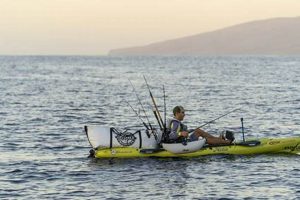
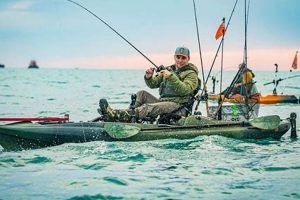
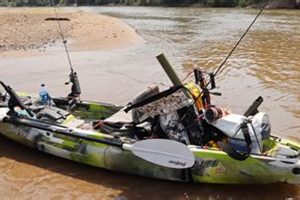
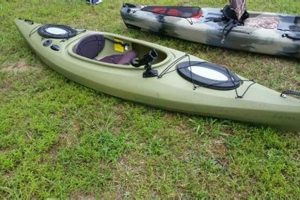
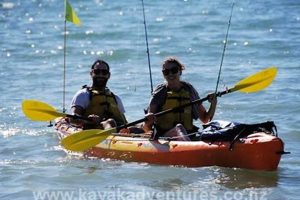
Kayaks specifically outfitted for fishing represent a specialized category within recreational watercraft. These vessels are equipped with modifications and accessories designed to enhance the angling experience. Common features include rod holders, tackle storage compartments, anchor trolleys, fish finders, and specialized seating. A typical example might include a sit-on-top kayak with adjustable rod holders, a built-in cooler for storing catches, and a GPS-enabled fish finder.
The evolution of specialized fishing kayaks has significantly improved angling accessibility and effectiveness. Pre-rigged setups eliminate the need for extensive DIY modifications, saving anglers time and effort. Dedicated storage and strategically placed accessories allow for efficient organization and retrieval of equipment, crucial for a seamless fishing experience. Enhanced stability and specialized features contribute to increased safety and comfort, allowing anglers to focus on the sport. The historical progression from basic, unmodified kayaks to purpose-built fishing platforms reflects the growing popularity and specialization within recreational fishing.
This article will delve into the specifics of choosing, outfitting, and utilizing fishing kayaks. Topics covered will include an in-depth examination of essential features, a comparison of different kayak types, practical advice on rigging techniques, and recommendations for safe and responsible kayaking practices.
Tips for Optimized Kayak Fishing
Careful preparation and strategic equipment choices contribute significantly to a successful and enjoyable fishing experience from a kayak.
Tip 1: Prioritize Stability: Kayak stability is paramount, especially when fishing. Wider kayaks generally offer greater stability than narrower designs. Consider the expected water conditions and personal comfort levels when selecting a kayak.
Tip 2: Select Appropriate Rod Holders: Rod holders should be strategically positioned for easy access and secure rod storage during paddling. Adjustable rod holders offer flexibility for different fishing techniques.
Tip 3: Organize Tackle Effectively: Efficient tackle organization is crucial for maintaining a streamlined fishing process. Utilize tackle boxes and storage compartments to keep lures, hooks, and other essentials readily available.
Tip 4: Consider an Anchor Trolley System: An anchor trolley system allows for precise anchor positioning, enabling anglers to control drift and maintain optimal fishing locations, especially in current or wind.
Tip 5: Invest in a Quality Fish Finder: Fish finders provide valuable underwater insights, aiding in locating fish, identifying underwater structures, and understanding bottom contours. Choose a model with features suitable for kayak fishing.
Tip 6: Choose a Comfortable and Supportive Seat: Extended periods on the water necessitate a comfortable and supportive seat. Look for adjustable seating options with adequate back support and cushioning.
Tip 7: Practice Safe Kayaking Habits: Always wear a personal flotation device (PFD) and adhere to local boating regulations. Inform someone of your fishing plans, including location and expected return time.
By following these guidelines, anglers can maximize their time on the water and significantly enhance their chances of a successful and enjoyable fishing experience.
These tips provide a solid foundation for successful kayak angling. The subsequent sections will delve deeper into specific equipment choices and rigging techniques.
1. Stability

Stability forms a cornerstone of effective kayak fishing. A stable platform is essential for casting, reeling, and landing fish, especially in challenging conditions. Compromised stability can lead to capsizing, equipment loss, and potentially dangerous situations. The inherent instability of kayaks necessitates careful consideration of design features, weight distribution, and on-water behavior. For example, wider kayaks with flatter hulls generally offer greater initial stability, beneficial for beginners or calmer waters. Longer, narrower kayaks, while less initially stable, can track more efficiently and handle rougher conditions once the angler develops the necessary balance and control.
Weight distribution plays a crucial role in kayak stability. Centering weight low and evenly within the hull maximizes stability. Adding accessories and gear to a rigged-out fishing kayak requires careful consideration of weight placement to avoid compromising balance. For instance, mounting a heavy fish finder on one side of the kayak without counterbalancing weight on the opposite side can create instability, particularly during movement. Similarly, unevenly distributed tackle within storage compartments can shift the center of gravity, affecting stability. Understanding the impact of weight distribution empowers anglers to configure their kayaks for optimal balance and performance.
Ultimately, achieving and maintaining stability in a rigged-out fishing kayak requires a holistic approach. Selecting a kayak with appropriate design characteristics for the intended fishing environment forms the foundation. Careful consideration of weight distribution, including gear placement and angler positioning, further enhances stability. Continuous awareness of body movements and adjustments to shifting conditions contribute to a safe and productive fishing experience. Neglecting stability considerations can compromise safety and detract from the overall enjoyment of kayak fishing.
2. Storage Capacity

Storage capacity represents a critical factor in the effectiveness and enjoyment of fishing kayaks. Adequate storage facilitates organized tackle management, efficient gear retrieval, and the ability to carry essential safety equipment. Insufficient storage can lead to cluttered decks, tangled lines, and difficulty locating necessary items, ultimately hindering fishing success and potentially compromising safety. The relationship between storage capacity and a well-rigged fishing kayak is directly proportional to the angler’s efficiency and preparedness on the water.
Consider a scenario where an angler encounters shifting weather conditions. A kayak with ample, well-organized storage allows for quick access to rain gear or additional layers of clothing, ensuring continued comfort and safety. Conversely, limited storage might necessitate leaving essential safety items ashore, potentially jeopardizing the angler’s well-being in unforeseen circumstances. Similarly, readily accessible tackle storage contributes to a seamless fishing experience. Dedicated compartments for lures, hooks, and other essentials allow anglers to adapt quickly to changing fishing conditions or target different species without fumbling through disorganized gear. This efficiency translates to more time spent fishing and less time managing equipment.
In conclusion, adequate storage capacity is not merely a convenience but a crucial component of a well-rigged fishing kayak. Ample and organized storage directly contributes to safety by allowing for the carriage of essential equipment, and it enhances fishing effectiveness by streamlining tackle management and gear retrieval. Anglers should carefully assess their individual needs and anticipated fishing scenarios when evaluating storage options. Prioritizing storage capacity contributes significantly to a positive and productive kayak fishing experience. The practical understanding of this relationship empowers anglers to make informed decisions about kayak selection and customization.
3. Rod Holder Placement

Rod holder placement is integral to a well-rigged fishing kayak, directly influencing angling efficiency and safety. Strategic placement optimizes casting, retrieval, and trolling, while minimizing line tangling and interference with paddling. Improper placement can hinder casting accuracy, impede paddling strokes, and increase the risk of rod entanglement or loss. Consider a flush-mounted rod holder positioned too far forward: casting may become awkward, and the rod’s length could interfere with paddle strokes. Conversely, holders placed too far aft might hinder access and increase the risk of snagging on obstacles behind the kayak.
Optimal rod holder placement varies depending on fishing style and kayak design. Anglers frequently casting and retrieving lures might benefit from forward-facing holders within easy reach. Trolling, however, often necessitates rear-mounted holders angled to keep lines clear of the paddle. A sit-on-top kayak designed for stand-up fishing requires different holder positioning compared to a sit-inside model. For instance, adjustable rod holders offer versatility for different fishing techniques and angler preferences. Anglers often employ multiple rod holders, each strategically positioned to accommodate diverse fishing approaches within a single outing.
Effective rod holder placement maximizes fishing efficiency and safety. Careful consideration of fishing style, kayak design, and individual preferences ensures optimal configuration. Strategic placement minimizes interference, facilitates efficient lure management, and contributes to a more productive and enjoyable fishing experience. Neglecting this aspect can compromise both angling success and overall safety on the water. A well-planned layout enhances casting accuracy, improves retrieval speed, and reduces the risk of equipment entanglement or loss, thereby contributing to a more successful and enjoyable fishing experience.
4. Customization Options
Customization options distinguish rigged-out fishing kayaks from standard recreational models. Adaptability to specific fishing styles and individual preferences enhances on-water effectiveness and overall enjoyment. Modular components and adaptable configurations allow anglers to tailor their kayaks for diverse fishing environments and techniques. Understanding these options is crucial for maximizing a fishing kayak’s potential.
- Rod Holders and Mounts
Rod holders are fundamental customization components. Adjustable mounts accommodate various rod lengths and angling styles, from spin casting to fly fishing. Track systems provide flexibility for repositioning holders based on specific needs and target species. Specialized holders for trolling or drift fishing further enhance versatility. For example, an angler targeting large pelagic fish might utilize heavy-duty rod holders with gimbal mounts, while a bass angler might prefer lighter, adjustable holders for precise lure presentation.
- Electronics Integration
Integrating electronics significantly expands a fishing kayak’s capabilities. Fish finders, GPS units, and transducers require specialized mounts and wiring solutions. Customization options include flush-mounted displays, RAM mounts for adjustable positioning, and through-hull transducer installations. For instance, a kayak rigged for offshore fishing might feature a large-screen chartplotter/fish finder combo, while a smaller, portable unit might suffice for inshore angling. Effective electronics integration provides crucial information about water depth, bottom structure, and fish location, directly impacting angling success.
- Storage Solutions
Tailored storage solutions maximize organization and efficiency. Modular tackle boxes, dry bags, and specialized compartments for specific gear keep essential items readily accessible. Customizable crate systems and deck rigging allow anglers to personalize storage configurations based on individual preferences and target species. An angler targeting multiple species might utilize a modular tackle system with interchangeable trays for different lures and rigs, while a fly fisherman might prioritize waterproof storage for flies and lines. Efficient storage enhances on-water organization and minimizes wasted time searching for equipment.
- Anchor Trolleys and Deployment Systems
Anchor trolleys and specialized deployment systems enhance boat control in various fishing environments. Adjustable trolley lines allow anglers to position the anchor for optimal drift control in current or wind. Stake-out poles provide quick anchoring in shallow water. Customized anchor deployment systems minimize deployment and retrieval time, maximizing fishing efficiency. For example, a kayak angler fishing in a river might utilize an anchor trolley to maintain position in a specific current seam, while an angler fishing in a lake might prefer a stake-out pole for quick anchoring in shallow weed beds. Effective anchoring enhances boat control and maximizes fishing effectiveness in specific locations.
These customization options transform a standard kayak into a specialized fishing platform. Adaptable configurations cater to individual angling styles and target species, ultimately enhancing fishing effectiveness and overall enjoyment. Careful consideration of these options empowers anglers to create a truly personalized and highly effective fishing kayak, tailored to their specific needs and preferences.
5. Propulsion Systems
Propulsion systems represent a defining feature of rigged-out fishing kayaks, significantly impacting maneuverability, range, and overall fishing effectiveness. The choice of propulsion directly influences an angler’s ability to navigate diverse water conditions, access specific fishing locations, and conserve energy for the act of fishing itself. Traditional paddle propulsion, while offering simplicity and affordability, can limit range and prove tiring during long fishing trips, particularly in challenging conditions like strong currents or wind. Pedal-powered systems, conversely, free the angler’s hands for fishing and provide greater speed and endurance, enabling access to more distant fishing grounds and facilitating longer periods on the water. Motorized kayaks offer the greatest range and speed, enabling anglers to cover vast distances quickly and efficiently, particularly in large bodies of water or challenging tidal environments. However, motorized systems introduce added complexity, maintenance requirements, and potential environmental considerations.
The selection of an appropriate propulsion system depends on several factors, including the intended fishing environment, target species, and individual angler preferences. A kayak angler fishing in calm, shallow waters for bass might find paddle propulsion perfectly adequate. However, an angler targeting offshore pelagic species requiring longer transits and greater range would likely benefit from a pedal or motorized system. Consider an angler fishing in a tidal river system; a pedal-powered kayak allows efficient navigation against the current, maximizing fishing time in prime locations. Conversely, a paddle kayak in the same scenario might necessitate significant physical exertion just to maintain position, reducing time and energy available for fishing. Understanding the practical implications of each propulsion system empowers anglers to make informed decisions based on their specific needs and fishing goals.
Effective propulsion system selection is crucial for maximizing fishing kayak performance and overall angling success. The choice between paddle, pedal, and motor-driven systems presents trade-offs between simplicity, range, speed, and environmental impact. Careful consideration of the intended fishing environment, target species, and individual angler preferences informs the optimal choice. This informed decision-making process contributes significantly to a more efficient, productive, and enjoyable kayak fishing experience. Ultimately, the correct propulsion system empowers anglers to access desired fishing locations, conserve energy, and focus on the core objective: catching fish.
Frequently Asked Questions
This section addresses common inquiries regarding outfitted fishing kayaks, providing concise and informative responses to assist in decision-making and enhance understanding.
Question 1: What are the primary advantages of a specialized fishing kayak over a standard recreational model?
Specialized fishing kayaks offer enhanced stability, integrated rod holders, dedicated storage for tackle and gear, and often feature customization options for electronics and other accessories, contributing to a more efficient and productive fishing experience.
Question 2: How does one determine the appropriate size and type of fishing kayak?
Kayak selection depends on factors such as angler size and weight, intended fishing environment (calm lakes vs. open ocean), and desired features. Longer kayaks generally track better in open water, while wider kayaks provide enhanced stability. Sit-on-top kayaks offer superior stability and ease of re-entry after a capsize, while sit-inside kayaks provide better protection from the elements.
Question 3: What essential safety equipment should accompany any kayak fishing excursion?
Essential safety equipment includes a personal flotation device (PFD), a whistle, a visual signaling device (such as a mirror or flare), a first-aid kit, and communication devices (e.g., VHF radio, cell phone in a waterproof case). Navigation tools like a compass or GPS are also recommended.
Question 4: What are the key considerations when choosing a propulsion system for a fishing kayak?
Propulsion choices include paddle, pedal, and motor. Paddle propulsion offers simplicity and affordability but requires more physical exertion. Pedal drives provide hands-free operation and increased speed, while motors offer the greatest range but introduce added complexity and cost.
Question 5: How does one maintain and care for a rigged-out fishing kayak?
Regular rinsing with fresh water after each use helps prevent corrosion and damage from saltwater or other contaminants. Proper storage out of direct sunlight prolongs the lifespan of the kayak and its components. Periodic inspection of hardware, lines, and accessories ensures continued functionality and safety.
Question 6: What resources are available for learning more about kayak fishing techniques and best practices?
Numerous online resources, including forums, instructional videos, and articles, provide valuable information on kayak fishing techniques. Local kayak fishing clubs and outfitters offer guided trips and educational workshops. Consulting experienced anglers can also provide valuable insights and practical advice.
Addressing these common questions provides a foundational understanding of key considerations related to rigged-out fishing kayaks. Careful consideration of these aspects will contribute significantly to informed decision-making and enhanced on-water safety and enjoyment.
The next section will provide a comprehensive guide to choosing the right fishing kayak based on individual needs and preferences.
Rigged Out Fishing Kayaks
This exploration of specialized fishing kayaks has highlighted their evolution from basic watercraft to highly adaptable fishing platforms. Key considerations, including stability, storage, rod holder placement, customization options, and propulsion systems, contribute significantly to on-water effectiveness and safety. Understanding these elements empowers informed decision-making, enabling anglers to select and configure kayaks optimized for individual needs and target species.
The increasing sophistication of rigged-out fishing kayaks reflects a growing appreciation for their unique capabilities. Continued innovation promises further advancements in design, materials, and integrated technologies, enhancing angler experiences and access to diverse fishing environments. Careful consideration of the factors presented herein allows anglers to harness the full potential of these specialized vessels, contributing to enhanced fishing success and a deeper connection with the aquatic world.