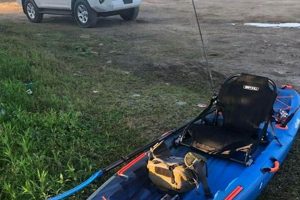
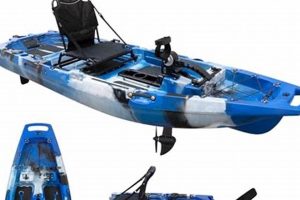
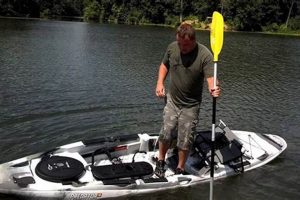
Tandem kayaks designed for angling offer anglers the opportunity to share their passion with a companion while enjoying enhanced stability and combined paddling power. These vessels typically feature specialized seating arrangements, often with adjustable positions and elevated platforms for improved visibility and casting. Integrated rod holders, ample storage for tackle and gear, and even dedicated livewells are common features. For example, a couple might choose a tandem fishing kayak for a weekend getaway on their favorite lake.
The shared experience offered by these watercraft enhances camaraderie and safety on the water. The increased stability inherent in their design proves advantageous in challenging conditions and when landing larger fish. Historically, fishing from kayaks evolved from solo endeavors, with the later introduction of tandem designs expanding the social and practical possibilities of kayak angling. This evolution reflects a broader trend towards shared recreational activities and the increasing specialization of outdoor equipment.
The following sections will explore key considerations when selecting a two-person fishing kayak, including hull design, materials, features, and popular models available on the market. Furthermore, expert advice on paddling techniques, safety precautions, and responsible fishing practices will be provided.
Tips for Tandem Kayak Fishing
Proper preparation and mindful practices contribute significantly to a successful and enjoyable tandem kayak fishing experience. The following tips offer valuable guidance for maximizing both comfort and effectiveness on the water.
Tip 1: Coordinate Paddling Strokes: Synchronized paddling is crucial for efficient movement and maintaining a straight course. Practice paddling together before venturing out to develop a rhythm that works for both individuals. Consider using verbal cues or non-verbal signals to maintain synchronization.
Tip 2: Distribute Weight Evenly: Proper weight distribution ensures stability and optimal performance. Gear and anglers should be positioned to maintain balance and prevent tipping. This may require adjustments based on individual weight and gear placement.
Tip 3: Establish Clear Communication: Open communication is essential, especially when navigating challenging waters or landing fish. Discuss roles and responsibilities beforehand, such as who will navigate and who will handle the fishing gear. Establish clear hand signals or verbal cues for changing direction or stopping.
Tip 4: Choose Appropriate Paddles: Paddle length and blade shape impact paddling efficiency. Select paddles suited to individual height and paddling style for optimal performance and reduced fatigue.
Tip 5: Prioritize Safety: Wearing personal flotation devices (PFDs) is paramount. Carry essential safety equipment, including a whistle, signaling device, and first-aid kit. Check weather forecasts before heading out and be aware of changing conditions.
Tip 6: Respect the Environment: Practice Leave No Trace principles. Pack out all trash and avoid disturbing wildlife. Adhere to local fishing regulations and handle fish with care.
Tip 7: Plan Your Fishing Strategy: Discuss target species, fishing techniques, and preferred locations beforehand. Coordinate casting and retrieval to avoid tangled lines. Assign roles for tasks such as netting fish or handling the anchor.
By following these tips, anglers can enhance their shared fishing experience and foster a safe and productive outing. These practices contribute not only to successful angling but also to a deeper appreciation for the sport and the natural environment.
These preparatory steps and mindful practices ensure a rewarding experience on the water, allowing anglers to focus on the joy of shared angling.

Tandem fishing kayaks fundamentally alter the angling experience by enabling shared participation. This shared experience fosters camaraderie and strengthens bonds between individuals, transforming a solitary pursuit into a social activity. The ability to share the excitement of a catch, discuss techniques, and enjoy the natural environment together enhances the overall experience. For example, a parent introducing a child to fishing can create lasting memories through the shared experience offered by a tandem kayak. Similarly, friends can strengthen their connection while enjoying a day of fishing together. This social aspect distinguishes tandem kayak fishing from solo excursions, adding a dimension of shared enjoyment and mutual support.
The collaborative nature of tandem kayak fishing extends beyond the social aspect. Sharing a kayak necessitates communication and coordination, promoting teamwork and cooperation. Anglers must synchronize their paddling strokes, navigate together, and consider each other’s fishing space. This shared responsibility fosters a sense of partnership and enhances the overall sense of accomplishment. Practically, this shared experience can also improve safety, as anglers can assist each other in challenging situations or emergencies. The presence of a companion offers reassurance and immediate support, contributing to a safer and more secure environment on the water.
The shared angling experience inherent in tandem kayaking offers significant benefits beyond simply catching fish. It creates opportunities for connection, strengthens relationships, and fosters teamwork. While practical considerations like stability and capacity are important, the social and emotional benefits of shared angling ultimately enrich the experience and contribute to the growing popularity of tandem fishing kayaks. This understanding underscores the value of shared experiences in outdoor recreation and highlights the role of tandem kayaks in facilitating these connections.
2. Enhanced Stability
Enhanced stability is a critical feature differentiating two-person fishing kayaks from their single-seat counterparts. This characteristic directly influences angler comfort, safety, and overall fishing effectiveness. Understanding the factors contributing to enhanced stability is crucial for informed kayak selection and successful angling experiences.
- Wider Hull Design
Tandem kayaks generally feature wider hulls compared to solo kayaks. This increased width creates a larger base of support on the water, reducing the likelihood of tipping. A wider hull offers greater initial stability, meaning it resists tipping when at rest or moving slowly. This is particularly beneficial for anglers who stand to cast or move around in the kayak. The wider hull allows for more freedom of movement without compromising stability.
- Increased Weight Capacity
The higher weight capacity of two-person kayaks contributes to their inherent stability. The added weight of two anglers and their gear lowers the center of gravity, making the vessel less susceptible to tipping. This increased stability translates to a more secure and comfortable platform, especially in challenging conditions such as wind or choppy water. For example, two anglers fishing in a tandem kayak will experience less rocking than a single angler in a solo kayak of similar length.
- Hull Shape and Design Features
Specific hull designs, such as pontoon hulls or flat bottoms, further enhance stability. Pontoon hulls provide exceptional stability due to their wide, flat shape, while flat-bottomed hulls offer excellent initial stability. Features like chines, which are angular edges along the hull, also contribute to secondary stability the resistance to tipping when the kayak is leaned. These design elements work in concert to provide a stable platform across various water conditions.
- Lower Center of Gravity
The combined weight of two anglers and their gear naturally creates a lower center of gravity in a tandem kayak. This lower center of gravity increases the kayak’s resistance to tipping, especially during activities like casting or reeling in fish. This added stability allows for greater confidence and control while fishing, reducing the risk of capsizing and contributing to a safer and more enjoyable experience on the water.
The enhanced stability inherent in two-person fishing kayaks translates to increased angler confidence and safety, allowing for a wider range of fishing activities and a more comfortable experience, particularly in varied or challenging water conditions. This feature is a key consideration for anglers seeking a stable platform for fishing with a companion.
3. Increased Capacity

Increased capacity is a defining characteristic of two-person fishing kayaks, directly impacting their practicality and versatility. This expanded capacity extends beyond simply accommodating two anglers, encompassing gear storage and overall load-bearing potential. Understanding the nuances of this increased capacity is crucial for maximizing the utility of these tandem vessels.
- Angler Accommodation
The primary advantage of increased capacity lies in the ability to accommodate two anglers comfortably. This allows for shared fishing experiences, enhances safety through mutual support, and enables collaborative paddling. The design of two-person kayaks often incorporates dedicated seating arrangements with adjustable positions and backrests for enhanced comfort during extended outings.
- Gear Storage
Increased capacity also translates to more storage space for fishing gear. Tandem kayaks typically feature larger hatches, dedicated compartments, and integrated storage solutions for rods, tackle boxes, and other essential equipment. This expanded storage capacity allows anglers to carry a wider variety of gear and provisions, enhancing their preparedness and adaptability on the water. For example, anglers targeting different species can bring specialized rods and tackle without sacrificing space or comfort.
- Weight Capacity
Two-person kayaks possess a higher weight capacity compared to solo kayaks, allowing them to carry heavier loads. This increased weight capacity accommodates the combined weight of two anglers, their gear, and potentially even caught fish. This robust weight capacity ensures stability and performance even when fully loaded, contributing to a safe and efficient fishing experience.
- Provisioning and Supplies
The increased capacity of two-person kayaks allows for carrying additional provisions and supplies, extending the duration and range of fishing trips. Anglers can pack more food, water, and safety equipment, enabling them to explore more remote locations or spend longer periods on the water without resupply. This enhanced self-sufficiency expands fishing opportunities and contributes to a more comprehensive outdoor experience.
The increased capacity of two-person fishing kayaks significantly enhances their versatility and practicality. By accommodating two anglers, ample gear, and essential supplies, these kayaks facilitate shared experiences, extended trips, and diverse fishing strategies. This expanded capacity is a defining feature that sets two-person kayaks apart from their solo counterparts and contributes to their growing popularity among anglers seeking both social interaction and practical functionality on the water.
4. Specialized Features

Specialized features distinguish fishing kayaks, particularly two-person models, from recreational kayaks, optimizing them for angling pursuits. These features enhance functionality, angler comfort, and overall fishing effectiveness. Consideration of these specialized features is crucial for selecting the appropriate vessel for specific fishing needs and preferences.
Rod holders, often flush-mounted or adjustable, provide secure rod storage and hands-free operation, enabling techniques like trolling or managing multiple lines. Tackle storage compartments, ranging from sealed hatches to integrated tackle boxes, keep gear organized and protected from the elements. These features improve efficiency and reduce clutter, allowing anglers to focus on fishing. For example, integrated rod holders allow anglers to troll while simultaneously paddling, maximizing fishing time. Similarly, dedicated tackle storage keeps essential gear readily accessible, minimizing disruptions during critical moments.
Further specialized features include anchor trolleys, facilitating controlled drift fishing, and livewells, maintaining bait or caught fish in optimal condition. Adjustable seating positions accommodate varying angler preferences and fishing styles, enhancing comfort during long hours on the water. Footrests, often adjustable, provide crucial leverage for paddling and stability while casting. These features contribute significantly to the overall fishing experience, optimizing functionality and angler comfort. An angler seeking to fish in currents would benefit from an anchor trolley system, while a bass angler might prioritize a livewell for keeping catches fresh. Understanding these specialized features and their applications enables informed decision-making when selecting a two-person fishing kayak.
The integration of specialized features in two-person fishing kayaks reflects a purposeful design philosophy aimed at maximizing angling effectiveness and enjoyment. Careful consideration of these features empowers anglers to select a kayak tailored to their specific needs, enhancing both comfort and functionality on the water. This understanding is crucial for optimizing fishing experiences and underscores the importance of specialized features in distinguishing fishing kayaks from their recreational counterparts. Selecting a kayak with appropriate specialized features, based on individual fishing styles and target species, can significantly enhance the overall fishing experience.
5. Varied Hull Designs
Hull design significantly influences the performance characteristics of two-person fishing kayaks, impacting stability, maneuverability, tracking, and speed. Understanding the relationship between hull design and intended use is crucial for selecting the appropriate kayak for specific fishing environments and styles. The diversity in hull designs caters to varying water conditions, fishing techniques, and angler preferences.
Common hull designs include pontoon, flat-bottom, rounded, and V-shaped hulls. Pontoon hulls offer exceptional stability, making them ideal for calm waters and stand-up fishing. Flat-bottom hulls provide excellent initial stability and maneuverability in shallow water, facilitating precise positioning for sight fishing. Rounded hulls offer a balance of stability and maneuverability, suitable for a range of conditions. V-shaped hulls excel in tracking and speed, performing well in open water and choppy conditions but potentially sacrificing some stability. For example, a tandem kayak with a pontoon hull offers a stable platform for fly fishing in calm lakes, whereas a V-shaped hull is more suitable for trolling in coastal waters. Selecting the appropriate hull design depends on balancing desired stability, maneuverability, and speed with anticipated water conditions and fishing techniques.
Consideration of hull design extends beyond basic shapes to include features like chines and rocker. Chines, the angular edges along the hull, influence secondary stability the kayak’s resistance to tipping when leaned. Hard chines enhance secondary stability, benefiting anglers who frequently lean or stand while fishing. Rocker, the curvature of the hull from bow to stern, affects maneuverability and tracking. Kayaks with significant rocker turn easily but track less efficiently in a straight line, whereas kayaks with minimal rocker track well but require more effort to turn. Understanding these design nuances enables informed decision-making and selection of a two-person fishing kayak optimized for specific needs and preferences. Choosing a hull design aligned with intended use enhances performance, efficiency, and overall fishing experience.
6. Considerable Weight Capacity

Weight capacity is a critical factor in two-person fishing kayak selection, directly influencing safety, performance, and overall functionality. A considerable weight capacity is essential for accommodating two anglers, their combined gear, and potentially caught fish. Understanding the implications of weight capacity is crucial for informed decision-making and ensuring a safe and successful fishing experience.
- Combined Angler Weight
The combined weight of two anglers constitutes a significant portion of the total load. A kayak’s weight capacity must comfortably exceed this combined weight to ensure safe operation and prevent instability. Exceeding the recommended weight capacity compromises stability and maneuverability, increasing the risk of capsizing. For example, two anglers weighing a combined 350 pounds require a kayak with a weight capacity significantly greater than 350 pounds, ideally with a safety margin for gear and other items.
- Gear and Equipment
Fishing gear, including rods, reels, tackle boxes, and other equipment, adds substantial weight. The kayak’s weight capacity must account for this additional load, ensuring stable and predictable performance. Inadequate weight capacity for gear can lead to reduced freeboard (the distance between the waterline and the top of the hull), increasing the risk of swamping in rough conditions. Anglers carrying specialized equipment, such as fish finders or large tackle boxes, must factor these weights into their kayak selection.
- Caught Fish
The weight of caught fish, particularly in successful outings, contributes to the overall load. While often overlooked, this additional weight can impact stability and performance, especially in smaller kayaks or when multiple large fish are onboard. Selecting a kayak with ample weight capacity allows for the safe and comfortable transport of catches without compromising stability or maneuverability.
- Performance and Stability
Weight capacity directly influences kayak performance and stability. Operating a kayak near its maximum capacity can reduce maneuverability, decrease speed, and impact tracking. Exceeding the weight capacity significantly compromises stability, increasing the risk of capsizing. Choosing a kayak with a weight capacity well-suited to anticipated loads ensures optimal performance, stability, and safety on the water.
Careful consideration of weight capacity is essential for selecting a two-person fishing kayak that safely and effectively accommodates anglers, gear, and potential catches. Understanding the interplay between weight capacity, stability, and performance empowers informed decision-making and contributes to a more enjoyable and secure fishing experience. Prioritizing weight capacity ensures not only safety but also optimal functionality on the water, allowing anglers to focus on the pursuit of their target species.
7. Collaborative Paddling
Collaborative paddling forms an integral aspect of the two-person fishing kayak experience, significantly influencing efficiency, maneuverability, and overall enjoyment. Effective collaboration transforms paddling from a purely functional task into a synchronized effort, maximizing forward momentum and minimizing wasted energy. The inherent design of tandem kayaks necessitates coordinated paddling, transforming individual effort into a unified force. Cause and effect are directly linked; synchronized paddling leads to efficient movement, while uncoordinated paddling results in reduced speed and wasted energy. For instance, two anglers paddling in sync can cover greater distances with less exertion compared to inconsistent paddling efforts. This efficiency gains importance during longer fishing trips or when navigating against currents or wind.
The importance of collaborative paddling extends beyond mere efficiency. Synchronized strokes contribute significantly to maintaining a straight course, crucial for navigating to desired fishing locations or trolling effectively. Consider a scenario where one angler paddles more forcefully than the other; the kayak will veer off course, requiring constant correction and hindering fishing effectiveness. In contrast, harmonious paddling minimizes course deviations, conserving energy and allowing anglers to focus on fishing. Practical applications of collaborative paddling include navigating narrow channels, maintaining position in currents, and approaching fish-holding areas stealthily. This understanding translates directly to improved fishing outcomes and a more streamlined experience on the water.
Effective communication forms the cornerstone of successful collaborative paddling. Non-verbal cues, established hand signals, or concise verbal communication facilitate seamless transitions, turns, and adjustments in paddling rhythm. This minimizes disruptions and maintains the kayak’s balance and momentum. Challenges such as navigating through obstacles or adapting to changing water conditions demand effective communication to ensure coordinated responses. Ultimately, collaborative paddling represents more than just coordinated movement; it embodies teamwork, shared responsibility, and a synchronized effort that enhances not only efficiency and maneuverability but also the overall enjoyment of the tandem fishing kayak experience. This understanding elevates the activity beyond a simple mode of transportation, transforming it into a shared endeavor that strengthens the bond between anglers and enhances their connection with the aquatic environment.
Frequently Asked Questions
Addressing common inquiries regarding tandem fishing kayaks provides clarity for informed decision-making and optimal utilization.
Question 1: What are the primary advantages of choosing a tandem fishing kayak over two solo kayaks?
Tandem kayaks offer enhanced stability, increased weight capacity for gear, and often a lower overall cost compared to purchasing two solo kayaks. They also promote a shared experience and collaborative paddling.
Question 2: How does one determine the appropriate weight capacity for a two-person fishing kayak?
The combined weight of anglers, gear, and potential catches should be well below the kayak’s maximum weight capacity to ensure safe and optimal performance. A safety margin is recommended.
Question 3: Are tandem fishing kayaks more difficult to maneuver than solo kayaks?
While generally longer, tandem kayaks designed for fishing often incorporate design features for maneuverability. Coordinated paddling and practice enhance maneuverability.
Question 4: What key features should one look for in a tandem fishing kayak designed for specific fishing styles, such as trolling or fly fishing?
Specific needs dictate feature prioritization. Trolling benefits from rod holders, anchor trolleys, and higher speed hulls. Fly fishing prioritizes stability, ample deck space, and readily accessible storage.
Question 5: How does hull design influence the performance of a tandem fishing kayak in different water conditions?
Hull design impacts stability, speed, and maneuverability. Wider, flatter hulls offer stability in calm water, while V-shaped hulls perform better in choppy conditions. Consider intended water conditions when selecting a hull design.
Question 6: What safety precautions should be taken when using a tandem fishing kayak?
Always wear personal flotation devices (PFDs). Carry essential safety equipment, including a whistle, signaling device, and first-aid kit. Check weather forecasts and be aware of changing conditions. Inform someone of your planned route and estimated return time.
Careful consideration of these frequently asked questions empowers informed decisions and promotes safe and enjoyable tandem kayak fishing experiences. Addressing these common concerns fosters a deeper understanding of the nuances associated with two-person fishing kayaks, enabling anglers to select appropriate vessels and maximize their utility on the water.
The subsequent sections delve into specific kayak models and offer further guidance on selecting the ideal tandem fishing kayak based on individual needs and preferences.
Conclusion
Tandem fishing kayaks offer distinct advantages for anglers seeking shared experiences and enhanced functionality on the water. From increased stability and weight capacity to specialized features and collaborative paddling opportunities, these vessels provide a unique platform for angling pursuits. Careful consideration of hull design, features, and capacity ensures selection of a kayak optimized for specific needs and intended water conditions. Understanding the nuances of collaborative paddling and prioritizing safety precautions contribute significantly to successful and enjoyable outings.
The evolving landscape of recreational fishing continues to embrace advancements in kayak design and technology. As tandem fishing kayaks gain popularity, further innovations promise enhanced performance, comfort, and specialized features tailored to diverse angling styles. Choosing a tandem fishing kayak represents an investment in shared experiences, enhanced fishing opportunities, and a deeper connection with the aquatic environment. Informed decision-making empowers anglers to maximize the potential of these versatile vessels, fostering lasting memories and a richer appreciation for the sport of fishing.