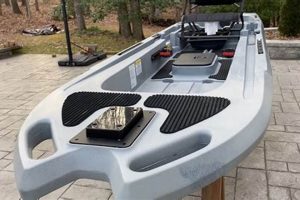
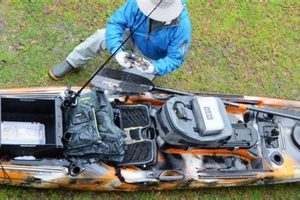
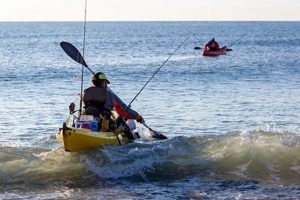
This specific model of recreational watercraft is designed for anglers seeking adventures in remote locations. It combines stability and maneuverability with features tailored for fishing, such as rod holders and storage compartments. Typically constructed from durable materials like high-density polyethylene, these vessels are built to withstand the rigors of navigating various water conditions, from placid lakes to flowing rivers.
The ability to access secluded fishing spots often translates to better angling opportunities and a more immersive experience in nature. The portability of these kayaks allows for transport to otherwise inaccessible waterways, expanding angling horizons. This type of watercraft reflects a growing trend in outdoor recreation, emphasizing self-reliance and a deeper connection with the environment.
Further exploration of this topic will cover specific design elements, manufacturing processes, and the broader impact of this type of kayak on the fishing community and the environment.
Tips for Kayak Fishing
Proper preparation and technique enhance safety and enjoyment while kayak fishing. These tips offer guidance for anglers of all skill levels.
Tip 1: Plan and Research: Prior to embarking on any fishing trip, thorough research of the intended waterway is crucial. Factors such as water conditions, weather forecasts, and local regulations should be considered. Establishing a float plan and sharing it with a trusted contact is a recommended safety precaution.
Tip 2: Essential Gear: Carrying essential safety equipment, including a personal flotation device (PFD), a whistle, and a first-aid kit, is paramount. Navigation tools, such as a GPS device or compass, are also recommended. Fishing-specific gear should be organized and readily accessible.
Tip 3: Stability and Balance: Maintaining balance is crucial for a successful and safe fishing experience. Distributing weight evenly within the kayak and practicing entering and exiting the vessel in shallow water will improve stability.
Tip 4: Paddling Techniques: Learning efficient paddling techniques conserves energy and allows for greater maneuverability. Practicing different paddle strokes will enhance control and precision on the water.
Tip 5: Respect Wildlife and the Environment: Minimizing environmental impact is crucial for preserving natural habitats. Adhering to Leave No Trace principles, such as packing out all trash and avoiding disturbing wildlife, is essential.
Tip 6: Catch and Release Best Practices: Proper handling of fish during catch and release minimizes stress on the animal and promotes conservation. Using appropriate hooks and handling techniques ensures the fish’s health and survival.
By adhering to these guidelines, anglers can maximize their enjoyment of kayak fishing while prioritizing safety and environmental responsibility.
This foundational knowledge will empower anglers to make informed decisions and contribute to a positive and sustainable fishing experience. Further sections will delve into more advanced techniques and considerations.
1. Stability

Stability is a critical performance characteristic for fishing kayaks, particularly those designed for wilderness excursions. A stable platform is essential for casting, reeling, and landing fish, especially in challenging conditions. This characteristic directly influences safety and angler confidence, contributing to a more positive and productive fishing experience. The following facets detail the components of stability specific to wilderness fishing kayaks.
- Hull Design:
Wider hulls generally provide greater primary stability, resisting initial tipping. A flatter hull bottom enhances secondary stability, providing a secure feel even when leaning. The Wilderness Ride 115 likely incorporates a design balancing primary and secondary stability to accommodate both calm and choppy water conditions. A wider, flatter hull, for example, may sacrifice some maneuverability for enhanced stability, a trade-off often prioritized in fishing kayak designs. The specific hull design is crucial for maintaining balance while casting and retrieving.
- Center of Gravity:
A lower center of gravity contributes significantly to stability. The placement of seating, storage compartments, and gear within the kayak influences the overall center of gravity. Kayaks designed for fishing often feature lower seating positions to enhance stability. Proper weight distribution within the kayak also plays a critical role. For example, strategically placing heavier items lower in the hull can improve stability. Understanding the impact of weight distribution is crucial for maximizing stability and safety on the water.
- Water Conditions:
External factors such as wind, currents, and waves significantly impact stability. Kayaks designed for wilderness environments often feature design elements to mitigate these effects. Features such as a higher bow or a tracking keel can improve performance in challenging conditions. For example, a kayak with a pronounced keel will track straighter in windy conditions, reducing the likelihood of being pushed off course. Considering the anticipated water conditions when selecting a kayak is crucial.
- Angler Input:
The angler’s movements and actions also influence stability. Smooth, deliberate movements contribute to maintaining balance, while sudden shifts in weight can compromise stability. Experience and practice improve an angler’s ability to maintain balance in various conditions. For instance, learning to brace with a paddle can prevent capsizing in rough water. Understanding the impact of one’s own movements on the kayak’s stability is a key aspect of safe and effective kayak fishing.
These interconnected factors contribute to the overall stability of the Wilderness Ride 115, allowing anglers to confidently navigate and fish in diverse wilderness environments. A stable platform is the foundation for a successful and enjoyable fishing experience, enabling anglers to focus on the task at hand rather than constantly battling to maintain balance.
2. Maneuverability

Maneuverability represents a critical performance attribute for fishing kayaks, particularly in wilderness settings. The ability to navigate intricate waterways, respond efficiently to changing currents, and position the kayak effectively for optimal casting angles directly impacts fishing success and overall experience. This characteristic becomes especially relevant in wilderness environments, which often present narrow creeks, shallow water obstacles, and unpredictable currents. Consider a scenario where an angler needs to navigate through a dense stand of submerged logs or quickly reposition to target a rising fish; the kayak’s maneuverability becomes paramount. The Wilderness Ride 115 fishing kayak’s maneuverability is likely influenced by its hull design, length, and rudder or skeg system, if equipped. Shorter kayaks generally offer greater maneuverability, enabling quicker turns and adjustments in confined spaces.
The interplay between stability and maneuverability represents a crucial design consideration in kayak construction. While stability provides a secure platform for fishing activities, excessive stability can compromise maneuverability. Designers must strike a balance to create a kayak suitable for the intended environment and fishing style. For instance, a kayak designed for open ocean fishing might prioritize stability over maneuverability to handle rougher water conditions, while a kayak designed for river fishing would likely prioritize maneuverability to navigate tight bends and obstacles. In the context of wilderness fishing, the Wilderness Ride 115 likely incorporates a design that balances these two attributes, providing sufficient stability for fishing activities while maintaining adequate maneuverability for navigating complex waterways. This balance allows anglers to confidently explore diverse environments, from calm lakes to challenging river systems. The practical implications are significant; enhanced maneuverability allows anglers to access prime fishing locations, effectively present lures, and respond efficiently to fish behavior.
Efficient maneuverability reduces angler fatigue, enabling longer and more productive fishing trips. Furthermore, it contributes to safety by allowing for quicker responses to unforeseen circumstances, such as sudden changes in water flow or encounters with obstacles. Challenges may include maintaining directional stability in windy conditions or maneuvering in strong currents, highlighting the importance of appropriate paddling techniques and kayak control skills. Understanding the influence of design features, water conditions, and angler input on maneuverability equips anglers with the knowledge to select the right kayak for their needs and maximize their performance on the water. This insight is particularly valuable in wilderness settings where adaptability and responsiveness are crucial for a successful and enjoyable fishing experience.
3. Storage Capacity

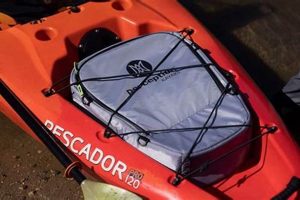
Storage capacity represents a critical aspect of fishing kayak design, significantly influencing functionality and the overall angling experience, especially in wilderness contexts. Adequate storage facilitates organized gear management, enabling efficient access to essential equipment while maintaining a clutter-free and balanced vessel. This attribute becomes paramount during extended wilderness trips where self-sufficiency is essential. Consider a multi-day fishing expedition requiring provisions, camping gear, and specialized fishing equipment; ample, well-designed storage becomes indispensable. The Wilderness Ride 115 fishing kayak likely addresses these needs through a combination of dedicated compartments, tank wells, and deck rigging. These features allow for strategic placement of gear based on size, frequency of use, and protection from the elements.
The practical implications of storage capacity extend beyond mere convenience. Efficient organization enhances safety by minimizing clutter and preventing entanglement with fishing lines or other equipment. Secure storage protects sensitive electronics, food supplies, and other essential items from water damage and environmental exposure. Dedicated compartments for specific gear, such as tackle boxes or rods, further streamline workflow and optimize fishing efficiency. For example, a readily accessible tackle box allows for quick lure changes without disrupting fishing rhythm, while secure rod storage protects valuable equipment during transport and navigation. Insufficient or poorly designed storage can lead to frustration, lost time, and compromised safety, highlighting the importance of careful consideration during kayak selection. Challenges might include balancing weight distribution with storage capacity, ensuring waterproof protection in demanding conditions, and customizing storage solutions for individual needs.
Understanding the relationship between storage capacity, kayak design, and the demands of wilderness fishing enables informed decision-making and contributes to a more successful and enjoyable on-the-water experience. Practical considerations include assessing the volume and type of gear typically carried, evaluating the accessibility and security of different storage solutions, and considering the impact of storage on the kayak’s overall balance and performance. This insight empowers anglers to select a kayak that aligns with their specific needs and fishing style, maximizing efficiency and safety in wilderness environments.
4. Fishing Features

Specialized features distinguish fishing kayaks from recreational models, enhancing angling effectiveness and overall experience. These features, integral to the Wilderness Ride 115 fishing kayak, directly impact functionality and contribute to a more productive and enjoyable time on the water. Their thoughtful integration reflects a focus on angler needs and the demands of wilderness fishing environments.
- Rod Holders:
Integrated rod holders provide secure storage and quick access to fishing rods, freeing hands for paddling, landing fish, and other essential tasks. Flush-mounted or adjustable rod holders accommodate various fishing techniques and rod lengths. Their strategic placement minimizes interference with paddling and casting. For example, angled rod holders positioned behind the angler allow for trolling while paddling. The number and type of rod holders on the Wilderness Ride 115 directly influence its versatility and adaptability to different fishing styles.
- Tackle Storage:
Dedicated tackle storage compartments keep lures, hooks, and other essential fishing gear organized and readily accessible. Waterproof compartments protect sensitive items from moisture and the elements. The design and placement of tackle storage impact fishing efficiency and workflow. Easy-access compartments located within reach of the angler minimize disruption during fishing. The Wilderness Ride 115 likely incorporates tackle storage solutions that balance capacity, accessibility, and security.
- Mounting Options:
Mounting options, such as tracks or inserts, provide versatility for attaching fish finders, GPS units, cameras, and other accessories. These options allow for customization and integration of essential electronics to enhance fishing success and navigation. The availability and placement of mounting points on the Wilderness Ride 115 influence its adaptability to individual angler needs and technological preferences. For example, strategically placed mounting points accommodate fish finders and GPS units without obstructing paddling or casting.
- Paddle Holders/Leashes:
Secure paddle holders or leashes keep the paddle within easy reach while fishing, preventing loss and maximizing efficiency. These features are crucial for maintaining control and stability when both hands are occupied with fishing tasks. The presence and design of paddle management systems on the Wilderness Ride 115 enhance safety and convenience on the water. A secure paddle leash, for instance, prevents the loss of the paddle in windy conditions or during unexpected maneuvers.
These integrated features, tailored for fishing, collectively enhance the functionality of the Wilderness Ride 115 fishing kayak. Their presence transforms a basic watercraft into a specialized angling platform, optimized for efficiency, convenience, and success in wilderness environments. The thoughtful integration of these features underscores the kayak’s design focus on the specific needs and demands of anglers pursuing their passion in remote locations. Considering these features in the context of the kayak’s overall design provides valuable insights into its intended use and target audience, allowing for a more informed assessment of its suitability for specific fishing styles and environments.
5. Durable Construction

Durable construction is paramount for a fishing kayak intended for wilderness environments, directly impacting its longevity, safety, and overall performance. The Wilderness Ride 115 fishing kayak, designed for such applications, likely prioritizes robust construction to withstand the rigors of navigating diverse and often challenging waterways. Cause and effect are intrinsically linked; a durable construction enables the kayak to withstand impacts, abrasions, and UV exposure, ultimately prolonging its lifespan and ensuring reliable performance over time. This inherent durability translates to enhanced safety, providing a dependable platform in remote locations where immediate assistance might be unavailable. For instance, a robust hull can withstand impacts with submerged rocks or logs, preventing punctures and ensuring the angler’s safety. Similarly, UV resistance preserves the structural integrity of the kayak, preventing degradation and maintaining its performance characteristics over extended periods of exposure to sunlight.
The practical significance of durable construction becomes particularly apparent in wilderness settings. Transporting the kayak to remote locations often involves traversing rugged terrain or navigating challenging water conditions. A robust construction minimizes the risk of damage during transport, ensuring the kayak arrives at the destination intact and ready for use. Consider a scenario where the kayak needs to be portaged across rocky terrain; a durable hull is less susceptible to damage, preserving its functionality for the intended fishing excursion. Furthermore, durable construction contributes to the kayak’s overall value proposition, offering a reliable and long-lasting investment for anglers seeking wilderness adventures. The ability to withstand the demands of such environments translates to fewer repairs and replacements, reducing long-term costs and maximizing the enjoyment of the sport.
The inherent durability of the Wilderness Ride 115 fishing kayak, achieved through material selection and construction techniques, underscores its suitability for wilderness exploration. Challenges might include balancing durability with weight and cost, requiring careful consideration of materials and manufacturing processes. Linking this characteristic to the broader theme of wilderness fishing highlights its crucial role in ensuring a safe, reliable, and ultimately successful experience in remote and challenging environments. This understanding allows for a more informed evaluation of the kayak’s suitability for specific wilderness applications and contributes to a deeper appreciation of its design and intended purpose.
Frequently Asked Questions
This section addresses common inquiries regarding the Wilderness Ride 115 fishing kayak, providing concise and informative responses to facilitate informed decision-making.
Question 1: What is the weight capacity of the Wilderness Ride 115?
The weight capacity typically ranges between 400-500 lbs, accommodating angler weight, gear, and potential catch. Confirming the precise capacity with the manufacturer or retailer is recommended.
Question 2: Is the Wilderness Ride 115 suitable for ocean use?
While designed for diverse environments, including lakes and rivers, its suitability for ocean use depends on specific conditions. Calm bays or protected coastal areas might be appropriate, but open ocean use in rough conditions is generally discouraged. Consulting experienced kayakers or local experts is advisable.
Question 3: What materials are used in the Wilderness Ride 115’s construction?
High-density polyethylene (HDPE) is commonly used due to its durability, impact resistance, and UV stability. Specific construction details might vary, so consulting manufacturer specifications is recommended.
Question 4: How does the Wilderness Ride 115 perform in windy conditions?
Performance in wind depends on factors such as wind speed, direction, and water conditions. While the kayak’s design likely incorporates features for stability, strong winds can impact tracking and maneuverability. Experience and appropriate paddling techniques are essential.
Question 5: What maintenance is required for the Wilderness Ride 115?
Regular rinsing with fresh water after each use helps prevent damage from saltwater or other contaminants. Periodic inspections for damage and proper storage contribute to longevity. Specific maintenance recommendations can be found in the owner’s manual.
Question 6: Are there any available accessories or modifications for the Wilderness Ride 115?
Various accessories, such as anchors, rod holders, and fish finders, can enhance functionality. Compatibility and installation procedures should be confirmed before adding modifications.
Understanding these key aspects contributes to a comprehensive overview of the Wilderness Ride 115 fishing kayak. Thorough research and consideration of individual needs are crucial for making informed purchasing decisions.
Further sections will delve into specific features, performance characteristics, and user experiences.
Conclusion
Exploration of this specialized fishing kayak reveals a design prioritizing stability, maneuverability, and specialized features for wilderness anglers. Durable construction and ample storage capacity further enhance its suitability for remote excursions. Key attributes discussed include the balance between stability and maneuverability, the impact of storage solutions on organization and efficiency, and the significance of fishing-specific features like rod holders and mounting options. The interplay of these elements contributes to a comprehensive understanding of the kayak’s intended purpose and target audience.
The increasing popularity of kayak fishing underscores a growing desire for closer engagement with nature and self-reliant exploration. Choosing appropriate equipment, like the Wilderness Ride 115, empowers anglers to access remote waterways and pursue their passion in diverse environments. Careful consideration of individual needs, fishing style, and target environment remains crucial for selecting the optimal kayak and maximizing the wilderness fishing experience.