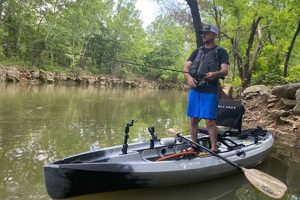
Specialized storage solutions designed for kayak anglers offer convenient and organized transport of essential gear. These purpose-built containers typically feature waterproof or water-resistant materials, multiple compartments, and attachment points compatible with kayak rigging systems. An example includes a small, waterproof container for storing lures and tackle, or a larger bag designed to hold a personal flotation device and other safety equipment.
Effective gear management is crucial for a successful and enjoyable fishing experience from a kayak. Dedicated storage keeps equipment secure, protected from the elements, and readily accessible, enabling anglers to focus on the activity. This is particularly important in the limited space of a kayak, where loose items can create clutter and safety hazards. The development of specialized storage solutions has paralleled the growth in popularity of kayak fishing, reflecting the increasing demand for practical and efficient gear organization in this specialized pursuit.
This article will further explore key features to consider when selecting appropriate storage, popular styles and designs available to anglers, and best practices for packing and organizing gear for a kayak fishing trip.
Essential Tips for Kayak Fishing Storage
Proper gear organization is paramount for a safe and productive kayak fishing excursion. These tips offer guidance for selecting and utilizing appropriate storage solutions.
Tip 1: Prioritize Waterproofing: Opt for waterproof or highly water-resistant bags and containers. This protects sensitive items like electronics, fishing licenses, and first-aid supplies from splashes, rain, and accidental submersion.
Tip 2: Consider Size and Capacity: Select storage solutions appropriate for the volume of gear being carried. Oversized bags can be cumbersome, while undersized bags may necessitate multiple trips to and from the vehicle.
Tip 3: Utilize Compartmentalization: Bags with multiple compartments aid in organizing tackle, tools, and other small items. This allows for quick access to specific items without rummaging through a single large compartment.
Tip 4: Secure Attachment is Crucial: Ensure chosen storage solutions can be securely fastened to the kayak. Utilize D-rings, bungee cords, or other attachment points to prevent gear from shifting or falling overboard.
Tip 5: Distribute Weight Evenly: Distribute weight evenly throughout the kayak for optimal stability and performance. Avoid concentrating heavy items in one area, which can negatively impact maneuverability.
Tip 6: Pack Essential Safety Gear: Dedicate a specific, easily accessible container for essential safety equipment, including a whistle, signaling device, and first-aid kit.
Tip 7: Practice Accessibility: Position frequently used items within easy reach. This minimizes the need to reach or lean excessively, improving both efficiency and safety.
By adhering to these guidelines, anglers can enhance safety, optimize space utilization, and improve overall efficiency on the water. Effective storage solutions contribute significantly to a more focused and enjoyable kayak fishing experience.
By implementing these strategies, anglers can ensure they are well-prepared for a safe and successful outing.
1. Durability

Durability is a critical factor in the selection of a fishing kayak bag. These bags are subjected to harsh conditions, including exposure to sunlight, water, and abrasion from rocks, hooks, and other gear. A durable bag resists tearing, puncturing, and UV degradation, ensuring long-term performance and protection of contents. For instance, a bag constructed from ripstop nylon or heavy-duty PVC will withstand the rigors of frequent use and exposure to the elements far better than a bag made from lightweight, less robust materials. Choosing a durable bag minimizes the risk of equipment loss or damage due to bag failure, ultimately contributing to a more cost-effective and reliable solution.
The practical implications of durability extend beyond simple longevity. A tear or puncture in a bag containing essential gear can compromise a fishing trip, potentially leading to lost tackle, damaged electronics, or even safety concerns. Furthermore, a durable bag maintains its structural integrity, retaining its shape and functionality even when fully loaded. This is especially important in kayak fishing, where space is limited and a collapsed or misshapen bag can disrupt balance and hinder paddling efficiency. Selecting a bag built with reinforced stitching, robust zippers, and high-quality materials ensures reliable performance in demanding environments.
In summary, the durability of a fishing kayak bag is directly linked to its ability to withstand the unique challenges of kayak angling. Investing in a durable bag translates to enhanced protection of valuable equipment, increased safety, and long-term cost savings. Careful consideration of construction materials and manufacturing quality allows anglers to select a storage solution that provides dependable performance and contributes to a positive overall fishing experience.
2. Water Resistance
Water resistance is paramount in kayak fishing, where gear is constantly exposed to splashes, spray, and potential submersion. A water-resistant bag safeguards sensitive equipment from moisture damage, ensuring functionality and longevity. This protection is crucial for electronics, such as fish finders and GPS devices, as well as essential documents like fishing licenses and permits. Choosing a bag with appropriate water resistance features is fundamental to a successful and worry-free fishing experience.
- Levels of Protection
Water resistance is categorized into different levels, from basic splash protection to complete submersion. Ratings like IPX denote the degree of protection. Lower IPX ratings offer protection against light splashes and rain, while higher ratings signify protection against sustained submersion. Anglers should consider their typical fishing conditions and select a bag with an appropriate IPX rating to ensure adequate protection for their gear. For example, an IPX7 rating signifies protection against temporary submersion, while an IPX4 rating indicates protection against splashes.
- Material Construction
The materials used in bag construction directly impact water resistance. Waterproof fabrics, such as PVC and nylon with specialized coatings, provide a barrier against moisture. Sealed seams and waterproof zippers further enhance protection by preventing water from seeping through closures or stitching. Bags constructed with these materials offer superior protection compared to those made from standard fabrics without waterproof treatments.
- Closure Mechanisms
Roll-top closures, waterproof zippers, and sealed seams contribute to overall water resistance. Roll-top closures create a tight seal by folding the top of the bag over multiple times before securing it with buckles or straps. Waterproof zippers utilize specialized sealing technology to prevent water ingress. These features work in conjunction with waterproof fabrics to provide comprehensive protection against the elements.
- Maintenance and Care
Maintaining water resistance requires proper care and attention. Regular cleaning removes dirt and debris that can compromise the integrity of waterproof coatings. Applying specialized waterproofing treatments periodically can help rejuvenate water repellency. Proper storage, avoiding prolonged exposure to extreme temperatures, and timely repairs of any damage, such as punctures or tears, are also essential for preserving the bag’s water-resistant properties.
Selecting a water-resistant fishing kayak bag involves careful consideration of the level of protection required, the materials used in construction, the type of closure mechanisms employed, and the ongoing maintenance required to preserve its effectiveness. A properly chosen and maintained water-resistant bag provides essential protection for valuable gear, contributing to a more enjoyable and worry-free kayak fishing experience. Understanding the various facets of water resistance allows anglers to make informed decisions and select the bag that best suits their individual needs and fishing conditions.
3. Storage Capacity

Storage capacity is a critical consideration when selecting a fishing kayak bag. The volume of gear required for a successful fishing trip varies depending on the type of fishing, the duration of the outing, and personal preferences. A bag with insufficient capacity necessitates leaving essential equipment behind or resorting to inefficient storage methods that can compromise safety and organization. Conversely, an excessively large bag adds unnecessary weight and bulk, potentially hindering maneuverability and comfort. A properly sized bag allows anglers to carry all necessary gear while maintaining a streamlined and efficient setup.
Consider a hypothetical scenario: an angler preparing for a multi-day fishing expedition requires space for various rods, reels, tackle boxes, safety gear, food, water, and clothing. A small tackle bag designed for short trips lacks the necessary volume. A large dry bag, while offering sufficient space, may be cumbersome and lack organizational features. A dedicated fishing kayak bag with appropriate storage capacity, multiple compartments, and attachment points provides the ideal solution, accommodating all essential items while maintaining order and accessibility. This demonstrates the practical importance of considering storage capacity in relation to specific fishing needs.
Balancing capacity with practicality is essential. While maximizing storage space may seem appealing, it’s crucial to avoid overloading the kayak. Excessive weight can negatively impact stability and performance, particularly in challenging conditions. Furthermore, a heavily loaded bag can be difficult to manage, increasing the risk of spills or lost items. A well-organized bag with optimized storage capacity allows anglers to carry sufficient gear without compromising safety or efficiency. Careful consideration of individual fishing requirements and kayak limitations enables informed decisions about appropriate storage capacity. Selecting a bag that aligns with these needs contributes significantly to a more enjoyable and productive fishing experience.
4. Attachment Systems

Secure attachment systems are crucial for integrating fishing kayak bags into the kayak’s structure, ensuring they remain stable and accessible while maximizing onboard space utilization. These systems prevent bags from shifting during paddling or in rough conditions, minimizing the risk of equipment loss or interference with paddling strokes. Effective attachment mechanisms contribute significantly to both safety and efficiency on the water.
- Integrated Attachment Points
Many fishing kayak bags feature integrated D-rings, loops, or straps designed specifically for attachment to kayak hardware. These built-in features offer convenient and secure connection points, allowing anglers to quickly and easily secure their bags to existing D-rings, rails, or other attachment points on the kayak. This integration simplifies the process of securing the bag and ensures compatibility with the kayak’s design.
- Straps and Buckles
Adjustable straps and buckles provide versatile attachment options, allowing for customization based on bag size and kayak configuration. These systems enable secure fastening to various points on the kayak, including seat backs, grab handles, and deck rigging. The adjustability of straps allows for a snug fit, minimizing movement and maximizing stability, even in rough water. For example, a longer strap can be used to secure a larger bag across the rear deck, while shorter straps can secure smaller bags to the seat back.
- Bungee Cord Systems
Bungee cords offer a flexible and adaptable attachment solution, particularly for securing irregularly shaped items or quickly stowing gear. Stretchable bungee cords with integrated hooks or clips can be used to lash bags to deck rigging or create custom attachment points. This adaptability is particularly useful for securing items like dry bags, tackle boxes, or even spare paddles. The flexibility of bungee cords accommodates variations in size and shape, providing a secure hold without rigid constraints.
- Compatibility with Kayak Rigging
Modern fishing kayaks often feature integrated track systems or mounting points designed for accessory attachment. Bags designed to be compatible with these systems offer seamless integration and a clean, organized setup. This compatibility simplifies installation and ensures a secure connection between the bag and the kayak, reducing clutter and maximizing deck space. Selecting bags designed to work with specific kayak rigging systems streamlines the organization and enhances overall efficiency.
The choice of attachment system depends on the specific fishing kayak bag, the kayak’s configuration, and individual preferences. A well-designed attachment system secures gear effectively, preventing unwanted movement and ensuring easy access to essential equipment. By understanding the various options available, anglers can select the most suitable attachment methods to optimize their kayak setup and enhance their overall fishing experience. Properly secured bags contribute to a safer and more efficient on-the-water experience, allowing anglers to focus on fishing without worrying about loose gear or compromised stability.
5. Accessibility
Efficient access to gear is paramount in kayak fishing, where limited space and the dynamic nature of the activity demand readily available equipment. A well-designed fishing kayak bag prioritizes accessibility, allowing anglers to quickly retrieve necessary items without compromising balance or interrupting the fishing process. Strategic placement and thoughtful organization within the bag contribute significantly to a seamless and productive fishing experience.
- Placement of Frequently Used Items
Frequently accessed items, such as lures, pliers, and line cutters, should be stored in readily accessible compartments or pockets. Exterior pockets or compartments located on the top or sides of the bag allow for quick retrieval without requiring anglers to dig through the main compartment. This minimizes disruption and maximizes fishing time, especially in situations requiring swift action.
- Bag Design and Opening Mechanisms
Bag design and opening mechanisms play a crucial role in accessibility. Wide-mouth openings, zippered compartments, and clear pockets facilitate quick identification and retrieval of gear. Bags with rigid frames or structured designs maintain their shape, preventing collapse and ensuring consistent access to contents. A well-designed bag allows anglers to locate and retrieve items efficiently, even in challenging conditions.
- Integration with Kayak Layout
Positioning the bag within the kayak cockpit impacts accessibility. Placing the bag within easy reach, either in front of the angler or secured to the side, minimizes the need for excessive reaching or leaning, improving both efficiency and safety. Careful consideration of the kayak’s layout and the angler’s reach allows for strategic placement of the bag, optimizing access to essential gear without compromising stability or paddling efficiency. For example, attaching the bag to the kayak’s side rails keeps it within arm’s reach while maintaining a clear deck space.
- Organization within the Bag
Internal organization further enhances accessibility. Utilizing smaller pouches, dividers, and clear compartments within the main bag allows for efficient categorization and storage of tackle, tools, and other small items. This systematic organization minimizes searching and fumbling, allowing anglers to quickly locate specific items without disrupting their fishing flow. A well-organized bag ensures that essential gear is readily available when needed, contributing to a more productive and enjoyable fishing experience. For example, storing different lure types in separate, labeled compartments within the bag allows for quick selection based on fishing conditions.
Prioritizing accessibility in fishing kayak bag selection and organization significantly enhances on-the-water efficiency and safety. A well-designed and strategically placed bag allows for seamless access to essential gear, enabling anglers to focus on the task at hand and maximize their fishing potential. Careful consideration of these accessibility factors contributes to a more streamlined and enjoyable kayak fishing experience. By optimizing access to tools and equipment, anglers can react quickly to changing conditions, minimize disruptions, and ultimately increase their chances of success.
6. Organized Compartments

Organized compartments within a fishing kayak bag are essential for efficient tackle management and retrieval. A well-compartmentalized bag allows anglers to maintain order, prevent tangles, and quickly locate specific items without disrupting their fishing flow. This organized approach contributes significantly to a more productive and enjoyable fishing experience.
- Dedicated Tackle Storage
Dedicated compartments designed specifically for tackle boxes, lure trays, and other organizational tools maximize storage efficiency and prevent items from shifting during transport. These specialized compartments often feature adjustable dividers or removable inserts, allowing for customization based on individual tackle preferences and fishing styles. A dedicated compartment for terminal tackle, for example, keeps hooks, weights, and swivels organized and readily accessible.
- Tool Organization
Separate compartments or pockets for tools, such as pliers, line cutters, and knot tying tools, prevent damage to other gear and ensure quick access when needed. These compartments may feature elastic loops or sheaths to secure tools in place, preventing them from rattling around or becoming entangled with fishing line. This dedicated storage for tools contributes to both safety and efficiency, as readily available tools are crucial for addressing common fishing challenges quickly.
- Protection of Sensitive Items
Padded or lined compartments offer protection for sensitive items such as electronics, sunglasses, and fishing licenses. These compartments safeguard fragile gear from impacts and scratches, ensuring their functionality and longevity. Waterproof compartments or liners provide additional protection against moisture, safeguarding valuable electronics and documents from splashes or unexpected submersion.
- Efficient Space Utilization
Multiple compartments, varying in size and shape, maximize space utilization within the bag. Smaller compartments are ideal for organizing small items like hooks and swivels, while larger compartments accommodate bulkier items like tackle boxes or extra spools of line. This tiered approach to storage ensures efficient use of space and prevents wasted volume within the bag, allowing anglers to carry a comprehensive selection of gear without unnecessary bulk.
The presence of organized compartments within a fishing kayak bag directly impacts on-the-water efficiency and overall fishing success. By maintaining order and facilitating quick access to essential gear, a well-compartmentalized bag allows anglers to focus on fishing rather than searching for misplaced items. This organizational efficiency streamlines the fishing process, reduces frustration, and ultimately enhances the enjoyment and productivity of kayak fishing excursions. A well-organized tackle system contributes significantly to a successful and rewarding experience on the water.
Frequently Asked Questions
This section addresses common inquiries regarding specialized storage solutions designed for kayak anglers.
Question 1: What are the key advantages of using a dedicated fishing kayak bag compared to a standard dry bag?
Dedicated fishing kayak bags offer specialized features such as integrated tackle organization, rod holders, and attachment points designed for kayak rigging systems. These features enhance efficiency and convenience compared to standard dry bags, which primarily focus on waterproofing.
Question 2: How does one determine the appropriate size and capacity for individual needs?
Appropriate size and capacity depend on the duration of fishing trips, the volume of gear typically carried, and the kayak’s storage limitations. Consider the types of fishing pursued and the necessary equipment to determine an appropriate bag size that balances storage capacity with maneuverability.
Question 3: What materials offer the best durability and water resistance for these bags?
Durable, water-resistant materials like heavy-duty PVC or ripstop nylon with TPU coatings offer excellent protection against the elements and the rigors of kayak fishing. Sealed seams and waterproof zippers further enhance protection from moisture.
Question 4: How can these bags be securely attached to a kayak to prevent loss or interference with paddling?
Secure attachment methods include utilizing integrated D-rings and straps, bungee cord systems, or compatibility with kayak-specific track systems. Ensuring a secure attachment prevents unwanted movement and potential loss during paddling.
Question 5: What features enhance accessibility to frequently used items while on the water?
Features like strategically placed exterior pockets, wide-mouth openings, clear compartments, and internal organizational systems enhance accessibility. These features allow for efficient retrieval of essential gear without disrupting the fishing process.
Question 6: How does proper organization within the bag contribute to overall fishing efficiency?
Proper organization, utilizing dedicated compartments for tackle, tools, and other items, prevents tangles, maximizes space utilization, and allows for quick identification and retrieval of specific gear. This streamlined approach enhances efficiency and reduces time spent searching for misplaced items.
Careful consideration of these frequently asked questions assists anglers in selecting appropriate storage solutions that enhance both the efficiency and enjoyment of kayak fishing excursions.
The following section will explore popular styles and designs of fishing kayak bags available in today’s market.
Conclusion
Specialized fishing kayak bags offer anglers a crucial advantage in managing gear effectively and maximizing on-the-water efficiency. Key factors discussed include durability, water resistance, storage capacity, attachment systems, accessibility, and organized compartments. Each aspect contributes significantly to a streamlined and productive fishing experience, ensuring essential equipment remains secure, protected, and readily available. Investing in a well-designed storage solution tailored to the demands of kayak fishing yields substantial benefits in terms of safety, organization, and overall enjoyment on the water.
Strategic gear management contributes significantly to a positive and successful kayak fishing experience. Careful consideration of storage solutions, coupled with a focus on organization and accessibility, empowers anglers to optimize their time on the water and focus on the pursuit of their target species. Prioritizing efficient gear management enhances not only the practical aspects of fishing but also the overall enjoyment and appreciation of the sport.