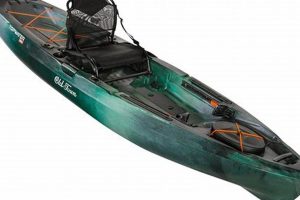
Tandem kayaks designed for angling offer a stable platform for two individuals to enjoy the sport. These vessels typically feature specialized seating, rod holders, and storage compartments for tackle and gear. A common example includes two bucket seats positioned fore and aft with ample space between for casting.
Shared paddling reduces individual exertion, allowing for longer trips and exploration of more distant waters. The collaborative nature of a two-person vessel enhances the fishing experience through shared strategy and camaraderie. Historically, similar multi-person watercraft were used for hunting and transportation, evolving into the specialized recreational and sporting vessels available today. This design enables more efficient travel and the ability to carry heavier loads, important factors for successful fishing expeditions.
Further exploration will cover topics such as choosing the right tandem fishing kayak, essential gear and safety considerations, popular fishing techniques from a tandem kayak, and recommended locations for a successful outing.
Tips for Tandem Kayak Fishing
Effective tandem kayak fishing requires coordination and preparation. The following tips offer guidance for a successful and enjoyable experience.
Tip 1: Establish Clear Communication: Designate roles for paddling, navigation, and fishing. Pre-determined signals or verbal cues minimize disruptions and maximize efficiency.
Tip 2: Distribute Weight Evenly: Balance gear and passengers to maintain stability and prevent capsizing. Consider the combined weight of anglers and equipment relative to the kayak’s capacity.
Tip 3: Synchronize Paddling: Coordinated paddling conserves energy and maintains directional control. Practice paddling together before venturing into challenging waters.
Tip 4: Choose Compatible Fishing Styles: Discuss preferred techniques and target species beforehand. Aligning fishing styles minimizes conflicts and maximizes enjoyment.
Tip 5: Employ a Drift Sock or Anchor: Control drift in currents or wind. This allows for focused fishing in a specific location.
Tip 6: Practice Casting and Retrieval Techniques: Consider the limited space and the presence of a partner when casting. Practice casting techniques that minimize entanglement and maximize accuracy.
Tip 7: Prioritize Safety: Wear personal flotation devices and carry essential safety equipment. Inform someone of your fishing plans and estimated return time.
Adhering to these guidelines enhances safety, efficiency, and overall enjoyment. Preparation and communication are key components of a successful tandem kayak fishing trip.
These tips provide a foundational understanding of tandem kayak fishing best practices, setting the stage for a rewarding experience on the water.
1. Stability

Stability is a paramount consideration in tandem fishing kayaks, directly impacting safety and angling effectiveness. A stable platform allows anglers to cast, reel, and land fish without compromising balance, especially crucial when dealing with larger fish or challenging water conditions. This section explores key facets contributing to stability in these specialized vessels.
- Hull Design
Hull design significantly influences stability. Wider, flatter hulls generally offer greater initial stability, resisting tipping during casting or landing. However, this stability can come at the cost of maneuverability. A “pontoon” style hull maximizes stability while a “V” hull enhances tracking and speed but sacrifices some stability. The choice depends on the intended fishing environment and angler preferences. For calm lakes and ponds, a wider hull is ideal. For rivers or coastal areas, a narrower, more maneuverable hull may be preferable.
- Weight Capacity and Distribution
Weight capacity and its distribution play a critical role in stability. Exceeding the manufacturer’s recommended weight limit significantly compromises stability. Proper weight distribution within the kayak is equally crucial. Evenly distributing gear and passengers helps maintain balance and prevents tipping. Concentrating weight too high or too far forward or aft can create instability.
- Center of Gravity
A lower center of gravity enhances stability. Sitting lower in the kayak lowers the overall center of gravity, making the vessel less prone to tipping. Kayak design elements, such as seat height and hull shape, influence the center of gravity. Lower seats and wider hulls contribute to a lower center of gravity and increased stability. Conversely, higher seats and narrower hulls elevate the center of gravity and reduce stability.
- Water Conditions
Water conditions, including wind, waves, and currents, significantly impact stability. Calm water generally presents fewer stability challenges compared to rougher conditions. Wind and waves can destabilize a kayak, particularly those with higher profiles. Strong currents can also affect stability, especially when turning or maneuvering. Understanding the limitations of a tandem kayak’s stability in varying water conditions is crucial for safe operation.
Considering these factors collectively provides a comprehensive understanding of stability in tandem fishing kayaks. Selecting a kayak with appropriate stability features for the intended environment and usage ensures a safe and successful fishing experience.
2. Capacity
Capacity in a two-person fishing kayak directly correlates with its ability to safely and effectively carry the combined weight of passengers, gear, and any caught fish. This encompasses not only the maximum weight limit specified by the manufacturer but also the usable storage space available. Understanding capacity limitations is crucial for both safety and practical functionality. Exceeding the weight limit compromises stability, increasing the risk of capsizing, especially in challenging conditions. Insufficient storage space limits the amount of gear, such as tackle boxes, coolers, and safety equipment, that can be carried, potentially hindering the fishing experience. For example, a kayak with a lower capacity might be suitable for day trips on calm waters with minimal gear, while a higher capacity vessel is necessary for longer expeditions or rougher conditions requiring additional safety and fishing equipment. The practical significance of understanding capacity lies in selecting a kayak appropriate for intended use, ensuring both safety and a productive fishing experience.
Consider a scenario involving two anglers planning an overnight fishing trip. They require not only personal gear but also camping equipment, food, and water, in addition to fishing rods, tackle boxes, and a cooler for their catch. Choosing a kayak with insufficient capacity would necessitate leaving essential items behind, compromising safety or comfort. Conversely, a kayak with ample capacity allows them to carry everything required, ensuring a safe and enjoyable trip. This highlights the direct link between capacity and the practicalities of various fishing scenarios.
Matching capacity to intended use is essential for maximizing safety and enjoyment. Evaluating the combined weight of anticipated passengers and gear against the manufacturer’s specified capacity ensures safe operation. Assessing available storage space relative to anticipated gear requirements allows anglers to choose a kayak suited to their specific needs. Failure to adequately consider capacity can lead to unsafe conditions or limit the effectiveness of fishing expeditions. Therefore, a thorough understanding of capacity is paramount in selecting the appropriate two-person fishing kayak.
3. Features
Specialized features distinguish fishing kayaks from recreational models, enhancing their utility and angler effectiveness. These features cater specifically to the needs of anglers, facilitating efficient fishing and enhancing overall comfort and safety. Rod holders, strategically positioned to keep rods secure and readily accessible, exemplify this specialization. Multiple rod holders allow anglers to employ different techniques or target various species simultaneously. Integrated tackle storage compartments keep essential gear organized and within reach, minimizing clutter and maximizing fishing time. These compartments are often designed with specific dimensions and configurations to accommodate tackle boxes, lures, and other fishing accessories.
Consider the scenario of two anglers targeting different species. One uses a spinning rod for bass, while the other employs a fly rod for trout. A tandem kayak with multiple rod holders, specifically designed to accommodate both types of rods, significantly enhances their combined fishing effectiveness. Furthermore, integrated tackle storage allows each angler to organize and access their specific gear without interfering with the other’s fishing space. This illustrates the practical impact of specialized features on the overall fishing experience.
The inclusion of specialized features contributes directly to angler success and enjoyment. Features like adjustable seating enhance long-term comfort, reducing fatigue during extended fishing trips. Built-in coolers maintain catch freshness, preserving the quality of the fish until they can be properly processed. These features highlight the focus on practicality and functionality in fishing kayak design. Careful consideration of these features is essential when selecting a tandem fishing kayak, ensuring the vessel aligns with specific fishing needs and preferences, maximizing both comfort and effectiveness on the water.
4. Maneuverability
Maneuverability in a two-person fishing kayak significantly impacts its effectiveness and suitability for various fishing environments. Efficient navigation through diverse water conditions, from narrow creeks to open lakes, relies heavily on the vessel’s responsiveness and ease of control. This characteristic directly affects the ability to reach desired fishing spots, navigate obstacles, and adjust positioning in response to changing currents or wind. The following facets delve into the key components contributing to maneuverability in these specialized kayaks.
- Hull Design
Hull design plays a pivotal role in determining maneuverability. Longer, narrower hulls generally track straighter and glide more efficiently, making them suitable for open water and covering longer distances. Shorter, wider hulls offer greater maneuverability in tight spaces, facilitating turns and navigation through complex environments like shallow creeks or rocky areas. A “V” shaped hull cuts through the water more efficiently for increased speed and tracking, while a flatter hull design provides greater stability but may be slower and less responsive. Choosing the appropriate hull design depends on the intended fishing locations and the balance between speed, tracking, and turning capability.
- Length and Width
Length and width directly influence maneuverability. Longer kayaks generally track better in a straight line but require more effort to turn. Shorter kayaks turn more easily but may sacrifice tracking performance, requiring more frequent corrective strokes. Wider kayaks offer increased stability but can be slower and less responsive to turning inputs. Narrower kayaks enhance speed and maneuverability but may be less stable. The optimal combination of length and width depends on the specific fishing environment and the desired balance between stability and agility.
- Rudder or Skeg
The presence of a rudder or skeg significantly enhances directional control and maneuverability, especially in windy conditions or strong currents. A rudder provides active control, allowing for precise steering adjustments. A skeg improves tracking by reducing yaw, minimizing the need for corrective strokes and enhancing straight-line paddling efficiency. These features are particularly valuable in challenging conditions, allowing anglers to maintain desired positions and navigate effectively against external forces.
- Paddler Coordination
Effective paddling coordination is essential for efficient maneuverability in a tandem kayak. Synchronized strokes maximize power and maintain directional control. Clear communication between paddlers is crucial for executing turns and navigating obstacles effectively. Practice and familiarity with paddling techniques significantly improve responsiveness and maneuverability, allowing the kayak to be controlled precisely and efficiently in various situations.
Understanding the interplay of these factors contributes to informed decision-making when selecting a two-person fishing kayak. Choosing a kayak with appropriate maneuverability characteristics for the intended fishing environment significantly enhances the overall experience, enabling efficient navigation, access to prime fishing locations, and successful angling outcomes.
5. Comfort

Comfort in a two-person fishing kayak directly influences enjoyment and endurance during extended outings. Discomfort can detract from the fishing experience, leading to premature fatigue and a decreased focus on angling. Proper seating, ample legroom, and convenient features contribute significantly to overall comfort, enabling anglers to remain on the water longer and enjoy the experience more fully. The following facets explore the crucial components contributing to comfort in these specialized vessels.
- Seating Design and Adjustability
Seating design and adjustability play a crucial role in overall comfort. Well-designed seats provide adequate support and cushioning, reducing pressure points and minimizing fatigue. Adjustable features, such as backrest angle and seat height, allow anglers to customize their positions for optimal comfort and support, accommodating individual preferences and physical characteristics. High-quality, adjustable seating enables anglers to maintain comfortable postures for extended periods, maximizing enjoyment and minimizing discomfort during long fishing trips.
- Legroom and Space
Adequate legroom and space within the kayak contribute significantly to comfort, especially during longer outings. Sufficient space allows anglers to change positions, stretch their legs, and avoid cramping or discomfort. Ample legroom also facilitates casting and reeling, allowing for a full range of motion without feeling confined. The kayak’s overall dimensions and the layout of seating and storage compartments directly impact available legroom and overall space, influencing comfort and freedom of movement.
- Storage Accessibility and Organization
Conveniently accessible and well-organized storage contributes to comfort by minimizing clutter and maximizing efficiency. Easily accessible storage compartments allow anglers to retrieve gear quickly and without disrupting their fishing. Designated compartments for specific items, such as tackle boxes, food, and drinks, further enhance organization and efficiency. This streamlined organization reduces frustration and allows anglers to focus on fishing rather than searching for misplaced equipment.
- Deck Padding and Footrests
Deck padding and adjustable footrests contribute to comfort by providing secure and comfortable footing and support. Non-slip padding enhances stability and prevents feet from sliding around, especially in wet conditions. Adjustable footrests allow anglers to customize leg positioning for optimal comfort and support, reducing fatigue during long periods of sitting. Properly positioned footrests also improve paddling efficiency and overall control of the kayak.
Considering these comfort factors contributes significantly to a positive and productive fishing experience in a two-person kayak. Prioritizing comfort features ensures anglers can enjoy extended time on the water without undue fatigue or discomfort, maximizing enjoyment and allowing for a greater focus on the sport of fishing. A comfortable environment enhances not only enjoyment but also focus and effectiveness while on the water. The connection between comfort and fishing success is significant, as a comfortable angler is a more focused and effective angler.
Frequently Asked Questions
This section addresses common inquiries regarding tandem fishing kayaks, providing concise and informative responses to facilitate informed decision-making and enhance understanding of these specialized vessels.
Question 1: What are the primary advantages of a tandem fishing kayak over two single kayaks?
Tandem kayaks offer increased stability, often carry more gear, and promote collaboration between anglers. They can also be more economical than purchasing two single kayaks.
Question 2: How is stability affected by the combined weight of passengers and gear?
Exceeding the manufacturer’s specified weight capacity significantly compromises stability, increasing the risk of capsizing. Even weight distribution within the kayak is crucial for maintaining balance.
Question 3: What features should one prioritize when choosing a tandem fishing kayak?
Essential features include rod holders, ample storage compartments, comfortable and adjustable seating, and a stable hull design appropriate for the intended fishing environment.
Question 4: How does hull design influence maneuverability and tracking?
Longer, narrower hulls generally track better in open water, while shorter, wider hulls offer enhanced maneuverability in tight spaces. Hull shape also influences stability, speed, and responsiveness.
Question 5: What safety precautions are essential when using a tandem fishing kayak?
Always wear personal flotation devices (PFDs), inform someone of fishing plans and estimated return time, check weather conditions before embarking, and carry essential safety equipment like a whistle, first-aid kit, and signaling device.
Question 6: How does one maintain and care for a tandem fishing kayak?
Regular cleaning, proper storage, and periodic inspection for damage contribute to the longevity and performance of a tandem fishing kayak. Rinse with fresh water after each use, store out of direct sunlight, and address any damage promptly.
Careful consideration of these frequently asked questions provides a comprehensive understanding of key aspects related to tandem fishing kayaks, enabling informed choices and a safe and enjoyable fishing experience.
The following section will delve into specific models and brands of tandem fishing kayaks, providing a comparative analysis to further aid selection.
Conclusion
Tandem fishing kayaks offer a unique approach to angling, providing a stable platform for shared experiences and enhanced on-the-water capabilities. Selection necessitates careful consideration of factors such as stability, capacity, features, maneuverability, and comfort, each playing a crucial role in overall performance and suitability for specific fishing environments. Understanding these elements empowers informed decision-making, ensuring the chosen vessel aligns with individual needs and intended usage.
Successful tandem kayak fishing hinges on preparation, communication, and adherence to safety guidelines. Proper weight distribution, synchronized paddling, and appropriate safety equipment contribute significantly to a safe and productive outing. Ultimately, informed selection and responsible usage unlock the full potential of these specialized vessels, fostering rewarding fishing experiences and a deeper connection with the aquatic environment.