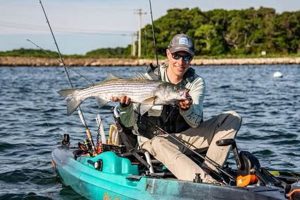
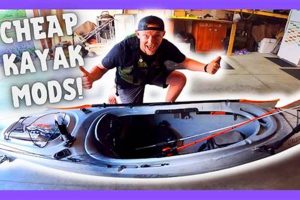
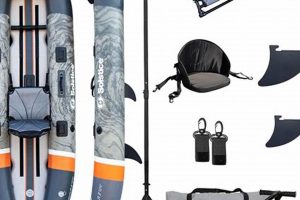
An affordable, stable watercraft designed for angling offers accessibility to the sport without significant financial investment. These kayaks often incorporate features like rod holders, storage compartments, and comfortable seating, prioritizing functionality over premium materials or advanced design elements. For example, a shorter, wider kayak made from high-density polyethylene can provide adequate stability and fishing features at a lower cost than a longer, sleeker fiberglass model.
Cost-effective access to fishing opens opportunities for recreational anglers to experience the outdoors and engage with nature. Historically, fishing from a personal watercraft was a luxury limited by the high cost of boats. The development of less expensive, purpose-built kayaks has democratized the sport, making it available to a wider audience. This accessibility contributes to both individual well-being and the growth of fishing communities.
Exploring options for affordable fishing kayaks requires consideration of various factors, including hull design, materials, features, and intended fishing environment. Subsequent sections will examine these factors in detail to guide consumers toward informed purchasing decisions.
Tips for Selecting an Affordable Fishing Kayak
Choosing an affordable fishing kayak involves careful consideration of several key factors to ensure the vessel meets individual needs and budgetary constraints. The following tips offer guidance for navigating the selection process.
Tip 1: Prioritize Stability over Speed: Shorter, wider kayaks generally offer greater stability, a crucial factor for anglers. A stable platform allows for comfortable casting and reeling without compromising safety.
Tip 2: Consider Sit-on-Top vs. Sit-Inside Designs: Sit-on-top kayaks are generally more affordable and offer easier entry and exit, making them suitable for warmer climates. Sit-inside designs provide better protection from the elements but can be more challenging to re-enter after a capsize.
Tip 3: Evaluate Essential Features: Focus on essential features like rod holders, paddle clips, and storage compartments. Avoid models with unnecessary extras that inflate the price without adding significant value.
Tip 4: Explore Used Kayaks: The used kayak market can offer significant savings. Inspect used kayaks thoroughly for signs of damage or wear before purchasing.
Tip 5: Research Materials: High-density polyethylene (HDPE) is a durable and affordable material commonly used in budget-friendly kayaks. Consider the trade-offs between cost, durability, and weight when selecting a material.
Tip 6: Factor in Transportation and Storage: Consider the kayak’s length and weight and ensure adequate transportation and storage solutions are available. Roof racks, trailers, or storage space may require additional investment.
Tip 7: Think Long-Term: While prioritizing affordability is essential, consider the long-term value. A slightly more expensive kayak with better durability and features might offer better value over time.
By considering these tips, consumers can make informed decisions, balancing cost with functionality and ensuring a satisfying fishing experience on the water.
These selection strategies empower anglers to confidently choose a kayak that aligns with individual needs and budgets, ultimately enhancing the enjoyment of the sport.
1. Stability
Stability represents a critical factor in fishing kayak selection, particularly within a budget-conscious context. A stable platform allows anglers to cast, reel, and land fish effectively without the risk of capsizing. This is especially important for activities like stand-up fishing, which require a higher degree of balance. Wider hulls and lower centers of gravity contribute to enhanced stability, often found in shorter, more affordable kayak models. A stable kayak enables anglers to focus on fishing rather than constantly correcting balance, resulting in a more enjoyable and productive experience. For example, a wider, flatter-bottomed kayak provides a more stable platform for fishing compared to a narrow, V-shaped hull, even in choppy water. This stability is crucial for anglers who prioritize safety and ease of movement while fishing.
Budget-friendly kayaks sometimes compromise on features to maintain affordability. However, stability remains a non-negotiable element for safety and functionality. While some high-end kayaks achieve stability through advanced hull designs and materials, budget-friendly options can achieve similar results through simpler design choices like increased width and a flatter hull. Understanding the relationship between stability and design allows consumers to select a kayak that provides sufficient stability without exceeding budgetary limitations. For instance, an angler seeking a stable platform for fishing in calm lakes or rivers might prioritize a wider, recreational-style kayak over a longer, touring-style kayak, thereby balancing stability and affordability.
Prioritizing stability in a budget-friendly fishing kayak contributes significantly to both safety and angling success. Understanding how design elements influence stability empowers informed purchasing decisions. While advanced features contribute to stability in premium kayaks, budget-friendly options can provide adequate stability through intelligent design choices. Selecting a stable kayak allows anglers to maximize enjoyment and on-the-water effectiveness without compromising financial constraints.
2. Durability

Durability represents a critical factor in evaluating budget-friendly fishing kayaks. A kayak’s ability to withstand impacts, abrasions, and UV exposure directly influences its lifespan and overall value. While budget constraints often necessitate compromises on certain features, durability should remain a priority. A less durable kayak may require frequent repairs or replacement, ultimately negating any initial cost savings. For instance, a kayak constructed from lower-grade polyethylene might crack or deform under stress, leading to leaks and potentially jeopardizing safety. Conversely, a kayak made from high-density polyethylene, while potentially slightly more expensive initially, offers increased resistance to impact and wear, extending its usable life and providing better long-term value.
The connection between durability and affordability often involves trade-offs. Manufacturers of budget-friendly kayaks must balance cost-effective materials and construction methods with adequate durability. This balance can be achieved through careful material selection, reinforced stress points, and efficient manufacturing processes. For example, some manufacturers utilize rotomolded construction with UV-resistant additives in their polyethylene kayaks, enhancing durability without significantly increasing cost. Understanding these manufacturing techniques and material choices empowers consumers to assess the long-term durability of prospective purchases. A slightly higher initial investment in a more durable kayak often translates to lower maintenance costs and a longer lifespan, ultimately proving more economical in the long run.
Prioritizing durability in a budget-friendly fishing kayak requires careful consideration of materials, construction, and intended usage. While some compromises may be necessary to stay within budget, sacrificing durability can lead to costly repairs and premature replacement. Investing in a kayak constructed from durable materials and employing robust manufacturing techniques ensures long-term value and reliable performance. This approach aligns with the core principle of budget-conscious purchasing: maximizing value while minimizing expenditure. Focusing on durability ensures that a budget-friendly kayak remains a functional and enjoyable asset for years to come.
3. Features

Features play a pivotal role in determining the functionality and overall value of a budget-friendly fishing kayak. While cost considerations often necessitate a streamlined approach to features, certain functionalities remain essential for a satisfactory fishing experience. Prioritizing essential features while avoiding unnecessary extras allows anglers to maximize utility without exceeding budgetary constraints. For example, integrated rod holders, paddle clips, and strategically placed storage compartments enhance on-the-water efficiency and contribute directly to angling success. Conversely, features like advanced electronics or premium seating systems, while desirable, might not justify the added cost for anglers operating within a limited budget. Careful consideration of feature sets allows for optimized performance and value within defined financial parameters.
The relationship between features and affordability involves strategic decision-making. Manufacturers often offer various models with tiered feature sets, catering to different budget levels and angling styles. Evaluating individual fishing needs and prioritizing essential features allows consumers to select a kayak that offers optimal functionality within their budget. For instance, an angler focusing on stillwater fishing might prioritize stability and storage capacity over features like rudder systems or multiple rod holders. Understanding the practical application of various features allows for informed choices that align with specific fishing requirements and budgetary limitations. This targeted approach maximizes the value proposition of a budget-friendly fishing kayak.
Balancing features and affordability represents a central challenge in selecting a budget-friendly fishing kayak. A thorough assessment of individual fishing needs and a clear understanding of feature functionality empower informed purchasing decisions. Prioritizing essential features that directly contribute to on-the-water performance and angler comfort ensures maximum utility within budgetary constraints. Avoiding superfluous features helps maintain affordability without compromising core functionality. This strategic approach to feature selection optimizes the value and enjoyment derived from a budget-friendly fishing kayak, reinforcing the principle of maximizing utility within financial limitations.
4. Portability

Portability represents a crucial consideration in the context of budget-friendly fishing kayaks. Transportation and storage constraints often influence purchasing decisions, particularly for individuals with limited vehicle capacity or storage space. Kayak weight and length directly impact portability, affecting ease of loading, unloading, and maneuvering. Heavier, longer kayaks may necessitate specialized roof racks, trailers, or assistance, potentially adding to overall costs. For example, a lightweight, shorter kayak can be easily transported on a standard car roof rack, minimizing transportation expenses. Conversely, a longer, heavier kayak might require a dedicated trailer or multiple individuals for handling, increasing both complexity and potential costs. Understanding the relationship between kayak dimensions, weight, and transportation logistics allows consumers to select a portable option that aligns with existing resources and budgetary limitations.
The interplay between portability and affordability often involves trade-offs. Manufacturers employ various design and material choices to optimize portability without significantly increasing costs. Shorter kayaks generally offer increased portability, while lighter materials like high-density polyethylene contribute to reduced weight without compromising durability. However, excessively lightweight kayaks may sacrifice stability, highlighting the importance of balancing portability with other essential performance characteristics. For instance, inflatable kayaks offer exceptional portability but may lack the stability and tracking performance of rigid-hulled kayaks. Evaluating the trade-offs between portability, performance, and cost allows consumers to make informed decisions based on individual needs and priorities. A compact, lightweight kayak with sufficient stability represents a balanced approach for budget-conscious anglers seeking convenient transportation and storage.
Prioritizing portability in a budget-friendly fishing kayak requires careful consideration of transportation logistics, storage solutions, and on-the-water performance requirements. Balancing portability with stability, durability, and features ensures that a kayak remains practical and functional. Lightweight materials and compact designs contribute to enhanced portability without compromising overall performance. Understanding the interplay of these factors allows for informed purchasing decisions, ultimately maximizing utility and minimizing the logistical challenges associated with transporting and storing a fishing kayak. This strategic approach ensures that a budget-friendly kayak remains a convenient and enjoyable asset for anglers seeking accessible on-the-water experiences.
5. Price Point
Price point represents a defining characteristic of budget-friendly fishing kayaks, directly influencing purchasing decisions and overall accessibility. Balancing desired features and performance with affordability requires careful consideration of available options and potential compromises. Understanding the relationship between price and value is crucial for making informed choices that align with individual budgetary constraints and angling aspirations.
- Initial Investment vs. Long-Term Value
Evaluating a kayak’s price requires considering not only the initial purchase cost but also potential long-term expenses. A less expensive kayak constructed from less durable materials may require more frequent repairs or replacement, potentially exceeding the initial cost savings of a slightly more expensive, durable model. For example, a kayak priced at $300 may seem attractive initially, but if it requires significant repairs or replacement within a few years, a $500 kayak built with more robust materials may offer better long-term value. Assessing durability and potential maintenance costs alongside the initial investment provides a more comprehensive understanding of true cost.
- Material Selection and Manufacturing Processes
Material selection and manufacturing processes directly impact a kayak’s price point. Kayaks constructed from high-density polyethylene (HDPE) generally offer a balance of affordability and durability, making them a popular choice for budget-conscious anglers. Rotational molding, a common manufacturing technique for HDPE kayaks, provides consistent quality and durability at a reasonable cost. More expensive materials like fiberglass or carbon fiber offer performance advantages but often exceed the budgetary limitations of entry-level anglers. Understanding the relationship between materials, manufacturing, and cost empowers informed decision-making.
- Feature Set and Functionality
The inclusion of specific features directly influences a kayak’s price. Essential features like rod holders, paddle clips, and storage compartments contribute to on-the-water functionality but can also impact cost. More advanced features, such as integrated fish finders, rudder systems, or premium seating, further increase price points. Balancing desired functionality with affordability requires prioritizing essential features while potentially foregoing less critical extras. For example, an angler primarily fishing in calm waters might prioritize stability and storage over a rudder system, thereby optimizing functionality within a specific budget.
- Retailer and Market Dynamics
Retailer markups, seasonal sales, and used kayak markets can significantly influence price points. Comparing prices across different retailers, both online and brick-and-mortar, can reveal potential savings. Seasonal sales and clearance events often offer opportunities to purchase kayaks at discounted prices. Exploring the used kayak market can provide access to higher-quality kayaks at lower price points, although careful inspection for wear and tear is essential. Understanding market dynamics empowers consumers to identify opportunities for maximizing value within their budget.
Careful consideration of price point in relation to long-term value, materials, features, and market dynamics empowers informed purchasing decisions within the context of budget-friendly fishing kayaks. Balancing desired functionality with affordability requires a strategic approach to feature selection, material evaluation, and market research. This approach ensures that anglers can access the sport without exceeding financial limitations while maximizing the value and enjoyment derived from their investment.
Frequently Asked Questions
Addressing common inquiries regarding the selection and utilization of budget-friendly fishing kayaks provides clarity and empowers informed purchasing decisions.
Question 1: What defines a “budget-friendly” fishing kayak?
A budget-friendly fishing kayak typically falls within a lower price range compared to high-end models, prioritizing essential features and functionality over premium materials or advanced design elements. Focus remains on providing adequate stability, durability, and fishing-specific features without excessive cost.
Question 2: Does affordability compromise quality and performance?
Affordability does not necessarily equate to compromised quality. Careful selection allows for a balance of cost-effectiveness and essential performance characteristics. Prioritizing durable materials, essential features, and stability ensures satisfactory performance within budgetary constraints.
Question 3: What essential features should be prioritized in a budget-friendly fishing kayak?
Essential features include rod holders, paddle clips or leashes, and storage compartments. These elements directly enhance on-the-water functionality and angling efficiency without significantly increasing cost.
Question 4: How does one differentiate between essential and non-essential features?
Essential features directly contribute to fishing functionality and safety. Non-essential features, while potentially desirable, add cost without significantly enhancing core fishing capabilities. Individual angling styles and target species influence feature prioritization.
Question 5: Are used kayaks a viable option for budget-conscious anglers?
Used kayaks represent a viable option for budget-conscious anglers, offering potential cost savings. Thorough inspection for damage, wear, and proper functionality is crucial before purchase.
Question 6: How does kayak length and width impact fishing performance?
Shorter kayaks generally offer greater stability, benefiting anglers in calm waters. Longer kayaks typically track better and cover distance more efficiently, making them suitable for larger bodies of water or moving currents. Width influences stability, with wider kayaks providing a more stable platform.
Understanding these fundamental aspects of budget-friendly fishing kayaks empowers informed decision-making, ensuring optimal value and enjoyment on the water.
The subsequent sections will delve into specific kayak models and recommendations, further assisting anglers in navigating the selection process.
Budget Friendly Fishing Kayak
Careful consideration of factors like stability, durability, features, portability, and price point empowers informed decisions regarding affordable fishing kayaks. Balancing essential functionality with budgetary constraints allows anglers to access the sport without compromising on-the-water effectiveness or enjoyment. Prioritizing durability and essential features ensures long-term value and a satisfying fishing experience. Understanding the relationship between these elements enables anglers to maximize their investment and fully enjoy the benefits of kayak fishing.
Affordable access to kayak fishing fosters a deeper connection with nature and promotes outdoor recreation within financial limitations. Informed purchasing decisions based on individual needs and priorities ensure a fulfilling and sustainable approach to the sport. The continued development of innovative and cost-effective kayak designs promises broader accessibility and enhanced enjoyment for anglers of all experience levels.