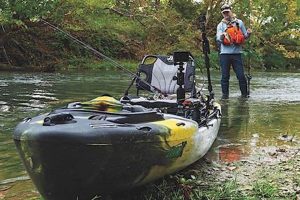
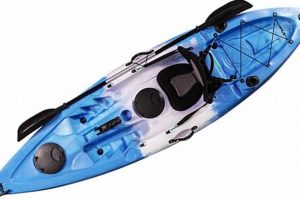
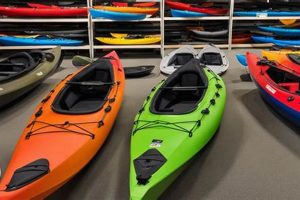
Kayaks measuring fourteen feet in length represent a popular size category within recreational paddling. This length often provides a balance between stability and maneuverability, suitable for various water conditions and paddling styles, from calm lakes to slow-moving rivers. They typically accommodate larger paddlers or those carrying additional gear for longer trips.
Vessels of this size offer advantages in tracking and speed compared to shorter options, making them efficient for covering longer distances. Their increased volume often translates to greater stability, inspiring confidence, especially for beginners. Historically, kayak dimensions have evolved based on intended use, materials, and regional traditions. Modern designs leverage advanced materials and construction techniques to optimize performance characteristics based on size and intended use.
The following sections will delve into specific aspects of kayaks within this size class, exploring design variations, materials, performance characteristics, and suitable paddling environments. Considerations for selecting appropriate paddling gear and accessories will also be addressed.
Tips for Selecting and Using a Fourteen-Foot Kayak
Choosing and utilizing a kayak of this length requires careful consideration of several factors to ensure optimal performance and safety. The following tips offer guidance for informed decision-making.
Tip 1: Consider Paddling Style and Intended Use: Evaluate whether the kayak will primarily be used for recreational paddling, touring, fishing, or other specialized activities. Different hull designs cater to specific needs.
Tip 2: Assess Water Conditions: Calm lakes and slow-moving rivers are generally suitable for this size vessel. Ocean paddling or navigating challenging rapids may require specialized designs and advanced skills.
Tip 3: Factor in Storage and Transportation: Kayaks of this length require adequate storage space and appropriate transportation methods, including roof racks or trailers.
Tip 4: Prioritize Comfort and Fit: Ensure adequate cockpit space and adjustable seating for comfortable paddling experiences, especially on longer trips.
Tip 5: Select Appropriate Paddles and Safety Gear: Choose paddles of appropriate length and blade shape based on paddling style and individual physique. Essential safety equipment includes a personal flotation device (PFD) and signaling devices.
Tip 6: Learn Basic Paddling Techniques and Safety Procedures: Acquire foundational paddling skills and safety knowledge through professional instruction or reputable online resources. Practice essential maneuvers in a controlled environment before venturing into open water.
Tip 7: Maintain and Store the Kayak Properly: Regular cleaning, inspection, and proper storage contribute to the longevity and performance of the kayak.
By adhering to these guidelines, individuals can make informed decisions regarding kayak selection and utilization, promoting both enjoyment and safety on the water.
These considerations pave the way for a satisfying paddling experience, ensuring safety and maximizing enjoyment on the water. The concluding section will reiterate key takeaways and offer additional resources for further exploration.
1. Length

The length of a kayak significantly influences its performance characteristics. Fourteen feet represents a common length in recreational kayaking, offering a balance between stability and maneuverability. Understanding the implications of this length is crucial for selecting a kayak appropriate for intended use and paddling conditions.
- Tracking and Speed
Longer kayaks generally track straighter and glide more efficiently than shorter ones, requiring less effort to maintain speed over longer distances. A fourteen-foot kayak’s length contributes to improved tracking and efficient cruising, making it suitable for touring and exploring larger bodies of water.
- Stability
While length contributes to speed, it can also influence stability. Longer kayaks tend to have greater initial stability, meaning they are less likely to tip over easily. This characteristic can benefit beginners or those paddling in calmer conditions. However, secondary stability, or the ability to remain stable during turns or in rough water, can vary based on hull design.
- Maneuverability
Longer kayaks can be less maneuverable than shorter ones, requiring more effort to turn or navigate tight spaces. While fourteen feet offers reasonable maneuverability for open water, it may present challenges in narrow creeks or rivers with sharp bends. This factor becomes particularly relevant when considering paddling style and intended environment.
- Storage and Transportation
The practicalities of storage and transportation are directly influenced by kayak length. Fourteen-foot kayaks necessitate appropriate storage solutions, such as dedicated racks or sufficient indoor space. Transportation requires a vehicle with adequate capacity and appropriate roof racks or trailers. These logistical considerations are essential for practical ownership.
The fourteen-foot length of these kayaks presents a compromise among various performance characteristics. While offering advantages in tracking and stability, considerations for maneuverability and logistical aspects remain relevant. Evaluating these factors in relation to individual paddling needs and preferences is crucial for a satisfying kayaking experience.
2. Hull Design

Hull design significantly influences a kayak’s performance characteristics, affecting speed, stability, maneuverability, and tracking. For fourteen-foot kayaks, hull design considerations are particularly crucial given the balance sought between efficient cruising and responsive handling. Understanding the nuances of various hull designs empowers informed decision-making aligned with specific paddling styles and water conditions.
- Flat Hull
Flat hulls provide excellent primary stability, making them ideal for beginners or calm water paddling. They offer good maneuverability but sacrifice tracking and speed compared to other designs. In fourteen-foot kayaks, a flat hull can enhance stability for fishing or recreational paddling on lakes and slow-moving rivers.
- Rounded Hull
Rounded hulls offer efficient tracking and speed but compromise initial stability. They perform well in open water and choppy conditions but require more experience to handle. Fourteen-foot kayaks with rounded hulls are suitable for touring and sea kayaking, where speed and efficiency are prioritized.
- V-Shaped Hull
V-shaped hulls excel in tracking and cutting through waves, providing good speed and directional stability. They offer less initial stability than flat hulls but often provide superior secondary stability. A fourteen-foot kayak with a V-shaped hull performs well in open water and moderate chop, making it suitable for coastal exploration or longer trips on larger lakes.
- Chined Hull
Chined hulls combine characteristics of flat and rounded hulls, offering a balance between stability and performance. Hard chines provide initial stability while soft chines enhance maneuverability. This design is versatile across various water conditions and paddling styles. In fourteen-foot kayaks, chined hulls provide a balance suitable for recreational paddling, light touring, and some fishing applications.
Selecting the appropriate hull design for a fourteen-foot kayak requires careful consideration of intended usage, paddling environment, and individual skill level. Understanding the performance characteristics of each design ensures an optimal paddling experience, balancing stability, speed, and maneuverability according to specific needs and preferences. Ultimately, hull design significantly contributes to overall kayak performance and dictates its suitability for various water conditions and paddling styles.
3. Weight Capacity
Weight capacity represents a critical specification for kayaks, particularly those measuring fourteen feet. This specification dictates the maximum combined weight of the paddler, gear, and any additional cargo the kayak can safely support. Exceeding the specified weight capacity compromises stability, performance, and safety. Understanding the relationship between weight capacity and kayak dimensions is essential for informed selection and safe operation.
Fourteen-foot kayaks generally offer higher weight capacities compared to shorter models due to their increased volume and buoyancy. This increased capacity allows for larger paddlers, additional gear for camping or fishing expeditions, and enhanced stability in various water conditions. For example, a fourteen-foot recreational kayak might have a weight capacity ranging from 300 to 400 pounds, accommodating a larger individual with substantial gear. Conversely, a shorter kayak designed for lighter paddlers might have a capacity limited to 250 pounds. Careful consideration of intended use and anticipated load is crucial when evaluating weight capacity. Overloading a kayak reduces freeboard, increasing the risk of capsizing, especially in rough conditions. It also negatively impacts performance, making the kayak sluggish and difficult to maneuver.
Manufacturers determine weight capacity through rigorous testing and calculations, considering factors such as hull design, material composition, and intended usage. Adhering to the manufacturer’s specified weight capacity ensures safe and optimal performance. Consulting available resources, including manufacturer specifications and retailer guidance, provides necessary information for informed decision-making. Understanding weight capacity limitations promotes responsible kayak selection and safe paddling practices.
4. Material Composition

Material composition significantly influences the performance, durability, and cost of fourteen-foot kayaks. Common materials include polyethylene, fiberglass, and composites like carbon fiber or Kevlar. Each material exhibits distinct properties impacting the kayak’s suitability for various paddling environments and activities. Polyethylene kayaks, known for durability and affordability, often serve recreational purposes. Fiberglass kayaks offer a balance between performance and cost, favored by intermediate paddlers. Composite kayaks, while more expensive, provide superior performance characteristics in terms of weight, stiffness, and efficiency, catering to experienced paddlers and racers. Material selection directly correlates with weight, impacting portability and maneuverability. Polyethylene kayaks are heavier than fiberglass or composite counterparts. The choice between rotomolded and thermoformed polyethylene further affects hull rigidity and weight. Fiberglass kayaks, while lighter than polyethylene, require more meticulous care to prevent damage. Composite kayaks represent the lightest option, facilitating effortless transport and enhanced responsiveness on the water. Durability varies significantly across materials. Polyethylene exhibits high impact resistance, suitable for rocky shorelines or river environments. Fiberglass, though less impact resistant, offers greater stiffness, enhancing performance. Composite materials, while offering superior stiffness and lightweight properties, are more susceptible to damage from impacts.
The manufacturing process influences material properties and overall kayak quality. Rotomolded polyethylene kayaks, created through a rotational molding process, offer uniform wall thickness and excellent durability. Thermoformed polyethylene kayaks, constructed using heated sheets molded over a form, often result in lighter weight and increased stiffness but may have varying wall thicknesses. Fiberglass kayaks involve layering fiberglass cloth and resin, producing a stiff, lightweight hull. Composite kayaks utilize advanced materials and construction techniques, resulting in superior strength-to-weight ratios. The intended use significantly impacts material selection. Recreational kayaks often employ rotomolded polyethylene for durability. Touring or sea kayaks frequently utilize fiberglass or composites for enhanced performance and efficiency. Whitewater kayaks typically incorporate high-impact-resistant polyethylene or composites for navigating demanding river environments.
Material composition directly impacts long-term maintenance requirements. Polyethylene kayaks require minimal maintenance beyond routine cleaning. Fiberglass kayaks require more attention, including gelcoat repairs and occasional waxing. Composite kayaks demand meticulous care, including inspections for delamination or cracks. Understanding the characteristics of each material empowers informed decision-making, balancing performance, durability, and maintenance requirements with individual paddling needs and preferences. Material selection significantly impacts the overall paddling experience, dictating the kayak’s suitability for specific environments and activities. Choosing appropriate materials based on intended use, budget, and desired performance characteristics ensures a satisfying and safe on-water experience.
5. Intended Usage

Intended usage serves as a crucial determinant in selecting a fourteen-foot kayak. The specific activities plannedrecreational paddling, touring, fishing, or day trippingdirectly influence the optimal kayak design and features. A kayak intended for leisurely paddling on calm lakes prioritizes stability and comfort, often featuring a wider hull and ample storage. Conversely, a kayak designed for touring emphasizes speed and efficiency, typically exhibiting a longer, narrower hull and streamlined design. Fishing kayaks incorporate specialized features such as rod holders, anchor trolleys, and live wells, impacting hull design and stability considerations. Day tripping necessitates sufficient storage capacity for gear and provisions, influencing kayak dimensions and weight capacity. A clear understanding of intended usage facilitates informed decision-making, ensuring the selected kayak aligns with specific paddling needs and preferences. For instance, a fourteen-foot recreational kayak designed for calm lakes may prove unsuitable for ocean paddling due to its hull design and stability characteristics. Similarly, a touring kayak designed for speed and efficiency may lack the stability and storage capacity required for a fishing expedition. Aligning intended usage with kayak design optimizes performance and safety, enhancing the overall paddling experience.
The relationship between intended usage and kayak features extends beyond hull design and storage capacity. Seat comfort and adjustability become paramount for longer touring trips, while maneuverability and stability are essential for fishing in confined spaces. Weight capacity considerations reflect the combined weight of paddlers, gear, and potential catch. Performance expectations also vary based on intended usage. Recreational paddling prioritizes stability and comfort, while touring demands speed and efficiency. Fishing requires stability and specialized features, and day tripping necessitates ample storage and comfortable seating. A mismatch between intended usage and kayak design can lead to compromised performance, reduced enjoyment, and potential safety concerns. For example, attempting a long-distance tour in a recreational kayak designed for calm lakes may result in fatigue and inefficiency due to its lower speed and tracking capabilities. Similarly, using a touring kayak with limited stability for fishing in choppy conditions could compromise safety.
Understanding the intended usage of a fourteen-foot kayak allows for a focused evaluation of various models and features, optimizing selection for specific needs and preferences. This informed approach enhances paddling experiences, ensuring compatibility between kayak design and intended activities. Considering intended usage as a primary factor in kayak selection contributes significantly to paddling satisfaction and safety, enabling paddlers to make informed decisions aligned with their individual goals and desired experiences on the water.
6. Storage Requirements
Storage requirements for fourteen-foot kayaks present logistical considerations impacting ownership. Their length and material composition necessitate dedicated space and appropriate storage solutions, impacting practicality and long-term maintenance. Understanding these requirements facilitates informed decisions regarding kayak selection and ownership responsibilities.
- Indoor Storage
Indoor storage offers optimal protection from the elements, preserving kayak integrity. Fourteen-foot kayaks require significant indoor space, potentially necessitating dedicated storage areas within garages, sheds, or basements. Utilizing ceiling hoists or wall-mounted racks maximizes space utilization. Indoor storage minimizes exposure to sunlight, temperature fluctuations, and precipitation, contributing to the longevity of the kayak’s materials and finish.
- Outdoor Storage
Outdoor storage presents challenges for kayaks due to environmental exposure. Fourteen-foot kayaks stored outdoors require protective covers to mitigate UV damage, moisture accumulation, and debris. Elevated storage on racks or cradles minimizes ground contact, reducing the risk of moisture-related damage. Selecting appropriate outdoor storage locations, shielded from direct sunlight and prevailing winds, minimizes potential wear and tear. Regular cleaning and maintenance become crucial for kayaks stored outdoors.
- Transportation Considerations
Transporting fourteen-foot kayaks requires appropriate vehicle capacity and securement methods. Roof racks designed for kayaks provide stable transport, distributing weight evenly. Straps and tie-down points secure the kayak during transit, preventing shifting or damage. Understanding local regulations regarding overhanging cargo ensures legal and safe transportation practices. Proper loading and unloading techniques minimize the risk of damage to both the kayak and the vehicle.
- Security Measures
Kayak security measures deter theft and vandalism, particularly for kayaks stored outdoors or during transport. Utilizing cable locks or security chains through designated locking points secures the kayak to fixed structures. Storing kayaks in secure locations, such as locked garages or sheds, minimizes theft opportunities. Engraving identification markers on the kayak aids in recovery if stolen. Insurance policies covering kayak theft or damage provide financial protection against potential losses.
Addressing storage requirements for fourteen-foot kayaks ensures their longevity and maintains their condition. Considering these factors during the purchasing process facilitates responsible ownership and minimizes potential storage-related challenges. Appropriate storage solutions protect the kayak’s integrity, preserving its value and ensuring its readiness for future paddling adventures.
Frequently Asked Questions
This section addresses common inquiries regarding kayaks measuring fourteen feet in length, providing concise and informative responses to facilitate informed decision-making.
Question 1: What are the advantages of a fourteen-foot kayak compared to shorter models?
Fourteen-foot kayaks generally offer improved tracking, greater speed, and increased storage capacity compared to shorter models, making them suitable for longer trips and larger bodies of water. They often provide enhanced stability, benefiting beginners or those paddling with heavier loads.
Question 2: Are fourteen-foot kayaks suitable for beginners?
While longer kayaks can offer increased stability, maneuverability can be slightly reduced. Beginners should consider their physical capabilities and paddling environment. Testing various kayak lengths and designs before purchasing is advisable.
Question 3: What type of water conditions are best suited for fourteen-foot kayaks?
Fourteen-foot kayaks perform well in calm lakes, slow-moving rivers, and protected coastal waters. Specific hull designs, such as V-shaped or chined hulls, can handle moderate chop or ocean conditions more effectively. Matching hull design to anticipated water conditions optimizes performance and safety.
Question 4: What are the transportation and storage considerations for a fourteen-foot kayak?
Transporting fourteen-foot kayaks typically requires roof racks or trailers. Storage necessitates adequate space in garages, sheds, or basements. Wall-mounted or ceiling-hoist systems can optimize storage space.
Question 5: How does weight capacity affect the performance of a fourteen-foot kayak?
Weight capacity dictates the maximum combined weight of the paddler, gear, and any additional cargo. Exceeding this limit compromises stability, performance, and safety. Adhering to manufacturer-specified weight capacities is crucial.
Question 6: What maintenance is required for a fourteen-foot kayak?
Maintenance requirements vary based on material composition. Polyethylene kayaks require minimal maintenance beyond cleaning. Fiberglass and composite kayaks necessitate more attention, including potential repairs and protective coatings. Proper storage practices minimize maintenance needs and prolong kayak lifespan.
Understanding these frequently asked questions equips individuals with essential knowledge for informed kayak selection and responsible ownership. Considering individual paddling needs, intended usage, and storage capabilities ensures a satisfying and safe kayaking experience.
The following section offers concluding remarks and additional resources for further exploration.
14 ft Kayaks
Fourteen-foot kayaks represent a versatile segment within the paddling community, catering to a range of skill levels and on-water pursuits. This exploration has highlighted key aspects of these vessels, encompassing design variations, material considerations, performance characteristics, and practical ownership aspects. Understanding the interplay between length, hull design, weight capacity, and intended usage empowers informed decision-making, ensuring alignment between kayak selection and individual paddling goals. Storage requirements and maintenance considerations further contribute to responsible ownership, preserving kayak integrity and maximizing lifespan.
Careful consideration of these factors contributes to informed decisions and fosters safe, enjoyable paddling experiences. The information presented serves as a foundation for further exploration, empowering informed choices within the diverse landscape of fourteen-foot kayaks available to paddling enthusiasts.