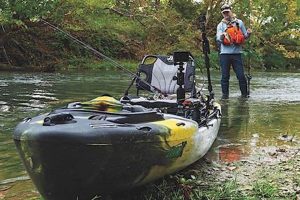
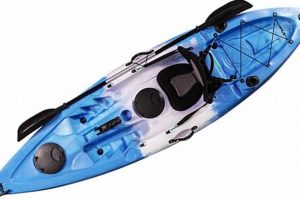
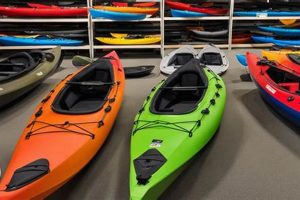
Kayaks designed for demanding conditions and rigorous use are typically constructed with highly durable materials and reinforced structures. These robust vessels are often chosen for challenging environments such as whitewater rapids, open ocean touring, or extended expeditions where resilience and stability are paramount. For example, a fishing kayak built to withstand impacts from rocks and carry heavy loads would fall into this category.
The enhanced durability of such kayaks offers significant advantages, including increased safety margins in challenging waters, a greater capacity for carrying gear and passengers, and a longer lifespan compared to recreational kayaks. Historically, these robust designs evolved from traditional boats used by indigenous cultures in harsh environments, adapting over time to incorporate modern materials and construction techniques. This focus on strength and resilience has made them indispensable for a range of professional and recreational activities.
This article will delve deeper into the specific features, materials, and design considerations involved in crafting these rugged watercraft, providing a comprehensive understanding of their capabilities and suitability for various applications. Topics covered will include material selection, hull design, weight capacity considerations, and maintenance best practices.
Tips for Selecting and Using Robust Kayaks
Choosing and utilizing a kayak built for demanding conditions requires careful consideration of various factors. The following tips offer guidance for making informed decisions and ensuring safe and successful excursions.
Tip 1: Assess Intended Use: Carefully evaluate the intended environment and activities. Whitewater paddling necessitates different design features than ocean touring or fishing. Consider factors like water conditions, potential obstacles, and carrying requirements.
Tip 2: Prioritize Material Selection: Evaluate the durability and performance characteristics of different construction materials. Rotomolded polyethylene offers excellent impact resistance, while composites provide superior stiffness and efficiency.
Tip 3: Inspect Hull Design: Examine the kayak’s hull shape and features. A flatter hull offers greater stability, while a V-shaped hull provides better tracking and maneuverability in rough water.
Tip 4: Consider Weight Capacity: Ensure the kayak’s weight capacity accommodates the combined weight of paddlers, gear, and any anticipated cargo. Exceeding the recommended capacity compromises stability and performance.
Tip 5: Evaluate Storage Options: Assess the kayak’s storage compartments and their suitability for carrying essential gear. Consider factors like accessibility, watertightness, and overall storage volume.
Tip 6: Practice Proper Maintenance: Regular maintenance ensures the kayak’s longevity and performance. This includes cleaning, inspecting for damage, and addressing any necessary repairs promptly.
Tip 7: Choose Appropriate Safety Gear: Always utilize appropriate safety equipment, including a personal flotation device (PFD), a signaling device, and a bilge pump. Consider additional safety measures depending on the environment and activity.
By adhering to these guidelines, individuals can select and utilize a kayak best suited for their specific needs, maximizing safety and enjoyment on the water. Proper preparation and informed decision-making are crucial for successful kayaking experiences in demanding environments.
This information provides a foundation for making informed decisions when choosing and using a kayak built for challenging conditions. The following sections will further explore specific types of robust kayaks and their applications.
1. Durable Materials

The designation “heavy-duty kayak” hinges significantly on the selection of durable materials during construction. These materials directly influence the kayak’s ability to withstand impacts, abrasion, and prolonged exposure to harsh environmental conditions. Cause and effect are clearly linked: robust materials lead to a more resilient vessel capable of enduring challenging situations. High-density polyethylene (HDPE), renowned for its impact resistance and UV stability, represents a common choice. Similarly, cross-linked polyethylene and composites like fiberglass or carbon fiber offer enhanced strength and stiffness, albeit at a higher price point. Consider a whitewater kayak navigating rocky rapids; the durable HDPE hull absorbs impacts, preventing catastrophic damage and ensuring the paddler’s safety. This illustrates the crucial role of material selection in achieving the desired durability.
Understanding the properties of different materials provides practical benefits for kayak selection. For instance, HDPE excels in impact resistance but may be heavier than composite materials. Composites offer superior strength-to-weight ratios, enhancing performance and efficiency, but can be more susceptible to cracking under stress. Choosing between these materials depends on the intended use. A fishing kayak designed for rocky shorelines might prioritize HDPE’s impact resistance, while a touring kayak intended for open water could benefit from the lighter weight and efficiency of composites. The practical significance of material selection becomes apparent when evaluating a kayak’s suitability for specific environments and activities.
In summary, durable materials form the foundation of a heavy-duty kayak. The relationship between material properties and the kayak’s ability to withstand demanding conditions is paramount. Recognizing the inherent strengths and limitations of various materials, such as HDPE and composites, allows informed decision-making, ensuring the chosen kayak aligns with the intended application. This understanding ultimately contributes to enhanced safety and prolonged lifespan of the vessel, proving crucial for successful and enjoyable kayaking experiences.
2. Reinforced Construction

Reinforced construction distinguishes a heavy-duty kayak from recreational models, enabling it to endure demanding conditions and impacts. This structural enhancement directly influences the kayak’s resilience, longevity, and overall performance in challenging environments. Examining specific reinforcement techniques provides insight into how these kayaks achieve superior durability and reliability.
- Reinforced Hulls:
Additional layers of material, strategically placed ribs, or bulkheads within the hull structure enhance impact resistance and overall structural integrity. Consider a kayak navigating rocky terrain; reinforced hulls distribute impact forces, minimizing damage and maintaining structural integrity. This reinforcement translates directly to increased safety and vessel longevity in challenging environments.
- Deck Reinforcement:
Reinforced decks, often incorporating additional layers or supporting structures, protect against impacts from above, such as falling rocks or gear. This is particularly important in whitewater kayaking or expeditions where impacts from above are likely. A reinforced deck provides a crucial layer of protection, ensuring the kayak remains functional and watertight.
- Enhanced Seat and Foot Brace Supports:
Reinforced seating and foot brace systems offer greater support and durability, crucial for maintaining control and stability in rough conditions. Secure and robust support systems contribute to enhanced paddling efficiency and safety, especially during extended periods on the water. Stronger supports prevent structural failure under stress, ensuring the paddler maintains control and stability.
- Heavy-Duty Hatches and Fittings:
Robust hatches and fittings further contribute to the overall durability. Watertight seals and reinforced closures protect gear from water damage, essential in demanding environments. These robust components maintain functionality even under stress, preserving the integrity of the kayak and protecting stored gear. High-quality fittings and hardware resist corrosion and damage, contributing to the kayak’s long-term performance.
These reinforcement strategies collectively contribute to the heavy-duty kayak’s ability to withstand demanding conditions. The interconnectedness of these reinforced components creates a synergistic effect, producing a vessel capable of enduring impacts, abrasion, and prolonged exposure to the elements. The result is a kayak built for reliability, longevity, and exceptional performance in challenging environments, distinguishing it from recreational models and making it suitable for expeditions, challenging waterways, and professional applications.
3. Increased Weight Capacity

A defining characteristic of a heavy-duty kayak is its increased weight capacity compared to recreational models. This enhanced capacity directly correlates with the kayak’s ability to carry heavier loads, including multiple passengers, gear, and supplies, expanding its utility for various applications, such as expeditions, fishing, and professional use. Understanding the factors contributing to this increased capacity is crucial for informed kayak selection.
- Hull Design and Volume:
Wider and longer hulls with increased volume contribute significantly to higher weight capacity. A larger displacement allows the kayak to support more weight without compromising stability or performance. For example, a fishing kayak designed for offshore use typically features a wider beam and increased volume to accommodate anglers, fishing gear, and potential catches. This design consideration is crucial for maintaining stability and buoyancy even with heavier loads.
- Structural Reinforcement:
Reinforced construction, including thicker hulls and strategically placed bulkheads, strengthens the kayak’s structure to handle heavier loads without deformation or failure. Reinforced components distribute weight evenly, preventing stress concentrations that could lead to structural damage. This reinforcement is crucial for maintaining the kayak’s integrity and ensuring safe operation even under heavy load.
- Material Selection:
Durable materials like high-density polyethylene (HDPE) or composites contribute to both structural integrity and increased weight capacity. The inherent strength of these materials allows the kayak to support heavier loads without compromising structural integrity. For instance, kayaks designed for expeditions often utilize durable materials to withstand the rigors of carrying heavy supplies over long distances. The material’s strength directly influences the kayak’s capacity and overall durability.
- Stability Considerations:
While increased weight capacity is essential, it must be balanced with stability considerations. Kayak design must ensure stability even when fully loaded. Features like a wider hull and a lower center of gravity contribute to enhanced stability, preventing capsizing even under heavy load. This balance between capacity and stability is crucial for safe and efficient operation in various water conditions.
The increased weight capacity of heavy-duty kayaks expands their utility for diverse applications. Whether carrying substantial gear on an expedition, transporting multiple passengers, or accommodating the demands of professional use, this enhanced capacity directly influences the kayak’s versatility. The interplay between hull design, structural reinforcement, and material selection determines the overall weight capacity and influences the kayak’s suitability for specific activities. Understanding these factors allows for informed decisions and ensures safe and efficient operation in various conditions, ultimately contributing to a more successful and enjoyable kayaking experience.
4. Enhanced Stability

Enhanced stability is a critical attribute of heavy-duty kayaks, directly influencing their performance and safety, particularly in challenging conditions. This characteristic distinguishes them from recreational kayaks, enabling them to handle rough water, heavier loads, and unexpected shifts in weight with greater composure. The following facets explore the key components contributing to enhanced stability in these robust vessels.
- Hull Design:
Hull design plays a pivotal role in determining a kayak’s stability. Wider hulls and flatter bottoms generally provide greater initial stability, resisting tipping. A wider beam increases the kayak’s footprint on the water, providing a more stable platform, particularly beneficial for activities like fishing or photography where maintaining balance is crucial. Conversely, narrower hulls designed for speed may sacrifice some initial stability for increased maneuverability.
- Lower Center of Gravity:
A lower center of gravity significantly contributes to a kayak’s stability. Designs that position the majority of the weight lower in the hull create a more stable platform, less susceptible to tipping. This is achieved through design elements such as a lower seating position and strategic weight distribution within the hull. A lower center of gravity allows the kayak to recover more easily from disturbances, enhancing stability in rough water or when carrying heavier loads.
- Weight Distribution:
Proper weight distribution within the kayak is essential for maintaining optimal stability. Evenly distributing gear and supplies within the hull minimizes the risk of imbalances that could lead to instability or capsizing. This is particularly important in heavy-duty kayaks designed for expeditions or carrying substantial loads, where uneven weight distribution can significantly compromise stability. Proper packing and securing of gear contribute to a balanced and stable platform.
- Tracking and Maneuverability:
While stability is paramount, it must be balanced with maneuverability. Heavy-duty kayaks often incorporate design features that enhance tracking and maneuverability without compromising stability. Features like a defined keel or skeg can improve tracking in a straight line, reducing the need for constant corrective strokes, which can inadvertently compromise stability. Balancing stability with maneuverability ensures the kayak performs efficiently and safely in various water conditions.
The enhanced stability of heavy-duty kayaks results from a combination of these factors, working synergistically to create a stable and secure platform in demanding environments. This inherent stability allows for increased confidence and safety in rough water, when carrying heavier loads, and during activities requiring a stable platform. Understanding these contributing factors provides valuable insights for selecting a kayak appropriate for specific needs and intended use, ultimately enhancing safety and enjoyment on the water.
5. Challenging Environments

Heavy-duty kayaks are purpose-built for challenging environments where durability, stability, and performance are paramount. These environments present unique demands that necessitate specialized design and construction, distinguishing heavy-duty kayaks from recreational models. Exploring the relationship between these kayaks and the challenging environments they are designed to navigate provides valuable insights into their specialized features and capabilities.
- Whitewater Rapids:
Navigating whitewater rapids presents significant challenges, including turbulent water, submerged obstacles, and potential impacts. Heavy-duty kayaks designed for whitewater typically feature reinforced hulls, robust grab handles, and specialized outfitting for enhanced safety and control. The kayak’s ability to withstand impacts and maintain stability in turbulent water is crucial for a safe and successful descent. For example, a kayak designed for Class IV rapids requires a higher level of durability and maneuverability than one intended for calmer waters. The design directly addresses the specific challenges posed by the whitewater environment.
- Open Ocean Conditions:
Open ocean environments present different challenges, including strong currents, waves, and exposure to the elements. Heavy-duty sea kayaks are designed with longer hulls for efficient tracking, ample storage for extended trips, and features like bulkheads and hatches for watertight compartments. These features enhance safety and performance in challenging offshore conditions. For example, a sea kayak designed for multi-day expeditions must possess sufficient storage capacity, stability in rough seas, and the durability to withstand prolonged exposure to saltwater and UV radiation. The kayak’s design directly reflects the unique demands of open ocean environments.
- Remote Expeditions:
Remote expeditions often involve extended periods in challenging environments, requiring kayaks capable of carrying substantial loads and withstanding varied conditions. Heavy-duty expedition kayaks prioritize durability, storage capacity, and efficient hull designs for long-distance paddling. The ability to carry essential gear, food, and supplies is crucial for self-sufficiency in remote areas. For example, a kayak designed for a week-long wilderness expedition must have the capacity to carry all necessary supplies while maintaining maneuverability and stability in varied water conditions. The kayak’s design reflects the specific needs of extended trips in remote and potentially challenging environments.
- Fishing and Professional Applications:
Heavy-duty kayaks also find application in professional settings and specialized recreational activities like fishing. Fishing kayaks often feature specialized features like rod holders, live wells, and increased stability for casting and reeling. Similarly, kayaks used for professional applications, such as scientific research or rescue operations, require specific design considerations to meet the demands of the task. For instance, a kayak used for search and rescue may require enhanced stability, maneuverability, and the capacity to carry specialized equipment. The kayak’s design directly addresses the unique needs of the professional or recreational activity.
The connection between heavy-duty kayaks and challenging environments is fundamental to their design and purpose. These kayaks are engineered to provide reliable performance and enhanced safety in conditions where recreational kayaks would be unsuitable. The specialized features and robust construction directly address the specific challenges posed by various demanding environments, enabling paddlers to explore, work, and recreate with confidence and security. The capacity to handle these challenging environments expands the possibilities for kayaking, allowing access to remote locations, demanding waterways, and specialized activities.
6. Extended Expeditions
Extended expeditions, often traversing remote and challenging environments, necessitate equipment capable of withstanding rigorous use and carrying substantial loads. The heavy-duty kayak, purpose-built for durability and high weight capacity, emerges as a crucial tool for such endeavors. The following facets explore the intricate relationship between extended expeditions and the specialized features of heavy-duty kayaks.
- Durability and Reliability:
Extended expeditions often expose kayaks to harsh conditions, including rocky shorelines, fluctuating temperatures, and prolonged UV exposure. The durability of a heavy-duty kayak, often constructed from robust materials like rotomolded polyethylene or composites, becomes paramount. A kayak capable of withstanding impacts, abrasion, and prolonged exposure to the elements ensures the expedition’s success. For instance, a multi-week kayaking trip along a rugged coastline demands a kayak capable of enduring impacts from rocks and waves without sustaining critical damage. This inherent durability directly contributes to the safety and success of extended expeditions.
- High Weight Capacity and Storage:
Extended expeditions necessitate carrying substantial supplies, including food, water, camping gear, and safety equipment. The high weight capacity of heavy-duty kayaks, facilitated by their robust construction and voluminous hulls, becomes essential. Ample storage space, including watertight compartments, ensures gear remains dry and protected throughout the journey. Consider a month-long expedition down a remote river; the kayak must accommodate all necessary supplies for the duration of the trip. This capacity directly influences the feasibility and success of such extended expeditions.
- Performance and Efficiency:
While durability and capacity are paramount, efficient hull designs remain crucial for covering long distances in varied conditions. Heavy-duty kayaks designed for expeditions often balance stability with tracking efficiency, allowing paddlers to cover significant distances with reduced effort. A well-designed hull minimizes drag and maximizes glide, conserving energy over extended periods. For example, a kayak designed for a long-distance river expedition benefits from a hull that tracks well in currents and allows for efficient paddling over many miles. This performance efficiency contributes directly to the success and enjoyment of extended expeditions.
- Safety and Self-Sufficiency:
In remote environments, self-sufficiency and safety become paramount. Heavy-duty kayaks designed for expeditions often incorporate features that enhance safety and promote self-sufficiency, such as multiple grab handles, deck rigging for securing gear, and watertight bulkheads for maintaining buoyancy in case of capsize. These features provide crucial safety margins in challenging situations and contribute to the overall success of the expedition. Consider a solo expedition in a remote wilderness area; the kayak’s safety features and ability to handle challenging conditions become crucial for mitigating risks and ensuring a safe return. This emphasis on safety and self-sufficiency is integral to the design and purpose of heavy-duty kayaks intended for extended expeditions.
The synergy between the demands of extended expeditions and the specialized features of heavy-duty kayaks is evident. These kayaks, with their durability, capacity, performance, and safety features, become indispensable tools for exploring remote regions, undertaking challenging journeys, and experiencing the rewards of extended time on the water. The ability to carry substantial loads, withstand demanding conditions, and provide a safe and efficient platform allows adventurers to push boundaries and embrace the challenges of extended expeditions with confidence.
Frequently Asked Questions
This section addresses common inquiries regarding kayaks designed for demanding use, offering clarity on key features and selection considerations.
Question 1: What key features differentiate a heavy-duty kayak from a recreational model?
Heavy-duty kayaks are distinguished by robust construction, durable materials like rotomolded polyethylene or composites, reinforced hulls and decks, increased weight capacity, and enhanced stability. These features enable them to withstand challenging conditions and carry heavier loads compared to recreational kayaks.
Question 2: Are heavy-duty kayaks suitable for beginners?
While beginners can certainly use heavy-duty kayaks, their increased weight and specialized features might be overkill for casual recreational paddling. Choosing a kayak appropriate for one’s skill level and intended use is paramount. A specialized retailer can provide guidance based on individual needs.
Question 3: How does hull design influence the performance of a heavy-duty kayak?
Hull design significantly impacts performance. Wider, flatter hulls generally offer greater stability, while longer, V-shaped hulls improve tracking and efficiency in rough water. Specific hull designs cater to different activities, such as whitewater paddling, ocean touring, or fishing.
Question 4: What maintenance is required for a heavy-duty kayak?
Regular maintenance is crucial for longevity. This includes cleaning the kayak after each use, inspecting for damage, and addressing any necessary repairs promptly. Proper storage, protected from prolonged sun exposure, also contributes to the kayak’s lifespan.
Question 5: How significant is weight capacity when selecting a heavy-duty kayak?
Weight capacity is a critical consideration. It dictates the combined weight of paddlers, gear, and any additional cargo the kayak can safely carry. Exceeding the specified weight capacity compromises stability and performance, potentially leading to unsafe conditions.
Question 6: What safety precautions should one take when using a heavy-duty kayak in challenging environments?
Always wear a personal flotation device (PFD), carry a signaling device, and inform someone of the planned route and estimated return time. Additional safety measures, such as carrying a bilge pump, first-aid kit, and spare paddle, are recommended depending on the environment and the length of the trip.
Careful consideration of these frequently asked questions empowers informed decision-making when selecting and utilizing a kayak for demanding environments and activities. Prioritizing safety and choosing equipment appropriate for the intended use ensures a rewarding and secure experience on the water.
The following section delves deeper into specific types of heavy-duty kayaks and their respective applications.
Conclusion
Kayaks designed for rigorous use represent a significant advancement in watercraft technology, enabling exploration and activity in demanding environments previously inaccessible to traditional recreational kayaks. This exploration has highlighted the crucial role of durable materials, reinforced construction, increased weight capacity, and enhanced stability in contributing to the overall performance and safety of these specialized vessels. From navigating challenging whitewater rapids to undertaking extended expeditions in remote locations, these robust kayaks expand the horizons of paddling possibilities.
The selection of a kayak appropriate for the intended environment and activity remains paramount. Careful consideration of design features, material properties, and weight capacity ensures safe and successful experiences on the water. As technology continues to advance, further innovation in materials and construction techniques promises even greater durability, performance, and accessibility, opening up new frontiers for exploration and adventure. The future of kayaking in challenging environments hinges on the continued development and refinement of these robust and versatile vessels.