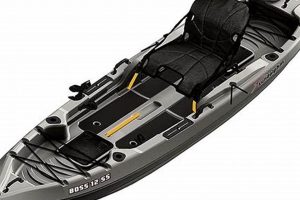
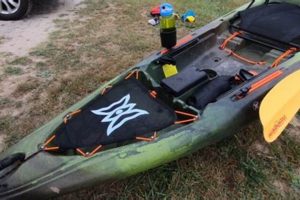
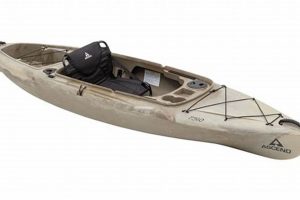
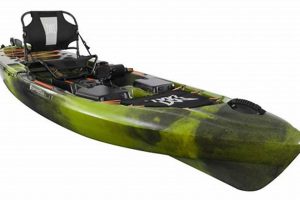
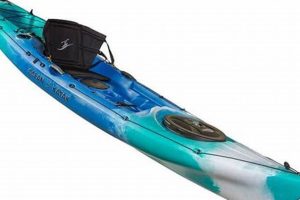
Budget-friendly, above-water fishing vessels offer an accessible entry point to kayak angling. These stable platforms typically feature open cockpits, facilitating easy entry and exit, and often include built-in rod holders and other fishing-specific amenities. Anglers can find these kayaks constructed from various materials, impacting their overall cost and durability.
Affordable fishing kayaks provide an opportunity for more individuals to experience the sport. Their stability and ease of use make them particularly appealing to beginners. The evolution of kayak design and manufacturing processes has made such specialized watercraft increasingly attainable. This accessibility helps broaden participation in outdoor recreational activities and promotes engagement with nature.
Further exploration will cover key considerations for selecting an appropriate vessel, including material comparisons, feature analysis, and essential safety guidelines. This information will empower prospective buyers to make informed decisions aligned with their individual needs and budgetary constraints.
Tips for Selecting a Budget-Friendly Fishing Kayak
Acquiring a suitable fishing kayak requires careful consideration of various factors. The following tips offer guidance for selecting a cost-effective option without compromising functionality or safety.
Tip 1: Define Fishing Needs: Target species and fishing environments (rivers, lakes, oceans) influence kayak selection. Smaller, calmer waters may require less stability than open ocean environments.
Tip 2: Prioritize Stability: Wider kayaks generally offer increased stability, a critical factor for anglers, especially beginners. Consider hull design and width for optimal balance.
Tip 3: Evaluate Weight Capacity: Ensure the kayak’s weight capacity accommodates the angler’s weight, along with fishing gear and any potential catch.
Tip 4: Assess Storage Options: Adequate storage for tackle, rods, and personal items is essential. Evaluate storage compartments and consider additional accessories like crates or dry bags.
Tip 5: Consider Material Durability: Common kayak materials include polyethylene and composites. Polyethylene offers durability at a lower cost, while composites provide enhanced performance but often come with a higher price tag.
Tip 6: Research Features: Look for fishing-specific features like rod holders, paddle holders, and anchor trolleys. These features can enhance the fishing experience significantly.
Tip 7: Inspect Used Kayaks Carefully: Purchasing a used kayak can save money, but requires thorough inspection for damage, wear, and tear. Check for cracks, leaks, and structural integrity.
Careful consideration of these factors will result in the acquisition of a fishing kayak well-suited to individual needs and budget. A properly chosen vessel enhances safety and enjoyment on the water.
By following these guidelines, individuals can confidently navigate the market and make an informed purchase decision. Next, we will discuss essential safety equipment and practices for kayak fishing.
1. Stability

Stability represents a critical performance attribute in budget-friendly, sit-on-top fishing kayaks. This characteristic directly influences angler safety and fishing efficacy. A stable platform allows for comfortable casting, reeling, and landing fish, reducing the risk of capsizing, especially in challenging conditions like currents or choppy water. Wider hulls and lower centers of gravity contribute to enhanced stability. Conversely, narrower kayaks prioritize speed and tracking but often compromise stability. Budget-conscious anglers must prioritize stability, particularly beginners, as it fosters confidence and allows focus on fishing rather than balance.
Consider two hypothetical kayaks: Kayak A, a wider, shorter model designed for calm lakes, and Kayak B, a longer, narrower model intended for open water. Kayak As wider hull provides inherent stability, making it suitable for stand-up fishing or maneuvering in tight spaces. Kayak Bs design sacrifices some stability for speed and tracking, making it less suitable for beginners or situations requiring frequent movement. Choosing between these designs requires careful consideration of intended use and individual skill level. Prioritizing stability, however, often proves beneficial for novices and experienced anglers alike, enhancing safety and overall fishing experience.
Understanding the relationship between stability and kayak design empowers informed purchasing decisions. While budgetary constraints might limit options, stability should never be compromised. Selecting a stable, budget-friendly kayak ensures a safe and enjoyable fishing experience, allowing anglers to focus on their passion rather than precarious balancing acts. This understanding contributes to a more informed and confident approach to kayak fishing, ultimately leading to greater enjoyment and success on the water.
2. Durability

Durability represents a critical factor influencing the lifespan and overall value of budget-friendly sit-on-top fishing kayaks. Material selection and construction techniques directly impact a kayak’s ability to withstand impacts, abrasion, and UV exposure. Understanding these factors allows for informed purchasing decisions aligned with anticipated usage and environmental conditions.
- Material Selection
Common materials include high-density polyethylene (HDPE) and various composite blends. HDPE offers excellent impact resistance and UV protection at a lower cost, making it a popular choice for budget-conscious buyers. Composites, while typically more expensive, offer enhanced stiffness and lighter weight, potentially impacting performance and portability. Material choice involves trade-offs between cost, durability, and performance characteristics.
- Construction Techniques
Manufacturing processes influence a kayak’s structural integrity. Single-piece, rotomolded HDPE kayaks often exhibit superior durability and impact resistance compared to multi-piece designs. Examining weld lines and joint construction in multi-piece kayaks can reveal potential weak points. Understanding construction techniques provides insights into a kayak’s long-term durability and resilience.
- UV Resistance
Prolonged exposure to sunlight can degrade kayak materials, leading to discoloration, brittleness, and reduced lifespan. UV-resistant additives and coatings enhance a kayak’s ability to withstand sun damage. Consider storage practices and UV protection when evaluating long-term durability, particularly in regions with intense sunlight.
- Impact and Abrasion Resistance
Kayaks encounter various impacts and abrasive forces during transport, launch, and use. Rocks, logs, and even improper storage can cause damage. Material properties and hull thickness contribute to impact and abrasion resistance. Evaluating these factors ensures a kayak can withstand anticipated environmental challenges.
Assessing durability requires careful consideration of material properties, construction methods, and intended usage. Balancing cost and durability remains a central challenge for budget-conscious kayak anglers. Prioritizing durability ensures a longer lifespan and minimizes the risk of costly repairs or replacements, ultimately maximizing the value of the investment. A durable kayak provides reliable performance over time, contributing to a more enjoyable and sustainable fishing experience.
3. Portability
Portability significantly influences the practicality and accessibility of budget-friendly sit-on-top fishing kayaks. Transporting a kayak from storage to launch site presents logistical challenges, especially for individuals with limited vehicle space or physical strength. Evaluating portability factors optimizes convenience and minimizes transport-related difficulties, ultimately enhancing the overall fishing experience.
- Weight
Kayak weight directly impacts ease of handling and transport. Lighter kayaks require less effort to load, unload, and carry, particularly across longer distances or challenging terrain. Material selection significantly influences weight; lighter composites often come at a premium cost, while more affordable polyethylene kayaks tend to be heavier. Balancing weight with budget constraints requires careful consideration of individual strength and typical transport scenarios.
- Length
Kayak length influences storage requirements and maneuverability during transport. Shorter kayaks fit more easily in smaller vehicles and require less space for storage. However, longer kayaks generally offer improved tracking and speed on the water. Balancing length with transport and storage limitations involves assessing available space and typical paddling environments. Roof racks, trailers, and kayak carts can mitigate transport challenges associated with longer kayaks, but these accessories add to the overall cost.
- Hull Design
The kayak’s hull design impacts how it handles on land. Smooth, rounded hulls can slide more easily across surfaces, while kayaks with pronounced keels or chines may require more careful handling during transport. Consider the terrain typically encountered during transport; sandy beaches, rocky shores, and uneven ground can influence the practicality of different hull designs.
- Carrying Options
Integrated handles, side handles, and molded-in carrying straps facilitate kayak transport. Ergonomically designed handles reduce strain and improve grip during carrying. Assess handle placement and design for comfortable and secure transport, considering individual strength and physical limitations. The availability and placement of handles significantly influence the ease of loading, unloading, and carrying the kayak, especially over longer distances.
Careful evaluation of these portability factors allows anglers to select a budget-friendly sit-on-top kayak suited to individual transport capabilities and storage limitations. Prioritizing portability ensures convenient and hassle-free transport, maximizing time spent fishing rather than wrestling with logistical challenges. This focus on practicality contributes to a more enjoyable and accessible kayak fishing experience.
4. Storage Capacity

Storage capacity directly impacts the practicality and functionality of budget-friendly sit-on-top fishing kayaks. Adequate storage facilitates organized transport of essential fishing gear, including tackle boxes, rods, reels, and safety equipment. Limited storage capacity necessitates careful gear selection and potentially compromises fishing versatility. Anglers targeting multiple species or employing diverse fishing techniques require greater storage capacity. For example, a kayak angler pursuing both bass and catfish might require space for different rod and reel combinations, along with specialized tackle for each species. Insufficient storage can limit fishing options and necessitate multiple trips or inconvenient gear juggling.
Budget-friendly kayaks often prioritize cost-effectiveness over expansive storage options. Manufacturers may incorporate smaller storage compartments or fewer dedicated storage areas to minimize material usage and production costs. This design approach presents trade-offs between affordability and storage capacity. Anglers must carefully evaluate their storage needs against budgetary constraints. Innovative storage solutions, such as aftermarket dry bags, gear tracks, and crate systems, can augment limited built-in storage, albeit at an additional cost. Prioritizing storage capacity during kayak selection ensures efficient gear management and enhances overall fishing versatility.
Understanding the relationship between storage capacity and cost allows for informed decision-making during kayak selection. While budget limitations might constrain storage options, careful planning and utilization of aftermarket storage solutions can mitigate these constraints. Prioritizing essential gear and adopting efficient packing strategies maximize available storage space. Ultimately, adequate storage capacity contributes to a more organized, efficient, and enjoyable fishing experience, allowing anglers to focus on the pursuit of their target species rather than equipment management challenges.
5. Fishing Features
Fishing features distinguish specialized fishing kayaks from recreational models. These features enhance angling efficiency and overall on-the-water experience. Budget-friendly sit-on-top kayaks often incorporate essential fishing features while maintaining affordability. Careful consideration of these features ensures optimal functionality and value within budgetary constraints.
- Rod Holders
Integrated rod holders provide secure rod storage, freeing hands for paddling, baiting, and other tasks. Flush-mounted rod holders minimize interference while trolling or paddling, while adjustable rod holders accommodate various fishing techniques. The number and type of rod holders influence fishing versatility. Budget-friendly kayaks may offer fewer rod holders or simpler designs compared to premium models.
- Tackle Storage
Dedicated tackle storage compartments offer organized storage for lures, hooks, weights, and other small fishing accessories. Dry storage compartments protect sensitive items from water damage. The size, accessibility, and water resistance of storage compartments impact fishing efficiency and gear organization. Budget-friendly kayaks may offer smaller or fewer storage compartments, requiring anglers to prioritize essential gear and potentially utilize aftermarket storage solutions.
- Paddle Holders/Leashes
Secure paddle storage prevents accidental paddle loss and facilitates hands-free fishing. Paddle holders or leashes keep the paddle within easy reach while fishing. Budget-friendly kayaks may offer simpler paddle securing mechanisms compared to premium models with integrated retractable systems.
- Anchor Systems
Anchor trolleys or cleats facilitate controlled positioning in current or wind. These features allow anglers to maintain desired fishing locations without continuous paddling adjustments. Budget-friendly kayaks may not include integrated anchor systems, requiring anglers to install aftermarket solutions or rely on simpler anchoring methods.
Evaluating fishing features within the context of budget constraints requires careful prioritization. Certain features, like rod holders and basic tackle storage, often appear even in budget-friendly models. More specialized features, like anchor trolleys or advanced seating systems, might require a higher investment. Matching fishing features to specific angling needs and budgetary limitations ensures optimal functionality and value without unnecessary expense. Prioritizing essential features enhances fishing efficiency and enjoyment within the context of a budget-conscious approach to kayak angling.
6. Affordable Price
Price point represents a critical factor influencing accessibility and purchasing decisions related to sit-on-top fishing kayaks. Affordability expands participation in kayak fishing by reducing the financial barrier to entry. Understanding the factors influencing kayak pricing empowers informed purchasing decisions aligned with budgetary constraints without compromising essential functionality or safety. This exploration examines key components contributing to the affordability of sit-on-top fishing kayaks.
- Material Selection
Kayak construction materials directly impact cost. High-density polyethylene (HDPE) offers a cost-effective solution for durable kayak hulls. Composites, while offering performance advantages, generally command higher prices. Material selection represents a significant factor in determining overall kayak affordability. Choosing HDPE allows manufacturers to offer kayaks at lower price points, expanding market access to budget-conscious consumers.
- Manufacturing Processes
Manufacturing techniques and labor costs influence final kayak price. Rotational molding, a common process for HDPE kayaks, offers efficient production, contributing to lower manufacturing costs. More complex construction methods, like those employed for composite kayaks, often involve higher labor and material expenses, impacting retail price. Efficient manufacturing contributes to affordability without compromising essential structural integrity.
- Features and Accessories
The inclusion of specialized features, such as integrated rod holders, adjustable seating systems, and advanced storage compartments, influences kayak pricing. Basic models with fewer features generally offer greater affordability. Balancing desired features with budgetary constraints requires careful consideration of essential functionality versus optional upgrades. Prioritizing essential features allows manufacturers to offer functional kayaks at accessible price points.
- Retailer and Distribution
Retailer markup, distribution networks, and sales channels impact the final cost to the consumer. Direct-to-consumer sales models and online retailers sometimes offer more competitive pricing compared to traditional brick-and-mortar stores. Researching various retail options can reveal potential cost savings. Understanding distribution models and retailer pricing strategies empowers informed purchasing decisions, maximizing value within budgetary limitations.
Affordability, in the context of sit-on-top fishing kayaks, represents a complex interplay of material selection, manufacturing processes, included features, and retail strategies. Balancing desired features and performance characteristics with budgetary constraints requires careful consideration of these factors. Prioritizing essential functionality and exploring various retail options empower informed consumers to select cost-effective kayaks without compromising safety or fundamental fishing utility. Understanding these dynamics allows budget-conscious anglers to access the sport of kayak fishing without exceeding financial limitations, ultimately promoting wider participation and enjoyment of on-the-water activities.
Frequently Asked Questions
This section addresses common inquiries regarding budget-friendly sit-on-top fishing kayaks, providing concise and informative responses to facilitate informed purchasing decisions and enhance understanding of this specialized recreational equipment.
Question 1: How does one determine the appropriate size and weight capacity for individual needs?
Kayak size and weight capacity should accommodate the angler’s weight plus gear and potential catch. Manufacturers provide weight capacity specifications. Exceeding these limits compromises stability and safety.
Question 2: What are the primary differences between single-piece and multi-piece kayak constructions?
Single-piece kayaks offer greater durability and structural integrity. Multi-piece kayaks offer portability advantages for transport and storage. Material selection also influences overall durability in both constructions.
Question 3: What essential safety equipment should accompany kayak fishing excursions?
Essential safety gear includes a personal flotation device (PFD), a whistle, a visual signaling device, and appropriate navigation lights. Local regulations may mandate additional safety equipment. Weather conditions should also influence safety preparations.
Question 4: How does one maintain and store a budget-friendly sit-on-top fishing kayak to maximize its lifespan?
Proper storage practices, including UV protection and proper rinsing after use, prolong kayak lifespan. Regular inspections for damage and timely repairs prevent minor issues from escalating. Manufacturer guidelines offer specific maintenance recommendations.
Question 5: Are there specific fishing techniques best suited for sit-on-top kayaks within a specific budget range?
Sit-on-top kayaks accommodate various fishing techniques, including trolling, casting, and still-fishing. Kayak stability and storage capacity influence technique suitability. Budget constraints may limit feature availability, impacting specialized technique application.
Question 6: What are the key considerations when choosing between a new and used budget-friendly fishing kayak?
Used kayaks offer potential cost savings but require thorough inspection for damage, wear, and previous repairs. New kayaks provide warranties and assurance of undamaged condition. Balancing cost and condition assessment informs purchasing decisions.
Careful consideration of these frequently asked questions equips prospective buyers with the knowledge necessary to navigate the selection process confidently. Prioritizing safety, functionality, and budgetary constraints ensures informed purchasing decisions aligned with individual needs and preferences.
The subsequent section will provide a concluding overview of key considerations for selecting a budget-friendly sit-on-top fishing kayak, consolidating essential information for prospective buyers.
Conclusion
Careful evaluation of key attributes, including stability, durability, portability, storage capacity, and specialized fishing features, empowers informed decision-making within budgetary constraints. Material selection and construction techniques significantly influence long-term value and performance. Prioritizing essential features and understanding performance trade-offs allows for cost-effective selection without compromising safety or fundamental functionality. Thorough research and consideration of individual fishing needs, transport limitations, and storage requirements optimize kayak selection, maximizing on-the-water enjoyment and angling success. A well-chosen, budget-friendly sit-on-top fishing kayak provides a gateway to rewarding angling experiences without excessive financial investment.
Accessible entry points to kayak fishing promote broader participation in outdoor recreational activities. Empowering informed purchasing decisions through comprehensive product knowledge fosters responsible equipment selection and enhances user experiences. Continued advancements in kayak design and manufacturing processes promise further improvements in affordability, performance, and accessibility, expanding opportunities for individuals to connect with nature and experience the tranquility and excitement of kayak angling.