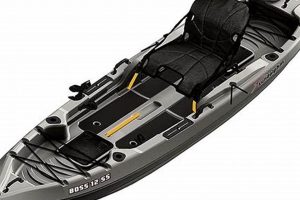
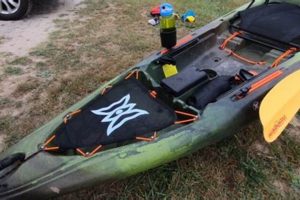
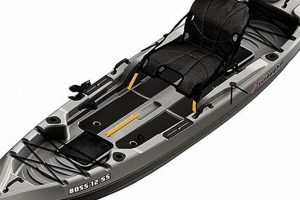
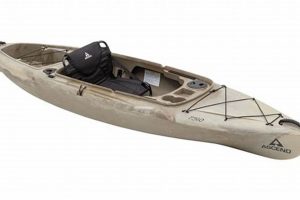
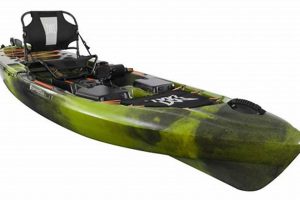
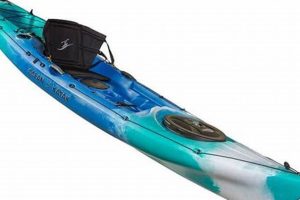
A premium, self-bailing watercraft designed for angling offers stability, maneuverability, and specialized features like rod holders and gear storage. These vessels are typically wider and more stable than recreational kayaks, providing a secure platform for casting and reeling. An example would be a kayak constructed of high-density polyethylene, featuring adjustable seating, multiple storage compartments, and integrated rod holders.
Choosing an appropriate watercraft is crucial for a successful fishing experience. Stability and specialized features enhance angler performance and comfort. The evolution of these specialized kayaks has significantly improved fishing accessibility and enjoyment, allowing anglers to explore diverse waterways with ease. Their inherent stability and open design make them suitable for a wider range of anglers, including those new to the sport.
This article will explore key factors to consider when selecting a fishing kayak, including hull design, materials, features, and budget. It will also delve into popular models and brands, offering a comprehensive guide to finding the perfect vessel for individual needs and fishing styles.
Tips for Selecting a Fishing Kayak
Choosing a fishing kayak requires careful consideration of various factors to ensure optimal performance and enjoyment on the water. The following tips offer guidance for selecting the right vessel.
Tip 1: Consider Hull Design: Different hull designs offer varying degrees of stability and maneuverability. A pontoon-style hull provides maximum stability, while a V-shaped hull offers greater speed and tracking but less stability. Anglers fishing in calm, shallow waters might prioritize stability, while those navigating open waters or currents might prefer a hull designed for tracking and speed.
Tip 2: Evaluate Material and Weight Capacity: High-density polyethylene (HDPE) is a common material due to its durability and affordability. Consider the kayak’s weight capacity relative to the angler’s weight and gear. Exceeding the capacity can compromise stability and performance.
Tip 3: Prioritize Essential Features: Rod holders, storage compartments, and comfortable seating are essential features. Paddle holders and anchor trolleys also enhance the fishing experience. Consider the number and placement of rod holders based on individual fishing styles.
Tip 4: Factor in Transportation and Storage: Consider the kayak’s length and weight for transportation and storage. Roof racks or trailers might be necessary. Storage space availability at home should also be considered.
Tip 5: Determine Budget: Fishing kayaks range in price depending on features and materials. Establish a budget early in the selection process. Research various brands and models within the budget range.
Tip 6: Test Before Purchasing: If possible, test paddle different models before making a purchase. This allows for assessment of stability, comfort, and maneuverability. Demo days or rentals offer opportunities to experience kayaks firsthand.
Tip 7: Research Reviews and Recommendations: Consult online reviews and seek recommendations from experienced anglers. Gather information from multiple sources before making a final decision.
By carefully considering these tips, individuals can select a fishing kayak that meets their specific needs, enhances their fishing experience, and provides years of enjoyment on the water.
This guide provides a comprehensive foundation for selecting a suitable fishing kayak. The subsequent sections will delve into specific models and brands, offering detailed reviews and comparisons.
1. Stability

Stability is a paramount consideration when selecting a fishing kayak, directly impacting safety, comfort, and angling success. A stable platform allows anglers to focus on fishing, rather than constantly correcting balance. This is particularly crucial when standing to cast, landing fish, or navigating challenging water conditions.
- Hull Design:
Hull design significantly influences stability. Wider, flatter hulls generally offer greater initial stability, ideal for calm waters and stand-up fishing. A pontoon-style hull provides maximum stability, though it may sacrifice maneuverability. Examples include catamaran-style hulls or those with pronounced chines. Conversely, narrower, V-shaped hulls offer better tracking and speed but compromise stability.
- Width and Length:
Kayak width directly correlates with stability. Wider kayaks are more stable, while narrower kayaks are faster and more maneuverable. Length also plays a role; longer kayaks generally track better in a straight line but may be less maneuverable than shorter ones. An example would be a wider, shorter kayak providing superior stability for fishing in shallow, calm waters.
- Center of Gravity:
A lower center of gravity enhances stability. The angler’s position and distribution of gear influence the center of gravity. Sitting lower in the kayak or distributing weight evenly improves stability. Standing up raises the center of gravity, requiring a wider and more stable hull to maintain balance. For example, placing heavier items lower in the kayak improves overall stability.
- Water Conditions:
Calm, flat water requires less inherent stability than choppy or moving water. Anglers fishing in challenging conditions should prioritize stability in their kayak selection. Wind, currents, and waves can significantly impact stability. A kayak stable in calm water may become unstable in rough conditions. Choosing a kayak suitable for the intended fishing environment is therefore essential.
Prioritizing stability in fishing kayak selection contributes significantly to a safe and enjoyable fishing experience. A stable platform allows anglers to confidently navigate various water conditions and focus on the task at hand: catching fish. By considering factors like hull design, width and length, center of gravity, and intended water conditions, anglers can select a kayak that offers the optimal balance of stability, performance, and comfort.
2. Maneuverability

Maneuverability is a critical factor influencing fishing kayak performance. Efficient navigation through diverse water conditions, including tight spaces, currents, and obstacles, directly impacts angling success. A highly maneuverable kayak allows anglers to access prime fishing spots with ease and precision.
- Hull Design:
Hull design significantly impacts maneuverability. Shorter kayaks with a more rounded or shallow V-hull tend to turn more quickly and efficiently. Longer kayaks with a deeper V-hull track better in a straight line but sacrifice turning performance. For example, a shorter, wider kayak excels in tight maneuvers within mangrove forests or rocky shorelines, while a longer, narrower kayak performs better in open water with currents.
- Length and Width:
Shorter kayaks are generally more maneuverable than longer kayaks, allowing for tighter turns and quicker changes in direction. Width also plays a role; narrower kayaks tend to be more agile, while wider kayaks offer increased stability but may be less responsive. A shorter, narrower kayak provides optimal maneuverability in confined spaces, while a longer, wider kayak offers greater stability in open water. For example, a 10-foot kayak is generally more maneuverable than a 14-foot kayak.
- Rudder or Skeg:
A rudder or skeg can significantly enhance tracking and maneuverability, particularly in windy or current-prone environments. A rudder provides directional control, while a skeg improves straight-line tracking. These features are particularly beneficial in challenging conditions, allowing anglers to maintain course and position effectively. For example, a rudder allows for precise adjustments in strong winds or currents, while a skeg minimizes yaw and maintains a straight course.
- Water Conditions:
Maneuverability requirements vary depending on the fishing environment. Calm, flat water allows for greater flexibility in kayak selection, while challenging conditions, such as currents or wind, necessitate a kayak designed for enhanced maneuverability. Kayaks with rudders or skegs are particularly advantageous in these environments. For example, a highly maneuverable kayak is essential for navigating tight spaces in rivers or maneuvering through dense vegetation.
Selecting a fishing kayak with appropriate maneuverability characteristics enhances angling effectiveness and overall on-the-water experience. By carefully considering hull design, length, width, and the presence of a rudder or skeg, anglers can choose a kayak optimized for their specific fishing environment and style. Prioritizing maneuverability ensures efficient navigation and access to prime fishing locations, maximizing opportunities for success.
3. Storage Capacity

Ample and well-designed storage is a defining characteristic of a premium fishing kayak. Efficient organization and accessibility of essential gear, including tackle boxes, rods, safety equipment, and personal items, directly impact fishing success and overall enjoyment on the water. Insufficient storage capacity can lead to a cluttered and inefficient fishing experience, hindering performance and potentially compromising safety.
- Types of Storage:
Fishing kayaks offer diverse storage options, including front and rear wells, hatches, tank wells, and side storage compartments. Each type caters to specific needs and gear. Front hatches often accommodate larger items, while rear tank wells are suitable for crates or live wells. Side storage is convenient for quick access to frequently used items. Dedicated rod holders, both flush-mounted and adjustable, are also essential storage components.
- Capacity and Weight Limits:
Storage capacity is measured in volume (cubic feet or liters) and weight capacity. Anglers should consider the volume and weight of their typical gear load when selecting a kayak. Exceeding weight limits can compromise stability and performance. Manufacturers provide weight capacity specifications for each model, accounting for both the angler’s weight and gear. Careful consideration of these limits is crucial for safe and efficient operation.
- Accessibility and Organization:
Easy access to stored gear is essential for efficient fishing. Well-placed hatches, readily accessible compartments, and bungee systems contribute to organized storage and quick retrieval of items. Dry storage compartments protect sensitive electronics and personal items from water damage. Consider the layout and accessibility of storage compartments when selecting a kayak. For example, a readily accessible storage compartment near the seating area is ideal for frequently used items like lures and tools.
- Material and Durability:
Storage compartments should be constructed from durable, weather-resistant materials. High-quality hatches and seals prevent water intrusion, protecting gear from damage. Reinforced compartments can withstand the impact of heavy gear or accidental drops. Durable storage solutions contribute to the overall longevity and value of the kayak. For example, a well-sealed hatch protects sensitive electronics from water damage in rough conditions.
Adequate and well-designed storage significantly enhances the fishing kayak experience. By carefully evaluating the types of storage, capacity, accessibility, and durability, anglers can select a kayak optimized for their specific needs and fishing style. Prioritizing these considerations contributes to an organized, efficient, and ultimately more successful fishing experience.
4. Comfort and Ergonomics

Comfort and ergonomics are critical factors influencing performance and enjoyment in a fishing kayak. Extended periods on the water necessitate a comfortable and supportive seating system that minimizes fatigue and maximizes angling effectiveness. Ergonomic design features promote efficient paddling, casting, and reeling, contributing to a more productive and enjoyable fishing experience. A poorly designed seating system can lead to discomfort, back pain, and reduced fishing time, hindering overall success. Conversely, a well-designed, adjustable seat allows anglers to maintain focus and energy throughout the day, maximizing fishing opportunities.
Several key elements contribute to comfort and ergonomics in a fishing kayak. Adjustable seating systems accommodate individual body types and preferences, allowing for customized comfort. Features like adjustable backrests, foot braces, and thigh supports enhance stability and control, reducing strain during paddling and casting. Padded seating surfaces and breathable fabrics enhance comfort, especially during long hours on the water. For example, a high-back seat with lumbar support provides crucial back support, reducing fatigue during extended fishing trips. Adjustable foot braces allow anglers to customize leg positioning for optimal paddling efficiency and stability. The integration of these features contributes significantly to overall comfort and reduces the risk of physical strain.
Prioritizing comfort and ergonomics in fishing kayak selection leads to a more enjoyable and productive fishing experience. A comfortable and supportive seating system allows anglers to maintain focus and energy, maximizing their time on the water. Ergonomic design features promote efficient paddling and casting, contributing to improved fishing performance. Investing in a kayak with superior comfort and ergonomics features translates to enhanced enjoyment and greater success on the water. Neglecting these factors can lead to discomfort, fatigue, and ultimately a diminished fishing experience. Understanding the interplay between comfort, ergonomics, and fishing performance empowers anglers to make informed decisions and select a kayak optimized for their individual needs and preferences.
5. Durability
Durability is a critical attribute of a top-tier fishing kayak, directly influencing its lifespan and overall value. These vessels are subjected to harsh conditions, including UV exposure, saltwater corrosion, impacts with rocks or submerged objects, and abrasion from transport and storage. A durable kayak withstands these challenges, requiring minimal maintenance and providing years of reliable service. Constructing a fishing kayak from robust materials resistant to these environmental factors is paramount for long-term performance. For example, high-density polyethylene (HDPE) is a common material known for its impact resistance and UV stability. Similarly, reinforced hulls and decks withstand abrasion and impacts, preserving the kayak’s structural integrity over time. Investing in a durable kayak minimizes repair costs and ensures long-term enjoyment on the water.
The connection between durability and a premium fishing kayak extends beyond material selection. Manufacturing processes, design features, and hardware quality also contribute significantly to overall durability. Rotational molding, a common manufacturing process for HDPE kayaks, creates a uniform, seamless hull with superior strength and impact resistance. Reinforced areas, such as the keel and seating area, further enhance durability in high-stress areas. High-quality hardware, including stainless steel fasteners and brass inserts, resists corrosion and ensures long-lasting functionality. For example, strategically placed skid plates protect the hull from abrasion when launching or landing in shallow water. Furthermore, well-designed hatches and seals prevent water intrusion, protecting internal components and stored gear from damage.
Understanding the factors influencing fishing kayak durability empowers informed purchasing decisions. Prioritizing durability ensures a long-lasting, reliable vessel capable of withstanding the rigors of regular use in diverse environments. Investing in a durable kayak represents a long-term value proposition, minimizing repair costs and maximizing time on the water. The practical significance of durability is undeniable; a robust kayak enhances the overall fishing experience, allowing anglers to focus on their passion rather than equipment concerns. This understanding, coupled with careful consideration of material selection, manufacturing processes, and design features, leads to the selection of a high-quality, durable fishing kayak capable of providing years of reliable performance.
Frequently Asked Questions
This section addresses common inquiries regarding the selection and use of premium, sit-on-top fishing kayaks. Clear and concise answers provide practical guidance for informed decision-making.
Question 1: What are the primary advantages of a sit-on-top kayak for fishing?
Sit-on-top kayaks offer inherent stability, self-bailing capabilities, and ease of entry and exit, making them ideal for fishing. Their open design allows for greater freedom of movement and easier access to gear.
Question 2: How does hull design affect stability and maneuverability?
Wider hulls generally provide greater stability, while narrower hulls enhance maneuverability. Longer kayaks track better in a straight line, while shorter kayaks turn more quickly. Specific hull designs, such as pontoon or V-shaped hulls, offer distinct performance characteristics.
Question 3: What features should one prioritize in a fishing kayak?
Essential features include rod holders, ample storage compartments, a comfortable and adjustable seat, and a stable hull. Additional features, such as rudders or skegs, enhance performance in specific environments.
Question 4: What materials are commonly used in fishing kayak construction, and how do they impact durability?
High-density polyethylene (HDPE) is a common material due to its durability, UV resistance, and impact resistance. Other materials, such as fiberglass or composites, offer performance advantages but may require greater care and maintenance.
Question 5: How does one determine the appropriate size and weight capacity for a fishing kayak?
Kayak size and weight capacity should be chosen based on the angler’s weight, gear, and intended fishing environment. Exceeding the weight capacity can compromise stability and performance. Manufacturer specifications provide guidance on appropriate weight limits.
Question 6: What safety precautions should be taken when using a fishing kayak?
Always wear a personal flotation device (PFD). Inform someone of your fishing plans, including location and expected return time. Check weather conditions before embarking. Carry essential safety gear, including a whistle, signaling device, and first-aid kit. Understanding and adhering to basic water safety practices is crucial for a safe and enjoyable fishing experience.
Careful consideration of these frequently asked questions equips prospective buyers with essential knowledge for selecting a fishing kayak tailored to individual needs and preferences. Prioritizing stability, maneuverability, storage, comfort, durability, and safety ensures a rewarding and enjoyable fishing experience.
This concludes the frequently asked questions section. The following section will offer an in-depth analysis of leading fishing kayak brands and models.
Conclusion
Selecting a premium, sit-on-top fishing kayak requires careful evaluation of key performance characteristics. Stability, maneuverability, storage capacity, comfort, and durability significantly influence on-water performance and overall fishing success. Prioritizing these factors ensures a safe, efficient, and enjoyable fishing experience. Understanding the interplay between these characteristics empowers informed purchasing decisions, leading to the selection of a kayak optimized for individual needs, fishing styles, and target environments.
Investing in a high-quality fishing kayak represents a commitment to enhancing angling pursuits. A well-chosen vessel becomes an extension of the angler, providing a stable, efficient, and comfortable platform for exploring diverse waterways and pursuing targeted species. The rewards of thoughtful selection extend beyond mere functionality; they translate into heightened enjoyment, improved fishing success, and a deeper connection with the aquatic environment. Consideration of the factors outlined herein empowers anglers to make informed decisions and embark on countless rewarding fishing adventures.