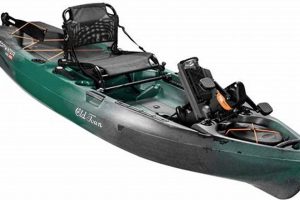
A high-quality yet affordable paddle is essential for kayak anglers. It represents the crucial link between the paddler and the water, impacting maneuverability, speed, and overall fishing experience. An ideal paddle for this purpose balances performance characteristics with affordability, offering features like lightweight construction, efficient blade design, and durable materials without a hefty price tag.
Choosing the right paddle can significantly enhance fishing success and enjoyment. A lightweight paddle reduces fatigue during long paddling sessions, allowing anglers to cover more water and reach prime fishing spots. An efficient blade design maximizes propulsion with each stroke, conserving energy and improving tracking. Durable construction ensures the paddle withstands the rigors of fishing environments, including impacts with rocks or underwater structures. Historically, kayak fishing paddles were often adapted from general-purpose paddles. However, the increasing popularity of kayak angling has driven innovation and specialization, resulting in paddles specifically designed for the needs of fishing enthusiasts.
This article will explore factors to consider when selecting an affordable, high-performing paddle for kayak fishing. Topics will include blade shapes and sizes, shaft materials and lengths, and other features that contribute to a positive on-the-water experience. Guidance will be provided to help anglers make informed purchasing decisions based on individual needs and budgets.
Tips for Selecting a High-Value Kayak Fishing Paddle
Choosing an appropriate paddle significantly impacts kayak fishing performance and enjoyment. These tips offer guidance for selecting a paddle that balances cost and performance.
Tip 1: Consider Blade Shape and Size. Wider blades offer more power per stroke, suitable for anglers who prioritize speed and covering large distances. Narrower blades are more efficient for prolonged paddling, reducing fatigue during extended fishing trips.
Tip 2: Evaluate Shaft Material. Aluminum shafts are generally more affordable and durable, but heavier than fiberglass or carbon fiber options. Fiberglass and carbon fiber shafts offer lighter weight and improved performance, albeit at a higher price point.
Tip 3: Determine Appropriate Shaft Length. Paddle length depends on factors like kayak width, paddler height, and paddling style. Choosing the correct length is crucial for efficient paddling and preventing strain.
Tip 4: Assess Paddle Weight. A lighter paddle reduces fatigue, especially during long fishing excursions. Consider the trade-off between weight and cost when selecting a paddle material.
Tip 5: Look for Drip Rings. Drip rings prevent water from running down the shaft onto the paddler’s hands, improving grip and comfort.
Tip 6: Consider Adjustable-Length Paddles. Adjustable paddles offer versatility for different paddling conditions and can be shared among users of varying heights.
Tip 7: Research and Compare Prices. Compare prices from different retailers and manufacturers to find the best value for a given paddle model.
Selecting a well-suited paddle enhances kayak fishing experiences by optimizing performance, reducing fatigue, and improving comfort. By considering these tips, anglers can make informed decisions and choose a paddle that meets their specific needs and budget.
By carefully evaluating these factors, anglers can select a paddle that maximizes their on-the-water efficiency and enjoyment, leading to more successful and rewarding fishing trips.
1. Material (Aluminum/Fiberglass)

Paddle material significantly influences performance, durability, and cost, making it a crucial consideration when selecting a budget-friendly option for kayak fishing. Aluminum and fiberglass represent the most common materials in this price range, each offering distinct advantages and disadvantages.
- Aluminum: Durability and Affordability
Aluminum paddles are renowned for their robust construction and resistance to damage, making them suitable for harsh fishing environments. They tolerate impacts with rocks, submerged debris, and other obstacles. Their affordability makes them a popular choice for anglers seeking a cost-effective option without sacrificing durability. However, aluminum’s heavier weight can lead to fatigue during extended paddling sessions.
- Fiberglass: Lightweight Performance
Fiberglass paddles offer a lighter weight compared to aluminum, reducing strain and improving paddling efficiency. This lighter weight translates to less fatigue during long fishing trips, allowing anglers to cover more water. Fiberglass also offers good strength and responsiveness, providing a more dynamic paddling experience. However, fiberglass paddles typically come at a higher price point than aluminum options and may be more susceptible to damage from severe impacts.
- Hybrid Constructions: Balancing Cost and Performance
Some budget-friendly paddles utilize hybrid constructions, often combining an aluminum shaft with fiberglass blades. This approach aims to balance the durability of aluminum with the lighter weight and performance benefits of fiberglass. These hybrid options can provide a good compromise for anglers seeking a blend of affordability and enhanced paddling characteristics.
- Impact on Overall Fishing Experience
The choice of paddle material directly affects the overall fishing experience. A heavier aluminum paddle can lead to fatigue, potentially limiting the angler’s range and enjoyment. Conversely, a lighter fiberglass paddle allows for longer, more comfortable paddling sessions, maximizing fishing time and access to desirable locations. The chosen material also influences the paddle’s responsiveness and efficiency in the water, impacting maneuvering and overall boat control.
Ultimately, the ideal paddle material depends on individual priorities and budget constraints. Anglers prioritizing durability and affordability may opt for aluminum, while those seeking lighter weight and improved performance may choose fiberglass or a hybrid construction. Careful consideration of these material characteristics ensures a paddle well-suited to the angler’s specific needs and fishing style.
2. Blade Design (Asymmetrical/Symmetrical)

Blade design significantly influences a kayak paddle’s performance, affecting factors such as stroke efficiency, power transfer, and overall paddling experience. Understanding the distinctions between asymmetrical and symmetrical blades is crucial for selecting a budget-friendly paddle optimized for kayak fishing.
- Asymmetrical Blades: Enhanced Efficiency
Asymmetrical blades are designed with one side slightly curved and the other side straighter. This design reduces flutter during the stroke, providing smoother entry and exit from the water. This enhanced efficiency translates to less energy expenditure and greater propulsion with each stroke. Asymmetrical blades are generally preferred for longer paddling distances and are often found on higher-end paddles, but budget-friendly options are increasingly available.
- Symmetrical Blades: Balanced Power
Symmetrical blades feature identical curves on both sides. They offer a balanced and predictable stroke, delivering consistent power transfer. While potentially less efficient than asymmetrical designs, symmetrical blades are often more affordable and suitable for anglers who prioritize stability and control over long-distance efficiency.
- Blade Size and Shape: Impact on Performance
Blade size and shape also play a role in paddle performance. Larger blades generate more power per stroke, suitable for covering larger distances quickly. Smaller blades offer better control and maneuverability, ideal for navigating tight spaces or fishing in currents. The blade’s shape, including its curvature and tip profile, further influences water displacement and overall efficiency.
- Choosing the Right Blade Design for Kayak Fishing
Selecting the appropriate blade design depends on individual fishing styles and preferences. Anglers frequently paddling long distances might prioritize the efficiency of an asymmetrical blade. Those focused on maneuverability and stability in tighter fishing areas might prefer a symmetrical design. Considering factors such as typical fishing locations, paddling distances, and personal paddling style helps determine the most suitable blade design for a budget-friendly kayak fishing paddle.
By carefully considering blade design, anglers can select a budget-friendly paddle that optimizes their on-the-water performance. Balancing factors such as efficiency, control, and cost allows for a paddle that enhances the overall kayak fishing experience without exceeding budgetary constraints.
3. Shaft Length (Appropriate Fit)
Appropriate shaft length is a critical factor influencing paddling efficiency, comfort, and injury prevention, directly impacting the selection of a best budget fishing kayak paddle. An incorrect shaft length can lead to inefficient paddling, shoulder strain, and reduced boat control, compromising the overall fishing experience. Proper fit depends on factors such as torso height, kayak width, and paddling style. Taller individuals or those paddling wider kayaks generally require longer shafts. High-angle paddlers, who hold their paddles more vertically, also benefit from longer shafts, while low-angle paddlers often prefer shorter options.
For example, a shorter paddler in a narrow kayak using a high-angle paddling style might find a 220cm shaft suitable, while a taller paddler in a wider kayak using a low-angle style could require a 240cm or longer shaft. Using a shaft that is too short can lead to over-rotation of the torso and increased strain on the shoulders, while a shaft that is too long can make it difficult to maintain a proper paddling cadence and control the kayak effectively. Understanding these relationships is crucial for selecting a paddle that maximizes performance and minimizes physical strain, especially during extended fishing trips.
Selecting the correct shaft length optimizes energy transfer during paddling, improving efficiency and reducing fatigue. This is particularly important for kayak anglers, who often spend long hours on the water. A proper fit allows for a more comfortable and biomechanically sound paddling stroke, reducing the risk of injury and enhancing overall enjoyment. While budget considerations are important, compromising on shaft length can negatively impact performance and comfort, ultimately hindering the fishing experience. Therefore, careful consideration of individual physical characteristics and paddling style is essential when selecting a budget-friendly paddle with the appropriate shaft length for optimal performance and long-term comfort.
4. Weight (Lightweight Preference)
Paddle weight significantly influences fatigue levels, especially during extended kayak fishing trips. A lighter paddle requires less exertion per stroke, conserving energy and enhancing overall comfort. This factor becomes particularly crucial in budget-conscious selections, as material choices often dictate weight and cost. Understanding the implications of paddle weight is essential for informed decision-making.
- Reduced Fatigue
A lightweight paddle minimizes muscle strain during long paddling sessions, allowing anglers to cover more water and fish for extended periods without experiencing undue fatigue. This advantage is particularly noticeable when paddling against wind or current. The reduced physical exertion allows for greater focus on fishing rather than battling fatigue.
- Improved Performance
A lighter paddle enables quicker strokes and faster recovery, enhancing overall paddling cadence and efficiency. This translates to improved maneuverability and responsiveness, crucial for navigating tight spots or pursuing fish. The lighter swing weight also allows for more precise paddle placement and control, benefiting techniques like stealth approaches.
- Material Influence
Paddle weight is directly related to material construction. Lighter materials, such as carbon fiber, typically come at a higher price point. Budget-friendly paddles often utilize aluminum or fiberglass, balancing weight and affordability. Aluminum offers durability but is heavier than fiberglass. Fiberglass provides a compromise between weight and cost, making it a popular choice in the budget category.
- Impact on Fishing Experience
Paddle weight directly impacts the overall fishing experience. A heavy paddle can detract from enjoyment, leading to fatigue and potentially limiting fishing time or access to desired locations. Conversely, a lightweight paddle enhances comfort and allows for longer, more productive outings. This factor is especially important for anglers who frequently embark on multi-day trips or cover significant distances on the water.
When seeking the best budget fishing kayak paddle, weight is a critical consideration. Balancing cost with performance requires careful evaluation of material choices and their corresponding weights. Prioritizing a lighter paddle within budget constraints can significantly enhance paddling comfort, efficiency, and overall fishing enjoyment, contributing to a more rewarding experience on the water.
5. Durability (Impact Resistance)
Durability, particularly impact resistance, is a crucial factor when selecting a budget-friendly kayak fishing paddle. Kayak angling often involves navigating shallow waters, maneuvering around obstacles, and occasionally encountering submerged debris or rocks. A durable paddle withstands these challenges, ensuring longevity and reliable performance without frequent replacements. Impact resistance directly translates to a paddle’s ability to withstand accidental collisions and general wear and tear inherent to the fishing environment. A paddle prone to breakage or damage compromises safety and necessitates unexpected expenses, negating the benefits of an initially low purchase price. For instance, a paddle striking a submerged log should ideally remain functional, while a less durable option might crack or break, jeopardizing the angler’s ability to navigate or return to shore.
The materials used in paddle construction significantly influence durability. Aluminum paddles are renowned for their robust nature and resistance to impact damage, making them a popular choice for budget-conscious anglers. Fiberglass paddles offer a lighter weight option but can be more susceptible to cracking or chipping under significant stress. Hybrid constructions combining aluminum shafts with fiberglass blades aim to balance durability and weight. Considering intended fishing environments is crucial when assessing durability needs. Anglers frequently paddling in rocky rivers or shallow coastal areas require higher impact resistance than those primarily fishing calm lakes. Evaluating potential impact scenarios helps determine the required level of durability and informs material choices.
Selecting a durable, impact-resistant paddle, even within a budget, minimizes the risk of equipment failure and ensures long-term value. While initial costs might be slightly higher for more robust materials, the reduced likelihood of replacements ultimately saves money and enhances the overall fishing experience. A durable paddle provides reliable performance and peace of mind, allowing anglers to focus on fishing rather than worrying about equipment fragility. Balancing cost with durability requires careful consideration of materials, construction, and anticipated paddling conditions to choose a paddle that withstands the rigors of kayak fishing and provides reliable service over time.
6. Drip Rings (Comfort Feature)
Drip rings, while seemingly minor, contribute significantly to comfort and performance, especially concerning budget-friendly kayak fishing paddles. These rings, positioned near the blade, prevent water from traveling down the paddle shaft and onto the paddler’s hands, forearms, and potentially into the kayak cockpit. This seemingly small feature offers several tangible benefits directly impacting the overall fishing experience. Cold or continuously wet hands can lead to discomfort, reduced grip strength, and increased susceptibility to blisters, especially during longer paddling sessions. In colder climates, this can contribute to hypothermia. Drip rings mitigate these issues, maintaining drier, warmer hands, and improving paddling comfort and control.
Consider a scenario where an angler is fishing in choppy conditions. Without drip rings, each paddle stroke brings water down the shaft, soaking hands and potentially the inside of the kayak. This added moisture can make it difficult to maintain a firm grip on the paddle, increasing the risk of slippage and reducing paddling efficiency. Furthermore, cold, wet hands can become numb, further compromising dexterity and control. Drip rings, in this context, become crucial for maintaining comfort, control, and safety. Moreover, in situations requiring quick reactions, such as landing a fish or navigating unexpected obstacles, maintaining a secure grip is paramount. Drip rings facilitate this by minimizing slippage caused by wet hands.
While drip rings might not be the primary deciding factor when choosing a budget fishing kayak paddle, their inclusion significantly enhances comfort and performance. They represent a relatively inexpensive feature offering substantial benefits, particularly for anglers spending extended periods on the water. Therefore, when evaluating budget-friendly paddles, the presence of drip rings should be considered a valuable addition contributing to a more enjoyable and productive fishing experience. Their practical significance, in terms of enhanced comfort, improved grip, and reduced fatigue, outweighs their minimal cost, solidifying their importance as a component of a well-chosen budget fishing kayak paddle.
7. Adjustability (Optional Feature)
Adjustable-length paddles offer versatility, accommodating varied paddling styles, kayak widths, and user heights. This adaptability becomes particularly relevant when considering a “best budget fishing kayak paddle,” as a single adjustable paddle can serve multiple purposes and users, potentially eliminating the need for multiple paddle purchases. Adjustability allows for fine-tuning feathering angles, the offset between the two blades, impacting stroke efficiency and comfort. While not essential, adjustability enhances a budget paddle’s value proposition by providing adaptability to changing conditions or shared use scenarios. For instance, an adjustable paddle allows a family to share a kayak without requiring separate paddles tailored to individual heights, offering significant cost savings.
Consider a fishing scenario where an angler needs to switch between open water paddling and maneuvering through tight, vegetated areas. An adjustable paddle facilitates this transition by allowing for on-the-fly length adjustments. A shorter length enhances control in confined spaces, while a longer length maximizes efficiency in open water. This adaptability proves particularly advantageous for budget-conscious anglers seeking a single paddle capable of handling diverse fishing environments. Furthermore, an adjustable paddle accommodates changes in seating position or kayak load, optimizing paddling efficiency regardless of shifting conditions. This adaptability enhances comfort and performance, particularly during long fishing trips where conditions may vary throughout the day.
While adjustability adds complexity and potentially slight weight increases compared to fixed-length paddles, its versatility enhances a budget paddle’s overall value. The ability to customize length and feathering angles optimizes performance across different paddling styles and conditions, maximizing efficiency and comfort. This adaptability represents a valuable feature, particularly for anglers seeking a single, versatile paddle capable of serving diverse needs within a budget. Therefore, while adjustability remains an optional feature, its inclusion in a budget-friendly fishing kayak paddle represents a worthwhile investment enhancing long-term utility and overall value.
Frequently Asked Questions
This section addresses common inquiries regarding the selection and use of budget-friendly kayak fishing paddles.
Question 1: What is the most important factor to consider when choosing a budget fishing kayak paddle?
Balancing cost with durability and performance is paramount. While cost remains a primary concern, compromising excessively on durability or performance can lead to premature wear, discomfort, and reduced fishing enjoyment. Prioritizing materials like durable aluminum or lightweight fiberglass within budget constraints ensures a suitable balance.
Question 2: Are adjustable-length paddles worth the extra cost for budget-conscious anglers?
Adjustable paddles offer versatility for different paddling styles, kayak widths, and user heights, potentially eliminating the need for multiple paddles. While slightly more expensive, their adaptability can provide long-term cost savings and enhanced performance across diverse fishing scenarios.
Question 3: How does paddle length affect kayak fishing performance?
Proper paddle length is crucial for efficient paddling and injury prevention. An incorrect length can lead to fatigue, strain, and reduced boat control. Length selection should consider torso height, kayak width, and paddling style for optimal performance and comfort.
Question 4: What are the key differences between aluminum and fiberglass paddles in the budget category?
Aluminum paddles offer excellent durability and affordability but are heavier than fiberglass. Fiberglass paddles provide a lighter, more efficient paddling experience but often come at a slightly higher price and may be less durable under extreme stress.
Question 5: Do drip rings significantly impact paddling performance?
Drip rings prevent water from running down the paddle shaft onto hands, improving grip, comfort, and control, especially in challenging conditions. While a seemingly small feature, their presence significantly enhances the overall paddling experience.
Question 6: How can one determine the appropriate paddle length for their needs?
Several online resources and paddle manufacturers provide sizing charts based on factors like height, kayak width, and paddling style. Consulting these resources or seeking advice from experienced kayak anglers can help determine the appropriate paddle length.
Careful consideration of these frequently asked questions empowers informed purchasing decisions, ensuring the selected budget-friendly kayak fishing paddle enhances on-the-water experiences without compromising performance or durability.
For further guidance on selecting specific paddle models and accessories, consult the following resources
Conclusion
Careful paddle selection significantly impacts kayak fishing experiences. Prioritizing factors like blade design, shaft material and length, weight, durability features like drip rings, and potential adjustability ensures optimal performance without exceeding budgetary constraints. A balanced approach considers individual paddling styles, fishing environments, and physical characteristics to determine the most suitable paddle configuration. Informed decisions based on these criteria yield a paddle that enhances on-the-water efficiency, comfort, and ultimately, fishing success.
Investing time in research and comparison empowers anglers to select a high-value paddle that maximizes enjoyment and performance on the water. A well-chosen paddle becomes an extension of the angler, seamlessly connecting them to the aquatic environment and facilitating successful fishing excursions. The appropriate paddle transforms kayak fishing from a simple activity into a fully immersive and rewarding experience. This careful consideration ultimately contributes to a more fulfilling and productive time spent pursuing angling passions.