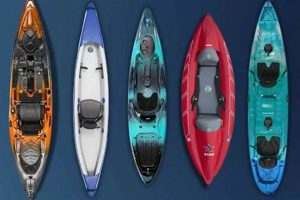
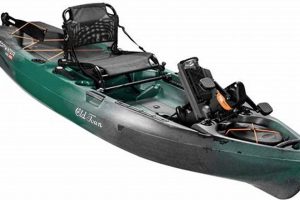
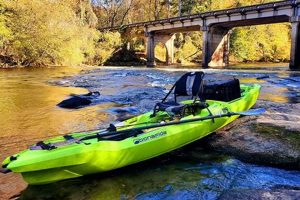
A premium, purpose-built watercraft designed for stability and hands-free angling blends performance features of a high-quality kayak with the elevated perspective and casting freedom of a stand-up paddleboard. Such vessels typically include specialized design elements like a wider hull for stability, a flat deck for easy movement, and integrated features for rod holders, tackle storage, and even anchor systems. An example might include a specific model with a high weight capacity, advanced propulsion system, and ample storage for fishing gear.
Elevated casting platforms offer anglers an improved vantage point for spotting fish and navigating shallow waters. This enhanced visibility, coupled with the stability afforded by a well-designed hull, allows for more accurate casting and a greater chance of hooking a target. Furthermore, the hands-free nature of these watercraft facilitates maneuvering and fighting fish. The evolution from traditional sit-on-top kayaks to dedicated stand-up fishing platforms reflects the increasing demand for specialized equipment catering to this popular angling style.
Considerations for selecting a suitable vessel include hull design, length, weight capacity, and integrated features. Subsequent sections will explore these factors in detail, providing guidance on choosing the optimal platform based on individual needs and fishing preferences, including considerations for different water types and fishing styles.
Tips for Selecting a Stand-Up Fishing Kayak
Choosing the right watercraft for stand-up fishing requires careful consideration of various factors, ensuring optimal performance and angler safety.
Tip 1: Prioritize Stability: Hull design significantly impacts stability. Wider, flatter hulls offer superior stability, crucial for casting and reeling while standing. Consider catamaran-style hulls or those with outriggers for enhanced stability.
Tip 2: Evaluate Length and Weight Capacity: Longer kayaks generally track better in open water, while shorter models offer improved maneuverability in tight spaces. Weight capacity must accommodate the angler’s weight, gear, and potential catch.
Tip 3: Inspect Deck Features: A spacious, uncluttered deck provides freedom of movement. Look for integrated features like rod holders, tackle storage compartments, and anchor systems to enhance fishing efficiency.
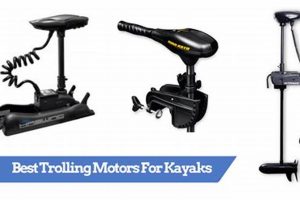
Tip 4: Consider Propulsion: Paddle propulsion is common, but pedal-powered or even motorized options offer hands-free fishing and faster travel, particularly beneficial in larger bodies of water or against currents.
Tip 5: Assess Water Conditions: Different water types require specific hull designs. Flatter hulls excel in calm lakes and rivers, while V-shaped hulls handle chop and waves more effectively in coastal environments.
Tip 6: Test Before Purchasing: If possible, test various models before making a purchase. On-water experience allows assessment of stability, maneuverability, and overall comfort.
Tip 7: Factor in Transportation and Storage: Consider the kayak’s weight and length for ease of transport and storage. Lighter, shorter models are generally easier to manage.
Careful consideration of these factors will lead to selecting a watercraft optimized for individual fishing styles and target environments, enhancing both enjoyment and safety on the water.
By understanding the nuances of these selections, anglers can equip themselves with the appropriate vessel to maximize their fishing potential.
1. Stability

Stability forms the cornerstone of a successful stand-up fishing kayak experience. A stable platform is paramount for maintaining balance while casting, reeling, and landing fish, particularly in dynamic water conditions. Compromised stability not only hinders fishing effectiveness but also presents safety risks. Consider the angler sight-fishing in shallow waters; a stable platform allows for accurate casting to wary fish without the risk of capsizing. Conversely, a wobbly kayak can lead to missed casts and even angler immersion. This connection between stability and angling success highlights the crucial role of a stable hull design in achieving a premium on-water experience. Factors influencing stability include hull width, shape, and the presence of outriggers or stabilizing fins.
The importance of stability extends beyond casting and reeling. Consider the scenario of landing a large fish; a stable platform provides the necessary leverage and balance to manage the fish effectively without compromising the angler’s safety. Similarly, navigating through challenging water conditions, such as currents or wakes from passing boats, demands a stable kayak to maintain control and avoid capsizing. The practical significance of stability becomes particularly pronounced in dynamic fishing environments where unpredictable conditions necessitate a reliable and stable platform. Investing in a kayak designed for maximum stability ensures a safer and more productive fishing experience.
In summary, stability is not merely a desirable feature but a fundamental requirement for a premium stand-up fishing kayak. It directly impacts angling success, angler safety, and overall enjoyment on the water. Prioritizing stability when selecting a kayak, understanding the factors influencing it, and recognizing its practical implications ensures anglers are well-equipped to handle diverse fishing scenarios and maximize their on-water potential.
2. Maneuverability
Maneuverability represents a critical performance attribute in stand-up fishing kayaks, directly influencing an angler’s ability to navigate diverse water environments and effectively target fish. Precise and responsive handling allows for efficient movement in tight spaces, quick adjustments to changing currents or wind conditions, and seamless transitions between fishing locations. This agility translates to more time spent fishing and less effort expended on navigating, ultimately maximizing on-water efficiency and angling success.
- Navigating Complex Waterways
Maneuverability becomes paramount when navigating intricate waterways such as mangrove tunnels, narrow creeks, or shallow flats. A highly maneuverable kayak allows anglers to effortlessly negotiate tight turns, avoid obstacles, and access secluded fishing spots often inaccessible to larger, less agile vessels. This capability expands fishing opportunities and enhances the ability to target specific species that inhabit these complex environments. For example, pursuing redfish in shallow, winding creeks necessitates a kayak capable of sharp turns and precise maneuvering to effectively present lures and navigate the intricate channels.
- Responding to Changing Conditions
Wind, currents, and tidal flows can significantly impact kayak control, demanding responsive handling to maintain position and effectively present lures or bait. A maneuverable kayak enables anglers to quickly adjust to these dynamic forces, maintaining optimal fishing presentation and preventing drift from target areas. Consider a scenario with shifting winds pushing a kayak off course; a highly maneuverable vessel allows for swift corrections, minimizing disruption to fishing and maintaining precise targeting. This adaptability is essential for consistent performance across diverse and changing environmental factors.
- Tracking and Speed
While maneuverability often emphasizes turning and responsiveness, efficient tracking in open water is also crucial. A well-designed hull balances agility with tracking performance, minimizing wasted energy during longer paddles between fishing spots. A kayak that tracks poorly requires constant correction, leading to fatigue and reduced fishing time. Optimized tracking enhances overall efficiency, especially in larger bodies of water or when covering significant distances between locations.
- Influence of Hull Design
Hull design significantly influences maneuverability. Shorter kayaks generally offer greater agility, enabling tight turns and quick changes in direction. Longer kayaks, while potentially faster in a straight line, can be less responsive in confined spaces. Hull shape also plays a role; flatter hulls enhance maneuverability in shallow water, while more pronounced keels or V-shaped hulls improve tracking in open water or choppy conditions. Understanding these design elements allows anglers to select a kayak that balances maneuverability with other performance characteristics based on their specific fishing style and target environment.
In conclusion, maneuverability is an essential consideration when selecting a stand-up fishing kayak. It directly impacts an angler’s ability to access prime fishing locations, adapt to changing conditions, and efficiently navigate diverse waterways. Evaluating a kayak’s turning radius, responsiveness, and tracking capabilities alongside its hull design ensures informed decision-making, ultimately enhancing on-water performance and fishing success.
3. Propulsion System

Propulsion systems significantly influence the performance and versatility of a stand-up fishing kayak. Optimal propulsion selection hinges on factors like fishing environment, target species, and individual angler preferences. Different systems offer distinct advantages and disadvantages, impacting speed, maneuverability, and hands-free fishing capabilities. Choosing the right propulsion contributes directly to fishing success and overall on-water experience.
Traditional paddle propulsion offers excellent maneuverability and affordability. Paddle-powered kayaks excel in tight spaces and shallow water, providing precise control for navigating complex environments like mangrove tunnels or rocky shorelines. However, paddling requires physical exertion, potentially limiting fishing time and range, especially in larger bodies of water or against strong currents. For example, a paddle-powered kayak offers superior agility for navigating shallow flats while sight-fishing for bonefish, but might prove less efficient for covering long distances in open ocean environments when targeting pelagic species.
Pedal-powered kayaks provide hands-free fishing, enabling anglers to focus on casting and reeling. Pedal drives offer greater speed and range compared to paddling, particularly beneficial in larger lakes, rivers, or coastal areas. This hands-free operation allows for simultaneous fishing and maneuvering, increasing efficiency and angling opportunities. For instance, a pedal-powered kayak excels when trolling for largemouth bass in open lakes, allowing anglers to maintain speed and direction while simultaneously working lures or bait. However, pedal drives can be heavier and more expensive than paddle systems, and might restrict access to extremely shallow waters due to fin or propeller depth.
Motorized kayaks offer the greatest speed and range, allowing anglers to cover significant distances quickly. This advantage is particularly relevant for exploring expansive bodies of water or reaching distant fishing grounds. Motorized propulsion minimizes physical exertion, conserving energy for fishing. For example, a motorized kayak excels when targeting offshore species, enabling anglers to quickly reach deep-water reefs or offshore structures. However, motors add weight and complexity, requiring battery management and potentially impacting maneuverability in tight spaces. Regulations regarding motorized watercraft also vary by location and should be considered when selecting a propulsion system.
Selecting the optimal propulsion system necessitates careful consideration of individual fishing styles, target environments, and desired performance characteristics. Evaluating factors like speed, maneuverability, range, cost, and maintenance requirements ensures an informed decision aligned with specific angling needs, enhancing overall fishing success and on-water enjoyment.
4. Storage Capacity

Ample and well-designed storage is a critical feature differentiating a standard kayak from a purpose-built fishing platform, especially in stand-up models where gear organization directly impacts stability and fishing efficiency. Sufficient storage capacity allows anglers to carry essential equipment, including tackle boxes, rods, safety gear, and personal items, enhancing both convenience and safety on the water. Effective storage solutions contribute directly to a more organized and productive fishing experience, minimizing clutter and maximizing time spent fishing rather than searching for misplaced gear.
- Tackle Organization
Dedicated compartments for tackle boxes, trays, and individual lures maintain organization and accessibility. A well-organized tackle system streamlines lure changes, prevents tangles, and ensures essential gear is readily available, maximizing fishing time and minimizing frustration. For example, specialized compartments for soft plastics protect them from damage and prevent them from mixing with other lures, maintaining their effectiveness. Efficient tackle organization contributes significantly to a seamless and productive fishing experience.
- Rod Storage and Management
Secure rod holders, preferably flush-mounted or recessed, protect rods from damage and prevent interference while paddling or standing. Multiple rod holders accommodate different rod types and fishing techniques, allowing anglers to switch between setups quickly and efficiently. For instance, dedicated rod storage for a spinning rod and a fly rod allows for diverse fishing approaches without the need to return to shore for equipment changes. Secure and accessible rod storage enhances versatility and maximizes fishing opportunities.
- Dry Storage for Personal Items
Watertight compartments safeguard essential personal items like phones, wallets, keys, and cameras from the elements. Dry storage protects sensitive electronics and ensures important belongings remain dry and functional throughout the fishing trip. This feature enhances safety and peace of mind, allowing anglers to focus on fishing without worrying about water damage to valuable equipment. For example, a dry storage compartment protects a cell phone for emergency communication, even in wet conditions, adding an important safety element to the fishing experience.
- Gear Capacity and Weight Distribution
Sufficient storage capacity for larger items like coolers, anchor systems, and safety equipment contributes to overall fishing preparedness. However, proper weight distribution within storage compartments maintains kayak stability and balance. Unevenly distributed weight can compromise performance and safety, particularly when standing. For example, distributing weight evenly between front and rear storage compartments maintains kayak trim and stability, crucial for safe and effective stand-up fishing. Thoughtful weight management enhances both performance and safety on the water.
In the context of a best stand-up fishing kayak, storage capacity is not merely about volume but also about intelligent design and organization. Strategic placement of compartments, specialized storage solutions for different gear types, and considerations for weight distribution contribute significantly to overall fishing performance, efficiency, and safety. A well-designed storage system optimizes the angling experience, allowing anglers to focus on what matters most: catching fish.
5. Deck Layout
Deck layout is integral to the performance and functionality of a best stand-up fishing kayak, directly influencing angler efficiency, comfort, and safety. A well-designed deck maximizes usable space, facilitates easy movement, and provides strategic placement for essential gear and accessories. This optimized layout contributes significantly to a seamless and productive fishing experience, minimizing wasted time and maximizing angling opportunities. A poorly designed deck, conversely, can hinder movement, limit access to essential gear, and compromise stability, negatively impacting overall fishing performance.
Consider the practical implications of deck layout. An uncluttered deck allows for free movement and casting, facilitating quick adjustments to changing fish behavior or water conditions. Strategic placement of rod holders keeps rods secure and readily accessible, minimizing time spent retrieving and stowing gear. Integrated storage compartments within easy reach ensure essential tackle and tools are readily available without compromising balance or stability. For example, a recessed tackle storage area near the standing platform allows for quick lure changes without requiring the angler to bend over or reach far, maintaining balance and fishing efficiency. Similarly, a flat, open deck provides ample space for landing and handling fish safely, enhancing both angler safety and catch preservation.
Effective deck layout extends beyond simple organization; it contributes to a more intuitive and seamless fishing experience. Features such as flush-mounted hardware minimize tripping hazards and line snags, enhancing safety and preventing interruptions during critical fishing moments. Ergonomically designed standing platforms provide comfort and stability during prolonged periods of standing, reducing fatigue and maximizing focus on fishing. The integration of these features reflects a thoughtful design approach that prioritizes angler needs and enhances the overall fishing experience. Ultimately, a well-designed deck layout optimizes functionality, promotes efficiency, and elevates a stand-up fishing kayak from a basic vessel to a high-performance angling platform.
6. Hull Design

Hull design is paramount in determining a stand-up fishing kayak’s performance, influencing stability, maneuverability, speed, and overall suitability for specific water conditions. Selecting a hull design optimized for intended fishing environments and angler preferences is crucial for maximizing on-water efficiency and angling success. Understanding the nuances of various hull designs empowers informed decision-making, ensuring the chosen kayak aligns perfectly with individual fishing needs and target environments.
- Flat Hull
Flat hulls provide exceptional primary stability, making them ideal for calm waters like lakes, ponds, and slow-moving rivers. This stability is crucial for stand-up fishing, allowing anglers to maintain balance while casting and reeling. However, flat hulls tend to be slower and less efficient in tracking a straight line compared to other designs. They are also more susceptible to wind drift, making them less suitable for open water or windy conditions. A flat hull excels in sheltered bays or estuaries where stability is paramount, but its limitations become apparent in choppy coastal waters.
- Pontoon Hull
Pontoon hulls, characterized by two separate hulls connected by a deck, deliver exceptional stability, surpassing even flat hulls. This design provides a wide, stable platform ideal for stand-up fishing, even in challenging conditions. Pontoon hulls offer increased weight capacity and often feature ample deck space for gear and accessories. However, they can be less maneuverable than other designs and may not track as efficiently in open water. A pontoon hull is an excellent choice for anglers prioritizing stability and deck space, particularly in calm to moderately choppy conditions.
- V-Shaped Hull
V-shaped hulls excel in rougher water conditions, offering superior tracking and cutting through waves and chop more effectively than flatter hull designs. This design provides better performance in open water or coastal environments, maintaining speed and direction even in challenging conditions. However, V-shaped hulls offer less primary stability than flat or pontoon hulls, potentially making stand-up fishing more challenging, especially for less experienced anglers. This design prioritizes speed and tracking over ultimate stability, making it a suitable choice for anglers fishing in more dynamic water environments.
- Tunnel Hull
Tunnel hulls blend characteristics of flat and V-shaped hulls, providing a balance of stability and performance. The tunnel shape creates lift, improving speed and efficiency while maintaining a relatively stable platform. This design performs well in a variety of conditions, from calm lakes to moderately choppy coastal waters. Tunnel hulls offer a versatile option for anglers seeking a balance between stability and performance, making them suitable for diverse fishing environments.
Understanding these hull design variations and their performance characteristics enables anglers to select a kayak optimized for their specific fishing style and target environment. Consider factors like water conditions, fishing techniques, and individual preferences when evaluating hull design, ensuring the chosen kayak maximizes on-water efficiency, stability, and overall fishing success. Selecting the correct hull is fundamental to achieving a best stand-up fishing kayak experience.
7. Weight Capacity

Weight capacity is a critical factor in selecting a stand-up fishing kayak, directly influencing stability, performance, and safety. Insufficient weight capacity compromises stability, increasing the risk of capsizing, especially when standing. Reduced performance results from a kayak sitting too low in the water, increasing drag and hindering maneuverability. Exceeding weight capacity can also damage the kayak’s structure, potentially leading to leaks or structural failure. A kayak rated for 250 lbs carrying a 200-lb angler, gear, and a potential catch nearing 75 lbs operates near its limit, potentially compromising stability and performance. Conversely, a kayak rated for 400 lbs offers a wider margin of safety and improved performance under similar loading conditions.
Understanding weight capacity’s practical implications is crucial for informed decision-making. Anglers must consider not only their body weight but also the combined weight of all gear, including rods, reels, tackle boxes, coolers, anchors, and safety equipment. Additional factors like potential catch weight and water conditions should also be considered. For example, an angler planning to fish in rougher waters might prioritize a higher weight capacity for enhanced stability in challenging conditions. Similarly, anglers targeting larger fish species must factor in the potential weight of their catch when evaluating weight capacity. Ignoring these factors can lead to an unstable and unsafe on-water experience.
Matching weight capacity to individual needs ensures optimal performance, safety, and longevity of the kayak. Careful consideration of all contributing factors allows anglers to select a kayak that performs optimally under realistic loading conditions. This informed approach maximizes stability, enhances maneuverability, and ensures a safe and enjoyable fishing experience. Neglecting weight capacity, however, compromises stability and performance, potentially leading to hazardous situations and ultimately detracting from the overall fishing experience. Therefore, accurate weight assessment and careful selection of a kayak with appropriate weight capacity are essential for ensuring a positive and safe on-water experience.
Frequently Asked Questions
Addressing common inquiries regarding the selection and use of premium stand-up fishing kayaks provides clarity and facilitates informed decision-making for anglers seeking to optimize their on-water experience.
Question 1: How does hull design impact stability in stand-up fishing kayaks?
Wider, flatter hulls generally offer greater initial stability, crucial for maintaining balance while standing. However, specialized designs like pontoon or tunnel hulls can provide enhanced stability even in more challenging conditions, albeit potentially at the expense of maneuverability or speed. Selecting a hull design optimized for anticipated water conditions and fishing style is crucial for maximizing both stability and performance.
Question 2: What factors influence the maneuverability of a stand-up fishing kayak?
Length, hull design, and the presence of a rudder or skeg system all influence maneuverability. Shorter kayaks generally offer greater agility in tight spaces, while longer kayaks track better in open water. Hull shape also plays a role; flatter hulls excel in shallow water, while V-shaped hulls perform better in chop. A rudder or skeg enhances directional control, particularly in windy or current-prone environments.
Question 3: What are the key considerations when choosing a propulsion system for a stand-up fishing kayak?
Fishing environment, target species, and personal preferences dictate propulsion system selection. Paddle propulsion offers affordability and maneuverability but requires physical exertion. Pedal drives provide hands-free fishing but can be heavier and more expensive. Motorized kayaks offer the greatest speed and range but add complexity and may be subject to regulations.
Question 4: How does storage capacity contribute to an effective fishing experience?
Ample and well-organized storage facilitates efficient tackle management, rod storage, and safekeeping of personal items. Dedicated compartments, secure rod holders, and watertight storage enhance organization, minimize clutter, and maximize fishing time by keeping essential gear readily accessible.
Question 5: What are the essential features to look for in a stand-up fishing kayak’s deck layout?
An uncluttered deck with ample space for movement, strategically placed rod holders, and integrated storage compartments are key features of an effective deck layout. Flush-mounted hardware minimizes snags, while an ergonomically designed standing platform enhances comfort and stability during prolonged standing.
Question 6: How does weight capacity affect performance and safety?
Weight capacity directly impacts stability and performance. Exceeding the recommended weight limit compromises stability, reduces maneuverability, and can potentially damage the kayak. Accurately assessing total weight, including angler, gear, and potential catch, is crucial for selecting a kayak with appropriate weight capacity to ensure both safety and optimal performance.
Careful consideration of these frequently asked questions empowers informed purchasing decisions, aligning kayak selection with individual angling needs and maximizing on-water success.
Exploring further resources and expert reviews can provide additional insights for selecting the ideal stand-up fishing kayak.
Best Stand Up Fishing Kayak
Optimal selection hinges on a comprehensive understanding of key design elements and performance characteristics. Hull design dictates stability and maneuverability in varying water conditions. Propulsion systems influence speed, range, and hands-free fishing capabilities. Storage capacity and deck layout contribute to efficient gear organization and angler comfort. Weight capacity considerations ensure safety and optimal performance. Careful evaluation of these factors, aligned with individual fishing styles and target environments, is paramount for discerning the ideal watercraft.
Investing in a premium, purpose-built platform enhances angling opportunities, improves on-water safety, and maximizes fishing enjoyment. Diligent research and informed decision-making empower anglers to select a vessel that elevates their fishing experience, providing years of reliable performance and lasting satisfaction on the water.