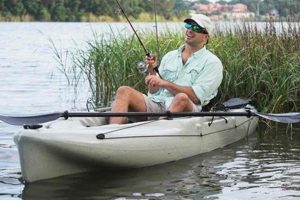
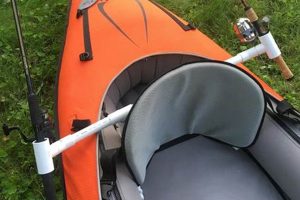
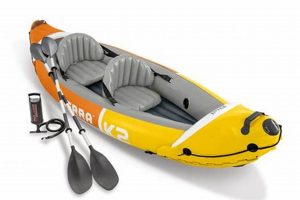
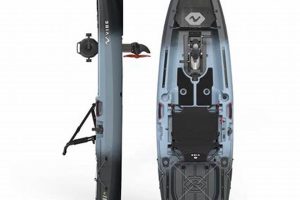
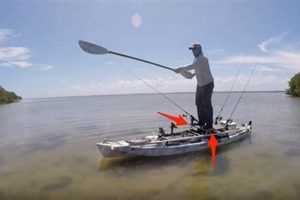
This type of watercraft, manufactured by Lifetime Products, is designed for two anglers to fish from a stable platform. Ten feet in length, these kayaks offer portability and maneuverability, particularly suited for smaller bodies of water. The “tandem” designation signifies its two-person capacity, while “fishing” highlights features such as rod holders, often included in the design.
Recreational fishing from these vessels provides an accessible and engaging way to enjoy the outdoors. Shared experiences enhance the activity, fostering camaraderie. Compact dimensions and lighter weight compared to larger boats simplify transport and storage. The stability of these platforms offers a secure fishing environment, especially beneficial for novice paddlers. Their increasing popularity reflects a growing interest in accessible and environmentally friendly recreational fishing.
Further exploration will cover topics relevant to prospective purchasers and current owners. Discussions will encompass selection criteria, essential accessories, basic paddling techniques, maintenance procedures, and responsible usage guidelines.
Tips for Tandem Kayak Fishing
Effective tandem kayak fishing requires preparation and coordination. These tips offer guidance for maximizing enjoyment and success on the water.
Tip 1: Distribute Weight Evenly: Balanced weight distribution is crucial for stability and efficient paddling. Gear should be distributed evenly throughout the kayak, avoiding concentration at either end.
Tip 2: Communicate Effectively: Clear and concise communication between paddlers is essential for coordinated paddling and maneuvering. Establish hand signals or verbal cues before embarking.
Tip 3: Practice Paddling in Sync: Synchronized paddling maximizes speed and efficiency. Practice paddling together before venturing into challenging waters.
Tip 4: Choose Appropriate Paddles: Correctly sized paddles improve efficiency and reduce fatigue. Paddle length should be appropriate for individual height and kayak width.
Tip 5: Wear Personal Flotation Devices (PFDs): Safety should always be a priority. PFDs are essential safety equipment and should be worn at all times while on the water.
Tip 6: Respect Wildlife and the Environment: Maintain a safe distance from wildlife and avoid disturbing natural habitats. Dispose of waste responsibly and adhere to “Leave No Trace” principles.
Tip 7: Check Weather Conditions: Before heading out, consult weather forecasts and be aware of potential changes in wind, temperature, and water conditions. Avoid paddling in unsafe conditions.
Tip 8: Plan Your Fishing Strategy: Discuss target species, fishing techniques, and desired locations with your paddling partner before embarking. A coordinated plan enhances fishing success.
Adhering to these tips can enhance safety, improve efficiency, and contribute to a more enjoyable tandem kayaking experience.
These practical considerations enhance safety and promote responsible enjoyment of this popular recreational activity. Further information regarding specific techniques and advanced skills can enhance proficiency on the water.
1. Durability (Lifetime Brand)

The “Lifetime” brand is intrinsically linked to the perceived and expected durability of the 10-foot, two-person tandem fishing kayak. Lifetime Products has cultivated a reputation for manufacturing resilient products using high-density polyethylene (HDPE). This material contributes significantly to the kayak’s impact resistance and overall robustness. HDPE’s inherent UV resistance also safeguards against sun damage, a common concern for outdoor equipment. This translates to a longer lifespan and reduced replacement costs, making it a cost-effective choice for consumers. A durable kayak withstands the rigors of regular use, including minor impacts with rocks, submerged obstacles, and transportation wear and tear. This inherent toughness enhances the user experience by minimizing concerns about damage and maximizing time on the water.
The practical significance of this durability becomes evident during transport, launching, and retrieval. These kayaks are often dragged across sandy or rocky terrain, exposed to varying weather conditions, and subjected to impacts during loading and unloading. A robust construction minimizes the risk of damage during these operations, preserving the kayak’s structural integrity and extending its usable life. Furthermore, the resilience of HDPE translates to improved safety on the water, providing a more reliable platform in challenging conditions. Choosing a durable kayak allows anglers to focus on the fishing experience rather than worrying about potential damage.
The durability attributed to the Lifetime brand contributes significantly to the long-term value and user satisfaction associated with these kayaks. Selecting a durable kayak minimizes the need for frequent repairs or replacements, ultimately contributing to a more sustainable and cost-effective approach to recreational fishing. The robust construction provides peace of mind and allows anglers to focus on enjoying the sport. This correlation between brand reputation and product durability reinforces the importance of material selection and manufacturing processes in delivering a reliable and lasting product.
2. Compact size (10 feet)

The 10-foot length of the Lifetime two-person tandem fishing kayak significantly influences its portability, maneuverability, and suitability for specific waterways. This compact size distinguishes it from longer kayaks, offering advantages in transport and storage while presenting potential trade-offs in tracking and speed. Understanding these implications is crucial for informed selection and effective utilization.
Transporting a 10-foot kayak is generally easier than managing longer models. It can often be loaded onto a vehicle’s roof rack without requiring a trailer, simplifying logistics and reducing transportation costs. Storage also benefits from the compact dimensions, allowing for easier accommodation in garages, sheds, or even within a residence. This ease of transport and storage broadens accessibility for individuals with limited space or transportation options. For example, accessing smaller lakes, ponds, or narrow rivers, where larger vessels might be impractical or prohibited, becomes feasible with a 10-foot kayak. Maneuverability within these confined waterways is also enhanced by the shorter length, enabling easier navigation through tight turns and around obstacles.
While the compact size offers advantages in portability and maneuverability, potential trade-offs should be considered. Shorter kayaks generally track less effectively than longer ones, meaning they require more frequent corrective strokes to maintain a straight course, particularly in windy conditions. Speed can also be affected, with shorter kayaks typically requiring more effort to achieve the same speed as longer models. However, for recreational fishing in calmer waters, these trade-offs are often outweighed by the benefits of portability and maneuverability. Ultimately, the suitability of a 10-foot kayak depends on the intended usage, including the type of waterway, fishing style, and individual preferences. Careful consideration of these factors ensures an appropriate match between kayak size and angler needs.

The “two-person” designation inherent in the Lifetime 10-foot tandem fishing kayak underscores the potential for a shared experience, a defining characteristic that distinguishes it from solo kayaking. This shared experience fosters camaraderie, enhances safety, and facilitates collaborative fishing strategies. The inherent social dimension adds a layer of enjoyment beyond the solitary pursuit of angling. Consider a parent introducing a child to fishing: the tandem kayak provides a stable and controlled environment for shared learning and bonding. Alternatively, two friends exploring a new waterway can leverage the collaborative nature of the tandem kayak to navigate unfamiliar waters and assist each other with fishing techniques. These shared experiences contribute to stronger interpersonal connections and create lasting memories associated with the activity.
The practical implications of a shared experience extend beyond the social dimension. In situations requiring maneuvering through challenging currents or navigating around obstacles, two paddlers offer greater control and stability. If one paddler encounters difficulty, the other can provide immediate assistance. This enhanced safety net is particularly valuable for less experienced kayakers or when exploring remote locations. Furthermore, a tandem kayak allows for specialization of tasks. One individual might focus on navigation while the other concentrates on fishing, optimizing efficiency and maximizing the overall experience. This division of labor can be particularly advantageous when employing specific fishing techniques requiring coordinated efforts, such as trolling or deploying multiple lines. The combined strength of two paddlers also facilitates easier launching and landing, particularly in challenging conditions.
The shared experience facilitated by a two-person tandem kayak enriches the overall fishing experience. While solo kayaking offers a sense of independence and solitude, the tandem kayak fosters connection and collaboration. This shared activity strengthens bonds between participants, enhances safety, and enables more effective fishing strategies. Understanding the inherent advantages of a shared experience underscores the appeal of tandem kayaking for a broader range of individuals, extending beyond seasoned anglers to encompass families, friends, and those seeking a more social and collaborative approach to outdoor recreation. This shared experience transforms a fishing trip into an opportunity for connection, learning, and shared adventure.
4. Collaborative paddling (Tandem)

Collaborative paddling, inherent in the design of a tandem kayak, forms an integral aspect of the Lifetime 10-foot two-person fishing kayak experience. Effective collaboration translates directly to efficient propulsion, enhanced maneuverability, and a more synchronized fishing approach. This coordinated effort requires clear communication, synchronized paddling rhythm, and an understanding of shared steering principles. Consider navigating a winding river: coordinated paddling enables smooth transitions through bends, minimizing wasted effort and maximizing progress. Conversely, a lack of coordination can lead to erratic movement, reduced efficiency, and potential frustration. Understanding the dynamics of collaborative paddling is therefore essential for maximizing the performance and enjoyment of a tandem kayak.
The practical significance of collaborative paddling becomes particularly evident in challenging conditions. Strong headwinds, swift currents, or navigating around obstacles demand synchronized effort and clear communication between paddlers. For example, paddling against a strong headwind requires consistent power and coordinated strokes to maintain forward momentum. One paddler setting a slightly faster pace can significantly disrupt the kayak’s tracking and increase the overall effort required. In navigating around submerged logs or rocks, coordinated steering and paddling prevent collisions and maintain stability. Such scenarios highlight the importance of collaborative paddling not only for efficiency but also for safety. Furthermore, collaborative paddling contributes to a shared sense of accomplishment, fostering teamwork and enhancing the overall experience. Successfully navigating a challenging section of river through coordinated paddling can be a rewarding experience, strengthening the bond between paddlers and adding a layer of satisfaction to the fishing trip.
Effective collaborative paddling in a tandem kayak, such as the Lifetime 10-foot model, requires ongoing communication and adaptation. Paddlers must adjust their strokes, power output, and steering inputs based on the prevailing conditions and the actions of their partner. Developing a shared understanding of paddling techniques and non-verbal communication enhances efficiency and minimizes potential conflicts. Regular practice and open communication contribute to a more synchronized and enjoyable tandem kayaking experience. Ultimately, mastering collaborative paddling transforms the tandem kayak from simply a two-person vessel into a cohesive unit, maximizing performance, enhancing safety, and enriching the shared experience on the water.
5. Angling focus (Fishing)

The “fishing” designation within the description of the Lifetime 10-foot two-person tandem kayak highlights its primary intended purpose: angling. This focus influences design elements, feature integration, and overall user experience. Understanding the angling-centric design considerations provides valuable insight into the kayak’s suitability for various fishing styles and target species.
- Specialized Features
Dedicated fishing features often include built-in rod holders, strategically positioned for easy access and secure rod placement. Recessed tackle storage compartments offer organized storage solutions for lures, hooks, and other essential fishing gear, minimizing clutter and maximizing efficiency. These integrated features distinguish a fishing kayak from recreational models, optimizing the angling experience. For example, flush-mounted rod holders minimize line entanglement and allow for hands-free trolling, while strategically placed storage compartments keep essential gear within easy reach.
- Stability and Performance
Stability is paramount in a fishing kayak, particularly when casting, reeling, or landing fish. The wider hull design typical of fishing kayaks provides enhanced stability compared to narrower recreational models. This stability minimizes the risk of capsizing and allows anglers to confidently stand while fishing, if desired. Performance considerations include tracking and maneuverability. Tracking efficiency is less critical for fishing kayaks compared to touring kayaks, as fishing often involves stationary positioning or slow trolling. Maneuverability, however, remains important for navigating shallow waters, approaching fishing spots, and avoiding obstacles. The hull design and overall dimensions of the Lifetime 10-foot tandem fishing kayak reflect a balance between stability and maneuverability optimized for angling activities.
- Capacity and Comfort
The two-person capacity of the tandem fishing kayak allows for shared angling experiences, but also requires consideration of weight capacity and seating comfort. Weight capacity dictates the combined weight of paddlers, gear, and potential catch. Exceeding the recommended weight capacity compromises stability and performance. Comfortable seating arrangements are essential for extended fishing trips. Features like adjustable backrests and padded seats enhance comfort and reduce fatigue, allowing anglers to focus on the fishing experience rather than physical discomfort. The tandem design facilitates shared angling excursions, promoting camaraderie and collaborative fishing strategies.
- Adaptability and Versatility
While primarily designed for fishing, the Lifetime 10-foot two-person tandem kayak often offers a degree of versatility for other recreational activities. Its stable platform and ample storage capacity make it suitable for leisurely paddling, nature observation, or photography. However, its specialized features, such as rod holders and tackle storage, might be less relevant for non-fishing activities. Understanding this balance between specialized features and potential versatility informs purchasing decisions based on individual needs and intended usage.
The “fishing” focus of this kayak model translates directly into design choices that prioritize angling needs. From specialized features to stability considerations, the Lifetime 10-foot two-person tandem fishing kayak demonstrates an angling-centric approach. Recognizing this focus allows potential buyers to assess its suitability for their specific fishing style, target species, and desired level of comfort and convenience. Understanding these design considerations empowers informed decisions and enhances the overall fishing experience.
Frequently Asked Questions
This section addresses common inquiries regarding the Lifetime 10-foot two-person tandem fishing kayak, providing concise and informative responses.
Question 1: What is the maximum weight capacity?
Weight capacity varies by model but typically ranges from 500 to 600 pounds. Exceeding this limit compromises stability and performance. Consulting the manufacturer’s specifications for the specific model is crucial.
Question 2: Is it suitable for ocean use?
While designed primarily for calmer waters like lakes and slow-moving rivers, cautious ocean use in sheltered bays or near-shore areas is possible. Open ocean ventures are generally discouraged due to potential stability issues in rough conditions. Prioritizing safety and adhering to manufacturer guidelines are crucial.
Question 3: What maintenance is required?
Routine maintenance includes rinsing with fresh water after each use, especially after saltwater exposure. Periodic inspection for damage and UV protectant application prolongs the kayak’s lifespan. Proper storage, away from direct sunlight and extreme temperatures, further contributes to its longevity.
Question 4: What accessories are recommended?
Essential accessories include paddles specifically designed for kayaking, personal flotation devices (PFDs) meeting safety standards, and a bilge pump for removing water. Optional accessories like anchor systems, dry bags, and fishing rod holders enhance functionality and convenience.
Question 5: How does it perform in windy conditions?
Due to its shorter length and lighter weight, this kayak can be susceptible to wind drift. Strong winds can impact tracking and maneuverability. Careful consideration of wind conditions before embarking is essential. Prioritizing safety and avoiding challenging conditions remain paramount.
Question 6: Is it difficult to transport?
Its relatively compact size facilitates transport. Roof rack systems readily accommodate the kayak, eliminating the need for trailers in many instances. Securing the kayak properly during transport is crucial for safety and to prevent damage.
Thorough understanding of these aspects contributes to informed purchasing decisions and ensures optimal utilization of the kayak.
This information serves as a starting point for further research and informed decision-making.
Conclusion
Exploration of the Lifetime 10-foot two-person tandem fishing kayak reveals a vessel designed for shared angling experiences. Its compact dimensions facilitate transport and storage, while specialized features like rod holders cater to fishing needs. Collaborative paddling, inherent in its tandem design, necessitates coordinated effort for optimal performance and safety. Durability, attributed to the Lifetime brand and HDPE construction, contributes to longevity and reliable performance. Understanding these aspects empowers informed selection and enhances user experience.
Careful consideration of individual needs, intended usage, and waterway characteristics remains crucial for maximizing enjoyment and ensuring safe operation. Further research into specific features, paddling techniques, and safety guidelines enhances preparedness and promotes responsible enjoyment of this popular recreational pursuit.