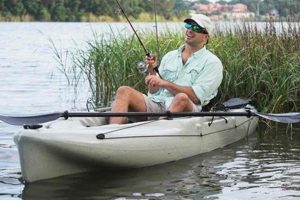
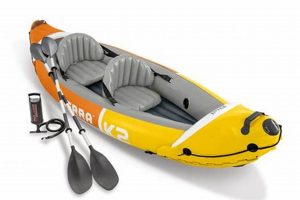
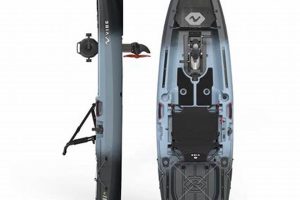
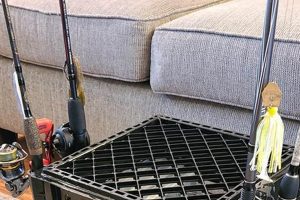
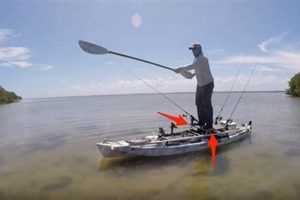
A small, narrow watercraft designed for individual paddling now frequently incorporates built-in or attachable supports for angling equipment. These specialized crafts allow anglers to access shallow waters and hard-to-reach fishing spots, providing a stable platform for casting and reeling. This integration of paddling and angling offers a unique and efficient approach to recreational fishing.
The combination of a personal watercraft with readily available fishing equipment enhances angling opportunities significantly. It allows for greater mobility and stealth compared to larger boats, enabling access to areas teeming with fish yet inaccessible by other means. Historically, anglers adapted existing kayaks for fishing; however, the increasing popularity of this approach led to purpose-built designs optimized for stability, storage, and angler comfort. This evolution has transformed recreational fishing, opening up new possibilities for both novice and experienced anglers.
This article will further explore the advantages of these specialized watercraft, covering topics such as choosing the right model, essential accessories, popular fishing techniques, and safety considerations for a successful and enjoyable fishing experience.
Tips for Kayak Fishing
Effective angling from a kayak requires careful planning and execution. The following tips offer valuable insights for a successful and enjoyable experience.
Tip 1: Prioritize Stability: Kayak stability is paramount, especially when fishing. Wider, flatter-hulled designs offer greater stability compared to narrower, performance-oriented kayaks. Consider the fishing environment (calm lakes versus flowing rivers) when selecting a kayak.
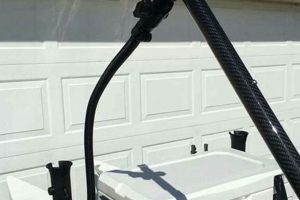
Tip 2: Choose Appropriate Rod Holders: Rod holders, whether flush-mounted, adjustable, or rotating, should securely hold rods while allowing easy access. Consider the types of fishing anticipated and the preferred casting techniques when choosing rod holders.
Tip 3: Organize Tackle Efficiently: Efficient tackle organization is crucial in a limited kayak space. Utilize tackle boxes, trays, and bags designed for kayak fishing to keep essential gear readily accessible and prevent clutter.
Tip 4: Practice Paddle and Rod Handling: Mastering simultaneous paddling and rod handling is essential for kayak angling. Practice casting and retrieving while maintaining balance and kayak control in a safe environment before venturing into open water.
Tip 5: Understand Water Conditions: Assess water conditions, including currents, tides, and wind, before embarking on a fishing trip. Knowledge of these factors ensures angler safety and aids in locating fish.
Tip 6: Respect Wildlife and the Environment: Practice catch-and-release whenever possible and adhere to local fishing regulations. Minimize environmental impact by properly disposing of fishing line and other waste.
Tip 7: Dress Appropriately and Be Prepared: Dress in layers suitable for changing weather conditions and wear a personal flotation device (PFD). Carry essential safety equipment, including a whistle, signaling device, and first-aid kit.
By following these guidelines, anglers can maximize their chances of success while ensuring a safe and enjoyable kayak fishing experience.
These tips provide a foundation for successful kayak angling. Further research and practice will enhance skills and contribute to a fulfilling experience on the water.
1. Kayak Stability

Maintaining balance is paramount when fishing from a kayak, particularly one equipped with rod holders. A stable platform is essential for casting, retrieving, and landing fish without compromising angler safety. This stability is influenced by several interconnected factors.
- Hull Design and Width
Wider, flatter hulls generally offer greater initial stability, making them suitable for calmer waters and beginners. Narrower hulls, while faster and more maneuverable, require more experience to balance. The hull design directly impacts how the kayak reacts to weight shifts inherent in fishing activities, such as casting and reeling.
- Center of Gravity
A lower center of gravity contributes to stability. Factors influencing the center of gravity include the angler’s weight, the distribution of gear within the kayak, and the presence of accessories like rod holders. Keeping weight low and centered enhances stability, especially when combined with strategically placed rod holders.
- Water Conditions
Calm lakes and ponds offer a more stable fishing environment than rivers or open ocean. Wind, currents, and waves can significantly impact stability, requiring adjustments in angler positioning and paddling technique. Even with a stable hull design, challenging water conditions necessitate increased vigilance and awareness of balance.
- Angler Movement
Sudden movements, like casting or reaching for a dropped item, can destabilize a kayak. Smooth, deliberate actions are crucial for maintaining balance. Anglers should practice casting and retrieving from a seated position to minimize disruptions to the kayak’s equilibrium, particularly when utilizing mounted rod holders.
Understanding the factors influencing kayak stability is crucial for anglers seeking to maximize their fishing experience while minimizing risks. Choosing a kayak with a suitable hull design, distributing weight evenly, and adapting to prevailing water conditions are essential for maintaining balance and enjoying a safe and productive fishing outing. Properly secured rod holders, when integrated into a stable platform, contribute to angler confidence and efficiency.
2. Rod Holder Placement
Rod holder placement significantly impacts the functionality and effectiveness of a kayak designed for fishing. Strategic positioning optimizes casting, retrieval, and overall angler efficiency. Incorrect placement, conversely, can hinder performance and even compromise safety. Several factors influence optimal placement, including the angler’s dominant hand, preferred casting techniques, and the types of fish targeted. For example, a right-handed angler targeting bass might prefer two rod holders positioned near the cockpit: one angled forward for casting and another angled backward for trolling. This arrangement allows for easy access and efficient switching between techniques without hindering paddling or requiring excessive movement.
Consideration of kayak width and hull design is also crucial. Wider kayaks offer more flexibility in rod holder placement, while narrower designs necessitate more strategic positioning to maintain balance and prevent interference with paddling. Flush-mounted rod holders integrated into the kayak’s gunwales offer a streamlined profile and minimize the risk of entanglement, but may limit adjustability. Adjustable or rotating rod holders provide greater flexibility for different fishing techniques but require careful placement to avoid obstructing the angler’s movement. In a sit-on-top kayak, track-mounted systems allow for customized rod holder placement based on individual preferences and fishing styles. This adaptability offers a significant advantage for anglers frequently changing locations or targeting different species.
Effective rod holder placement transforms a standard kayak into a specialized fishing platform. Careful consideration of angler preferences, fishing techniques, and kayak design contributes to an efficient and enjoyable fishing experience. Prioritizing accessibility, stability, and minimal interference with paddling ensures optimal functionality and enhances on-the-water performance. Understanding the interplay between these factors enables anglers to customize their kayaks for maximum efficiency and enjoyment.
3. Hands-Free Fishing
Integrating fishing rod holders into kayak design facilitates hands-free fishing, a significant advantage in various angling scenarios. This capability allows anglers to perform essential tasksadjusting tackle, paddling, or landing a fishwithout constantly gripping the rod. Hands-free fishing enhances both efficiency and safety on the water.
- Enhanced Kayak Control
Maintaining kayak position and maneuvering in currents or wind becomes easier with hands available for paddling. Rod holders secure fishing rods, preventing loss or damage while allowing the angler to focus on navigation. This is particularly crucial in dynamic environments where constant adjustments are needed.
- Improved Safety
Sudden changes in conditions or unexpected catches necessitate quick reactions. Hands-free fishing enables immediate responses to potential hazards, such as navigating through obstacles or handling a large, active fish. Having both hands available significantly improves safety margins in unpredictable on-the-water situations.
- Multitasking Efficiency
Hands-free fishing allows anglers to address various tasks concurrently. Changing lures, adjusting bait, operating fish finders, or even photographing a catch becomes significantly easier without the need to constantly hold a rod. This multitasking capability streamlines the fishing process and maximizes time spent actively fishing.
- Reduced Angler Fatigue
Constantly gripping a fishing rod, especially during lengthy outings, can lead to fatigue. Rod holders provide a secure resting place for rods, reducing strain on hands and arms. This contributes to greater overall comfort and endurance, allowing for longer, more enjoyable fishing trips.
Hands-free fishing, facilitated by thoughtfully integrated rod holders, enhances kayak angling across multiple dimensions. From increased safety and kayak control to improved multitasking efficiency and reduced angler fatigue, the advantages contribute significantly to a more productive and enjoyable fishing experience. This feature transforms the kayak into a versatile fishing platform, enabling anglers to fully engage with their surroundings and the challenges of angling.
4. Equipment Accessibility

Efficient organization and accessibility of fishing equipment are paramount when angling from a kayak. Limited space necessitates strategic placement and readily available tools and tackle. A well-designed kayak with integrated rod holders contributes significantly to optimizing equipment accessibility, directly impacting fishing efficiency and overall enjoyment.
- Strategic Gear Placement
Kayaks designed for fishing often incorporate dedicated compartments, storage wells, and strategically placed attachment points. These features allow anglers to organize essential gear, such as tackle boxes, pliers, and extra line, within easy reach. Efficient organization minimizes time spent searching for items, maximizing time spent fishing. For example, placing frequently used lures in a small tackle box attached to the kayak’s deck ensures quick access without rummaging through larger storage compartments.
- Rod Holder Integration
Integrated rod holders not only secure rods but also contribute to overall equipment accessibility. Positioning rod holders within easy reach allows for seamless transitions between paddling and fishing, maximizing efficiency. Furthermore, secure rod storage prevents equipment loss or damage, particularly important in dynamic water conditions. A readily accessible rod allows an angler to respond quickly to a fish strike without fumbling for equipment.
- Hands-Free Operation
Rod holders enable hands-free fishing, freeing the angler’s hands for other essential tasks. Landing a fish, adjusting tackle, or operating electronic devices becomes significantly easier without the constant need to hold a fishing rod. This enhanced accessibility contributes to a smoother, more efficient fishing experience, allowing anglers to focus on the task at hand.
- Adaptability and Customization
Modern kayak designs often feature adjustable or track-mounted systems for rod holders and other accessories. This adaptability allows anglers to customize their setup based on individual preferences and fishing styles. Adjustable systems cater to specific needs, accommodating various rod lengths and fishing techniques. This personalized approach to equipment accessibility further enhances efficiency and comfort on the water.
Optimized equipment accessibility is a hallmark of well-designed fishing kayaks. Strategic gear placement, integrated rod holders, hands-free operation, and adaptability contribute to a streamlined and efficient angling experience. By maximizing accessibility, these kayaks empower anglers to focus on the core activity fishing rather than managing equipment challenges. This enhanced efficiency translates to a more enjoyable and productive time on the water.
5. Angler Comfort
Angler comfort directly influences fishing session duration and overall enjoyment. A kayak equipped with fishing rod holders contributes significantly to this comfort by reducing fatigue and promoting efficient body mechanics. Sustained angling requires physical endurance; discomfort can curtail outings and diminish effectiveness. Rod holders alleviate the strain of constantly holding fishing rods, freeing hand muscles and reducing overall physical stress. This is particularly beneficial during lengthy sessions or when targeting larger, more powerful fish. For example, trolling or bottom fishing requires extended periods with a rod in hand; integrated rod holders allow anglers to relax their grip while maintaining bait or lure presentation, conserving energy and improving focus. This translates to longer, more productive, and ultimately more enjoyable fishing experiences.
Furthermore, the strategic placement of rod holders contributes to ergonomic efficiency. Positioning holders within easy reach minimizes awkward stretching and twisting, reducing strain on back, shoulder, and neck muscles. Adjustable rod holders allow for customized positioning based on individual body size and fishing style, further enhancing comfort and reducing the risk of musculoskeletal strain. This customization is crucial for accommodating different fishing techniques, such as fly fishing, which requires more dynamic rod movements than still fishing. By minimizing unnecessary movement and promoting proper posture, strategically placed rod holders optimize angler comfort, enabling extended periods on the water without physical compromise.
In essence, angler comfort represents a critical factor in successful kayak fishing. Integrating rod holders directly addresses this factor, mitigating fatigue, promoting ergonomic efficiency, and enhancing overall enjoyment. The ability to maintain focus and physical stamina throughout a fishing session contributes directly to angling success. Addressing angler comfort through thoughtful design and equipment selection ensures a more rewarding and sustainable pursuit of this demanding recreational activity. This focus on comfort transforms a potentially tiring experience into a relaxing and enjoyable pursuit, maximizing the benefits of spending time on the water.
Frequently Asked Questions
This section addresses common inquiries regarding kayaks equipped with fishing rod holders, providing concise and informative responses.
Question 1: How many rod holders are optimal for a fishing kayak?
The ideal number depends on individual fishing style and preferences. Two rod holders often suffice: one for active fishing and another for trolling or storing a spare rod. Some anglers prefer more holders for diverse techniques or specialized setups.
Question 2: Are adjustable rod holders preferable to fixed mounts?
Adjustable holders offer greater flexibility in rod positioning and angling, accommodating various fishing techniques and personal preferences. Fixed mounts provide a simpler, more streamlined setup but may lack adaptability.
Question 3: What materials are commonly used for kayak fishing rod holders?
Common materials include durable plastics, stainless steel, and aluminum. Each material offers different trade-offs in terms of weight, strength, corrosion resistance, and cost. Plastic offers affordability and corrosion resistance, while metal provides greater strength and durability.
Question 4: Can rod holders be added to existing kayaks not specifically designed for fishing?
Yes, aftermarket rod holders are readily available for installation on most kayaks. Options include clamp-on, track-mounted, and flush-mounted designs. Careful consideration of kayak structure and stability is essential for proper installation.
Question 5: How does one maintain and care for kayak fishing rod holders?
Regular rinsing with fresh water after each use removes salt, grime, and debris, prolonging rod holder lifespan. Periodic inspection for wear and tear, particularly in moving parts of adjustable holders, ensures continued functionality. Proper lubrication of moving components prevents corrosion and maintains smooth operation.
Question 6: Are there safety considerations specific to using rod holders on a kayak?
Rod holders, while beneficial, can present entanglement hazards if not used thoughtfully. Ensuring proper rod placement minimizes the risk of snagging lines or interfering with paddling strokes. Maintaining a clear deck area and practicing safe rod handling procedures contribute to angler safety.
Understanding these aspects of kayak fishing rod holders facilitates informed decisions regarding selection, installation, and usage. This knowledge contributes to a safer, more efficient, and ultimately more enjoyable fishing experience.
For further exploration of specific kayak models, fishing techniques, and safety guidelines, continue to the following sections.
Conclusion
Exploration of kayaks equipped with fishing rod holders reveals significant advantages for anglers. Enhanced stability, strategic equipment placement, and hands-free operation contribute to increased efficiency, improved safety, and reduced angler fatigue. Adaptable designs accommodate diverse fishing styles and preferences. Careful consideration of hull design, rod holder placement, and overall equipment organization optimizes the kayak fishing experience.
Investing in a well-equipped fishing kayak represents a commitment to enhancing angling pursuits. Strategic integration of features like specialized rod holders transforms a simple watercraft into a versatile and efficient fishing platform. This evolution in angling equipment empowers anglers to explore new waters, refine techniques, and deepen their connection with the sport. Continued innovation promises further advancements in kayak fishing technology, enhancing both accessibility and enjoyment for anglers of all skill levels.