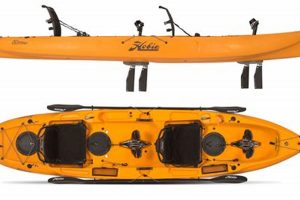
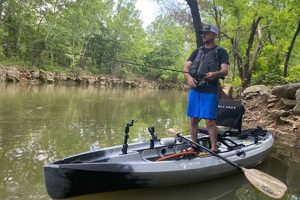
A small, pedal-driven watercraft designed by Hobie Cat specifically for angling offers hands-free operation, allowing anglers to cast, reel, and maneuver simultaneously. These vessels typically feature specialized seating, rod holders, storage compartments for tackle and gear, and often incorporate advanced features like live wells and fish finders. The pedal-drive system provides an efficient and quiet mode of propulsion, ideal for navigating shallow waters and approaching fish stealthily.
Hands-free fishing significantly enhances angling effectiveness. This type of watercraft enables exploration of hard-to-reach areas, providing access to waters otherwise inaccessible by larger boats or from shore. The stability and maneuverability of these vessels make them suitable for diverse fishing environments, from calm lakes and rivers to open ocean bays. Hobie Cat’s innovation in pedal-powered watercraft revolutionized kayak fishing, offering anglers a new level of freedom and versatility.
The following sections will delve into specific features, popular models, and essential accessories for this specialized angling vessel. Topics covered include propulsion systems, hull designs, outfitting options, and techniques for maximizing fishing success from these versatile platforms.
Tips for Pedal-Powered Kayak Angling
Maximizing success on the water requires careful planning and execution. These tips offer valuable insights for enhancing angling effectiveness from a pedal-driven fishing kayak.
Tip 1: Plan Routes Strategically: Pre-trip planning using nautical charts and mapping applications helps identify promising fishing locations and avoids navigational hazards. Consider wind and current conditions when charting a course.
Tip 2: Optimize Gear Storage: Efficient organization of tackle and equipment is crucial for maintaining a clutter-free and stable fishing platform. Utilize designated storage compartments and waterproof bags to protect gear from the elements.
Tip 3: Master Pedal Propulsion: Practice maneuvering the pedal drive system effectively to optimize speed and control. Learn to utilize reverse pedaling for precise positioning and maneuvering in tight spaces.
Tip 4: Prioritize Safety Equipment: Carry essential safety gear, including a personal flotation device, signaling devices, and a first-aid kit. Adhering to safe boating practices ensures a secure and enjoyable experience.
Tip 5: Select Appropriate Anchoring Systems: Employ anchoring systems suited for the specific fishing environment. Consider using stake-out poles in shallow water or a drift chute to control drift in currents.
Tip 6: Employ Effective Fish-Finding Techniques: Integrate fish-finding electronics and proven angling techniques to locate and target desired species. Understanding fish behavior and habitat preferences improves success rates.
Tip 7: Practice Catch and Release Techniques: Handle fish with care and utilize proper catch-and-release practices to ensure their survival and contribute to sustainable fisheries.
Implementing these strategies contributes significantly to enhanced angling experiences. Preparedness and efficient use of specialized equipment are key to maximizing success and enjoyment on the water.
The following section provides concluding remarks and highlights key takeaways for anglers seeking to optimize their fishing endeavors from these specialized vessels.
1. Pedal-Powered Propulsion

Pedal-powered propulsion represents a significant advancement in kayak fishing, particularly within the context of Hobie kayaks. This innovative system distinguishes these vessels from traditional paddle kayaks, offering distinct advantages for anglers. The following facets explore the key components, benefits, and implications of this technology.
- Enhanced Maneuverability:
Unlike paddle kayaks requiring hand-powered propulsion, pedal-powered systems offer hands-free operation. This allows anglers to maintain precise boat control while simultaneously casting, retrieving lures, and handling fish. Increased maneuverability enables navigation through complex environments, including shallow water, tight corners, and areas with heavy vegetation.
- Increased Efficiency and Speed:
Pedal drives provide greater propulsion efficiency compared to paddling, particularly over longer distances. The cyclical leg motion engages larger muscle groups, resulting in less fatigue and sustained higher speeds. This efficiency translates to more time spent fishing and exploring broader areas.
- Stealth and Reduced Disturbance:
The quiet operation of a pedal-powered system offers a significant advantage in stealth fishing. Unlike the splashing and noise associated with paddling, pedal drives minimize disturbance to the water, increasing the likelihood of approaching fish undetected. This is especially critical in shallow water environments where fish are easily spooked.
- Versatility and Adaptability:
Modern pedal-drive systems in Hobie kayaks offer various propulsion modes, including forward, reverse, and even hands-free steering. This adaptability allows anglers to adjust to changing conditions and fishing techniques quickly. Some models also incorporate fins designed for shallow water or weed-infested areas, further expanding their versatility.
The integration of pedal-powered propulsion into fishing Hobie kayaks represents a transformative advancement in angling technology. The combination of hands-free operation, increased efficiency, stealth, and versatility significantly enhances the fishing experience, enabling anglers to explore new waters, maximize fishing time, and improve overall success. This technology continues to evolve, driving innovation in kayak design and expanding angling possibilities.
2. Hands-Free Fishing

Hands-free fishing represents a core advantage of the fishing Hobie kayak, differentiating it from traditional paddle-powered kayaks. This capability significantly impacts angling effectiveness and overall experience. The following facets explore the key components, benefits, and implications of hands-free fishing in the context of these specialized vessels.
- Enhanced Lure Presentation:
Maintaining precise lure control is crucial for enticing fish. Hands-free operation allows for constant adjustments to lure depth and action, optimizing presentation and increasing the likelihood of strikes. Subtle manipulations, impossible while paddling, become readily achievable, allowing anglers to mimic natural bait movements and trigger fish responses more effectively.
- Improved Hookset and Fish Fighting:
When a fish strikes, immediate and effective hooksetting is essential. With hands readily available, anglers react instantly, increasing hookup ratios. During the fight, hands-free control of the kayak maintains optimal positioning and leverage, enhancing control over the fish and increasing landing success, particularly in challenging conditions.
- Increased Situational Awareness:
Continuous paddling divides attention, reducing awareness of surroundings. Hands-free operation allows anglers to focus on observing the water, identifying structure, and anticipating fish behavior. This heightened awareness translates to more strategic fishing decisions and increased opportunities for success. Scanning the water for bird activity, baitfish, or other signs of fish becomes easier and more effective.
- Multitasking and Efficiency:
Hands-free fishing enables concurrent tasks, such as adjusting fishing lines, changing lures, operating electronics, and even landing fish, all while maintaining boat control and position. This multitasking capability streamlines the fishing process, maximizing efficiency and time spent actively fishing. Tasks like netting a fish or quickly adjusting drag settings become significantly simpler.
Hands-free fishing fundamentally changes the angling experience aboard a fishing Hobie kayak. This capability enhances lure presentation, improves hookset and fish-fighting effectiveness, increases situational awareness, and promotes multitasking efficiency. These combined benefits contribute to a more productive and enjoyable fishing experience, underscoring the value of hands-free operation in this specialized angling platform.
3. Stability and Maneuverability
Stability and maneuverability are critical performance characteristics of fishing Hobie kayaks, directly influencing their effectiveness and suitability for various angling environments. These attributes determine the vessel’s ability to navigate diverse water conditions, maintain a stable fishing platform, and respond effectively to changing circumstances. Understanding the interplay between these factors is crucial for selecting the appropriate kayak and maximizing its on-the-water performance.
- Primary Stability:
Primary stability refers to a kayak’s initial resistance to tipping. Wider hulls generally exhibit higher primary stability, providing a secure feeling platform ideal for calm water fishing and tasks like standing to cast. This stability contributes to angler confidence, particularly in situations requiring precise movements or when handling fish.
- Secondary Stability:
Secondary stability describes a kayak’s resistance to tipping as it leans further. Hobie kayaks often feature a hull design that provides significant secondary stability, allowing them to lean into turns and handle rougher water conditions without capsizing. This characteristic is crucial for navigating choppy water, dealing with waves, and maneuvering in currents.
- Maneuverability in Tight Spaces:
Maneuverability in confined areas, such as shallow creeks, mangrove tunnels, or weed-choked waters, is essential for accessing prime fishing locations. The pedal-driven system and rudder control of Hobie kayaks facilitate precise turning and maneuvering, enabling anglers to navigate complex environments and position the vessel effectively for optimal casting angles. The ability to navigate tight spaces opens up a wider range of fishing opportunities.
- Tracking and Wind Resistance:
Tracking, a kayak’s ability to maintain a straight course, and resistance to wind drift are important considerations, especially in open water or windy conditions. Hull design and rudder systems contribute to tracking performance, minimizing the need for constant corrections and allowing anglers to focus on fishing. Effective tracking conserves energy and improves efficiency when paddling longer distances or contending with wind.
The combination of stability and maneuverability defines a fishing Hobie kayak’s performance envelope, influencing its suitability for specific fishing environments and techniques. Understanding the nuances of these characteristics allows anglers to select a vessel that aligns with their fishing style and target locations, maximizing their on-the-water effectiveness and overall fishing experience. Balancing stability and maneuverability optimizes performance in diverse conditions, from calm lakes and rivers to open ocean bays.
4. Specialized Fishing Features
Specialized fishing features distinguish Hobie kayaks from recreational models, optimizing them for angling effectiveness and enhancing the overall fishing experience. These integrated design elements cater specifically to the needs of anglers, providing practical solutions for tackle management, fish handling, and enhancing on-the-water performance. Understanding these features is crucial for maximizing the potential of a fishing Hobie kayak.
- Rod Holders:
Multiple rod holders, strategically positioned for easy access and secure rod storage, are a hallmark of fishing Hobie kayaks. These holders accommodate various rod types and allow anglers to troll multiple lines or keep rods readily available for different fishing techniques. Flush-mounted rod holders minimize line tangling and interference while paddling or pedaling.
- Tackle Management Systems:
Integrated tackle storage systems, including compartments, trays, and storage bins, provide organized and readily accessible storage for lures, hooks, lines, and other essential fishing gear. These systems keep equipment secure, dry, and within easy reach, minimizing clutter and maximizing fishing efficiency. Some models offer specialized compartments for specific items like leader lines or tools.
- Live Wells and Fish Handling:
Live wells, integrated into the kayak’s structure, provide a convenient and humane way to keep caught fish alive and fresh. These wells typically feature aeration systems and drain plugs for easy cleaning and maintenance. Additional fish-handling features, such as measuring boards or grippers, further enhance the angling experience and promote responsible catch-and-release practices.
- Mounting Options for Accessories:
Fishing Hobie kayaks offer versatile mounting options for accessories like fish finders, GPS units, cameras, and lighting systems. These mounting points, often integrated into the hull or deck, provide secure and convenient placement of electronics and other equipment, enhancing angling capability and situational awareness. Tracks and mounting plates allow for customization and flexibility in accessory placement.
These specialized fishing features contribute significantly to the effectiveness and enjoyment of fishing from a Hobie kayak. The integration of rod holders, tackle management systems, live wells, and mounting options streamlines the angling process, maximizes efficiency, and enhances the overall on-the-water experience. These features cater specifically to the needs of anglers, making Hobie kayaks a versatile and highly effective platform for pursuing a wide range of fishing styles and species.
5. Shallow Water Access
Shallow water access represents a significant advantage of fishing Hobie kayaks, expanding angling opportunities in environments often inaccessible to larger, motorized boats. The kayak’s shallow draft, combined with its maneuverability and quiet propulsion system, allows navigation in extremely shallow areas, opening access to prime fishing habitats often teeming with target species. This capability is particularly valuable in estuaries, flats, backwater creeks, and protected bays where shallow water holds significant ecological importance for fish populations.
For instance, navigating shallow flats teeming with bonefish or redfish often requires a stealthy approach and minimal disturbance. The Hobie’s pedal drive allows quiet movement through shallows, minimizing noise and water displacement that could spook fish. Similarly, accessing secluded backwater creeks and ponds, often rich in bass and panfish, becomes feasible due to the kayak’s compact size and ability to navigate tight spaces. This access provides anglers with a distinct advantage, allowing them to target fish in areas often overlooked by others. Furthermore, the shallow draft enables exploration of areas with submerged obstacles, such as oyster beds or vegetation, where fish often seek refuge and forage.
The ability to access shallow water expands angling opportunities significantly, providing access to diverse habitats and increasing the likelihood of encountering target species. This advantage underscores the versatility of fishing Hobie kayaks and their suitability for a wide range of fishing environments and techniques. Understanding the relationship between shallow water access and the kayak’s design features enables anglers to effectively target specific species and maximize their fishing success in these productive environments. However, navigating extremely shallow areas requires careful consideration of tides, currents, and potential underwater hazards to avoid grounding or damage to the kayak and its propulsion system.
6. Versatile Fishing Platform

The concept of a versatile fishing platform is central to the design and functionality of the fishing Hobie kayak. Versatility, in this context, refers to the kayak’s adaptability to diverse fishing environments, techniques, and target species. This adaptability stems from a combination of design features, including stability, maneuverability, specialized equipment integration, and the inherent advantages of human-powered propulsion. Understanding this versatility is crucial for appreciating the broad appeal and effectiveness of these specialized fishing vessels.
- Adaptability to Diverse Environments:
Fishing Hobie kayaks demonstrate adaptability across a wide spectrum of aquatic environments, from calm inland lakes and rivers to open ocean bays and estuaries. Their stability and maneuverability allow navigation through shallow water, vegetation, and challenging currents. This adaptability expands fishing opportunities, allowing anglers to target diverse species in their preferred habitats, whether pursuing bass in a secluded pond or tracking bonefish on shallow flats.
- Compatibility with Varied Fishing Techniques:
The platform’s versatility extends to compatibility with various fishing techniques. Trolling, casting, jigging, and even fly fishing are readily accommodated due to the kayak’s stability, hands-free operation, and customizable setup. Anglers can easily switch between techniques based on prevailing conditions and target species, maximizing their chances of success. The pedal-drive system allows for precise boat control while simultaneously managing fishing lines and equipment.
- Integration of Specialized Equipment:
Hobie kayaks are designed to seamlessly integrate specialized fishing equipment, further enhancing their versatility. Rod holders, fish finders, GPS units, live wells, and other accessories can be readily mounted and utilized, transforming the kayak into a fully equipped fishing platform. This integration streamlines the angling process, maximizes efficiency, and allows anglers to customize their setup based on specific needs and target species. The ability to incorporate specialized equipment contributes significantly to the kayak’s overall versatility.
- Human-Powered Propulsion Advantages:
The human-powered nature of Hobie kayaks, specifically their pedal-drive systems, contributes to their versatility. Quiet operation allows for a stealthy approach, minimizing disturbance to fish and enhancing effectiveness in shallow water environments. Furthermore, the physical engagement of pedaling offers a unique connection to the water and a sense of self-sufficiency. This human-powered aspect differentiates the experience from motorized boats, offering a closer-to-nature angling experience.
The versatility of the fishing Hobie kayak stems from a confluence of design elements and operational advantages. Its adaptability to various environments, compatibility with diverse fishing techniques, seamless integration of specialized equipment, and the inherent benefits of human-powered propulsion combine to create a highly adaptable and effective fishing platform. This versatility broadens angling possibilities, allowing anglers of all skill levels to pursue a wide range of species in diverse aquatic environments, contributing to the enduring popularity and success of these specialized fishing vessels.
7. Enhanced Angling Experience

The “fishing Hobie kayak” demonstrably enhances the angling experience through a confluence of factors. These specialized vessels offer a unique blend of stability, maneuverability, and hands-free operation, directly impacting angling effectiveness and overall enjoyment. The pedal-drive system, central to the Hobie design, frees anglers’ hands for casting, retrieving, and fighting fish, eliminating the constant need for paddling. This hands-free operation allows for more precise lure presentation, quicker hooksets, and improved fish-fighting capabilities, demonstrably increasing catch rates and angling success. Consider a scenario where an angler targets fish near a complex structure, such as submerged logs or overhanging branches. The pedal drive enables precise positioning and maneuverability within these tight spaces, while hands remain free to manage the fishing rod, maximizing the opportunity for a successful hookup.
Beyond improved fishing effectiveness, the Hobie kayak contributes to an enhanced angling experience through increased access and engagement with the aquatic environment. The vessel’s shallow draft allows exploration of areas inaccessible to larger boats, opening up new fishing grounds and increasing the likelihood of encountering target species. Simultaneously, the quiet operation of the pedal drive minimizes disturbance to the water, enhancing stealth and allowing anglers to approach fish undetected. Furthermore, the physical engagement of pedaling provides a unique connection to the water and a sense of self-sufficiency, enriching the overall experience. Imagine an angler quietly navigating a shallow estuary at dawn, propelled by the rhythmic motion of the pedals, observing wildlife, and feeling intimately connected to the surrounding environment. This immersive experience transcends mere fishing and becomes a holistic engagement with nature.
In summary, the “fishing Hobie kayak” elevates the angling experience by combining improved fishing effectiveness with enhanced engagement with the aquatic environment. The hands-free operation, increased access to shallow waters, quiet propulsion, and physical engagement of pedaling contribute to a more productive, immersive, and ultimately more rewarding fishing experience. While factors like weather conditions and individual angling skills invariably influence outcomes, the Hobie kayak provides a platform that demonstrably enhances the potential for a successful and enjoyable fishing experience. This understanding highlights the practical significance of choosing appropriate equipment to maximize not only catch rates but also the overall quality of time spent on the water.
Frequently Asked Questions
This section addresses common inquiries regarding specialized fishing kayaks, offering concise and informative responses to clarify key aspects and address potential concerns.
Question 1: What differentiates a fishing Hobie kayak from a standard recreational kayak?
Specialized fishing kayaks are purpose-built with features like a pedal-drive system for hands-free propulsion, integrated rod holders, tackle storage compartments, and often mounting points for fish finders and other accessories. These features enhance angling effectiveness and overall on-the-water experience.
Question 2: Are these kayaks suitable for ocean use?
Certain models are designed for ocean environments, featuring enhanced stability, longer hulls, and increased storage capacity. However, careful consideration of weather conditions, water currents, and personal paddling experience is crucial before venturing into open ocean environments. Selecting a model specifically designed for offshore use is recommended for ocean fishing.
Question 3: How difficult is it to learn to use the pedal-drive system?
The pedal-drive system is generally intuitive and easy to learn. Most individuals adapt quickly to the leg-powered propulsion, finding it efficient and comfortable. Practice in calm water conditions is recommended to gain familiarity with maneuvering and controlling the kayak using the pedals and rudder system.
Question 4: What maintenance is required for a pedal-driven fishing kayak?
Regular rinsing with fresh water after each use, particularly after exposure to saltwater, is essential. Periodic lubrication of moving parts, inspection of the drive system for wear and tear, and proper storage in a protected environment contribute to the kayak’s longevity and optimal performance.
Question 5: What safety precautions should one take when fishing from a kayak?
Wearing a personal flotation device (PFD) is paramount. Carrying essential safety equipment, including a whistle, signaling devices, and a first-aid kit, is highly recommended. Checking weather forecasts before embarking on a fishing trip, informing someone of intended fishing locations, and adhering to safe boating practices are crucial for ensuring a secure and enjoyable experience.
Question 6: What is the typical weight capacity of a fishing Hobie kayak?
Weight capacity varies depending on the specific model and hull design. It is crucial to consult manufacturer specifications and select a kayak with a weight capacity appropriate for the combined weight of the angler, gear, and potential catch. Exceeding the recommended weight capacity can compromise stability and performance.
Understanding these key aspects contributes to informed decision-making and ensures a safe and rewarding fishing experience. Choosing the appropriate kayak and adhering to safety guidelines enhances angling effectiveness and maximizes enjoyment on the water.
The subsequent section will provide concluding remarks and summarize key takeaways for prospective kayak anglers.
Conclusion
Specialized fishing kayaks represent a significant advancement in angling technology, offering distinct advantages over traditional fishing methods. The examination of core features, such as the pedal-driven propulsion system, hands-free operation, specialized fishing features, shallow-water access, inherent platform versatility, and the demonstrably enhanced angling experience, reveals a highly effective and adaptable approach to fishing. These features combine to offer anglers increased access to diverse fishing environments, improved fishing effectiveness through enhanced lure presentation and fish-fighting capabilities, and a deeper engagement with the aquatic environment.
As technology continues to evolve, advancements in kayak design and features promise further refinement of these specialized vessels, expanding angling possibilities and enhancing the overall fishing experience. Careful consideration of individual needs, target species, and preferred fishing environments will guide informed decision-making regarding kayak selection and equipment configuration. Ultimately, understanding the capabilities and advantages offered by these specialized fishing platforms empowers anglers to pursue their passion with increased effectiveness, efficiency, and enjoyment.