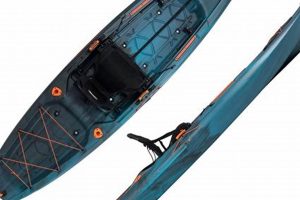
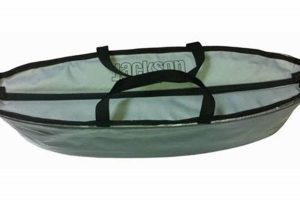
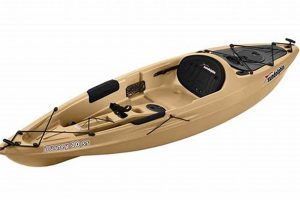
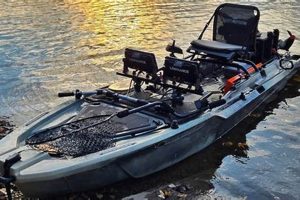
A sectional kayak designed for angling offers the portability of a smaller craft while retaining the stability and capacity often associated with larger, single-piece models. These vessels typically consist of two interlocking hull sections that can be assembled and disassembled for easier transport and storage. This modular design makes them particularly appealing to individuals with limited storage space or those who frequently travel to different fishing locations.
The primary advantage of this type of watercraft lies in its transportability. Unlike traditional kayaks, which require roof racks or trailers, these can often fit inside a vehicle, eliminating the need for specialized transport equipment and associated fuel costs. This design also benefits those living in apartments or with limited storage options. While the concept of modular kayaks is relatively recent, it addresses a long-standing challenge within the angling community: balancing performance on the water with the practicalities of transport and storage.
This article will further explore the advantages and disadvantages of these innovative vessels, considering factors such as materials, assembly processes, performance characteristics, and popular models available on the market. Additional topics will cover essential accessories, maintenance considerations, and tips for selecting the ideal sectional fishing kayak to meet individual needs and preferences.
Tips for Selecting and Using a Sectional Fishing Kayak
Choosing and utilizing a sectional fishing kayak requires careful consideration of various factors to ensure optimal performance, safety, and enjoyment on the water. The following tips offer guidance for both prospective buyers and current owners.
Tip 1: Prioritize Hull Material and Construction: Durability and weight are critical. Examine options like high-density polyethylene (HDPE) for robustness or lighter materials like ABS for enhanced portability. Evaluate construction quality, focusing on seam strength and hardware integrity.
Tip 2: Assess Assembly Complexity: Practice assembling and disassembling the kayak before reaching the water. A streamlined connection system minimizes setup time and frustration. Ensure all components fit securely and tightly.
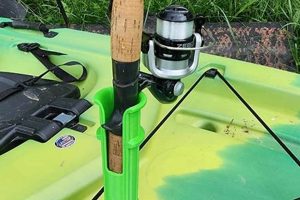
Tip 3: Consider Storage Capacity and Layout: Evaluate storage options for tackle, gear, and personal items. Prioritize kayaks with well-designed compartments and integrated features like rod holders and mounting tracks.
Tip 4: Factor in Weight Capacity and Stability: Match the kayak’s weight capacity to the combined weight of the angler, gear, and potential catch. Prioritize stability, especially in challenging conditions, by opting for wider hulls and lower centers of gravity.
Tip 5: Test Paddling Performance and Tracking: Research reviews and, if possible, test the kayak’s performance on the water. Assess its tracking ability and maneuverability to ensure it aligns with individual paddling style and fishing preferences.
Tip 6: Research Transportation and Storage Solutions: Determine how the disassembled sections will be transported and stored. Consider the kayak’s packed dimensions and weight relative to available vehicle space and storage facilities.
Tip 7: Invest in Essential Safety Equipment: Prioritize safety by equipping the kayak with a personal flotation device (PFD), a whistle, a bilge pump, and navigation lights, especially for low-light conditions.
By carefully considering these tips, individuals can select a sectional fishing kayak that aligns with their specific needs and enhances their overall angling experience. Careful consideration and preparation contribute significantly to both on-water safety and enjoyment.
This information provides a foundational understanding of key factors involved in choosing and using a sectional fishing kayak. The following sections will delve into specific models, accessories, and advanced techniques for maximizing performance and enjoyment on the water.
1. Portability

Portability stands as a defining characteristic of sectional fishing kayaks, directly addressing the transport and storage challenges associated with traditional single-piece designs. This feature significantly expands accessibility for anglers limited by vehicle size, storage space, or physical ability to handle larger kayaks.
- Reduced Transport Bulk:
The ability to break down the kayak into smaller components drastically reduces its transport volume. This eliminates the need for roof racks or trailers, allowing transport within the confines of a standard vehicle, even compact cars. This ease of transport expands access to remote fishing locations previously inaccessible with larger, cumbersome kayaks. For example, an angler can easily transport a disassembled kayak in a small SUV, eliminating the need for a specialized trailer.
- Simplified Storage:
The modular design facilitates compact storage in limited spaces. Disassembled sections can be stored in apartments, garages, or sheds without requiring dedicated storage racks or large floor areas. This compact storage footprint increases the practicality of kayak ownership for individuals living in urban environments or with limited storage capacity. For instance, sections can be stored vertically or horizontally, optimizing space utilization.
- Lightweight Construction:
Many sectional kayaks utilize lightweight materials to further enhance portability. While maintaining structural integrity, lighter materials simplify handling and reduce strain during transport, particularly for individuals with physical limitations. This design aspect enhances accessibility and ease of use for a wider range of anglers. A lightweight kayak might incorporate materials like ABS plastic to reduce overall weight without compromising structural rigidity.
- Effortless Maneuverability:
The reduced weight and size of individual sections simplify maneuverability, particularly in challenging terrain. Transporting the kayak from a vehicle to the water’s edge becomes significantly easier, even over uneven ground or longer distances. This ease of handling reduces the physical demands associated with kayak fishing, broadening its appeal to a wider demographic. For instance, carrying individual sections across a sandy beach or up a steep embankment becomes considerably less strenuous compared to maneuvering a full-sized kayak.
The inherent portability of sectional fishing kayaks transforms the accessibility and convenience of this popular watersport. By eliminating traditional barriers related to transport and storage, these innovative designs empower anglers to explore diverse waterways with greater ease and efficiency. The convergence of portability and performance opens new avenues for fishing enthusiasts of all skill levels and physical capabilities.
2. Storage

Storage considerations significantly influence the practicality and appeal of sectional fishing kayaks. The ability to disassemble and store these kayaks compactly addresses a key limitation of traditional kayak ownership, particularly for individuals with limited space. The following facets explore the storage advantages associated with these innovative designs.
- Reduced Footprint:
Disassembly reduces the overall storage footprint, allowing these kayaks to fit in spaces unsuitable for traditional designs. Storage becomes feasible in apartments, garages, closets, or even under beds. This eliminates the need for dedicated storage racks or large floor areas, maximizing space utilization in smaller living environments. For example, a disassembled kayak can be stored in a closet alongside other sporting equipment, optimizing space efficiency.
- Modular Flexibility:
The modular nature allows for flexible storage arrangements. Individual sections can be stored separately, adapting to the specific dimensions and layout of available storage areas. This adaptability maximizes storage efficiency and minimizes the disruption to existing storage solutions. Sections can be stored vertically, horizontally, or even stacked depending on available space.
- Protection and Preservation:
Disassembly facilitates more effective protection of the kayak during storage. Individual sections are less susceptible to damage from accidental impacts or warping compared to a fully assembled kayak. This modularity enhances the longevity of the kayak, preserving its structural integrity and aesthetic appeal over time. Storing sections in protective bags or covers further minimizes the risk of scratches or damage.
- Off-Season Convenience:
During the off-season, sectional kayaks require minimal storage space. The compact storage profile simplifies long-term storage without monopolizing valuable space. This facilitates seasonal storage rotations and simplifies overall organization within storage areas. A disassembled kayak can be easily stored alongside other seasonal equipment, such as skis or camping gear, maximizing space efficiency during periods of non-use.
The storage advantages of sectional fishing kayaks significantly enhance their practicality and overall appeal. By mitigating the storage challenges associated with traditional kayak ownership, these designs offer convenient and space-saving solutions for anglers in diverse living situations, maximizing accessibility and promoting long-term ownership satisfaction.
3. Assembly
Assembly represents a critical aspect of sectional kayak ownership, directly impacting the overall user experience. Efficient and reliable connection mechanisms are essential for seamless transitions between transport, storage, and on-water activity. Understanding the assembly process and its implications is crucial for maximizing the convenience and enjoyment of these innovative vessels.
- Connection System Design:
Connection system design dictates the speed and simplicity of assembly. Systems utilizing robust latches, clamps, or interlocking components generally offer quicker and more secure assembly compared to complex, multi-step processes. A well-designed system minimizes setup time and ensures a rigid, watertight connection between sections. Examples include lever-lock systems, toggle clamps, and slide-and-lock mechanisms. The choice of connection system influences both the speed of assembly and the overall structural integrity of the assembled kayak.
- Assembly Time and Complexity:
The time and complexity required for assembly directly impact the practicality of sectional kayaks. Streamlined assembly processes, often achieved through intuitive connection systems and clear instructions, minimize pre-fishing preparation time. Conversely, complex or time-consuming assembly can detract from the overall user experience. An ideal assembly process should be achievable within minutes, even for novice users. For instance, a simple latching system can significantly reduce assembly time compared to a system requiring multiple bolts and adjustments.
- Structural Integrity and Stability:
The assembled kayak’s structural integrity and stability are paramount for safety and performance on the water. A secure and rigid connection between sections ensures efficient power transfer during paddling and maintains stability in various water conditions. A well-designed connection system minimizes flex or movement between sections, creating a unified and stable platform for fishing. The rigidity of the connection directly influences the kayak’s tracking ability and overall handling characteristics.
- Maintenance and Durability of Connections:
The long-term durability and maintenance requirements of the connection system influence the overall lifespan of the kayak. Corrosion-resistant materials and robust construction ensure reliable performance over extended periods and minimize the need for frequent repairs or replacements. Regular inspection and cleaning of connection components contribute to their longevity and maintain optimal performance. For example, stainless steel hardware and durable plastic components enhance the connection system’s resistance to wear and tear, extending its lifespan and minimizing maintenance requirements.
Efficient and reliable assembly is fundamental to the practicality and enjoyment of sectional fishing kayaks. A well-designed connection system, combined with straightforward assembly procedures, enhances the user experience, allowing anglers to focus on the fishing experience rather than the assembly process. Understanding the nuances of assembly contributes to informed decision-making and ensures optimal performance and longevity of these versatile watercraft.
4. Performance

Performance characteristics significantly influence the suitability of a sectional fishing kayak for its intended purpose. While portability and storage convenience represent key advantages, on-the-water performance dictates its effectiveness as a fishing platform. Several factors contribute to the overall performance profile of these modular kayaks.
Hull Design and Stability: Hull design directly impacts stability, a critical factor for fishing activities. Wider hulls generally offer greater primary stability, resisting initial tipping, while longer, narrower hulls provide better secondary stability, recovering from larger leans. A kayak’s stability profile influences its suitability for different fishing styles and water conditions. A wider, flatter hull might be preferred for calm lakes or rivers, while a slightly narrower hull with a defined keel might be more suitable for coastal waters or choppier conditions. The hull design dictates how the kayak responds to angler movements, waves, and currents, influencing both comfort and safety.
Tracking and Maneuverability: Tracking, the ability to maintain a straight course, and maneuverability, the ease of turning and changing direction, represent critical performance aspects. Longer kayaks generally track better, while shorter kayaks offer enhanced maneuverability. The balance between these two characteristics depends on the intended fishing environment. A kayak designed for open water might prioritize tracking for efficient paddling over long distances, while a kayak intended for navigating tight rivers or maneuvering around obstacles might prioritize maneuverability. The design of the hull, keel, and rudder (if present) influences both tracking and maneuverability, shaping the kayak’s responsiveness to paddle input.
Speed and Efficiency: Speed and paddling efficiency influence the distance an angler can cover and the effort required. Longer, narrower kayaks tend to be faster and more efficient, while shorter, wider kayaks prioritize stability over speed. Hull design, material, and weight all contribute to the overall speed and efficiency profile. A lightweight kayak with a streamlined hull design requires less effort to paddle, allowing anglers to cover greater distances or fish for longer periods without fatigue. The choice between speed and stability often depends on the specific fishing application and the angler’s physical capabilities.
Weight Capacity and Load Management: Weight capacity dictates the total weight the kayak can safely carry, including the angler, gear, and any potential catch. Proper load management influences both stability and performance. Exceeding the weight capacity can compromise stability and make the kayak more difficult to control. Understanding the weight distribution and its impact on performance is crucial for safe and effective kayak operation. Distributing weight evenly within the kayak enhances stability and improves tracking, contributing to a more balanced and controlled paddling experience.
Understanding the performance characteristics of sectional fishing kayaks is crucial for informed purchasing decisions and optimal on-water experiences. Evaluating hull design, stability, tracking, maneuverability, speed, efficiency, and weight capacity empowers anglers to select kayaks best suited to their individual needs, fishing styles, and target environments. By considering these factors, anglers can maximize their fishing success and enjoyment while prioritizing safety and efficiency on the water.
5. Durability
Durability represents a critical factor influencing the long-term value and performance of a sectional fishing kayak. The ability to withstand the rigors of transport, assembly, and on-water use directly impacts the kayak’s lifespan and the overall user experience. Material selection, construction techniques, and connection system design all contribute to the overall durability profile.
Material selection significantly influences a kayak’s resistance to impacts, abrasion, and UV degradation. High-density polyethylene (HDPE) offers excellent impact resistance and durability, making it a popular choice for recreational kayaks. ABS plastic provides a balance between durability and weight, often preferred for its lighter construction. Composite materials, while offering superior strength and stiffness, typically come at a higher price point. The chosen material must withstand potential impacts from rocks, submerged obstacles, and general wear and tear associated with transport and storage. For example, an HDPE kayak might exhibit greater resistance to scratches and impacts compared to an ABS model, though it might also be heavier. Similarly, a composite kayak might offer superior stiffness and responsiveness but require more careful handling to prevent damage.
Construction techniques, including seam welding, molding processes, and hardware choices, influence the structural integrity and long-term durability of the kayak. Robust seam construction prevents leaks and ensures a watertight seal. Reinforced areas, particularly around stress points like seating areas and connection points, enhance the kayak’s ability to withstand impacts and flexing. High-quality hardware, such as stainless steel fasteners and durable latches, resists corrosion and ensures reliable performance over extended periods. For example, a kayak with welded seams typically offers greater durability and longevity compared to a kayak with glued seams. Furthermore, reinforced connection points contribute to the overall structural integrity of the assembled kayak, ensuring secure and reliable joining of sections.
The durability of the connection system directly impacts the kayak’s overall structural integrity and long-term performance. Robust connection mechanisms, featuring durable materials and secure locking mechanisms, ensure a rigid and reliable connection between sections. Corrosion-resistant hardware and high-strength components maintain connection integrity over time, minimizing the risk of failures or leaks. Regular inspection and maintenance of the connection system, including cleaning and lubrication, contribute to its long-term durability and performance. A well-maintained connection system ensures a consistent and reliable connection between sections, maximizing safety and performance on the water.
6. Cost
Cost represents a significant factor influencing purchasing decisions within the sectional fishing kayak market. The price of these kayaks varies considerably based on several key factors, including materials, features, construction quality, and brand reputation. Understanding the relationship between cost and these contributing factors empowers consumers to make informed choices aligned with individual budgets and performance expectations. For instance, kayaks constructed from high-density polyethylene (HDPE) generally occupy a lower price point compared to those made from more advanced composites. This price difference reflects the material costs and manufacturing processes associated with each material type. Similarly, kayaks equipped with advanced features, such as integrated fish finders, rod holders, or adjustable seating systems, typically command higher prices than more basic models. The inclusion of these features adds to the overall manufacturing cost, reflected in the final retail price.
Analyzing the cost-benefit ratio of various models within the sectional fishing kayak market is essential for maximizing value. While a higher price tag often correlates with enhanced features, durability, or performance characteristics, it’s crucial to assess whether these added benefits justify the increased cost for individual needs and intended usage. For example, an angler primarily fishing in calm lakes or rivers might prioritize stability and affordability over advanced features or high-speed performance, opting for a more budget-friendly model. Conversely, an angler targeting offshore fishing might prioritize durability, tracking, and specialized features, justifying a higher investment in a premium sectional kayak. The anticipated frequency of use and the specific fishing environment also play a role in cost considerations. A kayak intended for frequent use in challenging conditions might warrant a higher initial investment in a more durable model to ensure long-term performance and minimize potential repair costs.
Understanding the cost landscape within the sectional fishing kayak market requires careful consideration of materials, features, construction, and brand reputation. Analyzing the cost-benefit ratio of different models, factoring in individual needs and intended usage, facilitates informed purchasing decisions. Balancing desired features and performance characteristics with budget constraints ensures a satisfying and value-driven purchase, maximizing long-term enjoyment and minimizing potential financial strain.
Frequently Asked Questions
This section addresses common inquiries regarding sectional fishing kayaks, providing concise and informative responses to facilitate informed decision-making.
Question 1: How durable are sectional fishing kayaks compared to traditional single-piece kayaks?
Durability depends on materials and construction. High-quality sectional kayaks, particularly those utilizing robust connection systems and durable materials like high-density polyethylene (HDPE), can rival the durability of single-piece kayaks. Careful inspection of construction quality and connection mechanisms is recommended.
Question 2: Are sectional kayaks as stable as traditional kayaks?
Stability is primarily determined by hull design rather than sectional construction. Sectional kayaks with wider hulls offer comparable stability to similarly designed single-piece models. Performance variations exist based on specific hull characteristics, length, and width.
Question 3: How long does it take to assemble a sectional fishing kayak?
Assembly time varies depending on the connection system. Well-designed systems allow for assembly within minutes, often involving simple latching or clamping mechanisms. Practice significantly reduces assembly time.
Question 4: Can sectional kayaks handle rough water conditions?
Suitability for rough water depends on the specific kayak design, hull characteristics, and intended usage. Some models perform admirably in moderate chop, while others are better suited for calmer waters. Researching model-specific performance characteristics is crucial.
Question 5: What are the primary advantages of choosing a sectional kayak for fishing?
Key advantages include enhanced portability, simplified storage, and potential cost savings related to transport. These features make sectional kayaks particularly appealing for individuals with limited storage space or those frequently traveling to different fishing locations.
Question 6: What maintenance considerations are specific to sectional fishing kayaks?
Regular inspection and cleaning of connection mechanisms are crucial. Ensuring connections remain free of debris and properly lubricated contributes to their longevity and maintains a secure, watertight seal. General kayak maintenance, such as cleaning and UV protection, also applies.
Careful consideration of these frequently asked questions, alongside thorough research of individual models, empowers informed purchasing decisions and ensures optimal performance and longevity of sectional fishing kayaks. Understanding the nuances of these unique vessels contributes significantly to a satisfying and rewarding on-water experience.
The next section will delve into specific models and brands within the sectional fishing kayak market, offering comparative analyses and highlighting key features to consider during the selection process.
Conclusion
Sectional fishing kayaks offer a compelling solution for anglers seeking enhanced portability and storage convenience without compromising on-water performance. This analysis has explored critical aspects of these innovative vessels, from material selection and construction techniques to performance characteristics, assembly processes, and cost considerations. Durability, stability, and efficient connection systems emerge as key factors influencing long-term satisfaction and practical utility. Understanding the nuances of hull design, weight capacity, and intended usage empowers informed decision-making, aligning kayak selection with individual angling preferences and target environments.
The continued evolution of sectional kayak design promises further advancements in materials, assembly mechanisms, and integrated features. As technology progresses, anglers can anticipate even greater portability, enhanced performance, and increased durability. Careful consideration of individual needs, coupled with thorough research of available models, remains crucial for maximizing the benefits of these versatile watercraft. The future of sectional fishing kayaks points towards enhanced accessibility and convenience, empowering anglers to explore diverse waterways with greater ease and efficiency.