A kayak propelled by a pedal-driven system, specifically designed for angling, offers hands-free operation, allowing the angler to focus on fishing techniques and equipment manipulation. This propulsion method combines the quiet, low-profile advantages of a traditional kayak with the speed and efficiency of a small motorized boat. Imagine traversing longer distances with less physical exertion, reaching secluded fishing spots previously inaccessible by paddle alone.
This type of watercraft offers several key advantages. Increased range and speed enable anglers to cover more water and locate fish more effectively. The hands-free design facilitates fishing activities, from casting and retrieving to landing a catch. Furthermore, the pedal system provides a low-impact, full-body workout. The evolution of these specialized kayaks has revolutionized fishing, providing a versatile platform that blends elements of traditional kayaking with modern technology. This innovation offers a compelling alternative to both paddle kayaks and motorized boats for angling enthusiasts.
This article will further examine the distinct features and advantages of this innovative fishing platform, exploring topics such as propulsion system variations, hull designs, specific fishing applications, and essential accessories.
Tips for Pedal Kayak Fishing
Maximizing the advantages of a pedal-powered fishing kayak requires understanding key operational and safety considerations. The following tips offer guidance for a successful and enjoyable fishing experience.
Tip 1: Practice Maneuvering: Before venturing onto open water, practice maneuvering in a controlled environment. Understanding the turning radius and the impact of currents on the vessel is crucial.
Tip 2: Understand Propulsion System Maintenance: Regular maintenance ensures optimal performance and longevity. Consult the manufacturer’s guidelines for specific maintenance procedures, including lubrication and cleaning.
Tip 3: Prioritize Safety Equipment: Always wear a personal flotation device (PFD). Carry essential safety gear, including a whistle, signaling devices, and a first-aid kit.
Tip 4: Plan Fishing Routes Strategically: Research potential fishing locations and plan routes accordingly. Consider factors such as water depth, currents, and potential obstacles.
Tip 5: Adjust Seat and Pedal Positioning: Proper ergonomic setup is essential for comfort and efficient pedaling. Adjust the seat and pedals to achieve a comfortable and biomechanically sound position.
Tip 6: Distribute Weight Evenly: Proper weight distribution enhances stability and tracking. Distribute gear and equipment evenly throughout the kayak.
Tip 7: Be Mindful of Weather Conditions: Check weather forecasts before embarking on a fishing trip. Avoid venturing out in adverse weather conditions, such as strong winds or storms.
Tip 8: Respect Wildlife and the Environment: Practice responsible angling and adhere to local fishing regulations. Leave no trace behind, minimizing environmental impact.
By adhering to these guidelines, anglers can enhance safety, improve fishing efficiency, and promote responsible enjoyment of the sport.
These practical tips provide a framework for a safe and productive fishing experience, allowing anglers to fully leverage the advantages of a pedal-powered kayak. The following section concludes this article with a summary of key points and considerations.
1. Hands-Free Fishing

Hands-free fishing represents a significant advantage offered by pedal-driven kayaks, fundamentally changing the angling experience. This capability allows anglers to focus on fishing techniques and respond quickly to changing conditions, enhancing efficiency and overall success.
- Enhanced Lure Control:
Maintaining precise lure presentation is often crucial for attracting fish. A pedal drive system allows for continuous, subtle adjustments to the kayak’s position, enabling anglers to maintain optimal lure depth and action, even in challenging currents or wind. This level of control can be particularly advantageous for techniques like trolling or drift fishing.
- Improved Hookset Potential:
When a fish strikes, immediate and decisive action is often required for a successful hookset. With hands already free, anglers can react instantly, increasing the likelihood of securing the catch. This responsiveness is especially critical in situations involving fast-striking or lightly biting fish.
- Efficient Tackle Management:
From changing lures to adjusting lines, tackle management requires dexterity and often involves multiple steps. Hands-free operation simplifies these tasks, allowing anglers to re-rig, tie knots, or switch rods quickly and efficiently, minimizing disruption to the fishing process.
- Increased Situational Awareness:
Maintaining awareness of the surrounding environment is crucial for safety and effective fishing. By freeing up the hands, pedal drive kayaks allow anglers to scan the water for signs of fish, observe changing weather patterns, or navigate through complex environments with greater ease and attention.
These interconnected facets of hands-free fishing significantly enhance the angler’s ability to effectively target and catch fish. The pedal-driven kayak provides a platform that optimizes these advantages, transforming the angling experience into a more productive and enjoyable pursuit. This core benefit distinguishes pedal kayaks from traditional paddle-powered options and contributes significantly to their growing popularity among serious anglers.
2. Increased Range
The extended range offered by pedal-driven fishing kayaks represents a significant departure from traditional paddle kayaks, opening up new possibilities for anglers. This increased range is not simply about covering more water; it’s about accessing previously unreachable fishing grounds, maximizing fishing time, and expanding angling opportunities.
- Access to Distant Fishing Grounds
Pedal propulsion allows anglers to reach offshore reefs, distant islands, or mid-lake structures that would be impractical or excessively time-consuming to reach by paddle power alone. This expanded reach opens up a wider range of habitats and potentially larger fish populations.
- Efficient Exploration of Larger Bodies of Water
Large lakes, reservoirs, and coastal areas present vast fishing opportunities but can be daunting to navigate with a paddle kayak. Pedal kayaks enable efficient exploration of these expansive environments, allowing anglers to cover more ground and locate productive fishing areas quickly.
- Maximized Fishing Time
By reducing travel time, pedal kayaks maximize the time spent actively fishing. Less energy is expended on reaching the desired location, leaving more stamina for casting, retrieving, and fighting fish. This efficiency translates to a more productive and enjoyable fishing experience.
- Adaptability to Varying Conditions
Pedal kayaks provide a crucial advantage in challenging conditions such as strong currents or headwinds. The consistent propulsion system allows anglers to maintain course and speed, even in adverse environments, expanding the range of fishable conditions.
The increased range offered by pedal-driven kayaks fundamentally changes the dynamics of kayak fishing. It provides anglers with greater flexibility, allowing them to explore new waters, spend less time traveling, and fish more effectively in a variety of conditions. This capability significantly enhances the overall fishing experience and expands the possibilities for anglers seeking to maximize their time on the water.
3. Enhanced Stability

Stability plays a crucial role in the effectiveness and safety of a fishing kayak. Enhanced stability, a key feature of many pedal-driven designs, contributes significantly to angler comfort, efficient fishing practices, and overall safety on the water. This characteristic allows for more confident casting, fish fighting, and maneuvering in various water conditions.
- Wider Hull Design
Many pedal-driven kayaks feature wider hulls compared to traditional paddle kayaks. This increased width creates a larger contact area with the water, enhancing primary stabilityresistance to initial tipping. A wider hull provides a more stable platform, particularly beneficial when casting, reeling, or landing a fish.
- Lower Center of Gravity
The pedal drive system and seating position in these kayaks often contribute to a lower center of gravity. A lower center of gravity enhances secondary stabilitythe ability to recover from a tilt. This characteristic is essential in rough water or when dealing with the unexpected movements of a hooked fish.
- Weight Distribution
The inherent design of pedal kayaks, with the pedal drive system typically located centrally and lower in the hull, contributes to balanced weight distribution. Even weight distribution further enhances stability and prevents excessive rocking or tipping, promoting a more predictable and controlled kayaking experience.
- Standing and Sight Fishing
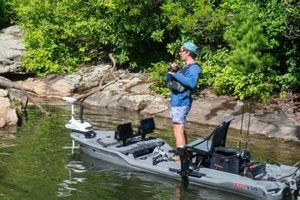
The enhanced stability of some pedal-driven kayaks allows anglers to stand and fish comfortably. This elevated position provides a better vantage point for spotting fish, making accurate casts, and maneuvering through shallow water or around obstacles. Standing also facilitates sight fishing, a popular technique in many fisheries.
The enhanced stability inherent in many pedal-driven kayak designs significantly improves the angling experience. It provides a secure and confident platform for various fishing techniques, from casting and retrieving to landing larger fish. This stability also contributes to angler safety, particularly in challenging conditions. By combining a stable platform with the efficiency of pedal propulsion, these kayaks offer a compelling option for anglers seeking to maximize both performance and enjoyment on the water.
4. Propulsion Efficiency
Propulsion efficiency represents a defining advantage of pedal-driven fishing kayaks, significantly impacting their performance and overall utility. These systems leverage biomechanics and optimized gear ratios to translate human energy into forward motion more effectively than traditional paddle kayaks. This efficiency translates to increased speed, reduced fatigue, and the ability to cover greater distances, ultimately enhancing fishing effectiveness.
The cyclical leg motion employed in pedaling engages larger muscle groups than paddling, allowing for sustained effort with less exertion. Furthermore, the underwater fin or propeller designs minimize energy loss due to slippage, maximizing thrust and maintaining momentum. This efficiency is particularly noticeable in challenging conditions, such as headwinds or currents, where pedal-driven kayaks outperform paddle-powered alternatives. Consider a scenario where an angler needs to navigate a long stretch of open water to reach a distant fishing spot. A pedal-driven kayak allows for faster traversal, conserving energy for the actual fishing activity. Conversely, paddling the same distance would require significantly more effort and time, potentially leading to fatigue and reduced fishing time.
Understanding the factors that contribute to propulsion efficiency is crucial for informed decision-making when selecting a pedal-driven kayak. Fin design, gear ratios, and the overall ergonomics of the pedal system all play a role in optimizing performance. Analyzing these factors enables anglers to select a kayak that best suits their individual needs and fishing style, maximizing their time and effort on the water. This focus on propulsion efficiency underscores the evolution of fishing kayak design, emphasizing performance and enabling anglers to access a wider range of fishing opportunities.
5. Quiet Operation
Stealth is often paramount in fishing. A quiet approach allows anglers to get closer to fish without disturbing them, significantly increasing the chances of a successful catch. Pedal-driven fishing kayaks offer a distinct advantage in this regard, operating far more quietly than motorized boats. This quiet operation is a critical factor contributing to their effectiveness in various fishing environments.
- Reduced Fish Spooking
The absence of a combustion engine eliminates the loud noises and vibrations that can spook fish, particularly in shallow water or calm conditions. The quiet propulsion system of a pedal kayak allows anglers to approach fish subtly, maximizing opportunities for a successful presentation.
- Enhanced Stealth in Shallow Water
In shallow-water environments, noise travels easily and can quickly alert fish to the presence of an angler. A pedal kayak’s quiet operation is especially beneficial in these sensitive areas, enabling close-range approaches without disturbing the target species. This is particularly advantageous when targeting species like bonefish, redfish, or snook in shallow flats.
- Improved Fishing in Calm Conditions
Calm water conditions often amplify even subtle noises, making stealth even more critical. The minimal noise produced by a pedal kayak becomes a significant advantage in these circumstances, allowing anglers to maintain a low profile and approach fish undetected.
- Natural Approach to Wildlife Observation
Beyond fishing, the quiet operation of a pedal kayak allows for discreet observation of wildlife in their natural habitat. Birds, other aquatic life, and even larger animals are less likely to be disturbed by the quiet approach of a pedal-powered vessel, offering unique opportunities for nature viewing and photography.
The quiet operation of a pedal-driven fishing kayak contributes significantly to its effectiveness as a fishing platform. By minimizing noise and disturbance, these kayaks allow anglers to approach fish more closely and increase their chances of success. This characteristic, combined with the other advantages of pedal kayaks, solidifies their position as a versatile and effective tool for anglers seeking a stealthy and efficient approach to fishing.
6. Specialized Features

Specialized features distinguish pedal-driven fishing kayaks from recreational models, optimizing them for angling effectiveness and enhancing the overall fishing experience. These features, often integrated seamlessly into the kayak’s design, reflect a deep understanding of angler needs and contribute directly to improved fishing performance and convenience. Consider, for example, the integration of rod holders. Multiple rod holders, strategically positioned for easy access and different fishing techniques, allow anglers to switch between setups quickly or troll multiple lines simultaneously. This seemingly simple feature significantly impacts fishing efficiency, allowing anglers to adapt to changing conditions or target different species without cumbersome adjustments.
Further enhancing functionality, many pedal fishing kayaks incorporate gear tracks, offering a versatile mounting system for fish finders, GPS units, camera mounts, and other accessories. A well-placed fish finder, for instance, provides real-time underwater insights, aiding in locating fish-holding structures or tracking baitfish movements. This integration of technology directly influences fishing success by providing crucial information that informs angling strategies. Similarly, integrated storage compartments, often designed specifically for tackle boxes and other fishing gear, optimize organization and accessibility, minimizing clutter and maximizing time spent fishing rather than searching for equipment. Livewells, designed to keep caught fish alive and healthy, further enhance the fishing experience, particularly for anglers practicing catch and release or preparing fresh catches for consumption.
Understanding the purpose and functionality of these specialized features is essential for maximizing the utility of a pedal-driven fishing kayak. While the core benefit of hands-free propulsion remains central, these integrated features significantly elevate the overall fishing experience, enhancing efficiency, comfort, and success on the water. These features, born from a focus on practical angler needs, demonstrate the continuous evolution of kayak design towards specialized performance and highlight the significant role that thoughtful design plays in modern fishing practices. Selecting a kayak with the right features, tailored to specific fishing styles and target species, is a critical step in optimizing angling success and enjoyment.
Frequently Asked Questions
Addressing common inquiries regarding pedal-driven fishing kayaks provides clarity for prospective buyers and enhances understanding of this specialized watercraft.
Question 1: What are the primary advantages of a pedal drive system over traditional paddling?
Pedal drive systems offer hands-free operation, increased speed and range, and enhanced fishing efficiency. These advantages allow anglers to focus on fishing techniques, cover more water, and maintain precise boat control, particularly in challenging conditions.
Question 2: How does the maintenance of a pedal drive system compare to that of a paddle kayak?
Pedal drive systems require periodic maintenance, including lubrication, cleaning, and occasional part replacement. While generally more involved than paddle kayak maintenance, proper care ensures optimal performance and longevity.
Question 3: Are pedal kayaks suitable for all body types and physical conditions?
Most pedal kayaks accommodate a wide range of user sizes and physical abilities. Adjustable seating and pedal positions allow for customized ergonomic setups. However, individuals with specific physical limitations should carefully evaluate models and potentially consult with a healthcare professional.
Question 4: What are the typical cost considerations associated with purchasing a pedal-driven fishing kayak?
Pedal kayaks typically represent a higher initial investment compared to paddle kayaks due to the complexity of the drive system. Prices vary significantly based on features, materials, and brand. Researching various models and considering long-term value is essential.
Question 5: How does the stability of a pedal kayak compare to that of a paddle kayak?
Many pedal kayaks offer enhanced stability due to wider hulls and lower centers of gravity. This enhanced stability is particularly beneficial for standing, casting, and fighting fish. However, stability varies among models, and individual preferences should be considered.
Question 6: What safety precautions should be taken when using a pedal-driven fishing kayak?
Standard kayak safety practices apply, including wearing a personal flotation device (PFD), carrying essential safety gear, checking weather conditions, and being aware of navigational hazards. Familiarization with the specific features and operation of the pedal drive system is also crucial.
Understanding these key aspects of pedal-driven fishing kayaks empowers informed purchasing decisions and promotes safe and enjoyable on-the-water experiences.
This concludes the frequently asked questions section. The following section will offer concluding remarks.
Conclusion
Pedal-driven fishing kayaks represent a significant advancement in angling technology, offering distinct advantages over traditional paddle kayaks and motorized boats. This article explored key aspects of these specialized watercraft, including the benefits of hands-free fishing, increased range and speed, enhanced stability, efficient propulsion, quiet operation, and specialized features designed for angling. Understanding these elements provides a framework for evaluating the suitability of pedal-driven kayaks for individual fishing needs and preferences. From enhanced lure control and improved hookset potential to access to distant fishing grounds and maximized fishing time, the advantages offered by these kayaks contribute significantly to angling effectiveness and overall enjoyment.
The evolution of fishing kayak design continues, with ongoing innovations in propulsion systems, hull designs, and integrated features. Careful consideration of these advancements, coupled with a thorough assessment of individual fishing styles and target species, empowers anglers to make informed decisions and select the optimal watercraft for maximizing success and enjoyment on the water. The future of kayak fishing undoubtedly holds further refinements and specialized adaptations, promising continued advancements in this dynamic and evolving segment of the angling world.