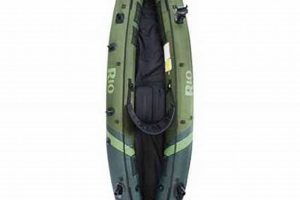
A darkly colored kayak, often black, is a popular choice for anglers. This coloration offers several tactical advantages for fishing. For example, a dark hull can blend in with shadowy shorelines or deep water, making the kayak less visible to fish. This can be particularly advantageous in clear water or when targeting wary species.
The use of such kayaks contributes significantly to angler success. A less visible vessel allows for closer approaches to target areas without disturbing fish. This stealth approach can be crucial in various fishing environments, from shallow flats to deeper offshore waters. While brightly colored kayaks may be preferable for safety in certain situations, the tactical advantages of a darker hue have made them a mainstay in the fishing community for many years.
The following sections delve into specific aspects of choosing and utilizing a dark-colored fishing kayak, including camouflage patterns, material considerations, and specific fishing applications where this color choice offers distinct benefits.
Tips for Choosing and Using a Dark-Colored Fishing Kayak
Selecting and employing a darkly colored kayak effectively can significantly enhance angling success. The following tips offer guidance on maximizing the advantages this color choice provides.
Tip 1: Consider the Fishing Environment: Dark hulls excel in environments where blending with shadows or deeper water is crucial. Evaluate the target fishing locations and prevalent light conditions to determine the suitability of a dark-colored kayak.
Tip 2: Evaluate Camouflage Patterns: While a solid black finish provides a good baseline, camouflage patterns can further break up the kayak’s outline, enhancing concealment in vegetated areas or against varied backdrops.
Tip 3: Assess Material and Finish: Matte finishes minimize glare and reflection, further reducing visibility. Consider durable materials that resist scratches and maintain their dark coloration over time.
Tip 4: Prioritize Safety Precautions: While dark colors offer camouflage, they can be less visible to other boaters. Always prioritize safety by using appropriate lighting and navigational aids, especially in low-light conditions or high-traffic areas.
Tip 5: Maintain a Low Profile: Minimize movements and noise within the kayak to avoid disturbing fish. Dark coloration complements a stealthy approach by reducing visual detection.
Tip 6: Utilize Appropriate Accessories: Choose accessories in dark or neutral colors to maintain a consistent low profile. Avoid brightly colored gear that could compromise the kayak’s camouflage.
Tip 7: Adapt to Changing Conditions: Light conditions can change throughout the day. Be mindful of how the kayak’s dark color interacts with the surrounding environment and adjust fishing strategies accordingly.
By considering these factors, anglers can leverage the benefits of a dark-colored kayak to improve their fishing experience and increase their chances of success. Careful selection and strategic use of this equipment can be a significant advantage on the water.
The concluding section summarizes the key advantages of using a dark-colored fishing kayak and offers final recommendations for optimizing its effectiveness.
1. Camouflage

Camouflage plays a crucial role in the effectiveness of a black fishing kayak. The primary purpose of a dark-colored kayak is to blend seamlessly with the surrounding environment, reducing visibility to fish and increasing angling success. This camouflage effect is achieved through the kayak’s color absorbing light, minimizing reflections and creating a less obtrusive presence in the water. The darker the kayak, the less likely it is to be detected by fish, especially in low-light conditions or murky waters. For example, a black kayak positioned near a shadowy bank or submerged structure becomes practically invisible, allowing anglers to approach fish undetected. This is particularly advantageous when sight fishing or targeting wary species.
The effectiveness of camouflage in a black fishing kayak also depends on the surrounding environment. While black provides a strong baseline, specific camouflage patterns designed to mimic natural elements like reeds, rocks, or vegetation can further enhance concealment. These patterns break up the kayak’s outline, making it even less conspicuous against varied backdrops. In clear, shallow water with a sandy bottom, a solid black kayak might still be visible from below. However, a kayak with a mottled camouflage pattern mimicking the sandy bottom provides superior concealment. Similarly, in areas with dense vegetation, a camouflage pattern incorporating greens and browns further minimizes the kayak’s visual impact.
Understanding the principles of camouflage and their application to black fishing kayaks allows anglers to choose the most effective color and pattern for their target environment. While a solid black hull offers significant advantages in many situations, considering specific camouflage patterns expands the range of environments where a dark-colored kayak excels. Ultimately, the correct camouflage contributes directly to a stealthier approach, increasing the chances of a successful fishing trip.
2. Reduced Visibility

Reduced visibility is a core advantage of black fishing kayaks, directly influencing angling success. The dark hull absorbs light, minimizing reflections and creating a less conspicuous profile against various backgrounds. This is particularly effective in low-light conditions, murky water, or near shadowy structures where a black kayak blends seamlessly with the environment. The reduced visibility allows closer approaches to fish without disturbance, a crucial factor when targeting wary species or fishing in clear, shallow waters. For example, in heavily vegetated areas, a black kayak becomes less obtrusive, permitting anglers to navigate closer to fish-holding spots without spooking their quarry. Similarly, in deeper, darker water, a black kayaks low profile minimizes its silhouette against the surface, reducing the likelihood of detection from below.
The impact of reduced visibility extends beyond mere camouflage. It enhances an angler’s ability to observe fish behavior without being detected. A less visible kayak reduces the potential for fish to alter their natural patterns, allowing for more accurate assessment of feeding habits and better-informed presentation of lures or bait. This can be particularly advantageous in sight fishing scenarios where spotting fish before they detect the angler is paramount. Furthermore, reduced visibility contributes to a more immersive and less disruptive experience, allowing anglers to better connect with their surroundings and focus on the subtle nuances of the aquatic environment.
Understanding the connection between reduced visibility and black fishing kayaks is crucial for maximizing fishing effectiveness. Strategic use of this characteristicselecting appropriate locations and times of day for fishingallows anglers to leverage its full potential. While other factors like kayak design and angler behavior also contribute to a stealthy approach, the inherent reduced visibility of a black hull provides a foundational advantage in diverse fishing environments. By prioritizing and optimizing this feature, anglers significantly improve their chances of a successful outing.
3. Stealth Approach

A stealth approach is intrinsically linked to the effectiveness of a black fishing kayak. The kayak’s dark color, often black, minimizes visibility, allowing anglers to approach fish undetected. This is crucial for wary species easily spooked by noticeable movement or shadows. The reduced visual signature of a black kayak contributes significantly to a stealthy approach, enabling anglers to get closer to target areas without disturbing fish or disrupting their natural behavior. For example, in clear, shallow waters, a black kayak blends with the darker depths or shadows, making it less conspicuous to fish looking up. Similarly, in murky or stained water, a black kayak becomes virtually invisible, offering a significant advantage when stalking fish in shallows or deeper water.
The connection between a stealth approach and a black fishing kayak extends beyond the color itself. Anglers often pair dark-colored kayaks with other stealth-enhancing tactics, such as minimizing movement, using quiet paddles, and wearing non-reflective clothing. These combined strategies create a comprehensive approach to concealment, maximizing the advantages of the kayak’s low visibility. For instance, an angler in a black kayak drifting silently along a weed line presents a minimal disturbance to the environment, increasing the likelihood of a successful approach and improving the chances of hooking a wary fish. This comprehensive approach to stealth is particularly crucial in sight fishing situations where fish are easily spooked by any sign of human presence.
The practical significance of understanding the connection between a stealth approach and a black fishing kayak lies in improved angling success. By minimizing disturbances and maximizing concealment, anglers can approach fish more closely, observe their behavior undisturbed, and present lures or bait with greater precision. This translates directly to increased catch rates, especially for challenging species. While the specific tactics employed may vary depending on the target species and environment, the underlying principle of minimizing visibility through the use of a black fishing kayak and related stealth practices remains central to successful angling outcomes. Challenges such as maintaining a low profile in windy conditions or navigating tight spaces without creating ripples require careful consideration and adaptation of stealth techniques. However, the advantages offered by a black kayak and a dedicated stealth approach consistently contribute to a more rewarding and effective fishing experience.
4. Material Durability
Material durability is a critical factor in the longevity and performance of a black fishing kayak. Kayaks are subjected to harsh conditions, including UV exposure, abrasion from rocks and vegetation, and impacts from underwater obstacles. A durable material ensures the kayak withstands these challenges, maintaining its structural integrity and preserving the effectiveness of its dark coloration over time.
- UV Resistance
Black kayaks, due to their color, absorb more solar radiation than lighter-colored kayaks. This increased absorption can lead to material degradation and fading if the kayak isn’t constructed from UV-resistant materials. High-quality polyethylene, commonly used in kayak construction, often incorporates UV inhibitors to prevent fading and maintain structural integrity. A kayak lacking sufficient UV resistance may become brittle and lose its color, compromising its camouflage effectiveness and overall lifespan.
- Impact Resistance
Impacts from rocks, submerged logs, or accidental collisions are inevitable during kayak fishing. A durable material, such as high-density polyethylene (HDPE) or rotomolded plastic, can absorb these impacts without significant damage. Impact resistance ensures the kayak remains functional and watertight, even after encountering obstacles in the water. A less durable material might crack or puncture, leading to leaks and potentially compromising the angler’s safety.
- Abrasion Resistance
Dragging a kayak across rocky shorelines, sandy beaches, or through dense vegetation can cause significant abrasion. A durable material resists scratching and wear, preserving the kayak’s appearance and functionality. Abrasion-resistant materials, often incorporating textured surfaces or reinforced layers, maintain the kayak’s camouflage effectiveness by preventing scratches that could reveal brighter colors underneath. Furthermore, abrasion resistance safeguards the kayak’s structural integrity by preventing deep gouges that could weaken the hull.
- Long-Term Performance
Material durability directly influences the long-term performance and cost-effectiveness of a black fishing kayak. A kayak built from robust materials requires less maintenance and repair, offering years of reliable service. This long-term performance justifies the initial investment in a higher-quality kayak, as it reduces the need for frequent replacements or costly repairs. The ability of the kayak to retain its black coloration and structural integrity ensures consistent camouflage and performance over its lifespan.
The durability of a black fishing kayak is paramount for ensuring its long-term effectiveness and safety. Investing in a kayak made from high-quality, durable materials ensures it can withstand the rigors of the fishing environment, preserving its camouflage, structural integrity, and overall performance for years to come. The combination of UV resistance, impact resistance, and abrasion resistance ensures the kayak maintains its dark coloration and functionality, maximizing its effectiveness as a stealthy fishing platform.
5. Light Absorption
Light absorption is a fundamental principle underlying the effectiveness of black fishing kayaks. The color black absorbs a greater portion of the visible light spectrum compared to lighter colors, which tend to reflect light. This characteristic has significant implications for camouflage and stealth in a fishing environment.
- Minimized Reflections
Black surfaces minimize light reflection, a crucial aspect of camouflage. Reflected light can create glare and reveal the kayak’s position to fish, especially in sunny conditions or clear water. A black kayak, by absorbing light rather than reflecting it, reduces the likelihood of creating these telltale flashes that could alert fish. This minimized reflectivity allows anglers to approach fish more closely without being detected, particularly in shallow water or when sight fishing.
- Reduced Silhouette
Light absorption contributes to a reduced silhouette, making the kayak less conspicuous against the background. A dark kayak absorbs light from all angles, minimizing the contrast between its outline and the surrounding environment, especially in dimly lit conditions or murky water. This reduction in silhouette makes it harder for fish to perceive the kayak as a solid object, enhancing the angler’s ability to blend seamlessly into the background. The effect is amplified when fishing near dark structures or vegetation, where a black kayak becomes virtually indistinguishable from the surroundings.
- Enhanced Camouflage in Varied Conditions
Light absorption allows black kayaks to maintain effective camouflage across a range of lighting conditions. From dawn to dusk, and even in overcast weather, a black kayak consistently absorbs light, minimizing reflections and reducing its visibility. This adaptability to changing light conditions ensures the kayak remains a stealthy platform throughout the fishing day. In contrast, lighter-colored kayaks may become more conspicuous as light levels fluctuate, potentially compromising their camouflage effectiveness.
- Heat Management
While advantageous for camouflage, the increased light absorption of black kayaks can lead to higher surface temperatures in direct sunlight. This can make the kayak uncomfortable for anglers, especially in warmer climates. However, this effect can be mitigated through the use of lighter-colored seating or by choosing kayaks constructed with materials that incorporate heat-reflective properties underneath the black outer layer. Anglers should also be mindful of potential heat buildup on stored gear and take precautions to prevent damage from excessive heat.
The light absorption properties of black fishing kayaks are integral to their effectiveness as stealthy fishing platforms. By minimizing reflections, reducing silhouettes, and enhancing camouflage across various lighting conditions, black kayaks enable anglers to approach fish undetected, significantly increasing their chances of success. While the potential for increased heat absorption warrants consideration, the advantages offered by the color black in terms of camouflage and stealth make it a preferred choice for many anglers seeking to maximize their fishing effectiveness.
Frequently Asked Questions
This section addresses common inquiries regarding black fishing kayaks, providing concise and informative responses.
Question 1: Do black kayaks get significantly hotter than lighter-colored kayaks?
Black kayaks absorb more solar radiation, leading to higher surface temperatures. This effect can be mitigated through lighter-colored seating, heat-reflective materials, and appropriate gear storage practices.
Question 2: Are black kayaks more difficult to see in low-light conditions or fog?
While offering camouflage advantages in daylight, black kayaks require increased visibility precautions in low light or fog. Navigation lights and reflective accessories are recommended to ensure safety.
Question 3: Does the black color fade over time with sun exposure?
UV resistance is crucial for black kayaks. High-quality kayaks incorporate UV inhibitors to prevent fading and maintain the effectiveness of the dark coloration over extended periods.
Question 4: Are black kayaks more susceptible to scratches and showing wear compared to other colors?
Durability varies by material and finish. Darker colors can show scratches more readily, but durable materials and appropriate care minimize this issue. Matte finishes can be particularly effective at concealing minor abrasions.
Question 5: Are there specific camouflage patterns available for black fishing kayaks that enhance their concealment?
Yes, various camouflage patterns complement the baseline stealth of a black kayak by further disrupting its outline and blending with specific environments like vegetation or rocky areas.
Question 6: Do black kayaks attract more heat, potentially affecting the water temperature around the kayak and disturbing fish?
While black kayaks absorb more heat, the impact on surrounding water temperature is negligible. The primary concern relates to angler comfort, addressable through appropriate precautions.
Careful consideration of these factors assists in making informed decisions regarding the selection and use of a black fishing kayak. Understanding the benefits and potential drawbacks of this color choice ensures an optimal fishing experience.
The following section provides concluding thoughts on the advantages of black fishing kayaks.
Black Fishing Kayak
The examination of black fishing kayaks reveals distinct advantages derived from their inherent light absorption and minimized reflectivity. These characteristics contribute significantly to a stealthy approach, allowing closer proximity to fish and enhancing observation opportunities. The reduced visibility offered by a black hull, particularly in low-light conditions or murky waters, proves advantageous for targeting wary species or fishing in clear, shallow environments. While considerations regarding heat management and visibility in specific conditions warrant attention, the core benefits of camouflage and stealth consistently contribute to improved angling outcomes. Material durability and appropriate camouflage patterns further optimize the effectiveness and longevity of black fishing kayaks.
The strategic application of these principlesselecting appropriate environments, minimizing movement, and understanding the interplay of light and shadowamplifies the advantages of a black fishing kayak. Continued exploration of camouflage techniques and material advancements promises further refinement of these advantages, enhancing the angling experience and promoting responsible interaction with aquatic ecosystems. Ultimately, the informed selection and utilization of a black fishing kayak empowers anglers to approach their pursuit with enhanced stealth and a deeper understanding of the environment.