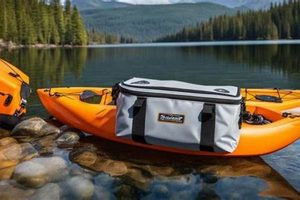
A specialized container designed for live bait storage and transport during kayak angling excursions typically features a secure lid, aeration system, and convenient carrying mechanisms suitable for compact kayak environments. These containers may be insulated to maintain optimal bait temperature and often incorporate specialized features like leak-proof seals and tie-down points.
Effective live bait management is critical for successful kayak fishing. Fresh, lively bait attracts more fish, increasing the angler’s chances of a successful catch. A dedicated container prevents spillage and keeps bait healthy and vigorous, maximizing its effectiveness. Prior to these specialized containers, anglers often relied on less effective and less convenient solutions, potentially impacting fishing success. The development and refinement of dedicated bait storage solutions have contributed to the overall improvement and enjoyment of the sport.
This article will further explore key considerations for selecting an appropriate live bait container for kayak fishing, including size, material, features, and maintenance. Discussion will also cover various bait types and their specific storage requirements, as well as best practices for bait management on the water.
Tips for Effective Live Bait Management in Kayak Fishing
Proper bait storage and handling are essential for a successful kayak fishing trip. These tips offer guidance on maximizing bait effectiveness and ensuring a positive angling experience.
Tip 1: Choose the Right Size: Select a container size appropriate for the target species and fishing duration. Oversized containers occupy valuable kayak space, while undersized containers may overcrowd and stress the bait.
Tip 2: Prioritize Insulation: Insulated containers maintain optimal bait temperature, particularly crucial in warmer climates. This preserves bait vitality and extends its lifespan.
Tip 3: Ensure Adequate Aeration: Sufficient oxygen is vital for bait survival. Consider containers with built-in aeration systems or add an aerator separately. Battery-powered aerators offer convenience and portability.
Tip 4: Secure the Lid: A tightly sealed lid prevents spills and keeps bait contained during kayak transport. Look for secure latches or locking mechanisms.
Tip 5: Consider Attachment Points: Containers with integrated tie-down points or attachment loops offer secure storage within the kayak, minimizing movement during paddling.
Tip 6: Match Bait to Container: Different bait types have varying storage requirements. Research the specific needs of the chosen bait and select a container that accommodates those needs.
Tip 7: Regularly Refresh Water: Periodically replenish the water in the container to remove waste and maintain optimal water quality, promoting bait health and longevity.
By following these tips, anglers can ensure their bait remains healthy and active, significantly increasing the likelihood of attracting fish and enjoying a productive kayak fishing outing.
This information provides a foundation for selecting and utilizing a live bait container effectively. The subsequent sections will delve into specific bait types and their care requirements, further enhancing angling proficiency.
1. Size and Capacity

Appropriate size and capacity are critical considerations when selecting a bait container for kayak fishing. Limited space within a kayak necessitates careful optimization of storage solutions. The container must effectively hold and maintain bait viability without compromising stability or maneuverability.
- Species and Bait Size
The size and type of bait employed directly influence the required container capacity. Smaller baitfish or invertebrates require less individual space than larger baitfish. Matching container capacity to the intended bait type prevents overcrowding and ensures bait health.
- Fishing Duration
Longer fishing trips necessitate larger bait supplies, requiring greater container capacity. Conversely, shorter outings allow for smaller, more compact containers. Aligning capacity with fishing duration minimizes wasted space and maximizes efficiency.
- Kayak Size and Stability
The kayak’s dimensions and weight capacity play a crucial role in determining the appropriate container size. Larger kayaks accommodate larger containers, while smaller kayaks require more compact options. Maintaining kayak stability is paramount; excessive weight or bulky containers can compromise balance and safety.
- Accessibility and Handling
Container size and shape should facilitate easy access and handling within the confined space of a kayak. A container that is too large or unwieldy can impede movement and create difficulties during bait retrieval. Prioritizing ergonomic design ensures convenient and efficient bait management.
Careful consideration of these factors ensures selection of a bait container that effectively balances storage capacity with practical constraints, optimizing both bait management and overall kayak fishing performance. Balancing these considerations contributes significantly to a successful and enjoyable fishing experience.
2. Material and Durability

Material selection significantly impacts the longevity and performance of bait containers in kayak fishing environments. Exposure to saltwater, UV radiation, and physical impacts necessitates durable, corrosion-resistant materials. Common choices include high-impact plastic polymers and marine-grade stainless steel. Plastic offers lightweight and cost-effective solutions, while stainless steel provides superior durability, though at a higher price point. Inferior materials may degrade rapidly, leading to leaks, structural failure, and ultimately, bait loss. For instance, a container constructed from thin, low-grade plastic might crack under stress or prolonged sun exposure, rendering it unusable. Conversely, a robust, high-density polyethylene container can withstand years of rigorous use in harsh marine conditions.
Durability extends beyond material choice to encompass construction quality and design features. Reinforced corners, robust hinges, and secure latches contribute to overall container integrity. Welded seams, as opposed to glued seams, offer superior resistance to leaks and separation. A well-designed container should withstand the rigors of kayak transport, including bumps, vibrations, and occasional impacts. Practical considerations include ease of cleaning and maintenance. Smooth, non-porous surfaces facilitate cleaning and prevent bacterial growth, ensuring bait health and container hygiene. Containers with removable liners further simplify cleaning and maintenance.
Selecting a durable bait container represents a long-term investment, contributing to efficient bait management and enhancing the overall kayak fishing experience. Choosing robust, corrosion-resistant materials and prioritizing quality construction ensures long-term performance, minimizes maintenance requirements, and ultimately supports angling success. This careful consideration of material and durability directly translates to a more reliable and enjoyable experience on the water.
3. Aeration and Insulation

Bait viability represents a critical factor in successful kayak angling. Maintaining healthy, active bait within the confines of a kayak requires careful consideration of both aeration and insulation. These two factors are intrinsically linked; effective aeration provides essential oxygen, while insulation maintains a stable temperature, both contributing to prolonged bait survival.
Adequate aeration replenishes dissolved oxygen within the bait container’s water, counteracting oxygen depletion caused by bait respiration and metabolic processes. Various aeration methods exist, from battery-powered aerators to manual pumps. Battery-powered aerators offer consistent oxygenation, crucial for extended fishing trips, while manual pumps provide a simple, non-powered alternative for shorter excursions. Without sufficient aeration, bait becomes sluggish and less attractive to target fish, diminishing angling success. For example, live shrimp held in a non-aerated container on a warm day will quickly become stressed and die, rendering them ineffective as bait. Conversely, shrimp in an aerated container remain active and appealing to fish.
Insulation plays a critical role in maintaining optimal bait water temperature. Direct sunlight and ambient air temperature fluctuations can rapidly alter water temperature within a kayak bait container, stressing or even killing the bait. Insulated containers mitigate these temperature variations, preserving bait health and longevity. Consider a scenario where an angler uses an uninsulated bait container on a hot summer day. The water temperature inside the container can quickly rise, stressing and potentially killing the bait. An insulated container, however, helps maintain a more stable and suitable temperature, preserving bait viability for longer periods. The synergistic relationship between aeration and insulation is vital for ensuring optimal bait condition throughout a kayak fishing trip. By addressing both aspects, anglers maximize their chances of success.
4. Security and Attachment

Secure attachment and prevention of accidental spillage are critical aspects of bait container design for kayak fishing. The dynamic environment of a kayak, subject to movement from paddling, waves, and potential impacts, necessitates robust mechanisms to secure the container and its contents. Loss of bait through spillage not only diminishes fishing success but also creates an undesirable mess within the confined space of the kayak.
- Lid Security
A secure lid prevents accidental opening and subsequent bait loss. Effective lid closures range from simple snap-on lids to more robust latching mechanisms. A loose or poorly secured lid can easily open during transit, resulting in spilled bait. For instance, a sudden jolt from navigating rough water could dislodge a loosely fitted lid. Conversely, a robust latching system ensures bait remains securely contained, regardless of external forces.
- Container Attachment
Integrated attachment points or tie-down loops allow secure fastening of the bait container within the kayak, minimizing movement during paddling and maneuvering. Without secure attachment, the container may shift or topple, potentially spilling bait or creating an imbalance. Imagine a kayak angler navigating through choppy waters. An unsecured bait container could slide across the deck, disrupting balance and potentially spilling valuable bait. Securely attaching the container to the kayak’s structure mitigates such risks.
- Tether Systems
Tethering the lid to the container body further safeguards against loss. Even if the lid becomes unlatched, the tether prevents complete separation, minimizing spillage. Consider a scenario where an angler accidentally drops the bait container while retrieving it from the kayak. A tethered lid prevents the container from opening fully upon impact, preserving the bait. This seemingly small detail can significantly impact a fishing trip.
- Placement and Accessibility
Strategic placement within the kayak optimizes accessibility while minimizing interference with paddling and other fishing activities. Positioning the container within easy reach, yet out of the primary paddling arc, balances convenience with practicality. A poorly placed container can hinder movement, obstruct casting, or create an imbalance. Optimal placement ensures efficient bait retrieval without compromising kayak control or fishing effectiveness.
Effective security and attachment mechanisms are essential for preserving bait and maintaining a clean and organized kayak environment. These features contribute significantly to a positive and productive fishing experience by minimizing distractions and maximizing angling efficiency. Selecting a bait container with robust security and attachment features reflects a proactive approach to bait management, enhancing overall fishing success and enjoyment on the water.
5. Portability and Access

Portability and ease of access are paramount considerations for bait containers in the context of kayak fishing. The limited space and dynamic nature of a kayak necessitate a container that is both easily transportable and readily accessible during fishing activities. A bulky, unwieldy container hinders movement and efficiency, while a container placed in an inconvenient location disrupts fishing flow. Consider an angler attempting to access bait from a container stowed deep within the kayak’s hull; this awkward maneuver interrupts fishing and potentially compromises stability. Conversely, a compact, strategically positioned container with a readily accessible lid allows for seamless bait retrieval without disrupting the angler’s focus or balance.
Several design features contribute to portability and access. Compact dimensions and lightweight construction facilitate transport to and from the kayak launch site, as well as storage within the kayak itself. Integrated carrying handles or shoulder straps further enhance portability. Lid design plays a crucial role in access; a wide-opening lid with a secure latch allows for quick and easy bait retrieval. Placement of the container within the kayak is equally important. Ideally, the container should be positioned within easy reach of the angler, yet out of the way of paddling strokes and casting movements. For example, mounting the container on a kayak’s accessory rails or within a readily accessible storage compartment balances convenience with efficiency.
Effective integration of portability and access features translates to a more streamlined and productive fishing experience. Ease of transport minimizes pre-fishing logistical challenges, while convenient access during fishing maximizes time spent actively angling rather than fumbling with equipment. Selecting a bait container optimized for portability and access allows anglers to focus on the core activity catching fish and ultimately contributes to a more successful and enjoyable outing.
Frequently Asked Questions
This section addresses common inquiries regarding live bait containers utilized in kayak fishing, providing concise and informative responses.
Question 1: What is the ideal size bait container for kayak fishing?
Optimal container size depends on target species, bait type, and fishing duration. Smaller species and shorter trips necessitate smaller containers, while larger species and longer trips require greater capacity. Kayak size and stability also influence container choice; excessive weight or bulk can compromise balance.
Question 2: What materials are best suited for kayak bait containers?
Durable, corrosion-resistant materials are essential. High-impact plastic polymers offer lightweight and cost-effective solutions, while marine-grade stainless steel provides superior durability, albeit at a higher cost. Material selection should consider long-term exposure to saltwater, UV radiation, and potential impacts.
Question 3: How important is aeration in a kayak bait container?
Aeration is crucial for maintaining bait viability. Oxygen depletion in stagnant water can rapidly stress and kill bait. Battery-powered aerators provide consistent oxygenation, essential for longer trips. Manual pumps offer a simpler alternative for shorter durations.
Question 4: What features enhance bait container security in a kayak?
Secure lids with robust latching mechanisms, integrated tie-down points for kayak attachment, and tethers connecting the lid to the container body prevent accidental spillage during transport and maneuvering. Strategic placement within the kayak further enhances stability and prevents disruption.
Question 5: How does insulation impact bait health in a kayak container?
Insulation helps maintain stable water temperature, mitigating the effects of direct sunlight and ambient temperature fluctuations, preserving bait health and extending viability, particularly during warmer conditions. Temperature extremes can stress or kill bait, significantly reducing effectiveness.
Question 6: What factors contribute to a portable and accessible bait container?
Compact dimensions, lightweight construction, integrated carrying handles or shoulder straps, and wide-opening lids with secure latches facilitate transport and easy access to bait. Strategic placement within the kayak balances accessibility with minimal interference during paddling and fishing activities.
Careful consideration of these frequently asked questions assists anglers in selecting a suitable live bait container optimized for the unique demands of the kayak fishing environment. Appropriate container selection enhances bait viability and contributes significantly to overall fishing success.
This FAQ section provides a comprehensive overview of key considerations. Further exploration of specific bait types and their care requirements will follow in the next section.
Kayak Fishing Bait Bucket
Effective bait management is paramount for successful kayak angling. A dedicated bait container, thoughtfully chosen and properly utilized, plays a crucial role in this endeavor. Considerations of size, material, aeration, insulation, security, and accessibility all contribute to maintaining bait viability and optimizing fishing efficiency within the confined environment of a kayak. Prioritizing these aspects ensures bait remains healthy, active, and readily available, maximizing angling potential.
Strategic bait management, facilitated by appropriate container selection, elevates kayak fishing from a recreational pastime to a productive pursuit. Investing in a high-quality, purpose-designed bait container represents an investment in angling success. This seemingly simple piece of equipment plays a pivotal role in enhancing the overall kayak fishing experience, allowing anglers to focus on the thrill of the catch.