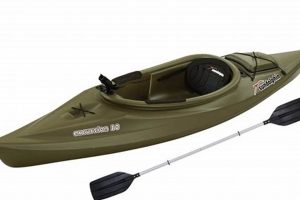
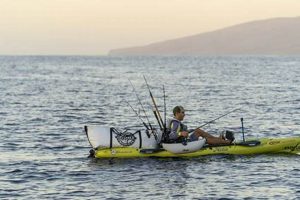
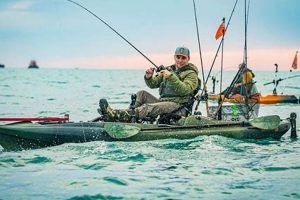
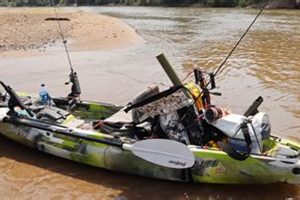
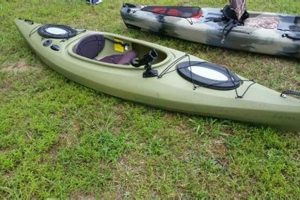
This concept explores the intersection of advanced materials and fishing kayak design. Imagine a vessel crafted from lightweight, exceptionally durable materials, potentially incorporating technologies like vibration dampening or enhanced stability features. Such advancements could lead to kayaks that are significantly lighter, faster, and more resistant to damage, ultimately enhancing the fishing experience.
Lighter kayaks offer improved portability and maneuverability, enabling anglers to access remote fishing spots with greater ease. Increased durability translates to a longer lifespan and reduced maintenance requirements. Hypothetically, future advancements could include integrated fish-finding technology or specialized storage solutions seamlessly incorporated into the kayak’s structure. These innovations promise a more efficient and enjoyable fishing experience, allowing anglers to focus on their passion.
This exploration will delve into the potential materials and technologies that could revolutionize kayak fishing, examining the potential impact on the sport and its future. Discussions will include material science advancements, design innovations, and the potential integration of cutting-edge technologies, offering a glimpse into the future of angling from a vessel-centric perspective.
Tips for Enhanced Kayak Fishing Experiences
Optimizing kayak selection and usage significantly improves fishing success and overall enjoyment. Careful consideration of vessel characteristics, combined with strategic preparation and execution, contributes to a more rewarding experience on the water.
Tip 1: Prioritize Stability and Maneuverability: Kayak selection should balance stability for casting and reeling with maneuverability for navigating diverse water conditions. Consider hull design and kayak length when choosing a vessel.
Tip 2: Optimize Gear Storage and Accessibility: Efficient organization of fishing gear within the kayak is crucial. Prioritize readily accessible rods, tackle boxes, and other essential equipment. Consider specialized storage solutions designed for kayaks.
Tip 3: Master Paddling Techniques: Efficient paddling conserves energy and allows for precise positioning. Practice different paddling strokes to navigate currents, wind, and varying water depths effectively.
Tip 4: Research and Respect Local Regulations: Adhere to all local fishing regulations, including licensing requirements, catch limits, and permitted fishing areas. Respect wildlife and natural habitats.
Tip 5: Plan for Safety and Emergencies: Always wear a personal flotation device (PFD) and carry essential safety equipment, including a whistle, signaling device, and first-aid kit. Inform someone of your fishing plans and expected return time.
Tip 6: Employ Stealth and Observation: Minimize noise and movement to avoid disturbing fish. Observe water conditions, bird activity, and other environmental cues to identify promising fishing locations.
Tip 7: Adapt to Changing Conditions: Weather and water conditions can change rapidly. Be prepared to adjust fishing techniques, locations, and plans as needed to ensure safety and maximize fishing success.
Strategic preparation and execution enhance fishing success and safety. Applying these tips contributes to a more rewarding and enjoyable kayak fishing experience.
By focusing on these principles, anglers can significantly improve their overall fishing experience, ensuring both productivity and safety on the water. This comprehensive approach facilitates a deeper connection with the sport and the natural environment.
1. Advanced Materials

The hypothetical concept of a “quantum fishing kayak” hinges on the development and application of advanced materials. These materials offer the potential to revolutionize kayak design, leading to significant improvements in performance, durability, and user experience. Exploring the possibilities of these materials is crucial to understanding the potential of next-generation fishing kayaks.
- Lightweight High-Strength Composites:
Materials like carbon fiber and graphene offer exceptional strength-to-weight ratios. Their application in kayak construction could result in significantly lighter vessels without compromising structural integrity. This translates to improved portability, maneuverability, and fuel efficiency for motorized kayaks. Consider a kayak easily carried long distances or one capable of navigating shallow waters with ease.
- Impact-Resistant Polymers:
Specialized polymers designed to absorb and dissipate impact forces can enhance the durability and longevity of kayaks. These materials could protect against damage from rocks, submerged obstacles, and other potential hazards encountered in various fishing environments. This resilience contributes to a longer lifespan and reduced maintenance requirements.
- Bio-Based and Sustainable Materials:
The use of sustainable materials like bamboo fiber or recycled plastics aligns with environmentally conscious design principles. These materials offer the potential to reduce the environmental footprint of kayak production while maintaining performance characteristics. This approach reflects a growing awareness of sustainability within the fishing community.
- Adaptive Materials:
While still largely theoretical, materials that can adapt to changing environmental conditions offer intriguing possibilities. Imagine a kayak hull that adjusts its shape for optimal performance in calm or rough waters. This dynamic adaptability could revolutionize kayak design and significantly enhance performance across diverse conditions.
These advancements in materials science represent a significant opportunity to redefine the fishing kayak. By incorporating these materials, future kayaks could offer unparalleled performance, durability, and environmental responsibility, ushering in a new era of angling from a vessel-centric perspective. Further research and development in these areas are crucial to realizing the full potential of these materials in revolutionizing the fishing experience.
2. Lightweight Construction

Lightweight construction represents a critical aspect of the hypothetical “quantum fishing kayak” concept. Reducing kayak weight while maintaining structural integrity enhances portability, maneuverability, and overall performance. This exploration delves into the facets of lightweight construction and their implications for this advanced kayak concept.
- Material Selection:
The choice of materials significantly impacts kayak weight. Advanced materials like carbon fiber, graphene, and lightweight polymers offer high strength-to-weight ratios, enabling the construction of lighter kayaks without compromising structural integrity. Consider the difference between a traditional fiberglass kayak and a carbon fiber equivalent, the latter potentially being significantly lighter while maintaining comparable strength. This material advantage translates directly to improved portability and on-the-water performance.
- Construction Techniques:
Innovative construction techniques further contribute to weight reduction. Vacuum infusion and other advanced manufacturing processes minimize excess resin and optimize fiber layup, resulting in lighter and stronger structures. These techniques, commonly employed in high-performance boat building, could be adapted for kayak construction, pushing the boundaries of lightweight design.
- Design Optimization:
Careful design optimization plays a crucial role in minimizing weight while maximizing functionality. Streamlined hull designs, efficient component placement, and strategic material distribution contribute to an overall lighter and more balanced kayak. This holistic design approach ensures that weight reduction does not compromise performance or stability.
- Impact on Performance:
The benefits of lightweight construction extend beyond portability. A lighter kayak requires less effort to paddle, enhancing maneuverability and speed. This translates to a more responsive and efficient vessel, allowing anglers to cover more water and access hard-to-reach fishing spots with greater ease. Consider the advantage of navigating shallow waters or swiftly changing positions to follow schooling fish.
These facets of lightweight construction contribute significantly to the potential advantages of a “quantum fishing kayak.” By combining advanced materials, innovative construction techniques, and intelligent design optimization, future kayaks could achieve unprecedented levels of performance and portability, redefining the angling experience.
3. Enhanced Durability
Enhanced durability represents a critical aspect of the hypothetical “quantum fishing kayak,” promising increased longevity, reduced maintenance, and enhanced performance in challenging environments. This exploration delves into the key facets contributing to enhanced durability and their implications for this advanced kayak concept.
- Advanced Materials:
The foundation of enhanced durability lies in the selection of advanced materials. Materials like high-strength polymers, reinforced composites, and potentially even graphene offer exceptional resistance to abrasion, impact, and UV degradation. Consider the difference between a standard polyethylene kayak susceptible to scratches and a kayak constructed from a highly durable polymer capable of withstanding significant impacts without sustaining damage. This material advantage translates directly to increased longevity and reduced maintenance requirements.
- Construction Techniques:
Advanced construction techniques further enhance durability. Techniques like rotational molding, vacuum infusion, and thermoplastic welding create stronger, more uniform structures with fewer weak points. These methods minimize the risk of delamination, cracking, and other forms of structural failure, contributing to a more robust and long-lasting kayak. Consider the seamless construction of a rotationally molded kayak compared to a traditionally joined kayak, the former offering superior resistance to leaks and structural weakening over time.
- Protective Coatings and Treatments:
Specialized coatings and treatments can further enhance the kayak’s resistance to environmental factors. UV-resistant coatings protect against sun damage, while anti-fouling treatments prevent the buildup of marine organisms, preserving the kayak’s hull and performance. These protective layers contribute to the long-term aesthetic and functional integrity of the kayak, minimizing the impact of environmental exposure.
- Reinforced Stress Points:
Strategic reinforcement of high-stress areas, such as the keel, hull, and deck fittings, enhances the kayak’s ability to withstand impacts and resist deformation. These reinforcements distribute stress more effectively, preventing localized damage and maintaining the structural integrity of the kayak under duress. Consider reinforced areas on a kayak designed for navigating rocky rivers, protecting the hull from damage and ensuring the vessel’s longevity in demanding environments.
These facets of enhanced durability contribute significantly to the potential advantages of a “quantum fishing kayak.” By combining advanced materials, robust construction techniques, protective coatings, and strategic reinforcements, future kayaks could achieve exceptional longevity and resilience, enabling anglers to explore more challenging environments with confidence and minimizing the time and expense associated with maintenance and repairs. This enhanced durability would unlock new possibilities for kayak fishing, allowing anglers to push the boundaries of their explorations.
4. Improved Stability
Improved stability represents a crucial advancement for the hypothetical “quantum fishing kayak,” directly impacting angler safety, comfort, and fishing effectiveness. Enhanced stability allows for more confident casting, reeling, and maneuvering, particularly in challenging conditions. This exploration delves into the key facets contributing to improved stability and their implications for this advanced kayak concept.
- Hull Design:
Innovative hull designs play a pivotal role in enhancing stability. Wider hulls, multi-hull configurations (like catamarans or trimarans), and strategically placed pontoons increase the kayak’s resistance to tipping. Consider the inherent stability of a wide, flat-bottomed kayak compared to a narrow, V-shaped hull. This design element contributes significantly to the angler’s sense of security and allows for more confident movement within the kayak.
- Ballast Systems:
Integrated ballast systems offer dynamic stability control. Adjustable ballast tanks or strategically placed weights lower the kayak’s center of gravity, increasing its resistance to rolling and pitching motions. Imagine a ballast system that automatically adjusts to changing water conditions or angler movements, maintaining optimal stability regardless of external factors. This adaptive stability enhancement would significantly improve safety and comfort, particularly in rough waters.
- Stabilizing Fins or Outriggers:
Deployable stabilizing fins or outriggers provide additional stability, particularly when stationary or drifting. These extensions increase the kayak’s effective width, reducing its tendency to tip. Consider the added stability provided by outriggers on a traditional canoe, applied to a kayak context for enhanced stability during fishing activities. This feature would prove particularly beneficial for anglers who prefer to stand while fishing or require a stable platform for casting and reeling.
- Advanced Materials and Construction:
Lightweight yet rigid materials and construction techniques contribute to stability. A stiff hull resists flexing and deformation, maintaining the intended hull shape and preventing instability caused by hull flex. Imagine a kayak constructed from a lightweight composite material that provides exceptional rigidity, preventing the hull from twisting or flexing under stress. This structural integrity contributes to a more predictable and stable platform for fishing activities.
These facets of improved stability contribute significantly to the potential advantages of a “quantum fishing kayak.” By combining innovative hull designs, dynamic ballast systems, stabilizing appendages, and advanced materials, future kayaks could offer unparalleled stability, enabling anglers to fish with greater confidence and comfort in a wider range of conditions. This enhanced stability would not only improve safety but also allow for more effective fishing techniques, maximizing the angler’s chances of success.
5. Integrated Technology

Integrated technology represents a defining characteristic of the hypothetical “quantum fishing kayak,” potentially transforming the fishing experience through enhanced information access, improved safety features, and increased fishing effectiveness. Exploring the potential integration of advanced technologies is crucial to understanding the transformative possibilities of this advanced kayak concept.
- Real-time Fish Finding and Environmental Monitoring:
Integrated sonar, GPS, and environmental sensors could provide anglers with real-time data on water temperature, depth, fish location, and other relevant environmental factors. Imagine a kayak displaying a 3D map of the underwater terrain and fish movements directly on a heads-up display integrated into the kayak’s structure. This real-time information access could significantly improve fishing efficiency and provide valuable insights into fish behavior and habitat.
- Communication and Safety Systems:
Integrated communication systems, such as VHF radios and satellite communication devices, enhance safety by enabling anglers to stay connected and call for assistance in emergencies. Automated distress signals triggered by capsizing or other critical events could further enhance safety protocols. Imagine a kayak automatically sending a distress signal with precise GPS coordinates in the event of an emergency, significantly increasing the chances of a swift rescue.
- Automated Navigation and Control Systems:
GPS-guided autopilot systems, motorized propulsion with intelligent control algorithms, and automated anchoring systems could streamline navigation and positioning, allowing anglers to focus on fishing. Imagine a kayak autonomously navigating to pre-programmed fishing spots, adjusting its position to account for changing currents or wind, freeing the angler to focus entirely on fishing. This automation could significantly enhance fishing efficiency and accessibility, particularly in challenging environments.
- Performance Monitoring and Biometric Feedback:
Integrated sensors could track paddling efficiency, speed, distance covered, and even biometric data like heart rate and exertion levels. This information could provide valuable feedback for improving paddling technique and optimizing physical exertion during fishing trips. Imagine a kayak providing real-time feedback on paddling efficiency, suggesting adjustments to technique for optimal energy conservation and speed, transforming the fishing experience into a data-driven pursuit of performance optimization.
These integrated technologies represent a significant leap forward in fishing kayak design. By seamlessly incorporating these advancements, the “quantum fishing kayak” could offer a significantly enhanced fishing experience, characterized by improved safety, increased efficiency, and a deeper understanding of the underwater environment. This integration of technology has the potential to revolutionize the sport, creating a more informed, connected, and ultimately more successful angling experience. Further development and refinement of these technologies are crucial to realizing the full potential of the “quantum fishing kayak” and its transformative impact on the future of fishing.
6. Increased Efficiency
Increased efficiency represents a core advantage of the hypothetical “quantum fishing kayak,” impacting various aspects of the fishing experience, from travel and setup to the act of fishing itself. Optimizing efficiency translates to more time spent fishing and less time and energy expended on peripheral tasks. This exploration delves into the key facets contributing to increased efficiency in the context of this advanced kayak concept.
- Reduced Travel Time and Effort:
Lightweight construction and potentially integrated motorized propulsion systems minimize the time and effort required to reach desired fishing locations. Consider the difference between paddling a heavy kayak against a current and effortlessly navigating the same water with a lightweight, motorized kayak. This efficiency gain allows anglers to access remote fishing spots and cover more water in less time, maximizing fishing opportunities.
- Streamlined Setup and Deployment:
Simplified assembly processes, integrated rigging systems, and readily accessible storage solutions contribute to a more efficient setup and deployment process. Imagine a kayak that unfolds and deploys quickly, with fishing gear readily organized and accessible, eliminating the need for time-consuming setup procedures. This streamlined approach allows anglers to spend more time fishing and less time preparing.
- Enhanced Fishing Techniques:
Improved stability, advanced fish-finding technologies, and potentially even automated casting or retrieval systems could enhance fishing techniques and increase the likelihood of success. Imagine a kayak with integrated sonar that pinpoints fish locations and an automated casting system that delivers bait with precision, significantly increasing the efficiency of fishing techniques. This technological integration could revolutionize the way anglers approach fishing, maximizing their chances of success.
- Optimized Energy Management:
Lightweight construction, efficient paddling dynamics, and potentially even integrated biometric feedback systems contribute to optimized energy management during fishing trips. Consider a kayak that provides real-time feedback on paddling technique and physical exertion, allowing anglers to conserve energy and maintain optimal performance throughout the day. This optimized energy management translates to longer, more productive fishing sessions.
These facets of increased efficiency contribute significantly to the potential advantages of a “quantum fishing kayak.” By streamlining various aspects of the fishing experience, from travel and setup to the act of fishing itself, this advanced kayak concept promises to maximize fishing time and minimize wasted effort. This enhanced efficiency translates to a more rewarding and productive angling experience, allowing anglers to focus on what matters most: the pursuit of their passion.
7. Personalized Design
Personalized design represents a significant potential advantage of the hypothetical “quantum fishing kayak,” offering the possibility of tailoring the vessel to individual angler needs and preferences. This customization could encompass various aspects, from kayak dimensions and seating configurations to integrated technology and specialized accessory mounts. Consider the difference between a standardized kayak designed for a general user and a kayak precisely tailored to an individual’s height, weight, fishing style, and preferred equipment. This personalized approach could significantly enhance comfort, performance, and overall fishing effectiveness. Current examples in other fields, such as custom-fitted bicycle frames or personalized running shoes, demonstrate the potential benefits of tailoring equipment to individual biomechanics and preferences. Applying this principle to kayak design could lead to a more ergonomic, efficient, and enjoyable fishing experience.
The practical significance of personalized design in the context of a “quantum fishing kayak” extends beyond mere comfort. A kayak tailored to an individual’s physical characteristics and fishing style could improve paddling efficiency, casting accuracy, and overall maneuverability. Specialized mounts for fishing rods, electronic devices, and other accessories could further enhance functionality and streamline the fishing experience. Imagine a kayak with a seating system that perfectly supports an angler’s posture, reducing fatigue and maximizing comfort during long fishing trips. Further, consider rod holders positioned for optimal casting angles based on the angler’s dominant hand and preferred casting technique. These personalized features could significantly impact fishing performance and enjoyment.
Realizing the full potential of personalized design in kayak fishing requires addressing several challenges. Developing efficient and cost-effective customization processes is crucial. 3D printing, modular design systems, and advanced manufacturing techniques could play a significant role in achieving this goal. Furthermore, integrating personalized design with other advanced features, such as integrated technology and lightweight construction, requires careful consideration and engineering. Successfully integrating these elements could lead to a truly revolutionary fishing kayak, offering unparalleled performance, comfort, and personalization. This personalized approach represents a significant step towards optimizing the human-vessel interaction in the context of fishing, potentially transforming the sport and enhancing the experience for anglers of all skill levels.
Frequently Asked Questions
This section addresses common inquiries regarding the hypothetical concept of a “quantum fishing kayak,” clarifying potential misconceptions and providing further insight into its potential implications.
Question 1: What distinguishes a “quantum fishing kayak” from conventional kayaks?
The “quantum” designation signifies a hypothetical leap forward in kayak design, incorporating advanced materials, construction techniques, and integrated technologies not currently available in conventional kayaks. These advancements could potentially revolutionize various aspects of kayak fishing, from stability and durability to efficiency and information access.
Question 2: Are “quantum fishing kayaks” currently available for purchase?
No, “quantum fishing kayaks” are a conceptual exploration of future possibilities. The technologies and materials discussed are either in early stages of development or remain theoretical. This exploration serves to envision the potential future of kayak fishing, not to represent currently available products.
Question 3: What is the expected cost of a “quantum fishing kayak”?
Due to the hypothetical nature of this concept, providing a precise cost estimate is not feasible. The incorporation of advanced materials and technologies would likely place these kayaks in a premium price range compared to conventional kayaks. Actual cost would depend on specific features, materials, and manufacturing processes.
Question 4: What are the primary benefits of advanced materials in kayak construction?
Advanced materials offer significant advantages in terms of strength-to-weight ratio, durability, and resistance to environmental factors. These benefits translate to lighter, stronger, and longer-lasting kayaks, potentially enhancing performance, portability, and overall user experience.
Question 5: How could integrated technology improve the fishing experience?
Integrated technologies, such as sonar, GPS, and environmental sensors, could provide real-time data on fish location, water conditions, and other relevant factors. This information access could significantly enhance fishing efficiency and provide valuable insights into fish behavior and habitat.
Question 6: What are the key challenges in developing and implementing these advanced kayak concepts?
Key challenges include material science advancements, developing cost-effective manufacturing processes, integrating diverse technologies seamlessly, and ensuring user-friendliness and accessibility. Overcoming these challenges is crucial to realizing the full potential of “quantum fishing kayaks.”
Addressing these common inquiries provides further clarity regarding the “quantum fishing kayak” concept and its potential implications for the future of fishing. While these advancements remain largely theoretical, they offer a compelling glimpse into the potential evolution of kayak fishing and the exciting possibilities that lie ahead.
The subsequent section will delve further into the potential societal and environmental impact of these hypothetical advancements, exploring both the opportunities and challenges they present.
Quantum Fishing Kayak
This exploration of the “quantum fishing kayak” concept has highlighted the transformative potential of advanced materials, innovative design, and integrated technology in the realm of fishing. From lightweight, ultra-durable hulls to real-time fish-finding capabilities and personalized ergonomics, the envisioned advancements promise to redefine the angling experience. Key areas of potential impact include enhanced efficiency, improved safety, increased accessibility to remote fishing locations, and a deeper understanding of aquatic environments.
While the “quantum fishing kayak” remains a concept for now, the ongoing advancements in material science, manufacturing techniques, and digital technologies suggest a future where such innovations could become reality. Continued exploration and development in these areas hold the potential to revolutionize not only kayak fishing, but also the broader relationship between humans and the aquatic world. The pursuit of these advancements presents both exciting opportunities and significant challenges, demanding careful consideration of ethical implications, environmental sustainability, and responsible implementation. The future of angling may well depend on the responsible pursuit of these transformative possibilities.