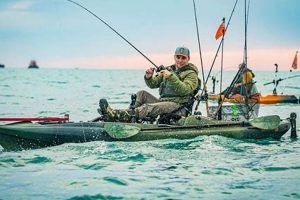
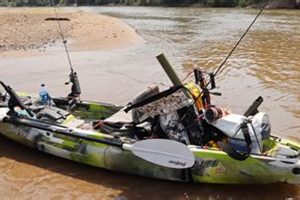
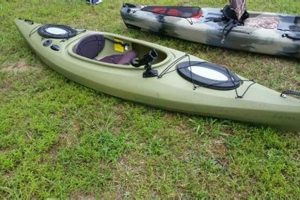
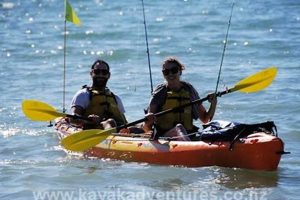
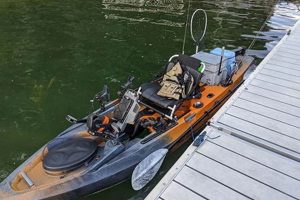
This specialized vessel blends the agility of a whitewater kayak with the stability and features required for angling. Imagine a compact, maneuverable boat designed to navigate turbulent rivers while offering convenient storage for fishing gear and specialized features like rod holders. These boats are typically shorter and wider than traditional whitewater kayaks, providing enhanced stability for casting and reeling in fish amidst challenging currents.
The development of these specialized crafts opened up new possibilities for anglers, allowing access to previously unreachable fishing grounds in remote river systems. This innovation combines the thrill of whitewater navigation with the rewarding pursuit of angling, offering a unique recreational experience. The ability to tackle challenging rapids and access pristine fishing locations makes this type of watercraft attractive to adventurous anglers seeking both excitement and tranquility in nature.
Further exploration of this topic will cover key aspects such as design variations, essential gear, safety considerations, popular fishing locations, and responsible angling practices.
Tips for Whitewater Kayak Fishing
Safe and successful river angling requires careful planning and execution. The following tips offer guidance for navigating the challenges and maximizing the rewards of this demanding pursuit.
Tip 1: Dress for the water, not the weather. River conditions can change rapidly. Wearing appropriate immersion gear designed for cold water is crucial, even on warm days.
Tip 2: Master basic paddling and swiftwater rescue techniques before fishing in moving water. Formal training from certified instructors provides essential skills for navigating challenging currents and responding effectively in emergencies.
Tip 3: Select specialized equipment designed for river environments. A shorter, wider hull offers increased stability for casting and landing fish in moving water. Rod holders, anchor systems, and specialized storage compartments are also beneficial features.
Tip 4: Research fishing regulations and obtain necessary permits. Rules regarding fishing seasons, catch limits, and permitted methods vary by location and should be strictly adhered to.
Tip 5: Scout potential fishing locations and plan routes carefully. Consider water levels, current speeds, and potential hazards before venturing onto the river. Identifying eddies and other calmer areas offers optimal fishing opportunities.
Tip 6: Prioritize safety and practice responsible angling techniques. Carry essential safety equipment, including a first-aid kit, signaling devices, and a throw rope. Practice catch-and-release methods to conserve fish populations and minimize environmental impact.
Tip 7: Learn to read the river. Understanding how currents, rocks, and other features interact allows for safer navigation and more effective fishing. Observe water flow patterns and identify potential hazards before entering rapids or other challenging areas.
Adherence to these guidelines significantly enhances safety and increases the likelihood of a successful and enjoyable fishing experience. Careful planning and preparation empower anglers to navigate the challenges and reap the rewards of this unique pursuit.
By understanding the nuances of this specialized activity, anglers can embark on their river adventures with confidence and respect for the environment.
1. Stability

Stability represents a critical performance characteristic in whitewater fishing kayaks, directly influencing angling success and overall safety. A stable platform enables anglers to cast, hook, and land fish effectively in dynamic river environments. Compromised stability increases the risk of capsizing, particularly when contending with turbulent currents, obstacles, or the movements inherent in fishing activities. The relationship between stability and kayak design involves several factors. Hull width, hull shape, and the presence of features like outriggers or stabilizing fins contribute significantly to overall stability. Wider hulls generally provide a more stable platform, especially in calmer waters. However, excessive width can hinder maneuverability in rapids and tight spaces. A well-designed hull incorporates a balance between primary and secondary stability. Primary stability refers to the initial resistance to tipping, while secondary stability describes the boat’s ability to remain upright when leaned or tilted further. For example, a kayak with a flatter hull bottom exhibits higher primary stability, making it feel more stable initially. A kayak with a more rounded or V-shaped hull may feel less stable initially but offer greater secondary stability, making it more resistant to capsizing when leaned.
Practical applications of this understanding are evident in the choices anglers make based on their fishing style and the specific river environments they frequent. Anglers targeting larger fish in challenging rapids often prioritize stability, opting for wider kayaks with enhanced secondary stability. Conversely, anglers fishing smaller streams or prioritizing maneuverability might choose a narrower kayak with slightly less primary stability. The selection process frequently involves trade-offs between stability, maneuverability, and speed, highlighting the need for a nuanced understanding of these interconnected factors. Consider the following scenario: an angler fishing in a fast-flowing river with numerous obstacles requires a kayak with excellent stability to maintain balance while navigating complex currents and maneuvering around rocks. This stability becomes even more critical when fighting a strong fish, where sudden movements or shifts in weight distribution could otherwise compromise balance and lead to a capsize.
In summary, stability stands as a foundational element in whitewater fishing kayak design and performance. Balancing stability with other crucial performance attributes like maneuverability and speed requires careful consideration of the intended fishing environment and individual angling style. Understanding the interplay of these factors enables informed decisions, promoting both fishing success and angler safety in dynamic river environments. Neglecting the crucial role of stability increases the likelihood of capsizes, jeopardizing not only fishing success but also angler safety. A well-informed selection process significantly enhances the overall experience, transforming a potentially challenging endeavor into a safe and rewarding pursuit.
2. Maneuverability

Maneuverability represents a critical performance attribute in whitewater fishing kayaks, directly influencing an angler’s ability to navigate complex river environments and access productive fishing locations. Precise boat control enables navigation through challenging rapids, around obstacles, and into tight pockets where fish often congregate. This agility translates directly to increased fishing opportunities and enhanced safety margins in dynamic river conditions. A kayak’s maneuverability depends on several interconnected design factors, including hull length, hull shape, and rocker profile. Shorter kayaks generally offer greater maneuverability, allowing for quicker turns and more responsive handling. Specific hull shapes, such as those with a defined keel or chines, can influence tracking and turning performance. Rocker, the curvature of the hull from bow to stern, plays a significant role in how a kayak responds to changes in direction and navigates through waves and currents. A higher rocker profile typically enhances maneuverability in turbulent water, while a lower rocker improves tracking in calmer conditions. The practical implications of these design elements become evident when considering real-world scenarios. Navigating a narrow, rock-strewn section of river demands a highly maneuverable kayak capable of precise adjustments and quick turns. Similarly, accessing a secluded fishing spot behind a midstream boulder necessitates a boat that can easily change direction and maintain control in tight quarters. A longer, less maneuverable kayak would struggle in these situations, limiting access to prime fishing areas and potentially compromising safety.
For example, consider an angler attempting to position their kayak upstream of a submerged log in swift current. A highly maneuverable kayak allows for precise adjustments to boat angle and position, enabling the angler to hold position effectively and present their lure or bait with accuracy. Conversely, a less maneuverable kayak might be swept downstream, making precise positioning difficult and potentially leading to snags or lost fishing opportunities. Furthermore, the connection between maneuverability and angler safety warrants consideration. A highly maneuverable kayak empowers anglers to react swiftly to unexpected changes in river conditions, such as sudden drops, obstacles, or shifting currents. This rapid response capability can prove crucial in avoiding collisions or capsizes, especially in challenging whitewater environments.
In summary, maneuverability stands as a crucial factor influencing both fishing success and angler safety in whitewater environments. Understanding how design elements such as hull length, shape, and rocker profile affect maneuverability allows for informed kayak selection and enhances on-water performance. Prioritizing maneuverability empowers anglers to navigate challenging rapids, access productive fishing locations, and react effectively to dynamic river conditions, contributing to a safer and more rewarding fishing experience.
3. Durability

Durability stands as a paramount consideration in whitewater fishing kayaks, given the demanding environments these specialized vessels encounter. Frequent contact with rocks, submerged logs, and other river obstacles necessitates a robust construction capable of withstanding impacts and abrasion without compromising structural integrity. A durable kayak ensures longevity, minimizes repair costs, and contributes significantly to angler safety in challenging whitewater conditions. The relationship between durability and material selection is paramount. Kayaks constructed from high-density polyethylene (HDPE) offer exceptional impact resistance and abrasion resistance, making them well-suited for the rigors of whitewater environments. Other materials, such as Royalex or composites like fiberglass or Kevlar, provide varying degrees of durability and performance characteristics. While composites may offer advantages in weight and stiffness, HDPE remains the prevalent choice for whitewater fishing kayaks due to its superior impact resistance and overall durability. Manufacturing processes also play a crucial role in determining a kayak’s overall durability. Rotational molding, a common technique used in HDPE kayak construction, creates a seamless, one-piece hull with uniform wall thickness, enhancing strength and impact resistance. Reinforced areas, such as stern guards and keel strips, further enhance durability in high-wear areas.
The practical implications of durability become evident when considering real-world scenarios. A durable kayak can withstand impacts from submerged rocks or logs without sustaining significant damage, allowing the angler to continue fishing without interruption. In contrast, a less durable kayak might suffer cracks, punctures, or structural damage in similar situations, potentially compromising safety and requiring costly repairs. For example, consider a scenario where a kayak strikes a submerged rock in fast-moving water. A durable HDPE kayak might emerge with only minor scratches, while a less durable kayak might sustain a crack or puncture, leading to water intrusion and potential instability. The long-term cost of ownership also factors into the durability equation. While a more durable kayak might have a higher initial cost, its extended lifespan and reduced need for repairs can result in lower overall expenses over time. Conversely, a less durable kayak might require frequent repairs, ultimately exceeding the initial cost savings.
In summary, durability represents a crucial factor in whitewater fishing kayak selection. Prioritizing durability ensures longevity, minimizes repair costs, and contributes significantly to angler safety in challenging river environments. Understanding the relationship between materials, manufacturing processes, and real-world performance allows for informed decision-making, leading to a more reliable and ultimately more rewarding fishing experience. The ability of a kayak to withstand the rigors of whitewater environments directly impacts not only the longevity of the equipment but also the safety and confidence of the angler.
4. Storage Capacity

Storage capacity represents a critical factor in whitewater fishing kayak design, directly impacting an angler’s ability to carry essential gear, maintain organization, and maximize fishing efficiency. Adequate storage facilitates access to tackle, safety equipment, and personal items, allowing anglers to focus on fishing rather than managing gear amidst challenging river conditions. Insufficient storage capacity can lead to cluttered cockpits, hindering paddling efficiency and potentially compromising safety. Conversely, well-designed storage compartments enhance organization, streamline gear retrieval, and contribute to a more enjoyable and productive fishing experience.
The connection between storage capacity and kayak design involves several key considerations. Dedicated compartments for tackle boxes, rods, and reels keep essential fishing gear organized and readily accessible. Dry storage compartments protect sensitive items like electronics and personal belongings from water damage. Bungee cord systems and tie-down points offer secure storage for larger items like coolers or dry bags. The size and placement of storage compartments influence both accessibility and overall kayak balance. For example, recessed compartments within the hull maximize storage space while minimizing interference with paddling strokes. Rear storage wells accommodate larger items, while smaller compartments located within easy reach offer convenient access to frequently used items like lures or tools. Consider a scenario where an angler needs to quickly change lures in response to changing fishing conditions. A kayak with well-organized storage compartments allows for efficient lure retrieval without disrupting fishing momentum or compromising stability. Conversely, a kayak with limited or poorly designed storage might require the angler to rummage through a cluttered cockpit, wasting valuable fishing time and potentially creating a safety hazard.
In summary, adequate storage capacity is essential for a successful and enjoyable whitewater fishing experience. Well-designed storage compartments enhance organization, streamline gear retrieval, and contribute to overall efficiency and safety. Understanding the relationship between storage capacity, kayak design, and practical on-water applications allows anglers to make informed decisions when selecting a kayak and optimizing their gear organization strategies. Effective storage solutions transform a potentially chaotic experience into a streamlined and productive pursuit, enabling anglers to focus on the task at hand catching fish.
5. Specialized Features

Specialized features distinguish whitewater fishing kayaks from recreational kayaks and enhance their performance in demanding river environments. These features directly impact angling effectiveness, safety, and overall user experience. Features like rod holders, anchor systems, and specialized seating configurations contribute significantly to an angler’s ability to navigate challenging rapids, maintain boat position, and efficiently manage fishing gear.
Rod holders, for example, secure fishing rods while paddling or navigating rapids, freeing the angler’s hands for boat control. Anchor systems, including anchor trolleys and deployable anchors, allow for precise boat positioning in current, enhancing fishing effectiveness in specific locations. Adjustable seating systems provide comfort and support during long fishing trips, while also enabling anglers to adjust their position for optimal casting and paddling ergonomics. These features work in concert to create a specialized platform optimized for the demands of river fishing.
Consider a scenario where an angler encounters a promising fishing spot in a fast-flowing section of river. An anchor trolley system allows the angler to precisely control boat position relative to the current, maintaining an ideal presentation for their lure or bait. Simultaneously, rod holders secure additional rods, preventing loss or damage while the angler focuses on the active fishing rod. Without these specialized features, maintaining boat position and managing multiple rods would prove significantly more challenging, potentially compromising fishing success and overall safety. The absence of these features necessitates awkward maneuvering and compromises efficient gear management, highlighting their importance in optimizing the fishing experience. Challenges associated with the lack of specialized features underscore their practical significance. Improvised solutions often prove cumbersome and ineffective, hindering performance and potentially jeopardizing safety. Investing in a kayak equipped with specialized features designed for river fishing significantly enhances the overall experience, transforming a potentially challenging activity into a more streamlined and rewarding pursuit.
Frequently Asked Questions
This section addresses common inquiries regarding specialized kayaks designed for fishing in whitewater environments.
Question 1: What differentiates a whitewater fishing kayak from a recreational kayak?
Key distinctions include shorter lengths for enhanced maneuverability in rapids, wider hulls for increased stability, specialized storage for fishing gear, and features like rod holders and anchor systems.
Question 2: What safety precautions are essential for whitewater kayak fishing?
Essential precautions include wearing appropriate personal flotation devices and immersion gear, acquiring swiftwater rescue training, scouting river conditions before embarking, and carrying essential safety equipment like a first-aid kit and signaling devices.
Question 3: What essential gear is recommended for whitewater kayak fishing?
Recommended gear includes a properly fitted personal flotation device, a paddle designed for whitewater, appropriate immersion gear, a throw rope, a first-aid kit, signaling devices, and fishing-specific equipment such as rods, reels, tackle, and appropriate lures or bait.
Question 4: How does one select the appropriate whitewater fishing kayak?
Selection criteria include angler skill level, intended fishing environment (river class and type), desired storage capacity, and preferred fishing techniques. Researching various kayak models and considering individual needs leads to informed decisions.
Question 5: Are there specific regulations or permits required for whitewater kayak fishing?
Regulations vary by location and may include fishing licenses, specific catch limits, permitted fishing methods, and access restrictions. Consulting local authorities ensures compliance with all applicable rules and regulations.
Question 6: What are the environmental considerations associated with whitewater kayak fishing?
Minimizing environmental impact involves practicing catch-and-release techniques whenever possible, properly disposing of fishing line and other waste, respecting wildlife and riparian habitats, and adhering to Leave No Trace principles.
Careful consideration of these frequently asked questions enhances angler preparedness, promotes safe practices, and fosters responsible engagement with the environment.
The next section will delve into advanced techniques for navigating challenging rapids and maximizing fishing success in whitewater environments.
Conclusion
This exploration has provided a comprehensive overview of specialized kayaks designed for fishing in whitewater environments. Key aspects discussed include the importance of stability and maneuverability in challenging river conditions, the significance of durability in withstanding impacts and abrasion, the necessity of adequate storage capacity for essential gear, and the advantages offered by specialized features such as rod holders and anchor systems. Furthermore, essential safety precautions, recommended gear, selection criteria, relevant regulations, and environmental considerations have been addressed, providing a holistic understanding of this demanding yet rewarding pursuit.
The confluence of skill, preparation, and respect for the environment allows anglers to navigate the complexities of whitewater and experience the unique thrill of angling in dynamic river systems. Continued exploration of advanced techniques and responsible practices will further enhance both the safety and enjoyment of this specialized activity, ensuring its sustainability for future generations. The dynamic interplay of physical prowess, strategic thinking, and environmental consciousness defines the essence of this pursuit, offering a unique connection with nature’s untamed waterways.