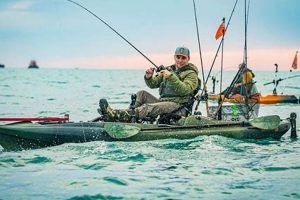
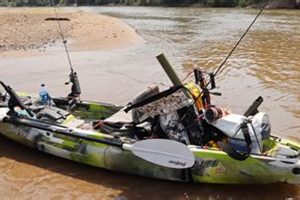
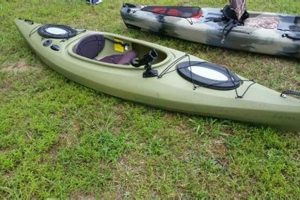
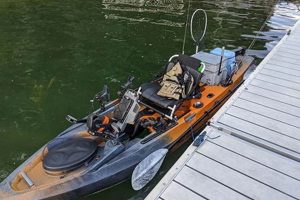
Anglers face a fundamental choice between two distinct watercraft: the compact, human-powered kayak and the larger, engine-driven boat. This decision hinges on factors like target species, fishing style, budget, and access to waterways. A kayak offers a stealthy, close-to-the-water experience, ideal for navigating shallows and exploring confined areas. Boats provide greater speed, range, stability, and carrying capacity, enabling access to deeper waters and longer excursions.
The choice between these vessels significantly impacts the overall angling experience. Kayaks offer an intimate connection with nature and a physical challenge, while boats deliver comfort and convenience. Historically, small, non-motorized craft like canoes and kayaks predate motorized boats, serving as essential tools for fishing and transportation. The advent of outboard motors revolutionized angling, opening up vast new possibilities for exploration and exploitation of fisheries. This evolution continues today with advancements in both kayak and boat design catering to the specific needs of anglers.
Understanding the distinct advantages and disadvantages of each option is crucial for making an informed decision. Subsequent sections will delve into detailed comparisons of key features including maneuverability, stability, cost, propulsion, fishing-specific features, and suitable fishing environments for each craft.
Tips for Choosing Between a Fishing Kayak and a Boat
Selecting the appropriate watercraft for angling requires careful consideration of individual needs and preferences. The following tips offer guidance for navigating this decision-making process.
Tip 1: Assess Target Species and Fishing Style: Larger, faster boats are better suited for offshore fishing targeting pelagic species. Kayaks excel in shallower environments pursuing species like bass or panfish.
Tip 2: Consider Physical Capabilities and Comfort: Kayaking demands a certain level of physical fitness. Boats offer greater comfort and stability, particularly beneficial for individuals with mobility limitations.
Tip 3: Evaluate Budgetary Constraints: Kayaks typically represent a lower initial investment and require less ongoing maintenance compared to motorized boats. Factor in costs like fuel, storage, and potential repairs.
Tip 4: Analyze Available Waterways and Transportation: Consider proximity to suitable launch sites and the ability to transport the chosen vessel. Kayaks offer greater portability and require less elaborate launching facilities.
Tip 5: Prioritize Safety and Essential Gear: Appropriate safety equipment, including life jackets and navigation lights, is crucial for both kayaks and boats. Research and adhere to local regulations.
Tip 6: Research Fishing-Specific Features: Modern fishing kayaks and boats offer specialized features like rod holders, livewells, and fish finders. Determine which features align with specific angling needs.
Tip 7: Consider Storage Capacity and Gear Requirements: Boats offer significantly more storage space for tackle, coolers, and other equipment. Kayaks require careful packing and prioritization of essential gear.
Careful consideration of these factors will lead to a more informed decision, ensuring a safe and enjoyable angling experience tailored to individual circumstances.
By weighing these points, anglers can confidently choose the best watercraft to maximize their time on the water.
1. Maneuverability

Maneuverability represents a critical differentiator when comparing fishing kayaks and boats. A vessel’s ability to navigate specific environments directly impacts angling success. Kayaks, due to their smaller size and lighter weight, possess superior maneuverability in confined areas such as shallow creeks, narrow rivers, and weed-choked waters. They can easily navigate tight turns and access areas unreachable by larger boats. This agility allows anglers to target fish in secluded pockets and along complex shorelines. Conversely, boats, while less agile in tight quarters, offer superior maneuverability in open water and challenging conditions. Their powerful engines enable quick navigation across large distances, swift currents, and choppy waters. This advantage allows anglers to cover more ground and access offshore fishing grounds inaccessible to kayaks.
The practical significance of maneuverability becomes evident when considering specific fishing scenarios. For example, pursuing bass in a densely vegetated pond requires the pinpoint precision offered by a kayak. Navigating through narrow channels and around submerged obstacles presents minimal difficulty. Conversely, trolling for salmon in a vast lake necessitates the speed and stability of a motorized boat. Covering large expanses of water efficiently and maintaining course in changing weather conditions are crucial for success. Choosing the appropriate craft based on maneuverability requirements significantly enhances the angler’s ability to reach target species and effectively present lures or bait.
Understanding the relationship between maneuverability and vessel choice optimizes fishing effectiveness. While kayaks offer distinct advantages in confined environments, boats excel in open water scenarios. Recognizing these strengths allows anglers to tailor their vessel selection to specific fishing locations and target species, ultimately increasing the likelihood of a successful outing. The decision should align maneuverability capabilities with the anticipated fishing conditions and personal angling preferences.
2. Stability

Stability plays a crucial role in the “fishing kayak vs boat” decision. It directly impacts angler safety, comfort, and fishing effectiveness. Kayaks, inherently narrower than boats, present a greater challenge to balance, particularly for novice paddlers. This characteristic can restrict movement within the kayak, making tasks like casting and reeling more challenging. Conversely, boats offer a more stable platform, allowing anglers greater freedom of movement and reducing the risk of capsizing, especially in rough waters. This enhanced stability also facilitates activities like standing while casting or fighting larger fish. The inherent stability differences significantly influence the types of water conditions suitable for each vessel. Kayaks are best suited for calmer waters, while boats can handle choppier conditions. For example, attempting to stand and cast in a kayak on a windy lake poses a significant risk, while a boat’s stability in the same conditions allows for a more secure and comfortable fishing experience.
The degree of stability required often correlates with the intended fishing style. Anglers focused on still fishing in calm waters might find a kayak’s stability sufficient. However, those engaging in techniques requiring more dynamic movement, like fly fishing or fighting strong fish, benefit significantly from the stability of a boat. Consider the scenario of hooking a large fish. In a kayak, the angler must carefully manage balance while battling the fish, increasing the risk of capsize. A boat, on the other hand, provides a stable platform, allowing the angler to focus on the fight without the added challenge of maintaining balance. This stability advantage extends to other activities, such as landing fish, handling gear, and navigating through wakes or currents.
Choosing between a fishing kayak and a boat based on stability considerations requires a realistic assessment of individual skill level, fishing style, and anticipated water conditions. Prioritizing stability enhances safety and comfort, allowing anglers to focus on the fishing experience rather than managing balance. While kayaks offer a closer-to-the-water experience, boats provide a secure platform crucial for anglers prioritizing stability, particularly in challenging conditions or when engaging in dynamic fishing techniques. Ultimately, balancing stability needs with other factors like maneuverability and cost contributes significantly to angler satisfaction and safety on the water.
3. Cost

Cost represents a significant factor influencing the choice between a fishing kayak and a boat. Budgetary considerations extend beyond the initial purchase price, encompassing ongoing expenses like maintenance, storage, and fuel. Analyzing these cost components provides a comprehensive understanding of the long-term financial implications associated with each option.
- Initial Purchase Price
Kayaks generally present a lower initial investment compared to boats. Entry-level fishing kayaks can be purchased for a fraction of the cost of even a basic motorized boat. This price difference reflects the simpler construction and lack of complex engine systems in kayaks. For example, a basic fishing kayak might cost between $500 and $1,500, while a small fishing boat with a motor can easily exceed $10,000. This substantial difference in initial outlay often makes kayaks a more accessible option for budget-conscious anglers.
- Maintenance Costs
Ongoing maintenance costs also differ significantly. Kayaks require minimal maintenance, primarily involving occasional cleaning and inspections. Boats, with their complex engines and electrical systems, demand more frequent and often more expensive maintenance, including oil changes, winterization, and repairs. For example, annual maintenance for a kayak might involve a few hours of cleaning and minor repairs costing less than $100, while a boat’s annual maintenance could easily reach several hundred or even thousands of dollars, depending on the engine type and age.
- Storage Costs
Storage requirements and associated costs contribute to the overall expense. Kayaks, due to their smaller size, offer flexible storage options, often fitting in a garage or even on roof racks. Boats, depending on size, may necessitate dedicated storage facilities, incurring additional monthly or annual fees. For example, storing a kayak at home is typically free, while renting a boat slip or storing a boat in a dedicated storage facility can cost hundreds of dollars per month. This difference in storage needs and costs influences the overall long-term financial commitment.
- Operational Costs
Operational costs, primarily fuel consumption, represent a significant ongoing expense for boat owners. Kayaks, being human-powered, eliminate fuel costs entirely. Boats, especially larger models or those used frequently, incur substantial fuel expenses depending on engine size and usage patterns. This ongoing operational cost represents a significant factor for anglers operating on a tight budget. For example, a day of fishing in a motorized boat can cost tens or even hundreds of dollars in fuel, while kayaking incurs no fuel expense.
Analyzing these cost components clarifies the financial implications of choosing between a fishing kayak and a boat. While the initial purchase price of a kayak is significantly lower, the ongoing costs associated with boat ownership, including maintenance, storage, and fuel, can accumulate substantially over time. Therefore, anglers must consider both short-term and long-term costs when making their decision. Evaluating these financial factors in conjunction with individual fishing needs and preferences leads to a more informed and financially sustainable choice.
4. Propulsion
Propulsion methods represent a fundamental distinction between fishing kayaks and boats, directly impacting an angler’s experience on the water. This core difference influences factors such as speed, range, access to fishing grounds, and physical exertion required during a fishing trip. Understanding the nuances of each propulsion system is essential for making an informed decision aligned with individual needs and preferences.
- Human-Powered Kayaks
Kayaks primarily rely on human power via paddles. This method provides a quiet, stealthy approach ideal for stalking fish in shallow waters or navigating sensitive ecosystems. However, it limits range and speed, requiring greater physical exertion, particularly in challenging conditions like strong currents or wind. Examples include traditional paddle kayaks and pedal-driven kayaks, the latter offering increased speed and efficiency for longer distances.
- Motorized Boats
Boats typically employ outboard motors offering significantly greater speed and range compared to kayaks. This allows anglers to cover vast distances, access offshore fishing grounds, and combat strong currents or winds efficiently. However, motors introduce noise and vibration, potentially spooking fish and disrupting the tranquility of the environment. Examples include gasoline-powered outboards, electric trolling motors for quieter operation, and increasingly popular, more environmentally friendly electric outboards.
- Sail-Powered Vessels
While less common for dedicated fishing, sailboats harness wind power for propulsion, offering a unique blend of efficiency and environmental friendliness. Sailboats can access deeper waters and cover considerable distances, although speed and maneuverability are dependent on wind conditions. Fishing from a sailboat presents specific challenges related to maneuvering and line management. This method suits specific angling styles, such as trolling or drifting, and requires specialized sailing knowledge and equipment.
- Electric Motors for Kayaks
Bridging the gap between human-powered and motorized vessels, electric motors designed for kayaks offer an increasingly popular option. These systems provide an assisted propulsion method, reducing physical strain and extending range. They offer a quieter alternative to gasoline outboards, minimizing disturbance to fish and the surrounding environment. However, they add weight and complexity to the kayak, requiring battery management and potentially increasing the overall cost.
The choice of propulsion method directly influences the type of fishing experience possible. Kayaks offer a close-to-nature, physically engaging experience, while motorized boats prioritize speed, range, and convenience. Sailboats cater to a specific niche, offering an environmentally conscious approach with unique challenges and rewards. Electric motors for kayaks provide a compromise, blending human power with assisted propulsion for enhanced versatility. Considering these diverse propulsion systems and their respective advantages and disadvantages is essential for aligning vessel choice with individual fishing styles, target species, and access to waterways.
5. Capacity

Capacity, encompassing both passenger and gear volume, represents a critical distinction between fishing kayaks and boats. This factor significantly influences the practicality and feasibility of various fishing trips, impacting the number of anglers accommodated, the amount of gear transported, and overall comfort on the water. Understanding capacity limitations and advantages is crucial for selecting the appropriate vessel for specific fishing scenarios and group sizes.
- Passenger Capacity
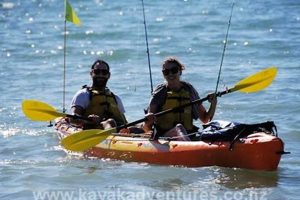
Kayaks, designed primarily for individual use, typically accommodate one angler. Tandem kayaks offer space for two passengers, but this configuration often compromises individual space and maneuverability. Boats, conversely, offer greater passenger capacity, ranging from small skiffs accommodating two or three anglers to larger vessels capable of carrying significantly more. This expanded capacity enables group fishing trips and facilitates shared experiences on the water. For instance, a family fishing outing requires a boat with sufficient seating for all members, while a solo angler prioritizing maneuverability might prefer a single-person kayak.
- Gear Capacity
Gear capacity directly influences the types of fishing trips feasible with each vessel. Kayaks offer limited storage space for tackle, coolers, and other essential gear. Anglers must prioritize essential items and employ efficient packing strategies. Boats, on the other hand, provide significantly more storage capacity, allowing anglers to bring additional equipment, larger coolers, and even specialized gear like downriggers or livewells. For example, a multi-day fishing expedition necessitates the ample storage provided by a boat, while a short afternoon trip targeting panfish requires less equipment and can be easily managed within a kayak’s limited storage space.
- Weight Capacity
Weight capacity dictates the maximum combined weight of passengers and gear a vessel can safely carry. Exceeding this limit compromises stability and increases the risk of capsizing, particularly in kayaks. Boats generally possess higher weight capacities, allowing for heavier loads and accommodating larger passengers or substantial gear. Understanding weight capacity is crucial for safe operation and preventing overloading. For example, attempting to carry excessive gear in a kayak can destabilize the vessel, making it difficult to control, while a boat with a higher weight capacity can safely handle the same load.
- Impact on Fishing Style
Capacity considerations often directly influence fishing styles. Kayaks, with their limited capacity and focus on individual angling, are well-suited for techniques requiring stealth and maneuverability, such as fly fishing in small streams or sight fishing in shallow flats. Boats, with their larger capacity and ability to carry specialized equipment, facilitate techniques like trolling, deep-sea fishing, or drifting, which often involve heavier gear and multiple anglers. Choosing the right vessel based on capacity considerations aligns with preferred fishing styles and maximizes effectiveness on the water.
Capacity considerations play a pivotal role in determining the suitability of a fishing kayak versus a boat for specific angling needs. Kayaks prioritize individual use and maneuverability, accepting limitations in passenger and gear capacity. Boats excel in accommodating larger groups and transporting substantial amounts of gear, facilitating diverse fishing styles and longer excursions. Careful consideration of capacity requirements, alongside factors such as maneuverability, stability, and cost, empowers anglers to select the most appropriate vessel for a safe, comfortable, and productive fishing experience.
6. Accessibility

Accessibility, in the context of choosing between a fishing kayak and a boat, refers to the ease and convenience of reaching desired fishing locations. This encompasses considerations such as transportability, launch requirements, and the suitability of each vessel for navigating specific waterways. Evaluating accessibility factors is crucial for maximizing fishing opportunities and ensuring a smooth and efficient angling experience.
- Transportation and Portability
Kayaks offer significant advantages in terms of transportation and portability. Their smaller size and lighter weight allow for easy transport on roof racks, trailers, or even inside larger vehicles. This portability eliminates the need for specialized trailers and reduces transportation costs. Boats, particularly larger models, often require trailers for transport, increasing complexity and expense. For example, a kayak can be easily loaded onto a car roof rack for transport to a remote lake, while a larger boat necessitates a trailer and suitable towing vehicle, potentially limiting access to certain areas.
- Launch Requirements
Launching a kayak requires minimal infrastructure. They can be launched from virtually any shoreline, boat ramp, or even shallow water access points. This flexibility expands fishing opportunities and reduces reliance on developed boat ramps. Boats, especially larger models with deeper drafts, require more developed launch facilities and deeper water access, potentially restricting access to certain waterways. For example, a kayak can be launched directly from a beach or riverbank, while a boat requires a suitable ramp and sufficient water depth. This difference in launch requirements significantly impacts access to various fishing locations.
- Navigating Waterways
Each vessel type presents distinct advantages and limitations regarding waterway navigation. Kayaks excel in navigating shallow waters, narrow creeks, and areas inaccessible to larger boats. Their shallow draft allows them to access secluded fishing spots and navigate through shallow vegetation. Boats, while restricted by draft and maneuverability in shallow areas, excel in navigating larger bodies of water, open ocean, and rough conditions. Their speed and stability allow them to cover greater distances and access offshore fishing grounds. For instance, a kayak is ideal for exploring shallow marshes and navigating tight mangrove tunnels, while a boat is better suited for traversing larger lakes or venturing offshore.
- Storage Considerations
Storage requirements also influence accessibility. Kayaks require less storage space than boats and can often be stored in garages, sheds, or even inside homes. This reduces storage costs and simplifies access to the vessel. Boats, especially larger models, may require dedicated outdoor storage or marina slips, increasing overall costs and potentially impacting access for spontaneous fishing trips. This difference in storage needs directly affects the convenience and spontaneity of fishing outings. For example, a kayak stored readily accessible at home allows for quick and easy preparation for a fishing trip, while retrieving a boat from off-site storage adds complexity and time.
Accessibility considerations significantly influence the practical aspects of fishing and should be weighed carefully when choosing between a kayak and a boat. Kayaks offer greater portability, simplified launch requirements, and access to shallow waterways, making them ideal for anglers prioritizing convenience and exploring diverse environments. Boats, while requiring more complex transportation and launch arrangements, provide access to open water, handle rough conditions, and accommodate larger groups, aligning with different fishing styles and preferences. Balancing accessibility needs with factors like capacity, stability, and cost ultimately determines the most suitable vessel for individual anglers and their specific fishing goals.
Frequently Asked Questions
This section addresses common inquiries regarding the choice between fishing kayaks and boats, providing concise and informative responses to facilitate informed decision-making.
Question 1: Which option is safer, a fishing kayak or a boat?
Both options present inherent risks. Kayaks, closer to the water, increase the risk of capsizing but offer greater maneuverability in emergencies. Boats provide a more stable platform but require adherence to navigation rules and safety regulations. Ultimately, safety depends on operator experience, appropriate safety equipment, and adherence to safe boating practices.
Question 2: What are the primary cost differences beyond the initial purchase price?
Significant cost disparities exist beyond the initial purchase. Boats incur ongoing expenses for fuel, maintenance (engine, hull), storage (marina, trailer), and potential repairs. Kayaks require minimal maintenance and offer flexible storage options, generally resulting in lower long-term costs.
Question 3: Which option is better suited for beginners?
The ideal choice for beginners depends on individual circumstances. Kayaks offer a more accessible entry point, requiring less specialized knowledge and equipment. However, mastering paddling and balance takes practice. Boats demand familiarity with navigation rules, engine operation, and safety procedures, often necessitating formal training or experienced guidance.
Question 4: Can kayaks be used in the ocean?
Specialized ocean kayaks are designed for open water conditions, featuring enhanced stability and storage. However, ocean kayaking requires advanced paddling skills, thorough planning, and careful attention to weather and tides due to increased risks compared to sheltered waters.
Question 5: What fishing accessories are essential for each option?
Essential accessories vary depending on the vessel and fishing style. Kayaks benefit from rod holders, paddle leashes, dry bags, and personal flotation devices. Boats require navigation lights, bilge pumps, anchors, life jackets, and potentially fish finders or downriggers, depending on the fishing method.
Question 6: How does weather impact the choice between a kayak and a boat?
Weather significantly influences vessel choice. Kayaks are more susceptible to wind and waves, limiting their use in challenging conditions. Boats, particularly larger models, offer greater stability and weather resistance, enabling fishing in rougher waters. Always check weather forecasts before embarking on any fishing trip and prioritize safety.
Careful consideration of these frequently asked questions, combined with a thorough evaluation of individual needs and priorities, empowers informed decision-making when choosing between a fishing kayak and a boat. Selecting the appropriate vessel enhances safety, maximizes fishing effectiveness, and contributes to a more enjoyable experience on the water.
For further guidance, consult local angling communities, boat dealers, or kayak specialists. Practical experience and expert advice supplement this information, enabling confident selection of the optimal fishing platform.
Fishing Kayak vs Boat
The “fishing kayak vs boat” debate represents a fundamental decision for anglers. This exploration highlighted key differentiators impacting the angling experience: maneuverability, stability, cost, propulsion, capacity, and accessibility. Kayaks offer a cost-effective, close-to-the-water experience, excelling in maneuverability and accessibility to shallow, confined waters. Boats provide greater stability, capacity, and range, enabling access to open water and diverse fishing techniques, albeit at a higher cost. The optimal choice hinges on carefully balancing individual needs, fishing style, target species, budget, and available waterways.
Ultimately, the decision transcends a simple “versus” comparison. It represents a personalized selection process reflecting individual priorities and desired fishing experiences. An informed evaluation of these factors empowers anglers to select the ideal vessel, maximizing enjoyment and success on the water. Continued innovation in kayak and boat design promises further refinement of these platforms, catering to evolving angler needs and enhancing the pursuit of aquatic quarry.