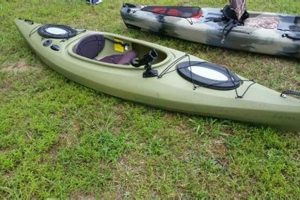
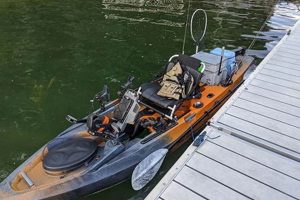
Lightweight, easily transported watercraft designed for angling offer anglers access to a wide range of fishing locations, from small ponds and rivers to larger lakes and coastal waters. These vessels typically feature specialized design elements like rod holders, tackle storage, and comfortable seating to enhance the fishing experience.
The ability to reach secluded fishing spots otherwise inaccessible by larger boats or from shore significantly expands angling opportunities. Compactness and ease of transport, often achieved through inflatable or folding designs, make these craft appealing to anglers with limited storage space or those who travel frequently. This advantage has contributed to the increasing popularity of this type of fishing, particularly among urban dwellers and recreational anglers seeking convenience and versatility. The evolution of materials and design has led to increasingly durable and efficient craft capable of handling diverse water conditions, further enhancing their appeal.
Further exploration will cover key features, selection considerations, and safe operation practices for these specialized watercraft.
Tips for Utilizing Compact Fishing Kayaks
Effective use of compact fishing kayaks requires consideration of several key factors to ensure both a productive and safe angling experience. The following tips offer guidance for maximizing the benefits of these specialized vessels.
Tip 1: Prioritize Stability: Vessel stability is paramount, especially when casting or reeling in fish. Select a design with a wider hull or consider outriggers for enhanced stability.
Tip 2: Choose Appropriate Paddles: Paddle length and blade shape impact paddling efficiency and maneuverability. Opt for a paddle suited to the user’s height and the kayak’s width.
Tip 3: Organize Tackle Efficiently: Limited space necessitates thoughtful tackle organization. Utilize tackle boxes and storage compartments strategically to maintain a clutter-free fishing area.
Tip 4: Practice Launching and Landing: Launching and landing techniques vary based on the chosen vessel and the water conditions. Practice in calm waters before venturing into more challenging environments.
Tip 5: Prioritize Safety Gear: Always wear a personal flotation device (PFD) and carry essential safety equipment, including a whistle, signaling device, and first-aid kit.
Tip 6: Check Weather Conditions: Be aware of weather forecasts and avoid venturing out in adverse conditions such as high winds or storms.
Tip 7: Respect Wildlife and the Environment: Adhere to Leave No Trace principles by packing out all trash and minimizing disturbance to wildlife and their habitats.
By adhering to these guidelines, anglers can significantly enhance their fishing experience while ensuring safety and environmental responsibility.
These practical tips pave the way for a more informed and enjoyable experience on the water, allowing anglers to fully utilize the advantages offered by compact fishing kayaks.
1. Portability

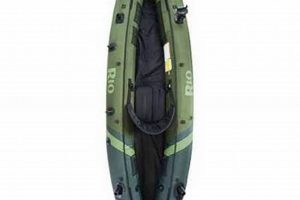
Portability defines the core advantage of these specialized kayaks, enabling access to diverse fishing locations often unreachable by larger vessels. This characteristic hinges on lightweight construction and compact design, frequently achieved through inflatable or folding mechanisms. Inflatable models deflate for compact storage and transport, while folding kayaks collapse into manageable sizes. This portability expands fishing opportunities, allowing anglers to explore remote ponds, rivers, and coastal areas with minimal logistical constraints. For instance, an angler can easily transport an inflatable kayak in a backpack to a mountain lake otherwise inaccessible by motorized boat.
The practical significance of portability extends beyond mere access. Reduced storage requirements benefit anglers living in apartments or with limited garage space. Simplified transport eliminates the need for trailers and large vehicles, facilitating travel to distant fishing destinations. This ease of transport contributes to the increasing popularity of these kayaks among urban anglers and those seeking versatile recreational options. Consider an angler living in a city; a portable kayak allows them to easily transport their vessel via public transport or a small car, opening up fishing opportunities beyond urban limitations.
In conclusion, portability directly impacts the versatility and accessibility of fishing kayaks. This defining characteristic expands angling horizons, simplifies logistics, and caters to diverse lifestyles. While portability prioritizes convenience, factors like load capacity and on-water performance require careful consideration based on individual angling needs. The careful balance between portability and performance remains a crucial factor in selecting the appropriate vessel.
2. Fishing Features

Specialized features distinguish portable fishing kayaks from recreational models, optimizing them for angling effectiveness. These features directly impact an angler’s ability to locate, target, and land fish. Rod holders, often adjustable and strategically positioned, secure rods while paddling or preparing tackle. Integrated tackle storage compartments keep essential gear organized and readily accessible, minimizing clutter and maximizing fishing time. Other features might include fish finders, anchor trolleys, and even live wells, further enhancing the angling experience. Consider a scenario where an angler needs to quickly switch between paddling and casting; readily available rods secured in holders enable seamless transitions and increase the chances of a successful hookup.
The presence and design of these features influence an angler’s overall success and enjoyment. Well-placed rod holders prevent rod loss and facilitate hands-free paddling. Efficient tackle storage streamlines lure changes and reduces time spent searching for equipment. These features, while enhancing convenience, also contribute to safety by maintaining a clear and organized cockpit area. For example, an angler navigating through shallow, weedy waters benefits from a dedicated anchor trolley system, allowing controlled drift and precise positioning for optimal casting.
Ultimately, the effectiveness of a portable fishing kayak hinges on the thoughtful integration of these specialized features. While portability remains crucial, these design elements transform a simple vessel into a dedicated fishing platform. The careful selection of a kayak with appropriate fishing features directly correlates with an angler’s ability to maximize their time on the water and achieve angling success. The balance between portability and specialized functionality underscores the evolution of these kayaks into efficient and accessible angling tools.
3. Stability

Stability is a critical performance attribute directly influencing the safety and effectiveness of portable fishing kayaks. A stable platform provides a secure base for casting, reeling, and landing fish, minimizing the risk of capsizing, especially in challenging conditions like currents or windy environments. Hull design, width, and length significantly influence stability. Wider kayaks generally offer greater initial stability, making them suitable for calmer waters and less experienced anglers. Longer, narrower kayaks may provide superior tracking and speed but often compromise initial stability. Consider an angler attempting to land a large fish in a narrow, unstable kayak; the risk of capsize increases significantly, potentially leading to gear loss and personal danger.
The importance of stability extends beyond simply preventing capsizing. Enhanced stability allows anglers to confidently stand and cast, expanding their field of vision and increasing casting accuracy. This is particularly advantageous in sight fishing scenarios or when navigating shallow waters. Furthermore, a stable platform minimizes fatigue during long fishing trips, allowing anglers to maintain focus and enjoyment. For example, an angler standing in a stable kayak can sight fish in shallow flats with greater precision than one seated in a less stable craft, leading to increased fishing success. Stability also impacts the angler’s ability to use accessories effectively; a stable kayak provides a secure platform for mounting fish finders, GPS units, and other electronic devices.
In conclusion, stability represents a crucial factor in portable fishing kayak selection and utilization. The interplay between hull design, width, and length directly impacts on-water performance and angler safety. Understanding the nuances of stability allows anglers to choose a kayak suited to their experience level, target fishing environments, and desired fishing techniques. Prioritizing stability ultimately enhances safety, improves fishing effectiveness, and contributes to a more enjoyable and productive angling experience.
4. Durability

Durability is a paramount consideration for portable fishing kayaks, directly impacting the vessel’s lifespan and overall performance. These kayaks frequently endure harsh conditions, including exposure to sunlight, saltwater, abrasive shorelines, and impacts from rocks or submerged debris. Construction materials and manufacturing processes significantly influence a kayak’s ability to withstand these challenges. Robust materials like high-density polyethylene (HDPE) or reinforced PVC offer superior resistance to punctures, abrasion, and UV degradation. Well-constructed seams and reinforced stress points further enhance durability, ensuring the kayak remains watertight and structurally sound over extended use. Consider a scenario where an angler frequently fishes in rocky rivers; a durable kayak constructed from abrasion-resistant materials is essential to prevent punctures and ensure longevity.
The practical implications of durability extend beyond the kayak’s structural integrity. A durable kayak requires less frequent repairs, minimizing downtime and maintenance costs. This reliability is particularly important for anglers who rely on their kayaks for regular fishing excursions or extended expeditions. Furthermore, a durable kayak retains its value over time, making it a worthwhile investment for serious anglers. For example, an angler investing in a high-quality, durable kayak may incur a higher initial cost but will likely experience lower long-term expenses compared to an angler frequently replacing less durable models. Durability also impacts safety; a well-maintained, durable kayak provides a more secure and reliable platform on the water, minimizing the risk of equipment failure in challenging conditions.
In summary, durability represents a critical factor influencing the long-term value and performance of portable fishing kayaks. Material selection, construction quality, and proper maintenance contribute to a kayak’s ability to withstand the rigors of regular use in diverse environments. Prioritizing durability ensures a reliable, safe, and cost-effective fishing platform, allowing anglers to focus on their passion without the distraction of frequent repairs or equipment failure. This focus on durability ultimately enhances the overall fishing experience and contributes to the long-term enjoyment of the sport.
5. Weight Capacity

Weight capacity represents a critical specification for portable fishing kayaks, directly influencing safety and performance. This metric dictates the maximum combined weight of the angler, gear, and any additional cargo the kayak can safely support. Exceeding the specified weight capacity compromises stability, maneuverability, and potentially the structural integrity of the vessel. Understanding and adhering to weight capacity limitations ensures a safe and enjoyable fishing experience.
- Safety Implications
Weight capacity directly correlates with safety on the water. Overloading a kayak reduces freeboard, increasing the risk of swamping or capsizing, especially in rough conditions. A kayak operating at its maximum capacity also responds less predictably to waves and currents, further compromising stability. Adhering to weight limitations ensures sufficient buoyancy and maneuverability, mitigating risks associated with overloading. For example, an overloaded kayak paddling in choppy waters faces a significantly higher risk of capsizing compared to a properly loaded vessel.
- Performance Considerations
Weight capacity significantly influences a kayak’s performance characteristics. An overloaded kayak sits lower in the water, increasing drag and reducing paddling efficiency. Maneuverability also suffers, making it more difficult to navigate tight turns or challenging currents. Maintaining a safe margin below the maximum weight capacity ensures optimal performance and responsiveness on the water. Consider an angler attempting to paddle against a strong current in an overloaded kayak; the reduced efficiency and maneuverability significantly impede progress and increase physical exertion.
- Impact on Kayak Longevity
Consistently exceeding the weight capacity can negatively impact a kayak’s lifespan. Overloading stresses the hull and seams, potentially leading to premature wear and tear, leaks, or structural damage. Adhering to weight limits preserves the kayak’s integrity, extending its usable life and minimizing the need for repairs. For instance, a consistently overloaded inflatable kayak may experience premature seam failure or material degradation compared to a kayak operated within its specified weight range.
- Determining Appropriate Capacity
Selecting a kayak with appropriate weight capacity requires careful consideration of individual needs. Anglers should account for their body weight, the combined weight of all fishing gear, and any additional cargo they plan to carry. Choosing a kayak with ample weight capacity ensures safe and efficient operation while accommodating potential future gear additions or changes in body weight. Consider an angler planning multi-day fishing trips; they require a kayak with sufficient capacity to accommodate camping gear, food, and water in addition to their fishing equipment.
In conclusion, weight capacity serves as a crucial factor influencing the safety, performance, and longevity of portable fishing kayaks. Understanding the implications of weight limitations and selecting a kayak with appropriate capacity ensures a secure and enjoyable fishing experience while preserving the integrity of the vessel. Careful consideration of individual needs and adherence to manufacturer recommendations maximize both safety and performance on the water.
6. Price Point

Price point significantly influences purchasing decisions within the portable fishing kayak market. Costs vary considerably based on several factors, including materials, features, size, and brand recognition. Entry-level kayaks constructed from less expensive materials like PVC often offer a more affordable entry point for casual anglers. Higher-end models incorporating advanced materials like carbon fiber or specialized features such as integrated fish finders and pedal-drive systems command premium prices, catering to serious anglers seeking enhanced performance and durability. Understanding the correlation between price and features enables informed purchasing decisions aligned with individual needs and budgets. For example, an angler primarily fishing small ponds might find an affordable inflatable kayak sufficient, while an angler targeting offshore species likely requires a more robust and expensive vessel.
The impact of price extends beyond initial purchase considerations. Long-term costs, including maintenance, repairs, and potential upgrades, also factor into the overall cost of ownership. Less expensive kayaks might require more frequent repairs or replacements, potentially offsetting initial savings over time. Higher-end kayaks often benefit from superior durability and warranties, potentially reducing long-term expenses. Furthermore, resale value correlates with initial price and brand reputation, offering potential cost recovery for anglers who eventually upgrade or transition to different fishing styles. Consider an angler purchasing a low-cost kayak that requires frequent repairs; the cumulative cost of repairs might eventually exceed the initial price difference compared to a more durable, albeit initially more expensive, model.
In conclusion, price point serves as a critical factor influencing purchasing decisions and long-term ownership costs within the portable fishing kayak market. Understanding the relationship between price, features, durability, and potential resale value empowers informed decision-making. Balancing budget considerations with performance requirements ensures anglers select a kayak that aligns with their fishing needs, experience level, and long-term financial goals. This balanced approach facilitates informed purchasing decisions, maximizing both enjoyment and value within the diverse portable fishing kayak market.
Frequently Asked Questions about Portable Fishing Kayaks
This section addresses common inquiries regarding portable fishing kayaks, providing concise and informative responses to facilitate informed decision-making and enhance understanding of these specialized vessels.
Question 1: What are the primary advantages of portable fishing kayaks compared to traditional kayaks or boats?
Key advantages include enhanced accessibility to remote fishing locations, simplified storage and transport, and reduced logistical requirements, eliminating the need for trailers or large vehicles. These advantages cater particularly well to anglers with limited storage space or those seeking versatile fishing options in diverse environments.
Question 2: How does one choose between an inflatable and a folding portable fishing kayak?
Selection depends on individual priorities. Inflatable kayaks prioritize compactness and ease of inflation/deflation, while folding kayaks offer potentially faster setup times and rigid hull characteristics. Factors such as storage space, transport methods, and desired on-water performance influence this decision.
Question 3: What safety precautions should be considered when using a portable fishing kayak?
Prioritizing safety involves consistently wearing a personal flotation device (PFD), carrying essential safety equipment like a whistle and signaling device, checking weather forecasts before embarking, and adhering to local boating regulations. Practicing self-rescue techniques enhances preparedness in unforeseen circumstances.
Question 4: How does weight capacity influence the performance and safety of a portable fishing kayak?
Weight capacity dictates the maximum combined weight the kayak can safely support. Exceeding this limit compromises stability, maneuverability, and potentially structural integrity. Adhering to weight limitations ensures optimal performance and safe operation on the water.
Question 5: What essential features should one look for in a portable fishing kayak?
Essential features include rod holders, tackle storage compartments, comfortable seating, and adjustable footrests. Additional features like anchor trolleys, fish finders, and live wells enhance angling effectiveness, depending on individual fishing styles and preferences.
Question 6: How does one maintain and prolong the lifespan of a portable fishing kayak?
Proper maintenance involves rinsing the kayak with freshwater after each use, especially after saltwater exposure, protecting it from prolonged sun exposure, storing it in a cool, dry place, and promptly repairing any damage. Adhering to manufacturer maintenance guidelines ensures optimal longevity and performance.
Understanding these key aspects of portable fishing kayaks empowers informed purchasing decisions and promotes safe and enjoyable angling experiences. Prioritizing safety, selecting appropriate features, and adhering to weight capacity limitations maximize the benefits of these versatile vessels.
The subsequent sections will delve into specific kayak models and provide comprehensive reviews to further aid selection and optimize angling experiences.
Portable Fishing Kayak
Exploration of portable fishing kayaks reveals their transformative impact on angling accessibility and versatility. Key factors including portability, specialized fishing features, stability, durability, weight capacity, and price point collectively define the selection and utilization process. Understanding these interconnected elements empowers informed decisions, aligning individual angling needs with appropriate vessel characteristics. Prioritizing safety considerations, adhering to weight limitations, and implementing proper maintenance practices ensure long-term enjoyment and responsible use.
The evolving landscape of portable fishing kayak design and technology promises continued advancements in performance, portability, and angler-centric features. Careful consideration of these evolving trends, coupled with informed decision-making, empowers anglers to embrace the expanding opportunities offered by these versatile vessels, fostering deeper connections with the aquatic environment and enhancing the overall fishing experience.