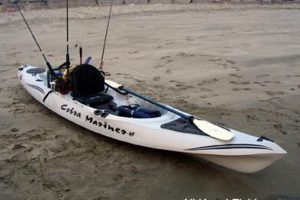
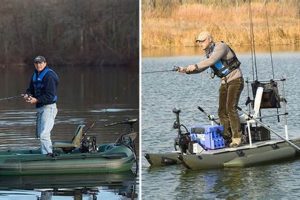
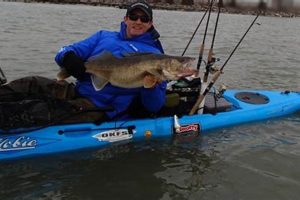
Specialized small watercraft designed for angling in New Zealand waters represent a popular choice for recreational and sport fishing. These vessels are typically equipped with features like rod holders, storage compartments for tackle, and comfortable seating arrangements optimized for long hours on the water. An example would be a sit-on-top style kayak outfitted with a fish finder and anchor trolley system, suited for exploring the coastal regions.
The popularity of this type of watercraft stems from the unique blend of access and stability they offer anglers. New Zealand’s diverse waterways, from sheltered harbors and estuaries to open coastal waters, are ideal for this style of fishing. These specialized watercraft provide a stable platform for casting and fighting fish while allowing anglers to reach areas inaccessible to larger boats. This enhances the fishing experience by offering closer contact with nature and the thrill of pursuing various fish species in their natural habitats. Historically, kayaks have been utilized in the region for centuries, but their adaptation specifically for angling is a more recent development, driven by technological advancements in kayak design and a growing interest in sustainable fishing practices.
The subsequent sections will explore key considerations for selecting an appropriate vessel for New Zealand conditions, including hull design, propulsion systems, and essential safety equipment. Furthermore, the discussion will encompass popular fishing locations across New Zealand and responsible angling practices for preserving the country’s pristine aquatic ecosystems.
Tips for Kayak Fishing in New Zealand
Successful kayak angling requires careful planning and preparation. These tips provide valuable guidance for enhancing safety and maximizing fishing success in New Zealand waters.
Tip 1: Check weather forecasts and tide charts. Understanding prevailing weather conditions and tidal movements is paramount for safe and effective angling. Unexpected changes can create hazardous situations, especially in open water. Consulting resources like Metservice New Zealand is crucial before embarking on any fishing trip.
Tip 2: Wear appropriate safety gear. A life jacket is essential, even in calm conditions. Additional safety equipment, including a VHF radio, personal locator beacon (PLB), and signaling devices, should be carried and readily accessible.
Tip 3: Choose the right kayak and paddle. Vessel selection should align with the intended fishing environment and target species. Paddle length and design impact paddling efficiency and comfort.
Tip 4: Plan fishing locations and routes carefully. Researching potential fishing spots and establishing clear routes beforehand optimizes fishing time and minimizes navigational challenges. Consider factors like water depth, currents, and access points.
Tip 5: Organize tackle and equipment effectively. Efficient storage and readily accessible tackle enhance angling efficiency. Waterproof containers and specialized kayak storage systems maintain organization and protect gear from the elements.
Tip 6: Practice paddling and maneuvering techniques. Developing proficient paddling skills improves boat control and maneuverability, particularly in challenging conditions like wind or currents.
Tip 7: Respect the environment and follow fishing regulations. Adhering to catch limits, size restrictions, and sustainable fishing practices ensures the preservation of New Zealand’s valuable fisheries for future generations.
By implementing these strategies, anglers can improve safety, optimize fishing success, and contribute to the responsible enjoyment of New Zealand’s diverse aquatic environments.
Careful preparation and informed decision-making are essential for a rewarding and safe experience. The following section will offer further insights into specific fishing techniques and recommended locations throughout New Zealand.
1. Stability

Stability is a paramount consideration when selecting a fishing kayak in New Zealand. A stable platform is essential for casting lines, fighting fish, and ensuring angler safety, particularly in variable conditions often encountered in New Zealand waters. This characteristic directly influences the angler’s ability to focus on fishing rather than maintaining balance, contributing significantly to a successful and enjoyable experience.
- Primary Stability
Primary stability refers to a kayak’s initial resistance to tipping. A wider hull generally provides greater primary stability, making it ideal for calmer waters and activities like still fishing or photography. For example, a wide, flat-bottomed kayak offers excellent primary stability, suitable for fishing in sheltered harbors or estuaries. However, this design can compromise maneuverability in rougher conditions. In the context of New Zealand fishing, high primary stability is advantageous for targeting species in calmer environments.
- Secondary Stability
Secondary stability describes a kayak’s resistance to tipping at greater angles of lean. This characteristic is crucial for navigating choppy waters or performing dynamic maneuvers. Kayaks with rounded or flared hulls typically exhibit strong secondary stability. For instance, a kayak with a flared hull may feel less stable initially but offers greater resistance to capsizing in rough conditions, like those encountered in exposed coastal areas of New Zealand. This characteristic allows anglers to confidently navigate challenging waters while maintaining balance and focusing on fishing.
- Hull Design and Stability
Hull design significantly influences both primary and secondary stability. Wider, flatter hulls maximize primary stability, while rounded or flared hulls enhance secondary stability. Choosing the appropriate hull design depends on the intended fishing environment. For instance, a kayak designed for offshore fishing in New Zealand will likely feature a longer, narrower hull with moderate primary and strong secondary stability, enabling it to handle rougher conditions and track effectively. Conversely, a kayak intended for sheltered harbor fishing might prioritize a wider, flatter hull for maximum primary stability.
- Impact of Gear and Movement on Stability
The distribution of gear and angler movement significantly impacts stability. Evenly distributing weight and minimizing sudden movements enhance overall stability. For example, storing heavier items low in the kayak and avoiding abrupt shifts in weight improves balance and reduces the risk of capsizing, particularly important when landing larger fish in New Zealand waters. Understanding the impact of gear placement and body movement is crucial for maintaining a stable platform and maximizing fishing success.
Considering these facets of stability when selecting a fishing kayak in New Zealand directly contributes to angler safety and fishing effectiveness. Matching the kayak’s stability characteristics to the intended fishing environment and personal preferences is crucial for an optimal on-water experience. Further research and potentially testing different kayak models can provide valuable insights before making a purchase decision.
2. Maneuverability
Maneuverability is a critical factor influencing the effectiveness and enjoyment of fishing kayak experiences in New Zealand. The ability to precisely position the kayak in diverse aquatic environments, from navigating tight rivers and estuaries to handling open coastal waters, directly impacts fishing success. This section explores the multifaceted nature of maneuverability as it applies to fishing kayaks in New Zealand.
- Hull Design and Length
Hull design significantly impacts a kayak’s maneuverability. Shorter kayaks with wider beams generally offer greater maneuverability in tight spaces, such as navigating mangrove forests or shallow rivers. Longer, narrower kayaks, while less agile in confined areas, excel in tracking straight and covering greater distances efficiently, making them suitable for open water or traversing larger lakes. For New Zealand’s diverse waterways, selecting a kayak with the appropriate hull design for the intended fishing location is paramount. A shorter kayak might be ideal for maneuvering in sheltered bays and estuaries, while a longer kayak would be preferred for paddling across larger lakes or coastal areas.
- Waterline Length and Speed
The length of the kayak’s waterline directly correlates with its potential speed. Longer waterlines typically result in higher speeds, allowing anglers to cover greater distances efficiently and access distant fishing spots. In New Zealand’s expansive waters, this can be a significant advantage. However, shorter waterlines, while potentially slower, can offer enhanced maneuverability in tight turns and confined spaces, crucial for navigating complex waterways or targeting specific fish habitats, like those found in the country’s numerous estuaries and inlets. The trade-off between speed and maneuverability requires careful consideration based on individual fishing preferences and target locations.
- Rudder and Skeg Systems
Rudders and skegs enhance a kayak’s tracking and directional stability, particularly in windy or current-prone conditions commonly encountered in New Zealand waters. Rudders provide active control for steering, while skegs offer passive directional assistance. These features are invaluable for maintaining a desired course and minimizing the need for constant corrective paddling, especially in challenging environments like open coastal areas or large lakes. Incorporating these systems can significantly improve efficiency and reduce fatigue during longer fishing trips in demanding conditions.
- Paddling Technique and Experience
While kayak design influences maneuverability, paddling technique plays a crucial role in maximizing on-water performance. Efficient paddling strokes and proper body positioning enhance maneuverability, allowing for precise control and effortless navigation. Experience and practice are essential for mastering these techniques and effectively maneuvering a kayak in various conditions, including the diverse environments found throughout New Zealand. Developing strong paddling skills is essential for safely and effectively exploring different fishing spots.
The maneuverability of a fishing kayak directly influences its suitability for specific fishing environments and target species in New Zealand. Balancing factors such as hull design, length, and potential speed with the intended use ensures optimal performance and maximizes fishing success. Thorough research and consideration of these facets contribute to a more informed kayak selection, enhancing the overall fishing experience in New Zealand’s diverse aquatic landscapes.
3. Storage Capacity

Storage capacity is a critical consideration when selecting a fishing kayak in New Zealand. The ability to securely and efficiently transport essential gear directly impacts fishing success and overall trip enjoyment. Ample storage allows anglers to carry a variety of tackle, safety equipment, food, water, and other necessary items for extended excursions. This reduces reliance on shore visits and expands fishing opportunities in remote locations, a significant advantage given New Zealand’s expansive coastline and numerous inland waterways. For example, carrying multiple rod and reel combinations allows anglers to adapt to varying fishing conditions and target different species encountered throughout the day. Sufficient storage for safety equipment like spare paddles, bilge pumps, and first-aid kits contributes to a safe and prepared on-water experience.
The types of storage solutions available also influence a kayak’s practicality. Dedicated storage compartments, such as sealed hatches, protect sensitive items from water damage, crucial in New Zealand’s often unpredictable weather conditions. Recessed storage areas minimize interference with paddling and fishing activities, ensuring a streamlined and efficient experience. Bungee cord systems and integrated storage wells provide readily accessible storage for frequently used items like pliers, knives, and lures. Strategic placement of storage compartments within the kayak optimizes weight distribution and maintains stability, crucial for navigating varying water conditions and handling larger fish. For instance, locating heavier items lower in the hull improves balance and reduces the risk of capsizing. Choosing a kayak with well-designed storage options enhances organization and contributes to a more efficient and productive fishing experience.
Understanding the storage requirements for specific fishing expeditions is essential. Shorter trips in sheltered waters may require less storage capacity compared to multi-day excursions in remote locations. Target species also influence storage needs. Fishing for larger species like kingfish might necessitate carrying heavier tackle and specialized equipment, requiring greater storage capacity. Matching storage capacity to fishing style and intended trip duration ensures optimal preparedness and maximizes the potential for a successful and enjoyable experience in New Zealand’s diverse fishing environments.
4. Comfort
Comfort plays a crucial role in the overall fishing kayak experience in New Zealand. Extended periods on the water, often in varying weather conditions, necessitate a comfortable and supportive seating arrangement. Discomfort can detract from focus and enjoyment, impacting fishing performance and potentially shortening trips. A well-designed seat minimizes fatigue and allows anglers to concentrate on fishing, crucial for maximizing success and enjoying New Zealand’s diverse aquatic environments. For example, an angler targeting snapper in the Hauraki Gulf might spend several hours on the water. A comfortable seat with adequate back support enables sustained focus and enhances the overall experience. Conversely, an uncomfortable seat can lead to premature fatigue, potentially curtailing the fishing trip and diminishing overall enjoyment.
Several factors contribute to seating comfort. Adjustable features like backrest angle and seat height allow customization to individual body types and preferences. Ergonomic design promotes proper posture and reduces strain on the back and legs, essential for long hours on the water. Breathable materials enhance comfort in warm conditions and prevent overheating, particularly relevant in New Zealand’s often sunny climate. High-quality padding cushions the angler from the hard shell of the kayak, further enhancing comfort and reducing fatigue. Consider an angler fishing for trout in the South Island’s high-country lakes. An adjustable, ergonomic seat with breathable padding allows for a comfortable and enjoyable experience, even during extended periods on the water. This contributes to a more relaxed and productive fishing trip.
Prioritizing comfort in fishing kayak selection directly impacts enjoyment and performance on New Zealand waters. Features like adjustable seating, ergonomic design, and breathable materials contribute significantly to a positive experience. Investing in a comfortable kayak ensures anglers can fully appreciate New Zealand’s stunning aquatic landscapes and maximize their time on the water. Neglecting comfort can lead to fatigue, discomfort, and a diminished appreciation of the overall fishing experience. Therefore, careful consideration of seating comfort during kayak selection is essential for optimizing fishing trips in New Zealand’s diverse environments.
5. Durability
Durability is a critical factor for fishing kayaks in New Zealand, given the demanding conditions they often face. The country’s diverse aquatic environments, ranging from sheltered harbors and estuaries to exposed coastlines and fast-flowing rivers, subject kayaks to considerable wear and tear. A durable kayak withstands impacts from rocks, submerged logs, and abrasive sand, ensuring a longer lifespan and maintaining performance over time. Construction materials and manufacturing processes directly influence a kayak’s ability to endure these challenging conditions. For example, a kayak constructed from high-density polyethylene (HDPE) offers superior impact resistance compared to a less durable material, proving invaluable in rocky coastal areas or fast-flowing rivers. Similarly, robust construction techniques, such as reinforced seams and hulls, enhance overall structural integrity and contribute to long-term durability. Choosing a durable fishing kayak minimizes the risk of damage and ensures continued reliable performance in New Zealand’s demanding waters.
The practical implications of durability extend beyond mere longevity. A robust kayak provides a safe and reliable platform for anglers in diverse conditions, contributing to peace of mind and enhancing the overall fishing experience. For instance, a durable kayak offers greater resistance to puncture or damage in the event of a collision with submerged debris, minimizing the risk of leaks and ensuring angler safety. Furthermore, a well-constructed kayak maintains its structural integrity and performance characteristics over time, preserving its value and providing years of reliable service. This is particularly important in New Zealand, where conditions can be unpredictable and challenging. A durable kayak allows anglers to confidently explore remote locations and focus on fishing, knowing their vessel can withstand the rigors of the environment. This directly translates to a more enjoyable and productive fishing experience.
In summary, durability is a non-negotiable attribute for fishing kayaks in New Zealand. The demanding nature of the country’s waterways necessitates a robust and well-constructed vessel capable of withstanding considerable wear and tear. Prioritizing durability during kayak selection ensures longevity, enhances safety, and contributes to a more enjoyable and productive fishing experience in New Zealand’s diverse and challenging aquatic environments. Investing in a durable kayak is an investment in long-term performance, safety, and overall enjoyment on the water.
Frequently Asked Questions
This section addresses common inquiries regarding kayak fishing in New Zealand, providing concise and informative responses to assist individuals in making informed decisions and enhancing their understanding of this popular activity.
Question 1: What type of kayak is best suited for fishing in New Zealand?
The optimal kayak depends on intended fishing locations and personal preferences. Sit-on-top kayaks are popular for their stability and ease of access, while sit-inside kayaks offer greater protection from the elements. Inflatable kayaks provide portability and convenience. Specific features like rod holders, storage compartments, and rudder systems should be considered based on individual fishing styles and target species.
Question 2: What safety precautions are essential for kayak fishing in New Zealand?
Wearing a life jacket is paramount. Checking weather forecasts and tide charts prior to departure is crucial. Carrying essential safety equipment, including a VHF radio, personal locator beacon (PLB), and signaling devices, is highly recommended. Informing someone of planned fishing locations and estimated return times enhances safety. Understanding local regulations and navigational hazards is essential for a safe and enjoyable experience.
Question 3: Where are popular kayak fishing locations in New Zealand?
New Zealand offers numerous excellent kayak fishing destinations. The Bay of Islands, Hauraki Gulf, Marlborough Sounds, and Fiordland provide diverse fishing opportunities. Numerous sheltered harbors, estuaries, and coastal areas offer excellent prospects for various species. Researching specific locations and local regulations is advised before embarking on fishing trips. Consider factors such as accessibility, target species, and prevailing weather conditions when selecting fishing locations.
Question 4: What fishing techniques are effective from a kayak in New Zealand?
Effective techniques include trolling, jigging, bottom fishing, and drift fishing. The optimal approach depends on target species and location. Local knowledge and experience can enhance fishing success. Researching prevalent fish species and appropriate tackle is advisable. Consulting local fishing guides or experienced anglers can provide valuable insights.
Question 5: What regulations apply to kayak fishing in New Zealand?
Adhering to all relevant fishing regulations, including catch limits, size restrictions, and permitted fishing methods, is essential. Obtaining necessary licenses and permits is mandatory. Respecting local customs and environmental considerations ensures the sustainability of New Zealand’s fisheries. Consulting the Ministry for Primary Industries website or local fishing authorities provides comprehensive information on current regulations.
Question 6: What essential gear should be carried on a fishing kayak in New Zealand?
Essential gear includes appropriate fishing tackle, safety equipment (life jacket, VHF radio, PLB, signaling devices), navigation tools (charts, GPS), and appropriate clothing for varying weather conditions. Food, water, and sun protection are also recommended. A dry bag or waterproof containers protect sensitive items from the elements. Packing essential gear ensures preparedness for various situations and enhances safety and enjoyment on the water.
Careful consideration of these frequently asked questions enhances preparedness and contributes to a safer and more enjoyable kayak fishing experience in New Zealand. Further research and consultation with local experts can provide valuable additional insights.
The next section will explore advanced techniques for kayak fishing in New Zealand, including tips for targeting specific species and navigating challenging conditions.
Fishing Kayak NZ
Specialized kayaks designed for angling in New Zealand offer a unique approach to experiencing the country’s rich aquatic ecosystems. Selection considerations encompass stability, maneuverability, storage capacity, comfort, and durability. Each attribute contributes significantly to on-water performance and overall enjoyment. Understanding these factors empowers informed decisions aligned with individual fishing styles, target species, and the diverse conditions encountered throughout New Zealand’s waters. Appropriate safety precautions and adherence to regulations are paramount for responsible and sustainable angling practices. Addressing frequently asked questions provides clarity and reinforces the importance of preparedness and informed decision-making.
Careful selection and responsible utilization of specialized fishing kayaks unlock unparalleled access to New Zealand’s diverse fisheries. Continued exploration of advanced techniques and emerging technologies promises further enhancement of this rewarding pursuit, emphasizing the importance of informed practices and a deep respect for the aquatic environment. The future of this specialized angling approach hinges on the responsible stewardship of these natural resources, ensuring their preservation for generations to come.