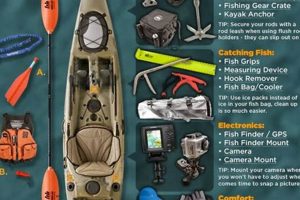
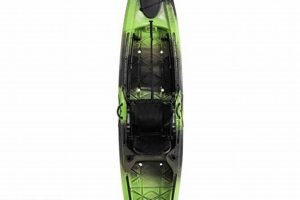
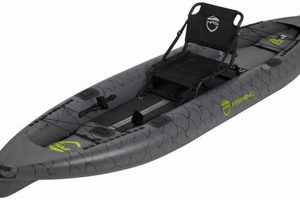
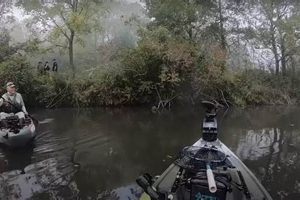
Choosing between shorter and longer kayaks designed for fishing involves considering several key factors. A shorter kayak, around ten feet, offers advantages in maneuverability, especially in tighter waterways like creeks and rivers, and tends to be lighter and easier to transport. Longer kayaks, closer to twelve feet, provide greater speed and tracking, making them better suited for larger bodies of water like lakes and open bays. They also typically offer more storage space for gear and supplies.
The length of a fishing kayak directly impacts stability, speed, and carrying capacity. Selecting the right size significantly improves fishing success and overall enjoyment on the water. Historically, fishing kayaks were primarily longer vessels, but advancements in hull design and materials have enabled shorter kayaks to become increasingly popular, offering anglers diverse choices to match specific fishing styles and locations.
This article will delve into the specific advantages and disadvantages of these two popular sizes, examining factors such as stability, speed, maneuverability, storage, transport, and the types of water each is best suited for, ultimately guiding anglers toward the optimal choice for their needs.
Tips for Choosing Between a Shorter and Longer Fishing Kayak
Selecting the appropriate kayak length for fishing requires careful consideration of individual needs and intended usage. The following tips offer guidance for making an informed decision.
Tip 1: Consider the fishing environment. Rivers and creeks often necessitate a shorter, more maneuverable kayak (around 10 feet), while larger bodies of water like lakes and bays benefit from the speed and tracking of a longer kayak (around 12 feet).
Tip 2: Evaluate transportation and storage limitations. Shorter kayaks are generally lighter and easier to transport and store, making them ideal for those with limited space or smaller vehicles.
Tip 3: Assess the importance of speed versus maneuverability. Longer kayaks excel in speed and tracking, advantageous for covering larger distances. Shorter kayaks prioritize maneuverability, crucial for navigating tight spaces and accessing shallow areas.
Tip 4: Factor in gear and equipment needs. Longer kayaks offer more storage capacity for fishing gear, tackle boxes, and other essentials, while shorter kayaks may require more strategic packing.
Tip 5: Prioritize stability requirements. Wider kayaks, regardless of length, generally offer greater stability, which is essential for anglers standing to cast or reel in fish.
Tip 6: Test different kayak lengths if possible. Demoing kayaks or renting various sizes provides valuable firsthand experience and helps determine the most comfortable and suitable length.
Tip 7: Consider paddling experience. Less experienced paddlers might find shorter kayaks easier to control initially, while seasoned kayakers might prefer the efficiency of a longer hull.
By carefully evaluating these factors, anglers can select a kayak length that maximizes their fishing experience, ensuring comfort, efficiency, and success on the water.
This information provides a foundational understanding for making an informed decision. Subsequent sections will delve deeper into specific features and considerations.
1. Maneuverability

Maneuverability represents a critical factor in kayak fishing, significantly influenced by hull length. Shorter kayaks, typically around 10 feet, excel in maneuverability due to their smaller turning radius. This allows for nimble navigation through tight spaces, such as narrow creeks, shallow waters, and areas dense with vegetation or obstacles. Longer kayaks, around 12 feet, possess a larger turning radius, making them less agile in confined environments. Consider a scenario where an angler needs to navigate through a series of fallen logs or quickly change direction to pursue a fish. The shorter kayak’s superior maneuverability provides a distinct advantage in such situations.
The impact of length on maneuverability extends beyond simple turning. Shorter kayaks also respond more quickly to paddle strokes, allowing for rapid adjustments in direction and speed. This responsiveness proves invaluable when navigating dynamic currents or making precise casts in challenging locations. While longer kayaks offer advantages in speed and tracking across open water, their reduced maneuverability can hinder performance in environments requiring frequent directional changes. For example, a 10-foot kayak might be more suitable for fishing in mangrove tunnels or navigating a winding river, while a 12-foot kayak might prove cumbersome.
Understanding the relationship between kayak length and maneuverability is essential for selecting the appropriate vessel for specific fishing environments. Prioritizing maneuverability often necessitates a shorter kayak, sacrificing some speed and tracking for enhanced agility. Conversely, prioritizing speed and tracking may require compromising maneuverability by opting for a longer kayak. Anglers must carefully weigh these trade-offs based on their target fishing locations and preferred techniques. Selecting the correct length based on maneuverability requirements ultimately contributes to a more efficient and enjoyable fishing experience.
2. Speed and Tracking
Speed and tracking represent critical performance characteristics differentiating 10-foot and 12-foot fishing kayaks. Longer kayaks (12-foot) generally exhibit superior speed and tracking due to their increased waterline length. A longer waterline reduces drag, allowing the kayak to glide through the water more efficiently, achieving higher speeds with less effort. This efficiency proves advantageous when paddling longer distances or contending with currents and wind. Furthermore, the longer hull provides enhanced directional stability, referred to as tracking, minimizing the need for constant corrective strokes. This translates to a more streamlined and predictable paddling experience, particularly beneficial in open water conditions.
Conversely, shorter kayaks (10-foot) possess a shorter waterline length, resulting in increased drag and reduced tracking compared to their longer counterparts. This translates to lower top speeds and a greater tendency to deviate from a straight line, requiring more frequent corrective strokes. While this might seem disadvantageous, the trade-off lies in enhanced maneuverability, as discussed previously. Consider a scenario involving paddling across a large lake to reach a distant fishing spot. A 12-foot kayak would likely reach the destination faster and with less effort than a 10-foot kayak. However, when navigating a narrow, winding creek, the 10-foot kayak’s superior maneuverability becomes a significant asset.
The selection of kayak length based on speed and tracking requirements depends heavily on the intended fishing environment. For anglers frequently traversing large distances in open water, a 12-foot kayak offers clear advantages in efficiency and speed. However, for anglers primarily fishing in smaller, confined waterways where maneuverability is paramount, a 10-foot kayak may prove a more suitable choice. Understanding the interplay between kayak length, speed, and tracking enables anglers to select the optimal vessel for their specific needs, maximizing performance and enjoyment on the water.
3. Stability
Stability constitutes a critical factor in kayak fishing, influencing angler safety, comfort, and fishing effectiveness. While kayak length plays a role, stability is more directly related to kayak width and hull design. Understanding the factors affecting stability is crucial for selecting a kayak suitable for individual needs and fishing styles.
- Hull Design
Different hull designs offer varying degrees of stability. Flat-bottomed hulls provide excellent primary stability (initial resistance to tipping), making them ideal for calm waters and stand-up fishing. However, they can feel less stable in rougher conditions. Rounded hulls offer less primary stability but greater secondary stability (resistance to capsizing once tilted), performing better in choppy water. V-shaped hulls provide efficient tracking but can feel less stable than flatter designs. The choice of hull design directly impacts the kayak’s stability characteristics.
- Width
Kayak width significantly affects stability. Wider kayaks generally offer greater stability than narrower kayaks, providing a more secure platform, particularly beneficial for anglers standing to cast or reel in fish. Narrower kayaks sacrifice some stability for increased speed and maneuverability. For example, a wider 10-foot kayak might be more stable than a narrower 12-foot kayak, even with the difference in length.
- Center of Gravity
The angler’s center of gravity and weight distribution within the kayak also influence stability. Keeping weight low and centered enhances stability, while shifting weight to the sides increases the risk of tipping. Properly securing gear and distributing weight evenly within the kayak improves overall stability, regardless of kayak length.
- Water Conditions
Water conditions significantly impact kayak stability. Calm, flat water generally presents fewer stability challenges, while rough water, currents, and wind can increase the risk of tipping. Selecting a kayak with appropriate stability characteristics for anticipated water conditions is essential for a safe and enjoyable fishing experience.
While the length of a fishing kayak (10-foot vs. 12-foot) indirectly influences stability by often correlating with width, the hull design, overall width, center of gravity, and water conditions are more direct determinants. Carefully considering these factors ensures the selection of a kayak with appropriate stability characteristics for individual angler needs and intended fishing environments. Prioritizing stability enhances safety, comfort, and confidence on the water, contributing to a more successful and enjoyable fishing experience.
4. Storage Capacity
Storage capacity represents a crucial consideration when selecting between 10-foot and 12-foot fishing kayaks. The available space for gear, tackle, and other essentials directly impacts fishing trip duration and overall comfort. Understanding the storage options in each kayak size aids in informed decision-making.
- Hull Size and Design
The larger hull size of 12-foot kayaks inherently offers greater storage capacity compared to 10-foot kayaks. This translates to more room for larger tackle boxes, additional rods, and other equipment. Furthermore, some 12-foot kayaks feature dedicated storage compartments, such as larger hatches and tank wells, designed to accommodate specific gear like coolers or dry bags. While 10-foot kayaks offer storage options, they are generally smaller and may require more strategic packing.
- Weight Capacity
Increased storage capacity often correlates with higher weight capacity in kayaks. 12-foot kayaks generally accommodate more weight than 10-foot kayaks, allowing anglers to carry additional gear and supplies without compromising stability or performance. This is particularly important for longer fishing trips or when carrying heavier equipment like battery-powered fish finders or larger tackle boxes.
- Deck Space and Rigging
Beyond internal storage, deck space and rigging options contribute to overall storage capacity. 12-foot kayaks often feature more deck space for mounting accessories like rod holders, fish finders, and gear tracks. This allows for convenient access to essential equipment and maximizes storage efficiency. While 10-foot kayaks can also be rigged with accessories, the limited deck space may necessitate more selective choices.
- Gear Organization and Accessibility
Effective gear organization and accessibility significantly impact fishing efficiency. While 12-foot kayaks offer more storage space, proper organization utilizing dry bags, tackle boxes, and other storage solutions is crucial for maximizing utility. Similarly, 10-foot kayaks benefit from careful planning and organization to ensure essential gear remains readily accessible despite limited space.
The selection of a 10-foot or 12-foot fishing kayak based on storage capacity depends heavily on individual fishing styles and trip requirements. Anglers embarking on longer expeditions or requiring substantial gear should prioritize the increased storage of 12-foot kayaks. Conversely, anglers prioritizing portability and maneuverability in smaller waterways may find the compact storage of 10-foot kayaks sufficient. Careful consideration of storage needs and organizational strategies ensures a well-equipped and efficient fishing experience, regardless of kayak length.
5. Transportation

Transporting fishing kayaks presents logistical considerations influenced significantly by kayak length. The ease of transport directly impacts accessibility to various fishing locations and overall convenience. Evaluating transportation methods and limitations is crucial for selecting between 10-foot and 12-foot kayaks.
- Vehicle Type and Size
The type and size of vehicle available for transport dictate kayak carrying capacity. Smaller vehicles, such as compact cars or sedans, may require roof racks or trailers for transporting longer 12-foot kayaks. Shorter 10-foot kayaks often fit inside larger vehicles or on smaller roof racks, simplifying transport. For example, a 12-foot kayak might necessitate a truck bed or a trailer for a compact car owner, while a 10-foot kayak might fit inside an SUV, eliminating the need for additional equipment.
- Kayak Weight and Portability
Kayak weight directly influences ease of handling during transport. 10-foot kayaks typically weigh less than 12-foot kayaks, simplifying loading, unloading, and carrying. This is particularly relevant for individuals with physical limitations or those transporting kayaks solo. Consider an angler carrying a kayak from a parking area to a launch site. The lighter weight of a 10-foot kayak reduces strain and simplifies the process, especially over longer distances or uneven terrain.
- Storage Solutions and Accessories
Roof racks, trailers, and kayak carts represent essential accessories facilitating kayak transport. Roof racks accommodate both 10-foot and 12-foot kayaks, but longer kayaks may require specialized cradles or extensions. Trailers offer greater carrying capacity for multiple kayaks or larger vessels but introduce additional storage and maintenance considerations. Kayak carts aid in transporting kayaks from vehicles to launch sites, minimizing carrying distance and strain, particularly beneficial for longer kayaks.
- Accessibility of Launch Sites
The accessibility of launch sites influences transportation choices. Launch sites with limited parking or challenging terrain may necessitate smaller, more portable kayaks. For instance, accessing a remote riverbank launch site might require carrying a kayak a considerable distance, favoring the lighter and more manageable 10-foot option. Conversely, launch sites with ample parking and easy access accommodate larger kayaks without significant transport challenges.
Selecting a kayak based on transportation considerations requires evaluating vehicle limitations, kayak weight and portability, available storage solutions, and launch site accessibility. 10-foot kayaks generally offer greater transport ease due to their smaller size and lighter weight, simplifying loading, unloading, and carrying. 12-foot kayaks offer advantages in speed and capacity but may present transport challenges, particularly for individuals with smaller vehicles or limited storage options. Careful consideration of these factors ensures seamless transportation, maximizing access to diverse fishing locations and contributing to a more convenient and enjoyable angling experience.
6. Target Fishing Location

Target fishing location represents a pivotal factor influencing the choice between a 10-foot and a 12-foot fishing kayak. Different aquatic environments present unique challenges and opportunities, necessitating kayaks with specific performance characteristics. Understanding the relationship between location and kayak length is essential for optimizing fishing success and overall experience.
- Small Lakes and Ponds
Smaller, sheltered bodies of water, such as ponds and small lakes, often favor maneuverability over speed. A 10-foot kayak excels in these environments, allowing anglers to navigate tight corners, explore shallow areas, and easily change fishing spots. The shorter length enhances agility and responsiveness, proving advantageous when targeting specific structures or pursuing fish in confined areas. While a 12-foot kayak can function in these locations, its larger turning radius may prove cumbersome.
- Large Lakes and Reservoirs
Larger bodies of water, such as vast lakes and reservoirs, prioritize speed and tracking. Covering greater distances to reach fishing grounds or trolling effectively necessitates the efficiency of a 12-foot kayak. Its longer waterline length allows for higher speeds and better tracking, minimizing effort and maximizing fishing time. While a 10-foot kayak can be used, it requires significantly more effort to cover the same distance and maintain a straight course, especially in windy conditions.
- Rivers and Streams
River and stream fishing presents unique challenges requiring maneuverability and stability. Navigating currents, shallow areas, and obstacles like rocks and fallen trees favors the agility of a 10-foot kayak. Its shorter length allows for quick turns and adjustments, essential for maintaining control and avoiding hazards. While a 12-foot kayak can navigate some rivers, its length can become a liability in tight spaces or fast-moving currents.
- Ocean and Coastal Areas
Ocean kayaking for fishing necessitates stability and capacity to handle varying conditions. While specialized ocean kayaks exist, anglers fishing near shore or in calmer bays might consider a 12-foot fishing kayak for its increased stability in chop and larger storage capacity for safety gear and catches. A 10-foot kayak is generally unsuitable for open ocean conditions due to limited stability and storage.
Matching kayak length to the target fishing location directly influences fishing effectiveness and enjoyment. Careful consideration of the specific characteristics of the intended fishing environment, such as size, water conditions, and potential obstacles, guides the selection between a 10-foot and a 12-foot fishing kayak. Choosing the appropriate length optimizes maneuverability, speed, stability, and safety, ultimately maximizing angling success and overall experience on the water.
Frequently Asked Questions
This section addresses common inquiries regarding the selection of appropriately sized fishing kayaks.
Question 1: Which kayak length is better for beginners?
Shorter kayaks (around 10 feet) often prove easier for beginners to manage due to their enhanced maneuverability and lighter weight. However, individual comfort and experience should guide the final decision.
Question 2: How does kayak length impact speed?
Longer kayaks (around 12 feet) generally achieve higher speeds due to reduced waterline drag, while shorter kayaks prioritize maneuverability over speed.
Question 3: Is a longer kayak always more stable?
Not necessarily. Stability depends more on kayak width and hull design than length. Wider kayaks generally offer greater stability, regardless of length.
Question 4: What type of water is best suited for a 10-foot kayak?
10-foot kayaks excel in smaller, confined waterways such as rivers, creeks, and smaller lakes, where maneuverability is paramount.
Question 5: What are the advantages of a 12-foot kayak for fishing?
12-foot kayaks offer advantages in speed, tracking, and storage capacity, making them well-suited for larger bodies of water like lakes, bays, and open ocean (near-shore).
Question 6: Can a 10-foot kayak be used in the ocean?
Generally, 10-foot kayaks are not recommended for open ocean conditions due to limited stability and storage capacity. They might be suitable for sheltered bays or very calm nearshore environments but caution is advised.
Careful consideration of individual needs, fishing style, and target fishing locations is essential for selecting the optimal kayak length. Prioritizing factors such as maneuverability, stability, speed, and storage ensures a safe and enjoyable fishing experience.
The following section will offer a concluding comparison and recommendations based on specific fishing scenarios.
10 vs 12 Foot Fishing Kayak
Selecting between a 10-foot and 12-foot fishing kayak requires careful evaluation of individual needs and intended usage. Shorter kayaks excel in maneuverability within confined waterways, offering advantages in agility and portability. Longer kayaks prioritize speed and tracking across open water, providing increased storage capacity. Factors such as target fishing location, transportation logistics, and individual paddling experience play crucial roles in determining the optimal kayak length.
Ultimately, the decision hinges on a comprehensive understanding of these competing factors. A thorough assessment ensures selection of a kayak that maximizes fishing performance, enhances safety, and contributes to a more enjoyable and successful experience on the water. Choosing the right kayak length empowers anglers to effectively explore diverse aquatic environments and pursue their passion with confidence and efficiency.