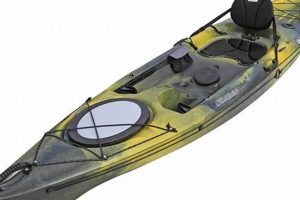
This specific type of small watercraft, designed for angling, is characterized by its brand and intended purpose. A small, often single-person vessel built for stability and maneuverability, it typically features specialized components like rod holders, storage compartments, and often a comfortable seat designed for extended periods on the water. An example would be a lightweight, sit-on-top model equipped with adjustable footrests and paddle holders, ideal for navigating shallow waters and accessing secluded fishing spots.
Such vessels offer distinct advantages for anglers. Their compact size allows access to shallow or heavily vegetated areas larger boats cannot reach. The inherent stability of these designs provides a secure platform for casting and reeling. Furthermore, specialized features like integrated storage for tackle and gear enhance the fishing experience. Over time, these watercraft have evolved from basic, utilitarian designs to incorporate advanced materials and features for improved comfort, performance, and fishability.
The following sections will explore specific aspects of this equipment category in greater detail, covering topics such as material construction, design variations, essential accessories, and recommended fishing techniques.
Tips for Kayak Fishing
Effective angling from this type of watercraft requires specific techniques and considerations. The following tips offer guidance for a safe and productive experience.
Tip 1: Prioritize Stability: Select a vessel appropriate for individual weight and intended water conditions. Wider hulls generally offer greater stability, especially for beginners.
Tip 2: Master Paddling Techniques: Efficient paddling conserves energy and allows precise maneuvering. Practice basic strokes and learn to adjust for wind and current.
Tip 3: Organize and Secure Gear: Utilize onboard storage compartments and secure loose items to prevent loss or interference during casting and reeling. Waterproof bags provide additional protection for sensitive equipment.
Tip 4: Choose Appropriate Tackle: Opt for shorter rods and reels suitable for the confined space. Consider lures and baits designed for the target species and fishing environment.
Tip 5: Practice Casting Techniques: Refine casting motions to account for the lower, less stable platform. Practice accurate, controlled casts to avoid tangling lines or snagging vegetation.
Tip 6: Understand Water Conditions: Research tides, currents, and weather patterns before venturing out. Be prepared for changing conditions and exercise caution in strong winds or rough waters.
Tip 7: Prioritize Safety: Always wear a personal flotation device and carry essential safety equipment, including a whistle, signaling device, and first-aid kit. Inform someone of your fishing plans and estimated return time.
By adhering to these guidelines, anglers can maximize their chances of success while ensuring a safe and enjoyable experience on the water.
This information provides a foundation for successful kayak fishing. The concluding section will offer additional resources and recommendations for further exploration.
1. Brand

The “Blue Wave” brand represents a specific manufacturer within the broader market of fishing kayaks. This brand association carries significant weight, influencing perceptions of quality, performance, and overall value. “Blue Wave” signifies more than just a name; it represents the manufacturer’s reputation, design philosophy, and commitment to specific features and construction methods. For instance, if Blue Wave is known for incorporating durable, high-density polyethylene in its kayak hulls, consumers associating the brand with “blue wave fishing kayak” will expect that level of material quality. This connection directly impacts purchasing decisions, as consumers often prioritize brands they trust and perceive as offering reliable performance.
The practical significance of understanding this brand connection lies in informed consumer choice. Recognizing “Blue Wave” as the manufacturer enables consumers to research the company’s history, product lines, and customer reviews. This informed approach allows for direct comparisons with other brands, facilitating selection of a fishing kayak that best aligns with individual needs and budget. For example, a consumer researching Blue Wave might discover they specialize in sit-on-top kayaks designed for stability in calm waters, which would be valuable information if targeting pond or lake fishing. Conversely, if Blue Wave’s reputation centers on affordability rather than high-end features, a consumer seeking advanced performance might explore alternative brands.
In summary, “Brand: Blue Wave” is not merely a label but a key component in understanding the overall value proposition of a “blue wave fishing kayak.” This brand association provides a framework for evaluating quality, features, and intended usage, empowering consumers to make informed decisions based on their specific fishing requirements and expectations. Recognizing the manufacturer behind the product name allows for a more nuanced understanding of the product’s strengths, limitations, and ultimate suitability within the broader fishing kayak market.
2. Activity
The “Activity: Fishing” component is integral to understanding the design and functionality of a blue wave fishing kayak. It signifies that the vessel is explicitly engineered and equipped for angling activities, distinguishing it from recreational or touring kayaks. This core purpose dictates specific design features and considerations crucial for successful on-the-water angling experiences.
- Stability and Maneuverability
Fishing kayaks prioritize stability, providing a secure platform for casting, reeling, and landing fish. This stability is achieved through wider hulls and design features promoting balance. Maneuverability is also essential, enabling anglers to navigate tight spots, shallow waters, and areas with dense vegetation. A stable and maneuverable platform is crucial for effective angling in diverse aquatic environments. For example, a wider, flatter hull provides stability for standing casts in calm lakes, while a shorter, more agile design enhances maneuverability in winding creeks.
- Specialized Features
Fishing kayaks often incorporate specialized features tailored to anglers’ needs. These may include rod holders, tackle storage compartments, anchor trolleys, and even fish finders. Such integrated features enhance efficiency and convenience on the water. For instance, flush-mounted rod holders secure rods while paddling, and readily accessible storage compartments keep tackle organized and within reach. These purpose-built features distinguish fishing kayaks from other types.
- Comfort and Ergonomics
Anglers often spend extended periods on the water, necessitating a comfortable and ergonomic seating arrangement. Adjustable seats with back support and ample legroom minimize fatigue and enhance the fishing experience. A well-designed seat allows anglers to focus on fishing, rather than discomfort, contributing to a more productive and enjoyable outing.
- Durability and Material Selection
Fishing kayaks typically utilize durable materials designed to withstand the rigors of the angling environment. These materials often include high-density polyethylene (HDPE) or other robust polymers resistant to impacts, abrasion, and UV exposure. This durability ensures the kayak can withstand contact with rocks, logs, and other potential hazards encountered in fishing locations. A durable kayak provides a reliable platform for years of fishing adventures.
These facets of “Activity: Fishing” collectively shape the design and functionality of the blue wave fishing kayak. By focusing on stability, specialized features, comfort, and durability, these vessels provide anglers with a dedicated platform optimized for a successful and enjoyable fishing experience. Understanding the interplay of these elements allows for informed selection and optimal utilization of the fishing kayak in its intended environment.
3. Type
The “Type: Kayak” designation within the “blue wave fishing kayak” term establishes the fundamental form and function of the watercraft. This categorization signifies a small, human-powered vessel propelled by a double-bladed paddle, typically designed for single occupancy, although tandem configurations exist. This inherent characteristic directly influences maneuverability, stability, and overall suitability for fishing applications. Kayaks, by their nature, offer a low-profile design allowing access to shallow waters and confined areas inaccessible to larger boats. This advantage is particularly relevant for fishing, enabling anglers to reach secluded spots often harboring desirable species.
Consider the cause-and-effect relationship between “Type: Kayak” and specific fishing scenarios. A kayak’s narrow profile and shallow draft enable navigation through dense vegetation, a common habitat for many fish species. This access distinguishes kayaks from wider, deeper boats restricted to open water. For example, targeting bass in heavily vegetated coves or pursuing trout in shallow streams becomes feasible with a kayak. The inherent portability of kayaks further enhances their utility. Their relatively lightweight construction allows for transport atop vehicles or even manual carrying across short distances, expanding access to remote fishing locations. This portability distinguishes kayaks from larger, trailer-dependent boats requiring specialized launch facilities.
Understanding “Type: Kayak” as a defining element of “blue wave fishing kayak” has significant practical implications. Recognizing this connection clarifies the vessel’s intended usage and informs equipment choices. For instance, selecting appropriate paddles, personal flotation devices, and storage solutions becomes more straightforward with a clear understanding of the kayak’s form and function. Furthermore, this understanding influences fishing strategies and techniques. Anglers can tailor their approach based on the kayak’s maneuverability and stability characteristics, maximizing their chances of success on the water. The “Type: Kayak” designation is therefore not merely a descriptive label but a critical component shaping the overall functionality and utility of the “blue wave fishing kayak” for its intended purpose.
4. Stability
Stability represents a critical performance attribute within the context of a blue wave fishing kayak. This characteristic directly influences the angler’s safety, comfort, and overall fishing effectiveness. A stable platform provides a secure base for casting, reeling, and landing fish, minimizing the risk of capsizing, particularly during dynamic movements inherent to angling activities. Cause-and-effect relationships exist between stability and design elements such as hull width, kayak length, and center of gravity. Wider hulls generally offer greater initial stability, while longer kayaks tend to track straighter. A lower center of gravity contributes to overall stability, reducing the likelihood of tipping. For example, a wider, flatter hull provides a more stable platform for standing casts, while a narrower, V-shaped hull offers greater maneuverability but compromises stability.
The importance of stability as a component of a blue wave fishing kayak extends beyond mere safety. Enhanced stability allows anglers to focus on fishing techniques rather than constantly correcting balance. This translates to improved casting accuracy, more efficient retrieval, and increased success in landing fish. Consider the practical implications: in challenging conditions, such as windy days or choppy water, a stable kayak maintains a predictable platform, allowing the angler to continue fishing effectively. Conversely, a less stable kayak might necessitate constant adjustments, hindering performance and potentially compromising safety. Real-life examples illustrate this: an angler attempting a hookset in a stable kayak can exert maximum force without fear of capsizing, whereas the same action in an unstable kayak could lead to an unintended swim. This distinction underscores the practical significance of stability in maximizing fishing success.
In summary, stability is not merely a desirable feature but a fundamental requirement for a functional and effective blue wave fishing kayak. Understanding the factors influencing stabilityhull design, center of gravity, and kayak lengthempowers informed decision-making during the selection process. Prioritizing stability ultimately enhances safety, improves fishing performance, and contributes to a more enjoyable and productive on-the-water experience. A stable platform provides the foundation for successful angling, enabling anglers to focus on their technique and maximize their chances of landing the catch. This focus on stability distinguishes fishing kayaks from other recreational kayak types, highlighting its essential role in the specialized activity of kayak angling.
5. Durability
Durability represents a critical factor influencing the lifespan and overall value of a blue wave fishing kayak. This attribute directly relates to the kayak’s ability to withstand the rigors of the fishing environment, including impacts, abrasion, and exposure to the elements. Cause-and-effect relationships exist between durability and material selection, construction methods, and overall design. Kayaks constructed from high-density polyethylene (HDPE) or similar robust polymers exhibit greater resistance to impacts and abrasion compared to those made from less durable materials. Reinforced hulls and decks further enhance durability, particularly in areas prone to stress or contact with obstacles. For example, a kayak designed with thicker hull sections in areas frequently impacting rocks or logs will exhibit greater durability over time. Similarly, UV-resistant coatings protect against sun damage, extending the lifespan of the kayak’s exterior.
The importance of durability as a component of a blue wave fishing kayak extends beyond mere longevity. A durable kayak provides a reliable and dependable platform for fishing expeditions, minimizing the risk of damage and ensuring consistent performance in diverse environments. Consider the practical implications: a durable kayak can withstand accidental impacts with rocks, logs, or other submerged obstacles without sustaining significant damage. This resilience allows anglers to explore challenging fishing locations, such as rocky shorelines or shallow rivers, without compromising the kayak’s structural integrity. Real-life examples illustrate this: a durable kayak can endure being dragged across a gravel beach or bumped against a dock piling without sustaining significant scratches or cracks. This robust construction provides peace of mind, allowing anglers to focus on fishing rather than worrying about potential damage to their equipment.
In summary, durability is a crucial consideration when evaluating a blue wave fishing kayak. Understanding the factors influencing durabilitymaterial selection, construction methods, and design featuresallows for informed decision-making and contributes to a more satisfactory long-term ownership experience. A durable kayak represents a valuable investment, providing a reliable platform for countless fishing adventures. Prioritizing durability ensures the kayak can withstand the demands of the fishing environment, maximizing its lifespan and contributing to a more enjoyable and productive on-the-water experience. This focus on durability directly correlates with the intended usage of a fishing kayak, distinguishing it from recreational kayaks where durability might play a less critical role.
6. Storage Capacity
Storage capacity represents a crucial aspect of a blue wave fishing kayak, directly impacting its practicality and overall effectiveness for angling. Adequate storage facilitates organized transport of essential fishing gear, including tackle boxes, rods, reels, and other accessories. This organized approach maximizes efficiency on the water, allowing anglers to focus on fishing rather than managing equipment. The following facets explore the multifaceted relationship between storage capacity and the blue wave fishing kayak experience.
- Types of Storage
Fishing kayaks offer diverse storage solutions, including integrated compartments, hatches, bungee cords, and tank wells. Integrated compartments provide secure, protected storage for smaller items like tackle boxes and lures. Hatches offer access to larger storage areas within the hull, accommodating bulkier items such as rods and reels. Bungee cords secure items on deck, providing quick access to frequently used gear. Tank wells, typically located behind the seat, accommodate larger items like coolers or dry bags. The strategic use of these various storage types optimizes space utilization and ensures efficient organization of essential fishing equipment.
- Capacity and Accessibility
The overall storage capacity of a fishing kayak directly influences the amount of gear an angler can carry. Kayaks with larger storage capacities accommodate longer fishing trips or situations requiring more equipment. Accessibility of storage compartments is equally crucial. Easily accessible compartments streamline gear retrieval, minimizing disruption during fishing activities. For example, a readily accessible hatch allows for quick retrieval of a spare rod or reel without requiring the angler to shift position or disembark the kayak.
- Weight Distribution and Stability
Proper weight distribution within storage compartments impacts the kayak’s stability and performance. Evenly distributing weight enhances balance and tracking, contributing to a more stable and predictable paddling experience. Concentrating weight in one area can negatively impact stability, making the kayak more prone to tipping. Understanding the relationship between weight distribution and stability is crucial for safe and efficient kayak operation. For instance, distributing heavier items lower in the hull and towards the center of the kayak improves stability, while placing lighter items higher up maintains a lower center of gravity.
- Impact on Fishing Experience
Adequate and well-organized storage directly enhances the overall fishing experience. Efficient access to essential gear streamlines fishing activities, allowing anglers to focus on technique and strategy. This organized approach minimizes wasted time searching for equipment, maximizing fishing time and increasing the potential for success. For example, having readily accessible lures and tackle allows for quick adjustments to changing fishing conditions, maximizing opportunities to catch fish.
In conclusion, storage capacity is not merely a practical consideration but a defining element of the blue wave fishing kayak experience. Understanding the various types of storage, optimizing capacity and accessibility, and managing weight distribution are crucial for maximizing efficiency, stability, and overall fishing success. The strategic use of storage solutions allows anglers to carry essential gear, maintain a stable platform, and focus on the task at hand: catching fish. This emphasis on storage distinguishes fishing kayaks from recreational models, highlighting its integral role in the specialized pursuit of angling from a kayak.
7. Maneuverability

Maneuverability represents a critical performance attribute of a blue wave fishing kayak, directly influencing its effectiveness in diverse aquatic environments. This characteristic encompasses the kayak’s responsiveness to paddle input, its ability to navigate tight spaces, and its overall agility on the water. Maneuverability plays a crucial role in accessing prime fishing locations, navigating challenging currents, and positioning the kayak effectively for optimal casting and retrieval. The following facets explore the multifaceted relationship between maneuverability and the blue wave fishing kayak experience.
- Hull Design and Length
Hull design significantly impacts maneuverability. Shorter kayaks with a more pronounced rocker (upward curve of the hull) tend to be more maneuverable, allowing for tighter turns and quicker changes in direction. Longer kayaks, while offering greater tracking ability in open water, may be less agile in confined spaces. For example, a shorter, rockered hull excels in navigating narrow creeks and maneuvering around obstacles like fallen trees or submerged rocks, while a longer hull is better suited for traversing larger bodies of water with less need for sharp turns.
- Water Conditions and Current
Maneuverability becomes particularly crucial in challenging water conditions. Strong currents, wind, and waves can significantly impact a kayak’s tracking and control. A highly maneuverable kayak allows anglers to maintain precise positioning and navigate effectively in dynamic environments. For instance, in a swift river current, a maneuverable kayak enables anglers to hold position near structure or eddies where fish often congregate, while a less maneuverable kayak might be swept downstream.
- Fishing Techniques and Target Species
Specific fishing techniques often necessitate varying degrees of maneuverability. Techniques like sight fishing or targeting fish in tight cover require a highly maneuverable kayak to precisely position the angler for optimal casting angles. Similarly, pursuing agile fish species necessitates a kayak capable of quick turns and rapid adjustments. For example, chasing schooling fish or targeting species known for quick bursts of speed requires a kayak that can respond rapidly to changes in fish movement.
- Impact on Fishing Efficiency and Success
Enhanced maneuverability directly contributes to fishing efficiency and success. The ability to quickly and precisely position the kayak allows anglers to cover more water, access prime fishing locations, and present lures effectively. This enhanced control translates to increased opportunities for catching fish and a more productive overall fishing experience. For instance, being able to silently and efficiently maneuver into position near a submerged log or weed bed significantly increases the chances of enticing a lurking fish.
In conclusion, maneuverability is not merely a performance characteristic but a defining element of the blue wave fishing kayak experience. Understanding the interplay between hull design, water conditions, fishing techniques, and overall maneuverability is crucial for maximizing fishing success. A highly maneuverable kayak empowers anglers to explore diverse environments, adapt to changing conditions, and effectively target specific fish species. This focus on maneuverability sets fishing kayaks apart from recreational kayaks designed for more leisurely paddling, highlighting its crucial role in the specialized pursuit of angling from a kayak.
Frequently Asked Questions
This section addresses common inquiries regarding kayaks designed for fishing, focusing on the “blue wave fishing kayak” keyword. The objective is to provide clear, concise information to facilitate informed decision-making and enhance understanding of this specialized watercraft category.
Question 1: What differentiates a fishing kayak from a recreational kayak?
Fishing kayaks incorporate specialized features like rod holders, tackle storage, and often enhanced stability for angling activities. Recreational kayaks prioritize comfort and ease of paddling for general-purpose use.
Question 2: Are all “blue wave fishing kayaks” sit-on-top designs?
While sit-on-top models are prevalent due to their stability and ease of entry/exit, some manufacturers might offer sit-inside fishing kayaks within their product line. Verification with specific product details is recommended.
Question 3: What weight capacity should one consider when selecting a fishing kayak?
Weight capacity considerations extend beyond the individual’s weight to encompass anticipated gear and equipment. Selecting a kayak with ample weight capacity ensures stability and safe operation.
Question 4: What are the typical material options for fishing kayak construction, and how do they impact durability?
High-density polyethylene (HDPE) is a common material due to its durability and impact resistance. Other materials, such as rotomolded plastic or composites, might offer varying degrees of durability and performance characteristics.
Question 5: How does hull design influence the stability and maneuverability of a fishing kayak?
Wider hulls generally provide greater stability, while longer, narrower hulls enhance tracking and speed. Specific hull designs, such as pontoon hulls or catamaran hulls, offer unique stability characteristics. Rocker, the upward curve of the hull, influences maneuverability, with more rocker enhancing turning capabilities.
Question 6: What essential safety precautions should one take when fishing from a kayak?
Wearing a personal flotation device (PFD) is paramount. Informing someone of fishing plans, carrying a communication device, and understanding local water conditions are additional crucial safety measures. Checking weather forecasts and being aware of potential hazards like changing tides or currents is essential.
Addressing these frequently asked questions offers valuable insights into the specialized category of fishing kayaks. A thorough understanding of these considerations empowers informed purchasing decisions and contributes to safe and enjoyable on-the-water experiences.
The subsequent sections will delve into specific product examples and comparative analyses within the “blue wave fishing kayak” market segment.
Conclusion
This exploration of the “blue wave fishing kayak” keyword has provided a comprehensive overview of this specialized watercraft category. Key aspects discussed include the significance of the brand association, the specialized design features catering to angling activities, the inherent advantages of the kayak platform, and the critical roles of stability, durability, storage capacity, and maneuverability. Understanding these interconnected elements provides a framework for informed evaluation and selection within the broader fishing kayak market. Furthermore, addressing frequently asked questions offers practical insights into key considerations for prospective buyers and current owners alike.
The information presented serves as a foundation for informed decision-making regarding “blue wave fishing kayaks.” Potential purchasers are encouraged to conduct further research, compare available models, and consider individual fishing styles and preferences. The evolution of kayak design and technology continues to advance, promising further innovation within this specialized segment of the recreational fishing market. Ultimately, informed selection and responsible usage contribute to enhanced fishing experiences and promote the continued enjoyment of this rewarding outdoor pursuit.