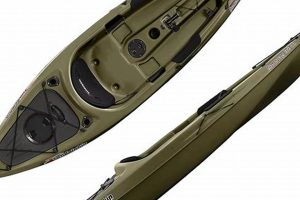
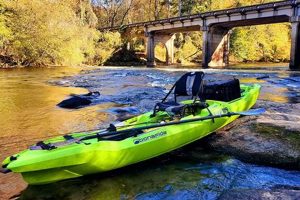
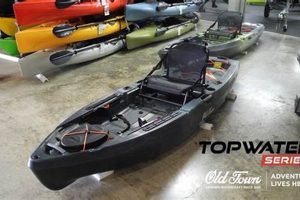
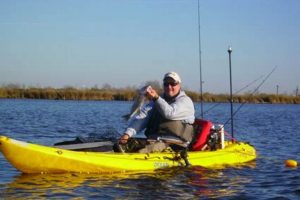
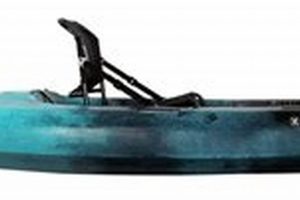
This specific size of watercraft represents a popular choice among anglers. A vessel of this length typically offers a balance of stability and maneuverability suitable for various fishing environments, from calm lakes and slow-moving rivers to moderately choppy coastal waters. Its dimensions often allow for ample storage for fishing gear and equipment, along with features like rod holders and comfortable seating designed for extended angling sessions.
The combination of length and purpose-built design provides several advantages. The waterline length contributes to decent tracking and speed, facilitating efficient movement across the water. The stability inherent in its design allows anglers to stand and cast with confidence, improving casting accuracy and visibility. Furthermore, the specialized features, including dedicated storage compartments and fishing-specific accessories, enhance the overall angling experience. The evolution of kayak design has led to this specific size becoming a preferred option for many fishing enthusiasts.
This discussion will further explore various aspects related to this category of watercraft, including factors influencing selection, essential accessories, recommended fishing techniques, and popular fishing locations.
Tips for Selecting and Utilizing a Fishing Kayak
Careful consideration of several factors contributes to a successful and enjoyable fishing experience from a kayak.
Tip 1: Stability Assessment: Evaluate hull design for stability, particularly if standing casting is desired. Wider hulls generally offer greater stability but may sacrifice maneuverability.
Tip 2: Weight Capacity Considerations: Ensure the kayak’s weight capacity accommodates the angler’s weight, along with gear and potential catch. Exceeding the limit compromises stability and performance.
Tip 3: Propulsion Options: Choose between paddle propulsion and pedal-driven systems. Paddle propulsion offers simplicity and affordability, while pedal drives offer hands-free fishing and increased speed.
Tip 4: Feature Evaluation: Consider essential features such as rod holders, storage compartments, and comfortable seating. Customizable options enhance convenience and fishing effectiveness.
Tip 5: Transportation Logistics: Account for transportation logistics, including vehicle compatibility and ease of loading and unloading. Roof racks or trailers may be necessary.
Tip 6: Water Conditions Analysis: Select a kayak suitable for the intended fishing environment. Longer kayaks track better in open water, while shorter kayaks offer maneuverability in tighter spaces.
Tip 7: Safety Precautions: Prioritize safety by wearing a personal flotation device (PFD) and carrying essential safety equipment, such as a whistle, signaling device, and first-aid kit.
Adhering to these guidelines enhances safety, comfort, and overall fishing success.
By understanding these aspects, anglers can make informed decisions and optimize their kayak fishing experiences.
1. Length

A kayak’s length significantly influences its tracking abilityits tendency to maintain a straight course. Within the context of a 13-foot fishing kayak, this characteristic becomes crucial for efficient movement across the water, especially during longer fishing trips or when navigating currents. Understanding the relationship between length and tracking is essential for selecting a kayak suited to specific fishing environments and preferences.
- Hydrodynamic Efficiency
Longer kayaks, such as those in the 13-foot range, generally exhibit improved hydrodynamic efficiency due to their longer waterline. This reduced drag allows them to glide through the water with less effort, requiring fewer paddle strokes to cover the same distance. This efficiency translates to conserved energy during long paddling sessions and more time focused on fishing rather than navigation.
- Directional Stability
The increased length contributes to directional stability, minimizing the tendency to yaw (deviate from the intended course). This stability proves advantageous in various conditions, from calm lakes to moderate currents, allowing the angler to maintain a desired heading with less corrective paddling. This is particularly beneficial when trolling or covering larger distances.
- Impact of Wind and Current
While longer kayaks excel in tracking, they can be more susceptible to being pushed off course by strong winds or currents. However, a 13-foot kayak typically offers a reasonable balance between tracking performance and manageable windage, making it suitable for a range of conditions. Careful consideration of prevailing wind and current patterns is still advisable when planning fishing trips.
- Maneuverability Considerations
While length enhances tracking, it can slightly reduce maneuverability compared to shorter kayaks. A 13-foot kayak offers a compromise, providing decent tracking while retaining sufficient agility for navigating around obstacles or maneuvering in tighter spaces like inlets or vegetated areas. This balance makes it a versatile option for various fishing environments.
The 13-foot length offers a practical balance between efficient tracking and manageable maneuverability. This length makes such kayaks well-suited for anglers seeking to cover distance effectively while retaining the ability to navigate diverse water conditions. Understanding this relationship allows for informed selection based on individual fishing styles and target environments.
2. Stability

Stability is a paramount concern in fishing kayaks, particularly for anglers who prefer to stand while casting. A stable platform allows for increased casting accuracy, improved leverage when fighting fish, and enhanced visibility of the surrounding water. In the context of a 13-foot fishing kayak, stability is often a key design consideration, balancing the need for maneuverability with the angler’s desire for a secure and confident casting platform. Several factors influence stability, including hull design, width, and weight distribution.
Wider hulls generally offer increased primary stabilityresistance to initial tippingwhich is crucial for standing. However, excessive width can compromise maneuverability. Many 13-foot fishing kayaks utilize design features such as flatter hull sections or outriggers to enhance stability without significantly sacrificing agility. Weight distribution within the kayak also plays a vital role; proper placement of gear and the angler’s own weight can significantly impact balance and stability. For instance, distributing weight evenly and lower in the hull generally improves stability. Standing in a kayak inherently raises the center of gravity, making stability even more critical. Kayaks designed for stand-up fishing often incorporate features like wider beams and flatter bottoms to compensate for this higher center of gravity.
The ability to stand and cast confidently provides several practical advantages. It allows anglers to sight fish more effectively, reach further with casts, and gain a tactical advantage when battling larger fish. However, achieving this level of stability requires careful consideration of the kayak’s design and the angler’s own balance and experience. Choosing a 13-foot kayak specifically designed for stand-up fishing, practicing entering and exiting a standing position in calm water, and understanding the impact of weight distribution are essential steps for safe and successful stand-up fishing. Selecting the right kayak and understanding its stability characteristics are essential for a safe and productive fishing experience.
3. Capacity

Capacity, encompassing both gear and angler weight, represents a critical factor influencing the performance and safety of a 13-foot fishing kayak. This capacity, often expressed as the maximum weight the kayak can safely support, directly impacts stability, maneuverability, and freeboardthe distance between the waterline and the top edge of the hull. Exceeding the specified weight limit compromises stability, increases the risk of capsizing, and reduces overall performance. Understanding the relationship between capacity and kayak dimensions is essential for safe and efficient operation.
A 13-foot kayak typically offers a reasonable capacity suitable for most anglers and their gear. However, individual needs vary depending on fishing style and equipment requirements. Anglers carrying heavier gear, such as larger tackle boxes or specialized fishing electronics, must carefully consider the kayak’s capacity. Similarly, anglers of larger stature must ensure the kayak can comfortably accommodate their weight. Attempting to overload the kayak can lead to decreased freeboard, making the vessel more susceptible to taking on water, particularly in rough conditions. Furthermore, exceeding the weight limit negatively impacts the kayak’s handling characteristics, making it sluggish and more difficult to maneuver. Real-world scenarios illustrate the importance of respecting weight capacity. An angler overloaded with gear might find it challenging to navigate through shallow water or respond effectively to changing weather conditions. In extreme cases, exceeding the capacity could lead to capsizing, posing a serious safety risk.
Careful consideration of capacity is essential for selecting an appropriate 13-foot fishing kayak. Anglers should realistically assess their weight, the weight of their intended gear, and any potential additional weight, such as a fish catch. Choosing a kayak with adequate capacity not only ensures safety but also optimizes performance and overall fishing enjoyment. Understanding the interplay between length, width, and hull design in relation to capacity empowers informed decision-making and contributes to a safe and successful fishing experience. Neglecting this aspect can jeopardize both performance and safety, underscoring its significance in the selection process.
4. Maneuverability
Maneuverability represents a critical performance characteristic for fishing kayaks, particularly when navigating diverse water conditions. A 13-foot fishing kayak typically aims to balance tracking performance with sufficient agility to navigate various environments, from open lakes and rivers to tighter spaces within inlets or vegetated areas. Understanding the factors influencing maneuverability is essential for selecting a kayak suited to specific fishing locations and styles.
- Hull Design Influence
Hull design significantly impacts maneuverability. A flatter hull generally provides greater initial stability but sacrifices turning responsiveness. A more rounded or V-shaped hull enhances maneuverability but may reduce primary stability. Many 13-foot fishing kayaks incorporate design features that attempt to balance these characteristics, allowing for reasonable stability while retaining sufficient turning capability.
- Length and Turning Radius
Length inherently influences turning radius; longer kayaks generally require a wider turning arc compared to shorter kayaks. A 13-foot kayak occupies a middle ground, offering a compromise between straight-line tracking and the ability to turn efficiently. This length is often suitable for a range of environments, but anglers navigating extremely tight spaces might prioritize shorter kayaks for enhanced agility.
- Impact of Water Conditions
Water conditions significantly affect maneuverability. Calm, open water allows for predictable and controlled movement, while currents, wind, and obstacles present challenges. A 13-foot kayak’s length provides reasonable stability in moderate conditions, but strong winds or swift currents require additional effort and skill to maintain control and navigate effectively. Understanding the anticipated water conditions at the intended fishing location is crucial for selecting an appropriately maneuverable kayak.
- Practical Implications for Anglers
The maneuverability of a 13-foot fishing kayak directly impacts the angler’s ability to position the vessel effectively for fishing. Navigating close to structures, maneuvering through vegetation, or adjusting position in response to changing currents or fish movement relies on the kayak’s responsiveness. Selecting a kayak with suitable maneuverability for the target fishing environment enhances fishing success and overall enjoyment.
Maneuverability in a 13-foot fishing kayak represents a crucial balance between tracking performance and agility. Understanding the interplay between hull design, length, and anticipated water conditions allows anglers to choose a kayak optimized for their specific fishing needs. The ability to maneuver effectively contributes significantly to a successful and enjoyable fishing experience, highlighting the importance of considering this factor in the selection process.
5. Features

Specialized features distinguish fishing kayaks from recreational models, enhancing angler efficiency and enjoyment. Within the context of a 13-foot fishing kayak, these purpose-built features contribute significantly to the overall fishing experience. Consideration of these features is paramount during the selection process, as they directly impact functionality and on-the-water effectiveness. These features often include rod holders, storage compartments, anchor trolleys, and transducer mounts. Rod holders, strategically positioned for easy access and secure rod storage, allow anglers to manage multiple lines or switch between different fishing techniques efficiently. Storage compartments, designed to accommodate tackle boxes, gear, and personal items, ensure essential equipment remains organized and readily accessible. Anchor trolleys enable precise positioning in current or wind, maximizing fishing effectiveness in specific locations. Transducer mounts facilitate seamless integration of fish finders, providing crucial underwater insights.
The integration of these specialized features into a 13-foot kayak amplifies its utility as a dedicated fishing platform. For example, an angler targeting specific species in a river system benefits significantly from the combination of rod holders, an anchor trolley system for controlled drift fishing, and ample storage for tackle and equipment. Conversely, an angler fishing in open water might prioritize features such as a transducer mount for depth and fish identification, along with comfortable seating designed for extended periods on the water. The careful selection of features tailored to individual fishing styles and target environments optimizes the kayak’s effectiveness and enhances the overall experience.
The availability and design of fishing-specific features are essential considerations when evaluating 13-foot fishing kayaks. The strategic integration of these features transforms a standard kayak into a dedicated fishing platform, enhancing angler efficiency, comfort, and overall success. Understanding the purpose and functionality of each feature empowers informed decision-making and contributes to a more productive and enjoyable fishing experience. Disregarding these specialized features limits the kayak’s potential and may compromise fishing effectiveness. Appropriate feature selection aligns the kayak with individual fishing styles and target environments, maximizing its utility and value.
6. Propulsion

Propulsion represents a fundamental aspect of kayak fishing, directly influencing speed, maneuverability, and overall fishing effectiveness. In the context of a 13-foot fishing kayak, the choice between paddle and pedal propulsion significantly impacts the angler’s experience. Each method presents distinct advantages and disadvantages, requiring careful consideration based on individual fishing styles, physical capabilities, and target environments.
- Paddle Propulsion: Traditional Approach
Traditional paddle propulsion offers simplicity, affordability, and full-body engagement. Paddling provides a direct connection with the water, enhancing maneuverability in tight spaces and allowing for precise adjustments in position. However, paddling requires physical exertion, potentially leading to fatigue during extended fishing trips. Furthermore, paddling occupies both hands, limiting the angler’s ability to simultaneously fish and maneuver. In a 13-foot kayak, paddle propulsion remains a viable option for anglers prioritizing affordability, simplicity, and a more active fishing experience.
- Pedal Propulsion: Hands-Free Fishing
Pedal-driven systems offer the distinct advantage of hands-free fishing, allowing anglers to cast, retrieve, and manage lines while simultaneously propelling the kayak. This feature proves particularly beneficial for techniques requiring precise boat control, such as trolling or bottom fishing. Pedal drives typically generate greater speed and cover more water compared to paddling, but they add complexity and cost to the kayak. Furthermore, pedal drives can limit maneuverability in very shallow water or dense vegetation. In a 13-foot fishing kayak, pedal propulsion provides a significant advantage for anglers seeking efficiency and hands-free operation, particularly in open water environments.
- Performance Considerations: Speed and Efficiency
Speed and efficiency differ significantly between paddle and pedal propulsion. Paddle propulsion relies on upper body strength and paddling technique, while pedal propulsion utilizes leg power. Pedal drives generally provide greater speed and cover more water with less physical exertion, particularly over longer distances. However, paddling offers greater control in tight spaces and shallow water. The performance characteristics of each propulsion method influence fishing effectiveness in different environments. A 13-foot kayak’s length and hull design interact with the chosen propulsion system, influencing overall speed and maneuverability.
- Financial Implications: Budgetary Considerations
The financial implications of paddle versus pedal propulsion are substantial. Paddle propulsion adds minimal cost to the kayak, while pedal-drive systems represent a significant investment. The added cost of pedal propulsion must be weighed against its benefits, including hands-free fishing and increased speed. Budget-conscious anglers might prefer paddle propulsion, while those prioritizing efficiency and convenience might justify the higher cost of a pedal drive system. The choice of propulsion method influences the overall cost of a 13-foot fishing kayak outfit, requiring careful consideration during the selection process.
The choice between paddle and pedal propulsion for a 13-foot fishing kayak depends on individual fishing preferences, physical capabilities, target environments, and budgetary constraints. Each method offers distinct advantages and disadvantages, impacting speed, maneuverability, fishing efficiency, and overall cost. Careful evaluation of these factors empowers anglers to select the propulsion system best suited to their specific needs and maximize their on-the-water experience.
7. Transportation

Transporting a 13-foot fishing kayak requires careful consideration of vehicle compatibility. The kayak’s length and weight necessitate appropriate transportation methods to ensure safe and efficient transport to and from fishing locations. Ignoring these logistical aspects can lead to difficulties and potential damage to both the kayak and the vehicle. The following facets illuminate the critical relationship between transportation and vehicle compatibility for 13-foot fishing kayaks.
- Roof Rack Systems
Roof rack systems represent a common and effective method for transporting kayaks. These systems typically consist of crossbars attached to a vehicle’s roof, providing a secure platform for carrying the kayak. Properly secured with straps and tie-down points, a 13-foot kayak can be safely transported on a roof rack. However, factors such as roof rack weight capacity and kayak weight must be considered. Specialized kayak carriers, designed to cradle the hull and minimize stress points, are recommended for optimal security and reduced risk of damage during transit. Examples include J-style carriers, which hold the kayak on its side, and saddle-style carriers, which support the hull from the bottom.
- Trailer Options
Trailers offer an alternative transportation solution, especially for longer distances or multiple kayaks. Kayak trailers provide greater carrying capacity and eliminate the need for lifting the kayak onto a roof rack. They also offer convenient storage and facilitate launching and retrieval at boat ramps. However, trailers require additional storage space and incur additional costs associated with purchase, registration, and maintenance. Various trailer designs exist, including small, lightweight trailers specifically designed for kayaks and larger multi-purpose trailers capable of carrying other equipment. The choice depends on individual needs and budget.
- Vehicle Size and Capacity
Vehicle size and capacity play a crucial role in determining suitable transportation methods. Smaller vehicles may lack the roof rack capacity or the towing capacity for a trailer suitable for a 13-foot kayak. Larger vehicles, such as SUVs or trucks, typically offer more robust roof rack options and greater towing capacity. Assessing vehicle specifications, including roof load limits and towing capacity, is essential for selecting appropriate transportation equipment. Ignoring these limitations can lead to vehicle damage or compromise safety during transport. Furthermore, the vehicle’s height must be considered when loading and unloading a kayak onto a roof rack. Assist devices, such as loading ramps or kayak lifts, can aid in this process, particularly for taller vehicles.
- Storage Considerations
Storage considerations extend beyond immediate transportation needs. Long-term storage of a 13-foot kayak requires adequate space, whether in a garage, shed, or dedicated storage facility. Improper storage can lead to warping or damage to the hull. Storage options include ceiling hoists, wall-mounted racks, or freestanding cradles. The chosen storage method must accommodate the kayak’s length and weight while protecting it from the elements and potential damage. Accessibility and ease of retrieval are also important factors to consider, particularly for frequent kayak users.
The transportation of a 13-foot fishing kayak necessitates careful planning and appropriate equipment selection. Evaluating vehicle compatibility, considering roof rack systems or trailer options, and addressing long-term storage needs ensures safe, efficient, and damage-free transport and storage. Failure to adequately address these logistical aspects can lead to difficulties and potentially compromise the kayak’s integrity, highlighting the critical link between transportation, vehicle compatibility, and responsible kayak ownership.
Frequently Asked Questions
This section addresses common inquiries regarding 13-foot fishing kayaks, providing concise and informative responses to facilitate informed decision-making.
Question 1: What advantages does a 13-foot length offer for fishing kayaks?
A 13-foot length typically provides a balance of stability and maneuverability suitable for various fishing environments. This length often contributes to efficient tracking in open water while retaining sufficient agility for navigating tighter spaces.
Question 2: Are 13-foot kayaks suitable for stand-up fishing?
Many 13-foot fishing kayaks are designed with stability features that accommodate stand-up fishing. However, stability varies depending on hull design and individual angler balance. Evaluating a kayak’s specific stability characteristics is recommended.
Question 3: How does the weight capacity of a 13-foot kayak affect performance?
Weight capacity directly impacts performance and safety. Exceeding the manufacturer’s specified weight limit compromises stability, reduces freeboard, and negatively affects handling. Accurately assessing gear and angler weight is crucial.
Question 4: What transportation options exist for 13-foot kayaks?
Common transportation methods include roof rack systems with appropriate kayak carriers and trailers. Vehicle compatibility, including roof rack capacity and towing capacity, must be considered. Specialized loading assists may be necessary.
Question 5: What fishing-specific features are commonly found on 13-foot kayaks?
Common features include rod holders, storage compartments, anchor trolleys, and transducer mounts. Feature selection should align with individual fishing styles and target environments.
Question 6: What are the primary differences between paddle and pedal propulsion for 13-foot kayaks?
Paddle propulsion offers simplicity and affordability, while pedal propulsion provides hands-free fishing and increased speed. The choice depends on individual preferences, fishing styles, and budgetary considerations. Pedal drives add complexity and cost but enhance efficiency for certain fishing techniques.
Careful consideration of these frequently asked questions facilitates informed decision-making, contributing to the selection of a 13-foot fishing kayak well-suited to individual needs and fishing preferences.
For further information, consult detailed kayak specifications and reviews or seek guidance from experienced kayak anglers.
Conclusion
Exploration of the 13-foot fishing kayak category reveals key considerations for prospective owners. Length and hull design influence tracking and maneuverability, impacting performance in diverse water conditions. Stability considerations, particularly for stand-up fishing, necessitate careful evaluation of hull characteristics and weight capacity. Feature selection, including rod holders, storage, and propulsion systems, should align with individual fishing styles and target environments. Transportation and storage logistics require attention, demanding assessment of vehicle compatibility and appropriate storage solutions. Understanding these interconnected factors empowers informed purchasing decisions.
Successful integration of these elements contributes to a rewarding kayak fishing experience. Appropriate selection based on individual needs and informed evaluation of available options maximizes on-the-water effectiveness and enjoyment. The 13-foot fishing kayak, properly chosen and equipped, offers a versatile platform for diverse fishing pursuits, enhancing access to a range of aquatic environments.