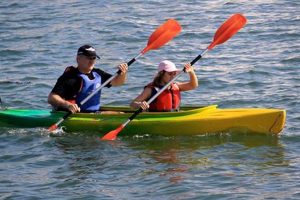
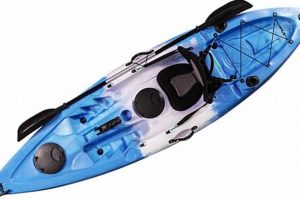
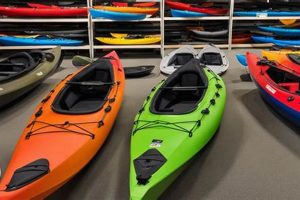
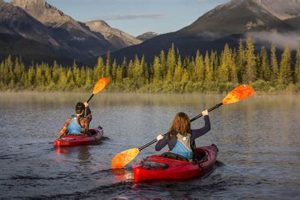
A kayak with a protective covering, encompassing various designs from small canopies shielding the paddler from sun and rain to fully enclosed cockpits offering protection from the elements and increased warmth. These vessels offer enhanced comfort and safety in diverse weather conditions, expanding kayaking possibilities.
Protection from the elements is a significant advantage, allowing for comfortable paddling in colder temperatures, strong sunlight, or rainy conditions. This can extend the kayaking season and broaden the range of suitable environments. The enhanced security offered by some models can also be beneficial for longer expeditions or carrying sensitive equipment. While traditional kayaks have long dominated the waters, the demand for these sheltered designs is increasing as paddlers seek greater comfort and versatility.
This article will further explore the various types of sheltered kayaks available, delve into the specific advantages and disadvantages of each design, and offer guidance for selecting the optimal vessel for individual needs and paddling styles.
Tips for Selecting and Using Sheltered Kayaks
Choosing and utilizing a kayak with enhanced protection requires careful consideration of various factors to ensure optimal performance, safety, and enjoyment on the water.
Tip 1: Consider the intended use. Different designs cater to specific needs. A small canopy might suffice for occasional sun protection, while a fully enclosed cockpit is necessary for cold-weather paddling or longer expeditions.
Tip 2: Evaluate the level of protection required. Full enclosures offer maximum protection from the elements, while partial coverings prioritize ventilation and visibility. The choice depends on the typical paddling environment and personal preferences.
Tip 3: Assess the impact on maneuverability. Added coverings can affect stability and handling. It is essential to test different designs to determine their impact on paddling performance.
Tip 4: Prioritize ventilation and visibility. Enclosed cockpits can trap moisture and limit visibility. Ensure adequate ventilation and clear sightlines for safe and comfortable paddling.
Tip 5: Check for ease of entry and exit. Getting in and out of a sheltered kayak can be more challenging than a traditional design. Practice entering and exiting the vessel before venturing onto the water.
Tip 6: Inspect the construction and materials. Durability and waterproofing are crucial for long-term performance. Choose kayaks made from high-quality materials and robust construction.
Tip 7: Research storage and transportation options. Sheltered kayaks can be bulkier and require more storage space. Consider transportation logistics before making a purchase.
By considering these factors, individuals can select a vessel that enhances comfort, safety, and overall paddling experience. Informed decision-making ensures optimal performance and enjoyment on the water.
These tips provide a foundation for informed decision-making. The following sections will delve deeper into specific sheltered kayak designs and their respective applications.
1. Weather Protection

Weather protection represents a primary advantage of covered kayaks, distinguishing them from traditional open-cockpit designs. The degree of protection varies depending on the specific covering, ranging from simple spray skirts deflecting light rain and splashes to fully enclosed cockpits shielding against wind, cold temperatures, and heavy precipitation. This protection expands the kayaking season, enabling comfortable paddling in conditions previously deemed unsuitable for open kayaks. For instance, a paddler in a covered kayak can comfortably navigate colder waters or continue an excursion despite unexpected rain, enhancing safety and enjoyment.
This enhanced protection contributes significantly to paddler comfort and safety. Reduced exposure to the elements minimizes the risk of hypothermia and other weather-related ailments. Furthermore, the covering can offer a sense of security, particularly in challenging conditions, allowing paddlers to focus on navigation and technique rather than battling the elements. Consider a sea kayaker navigating coastal waters; a covered cockpit provides crucial protection from waves and spray, enhancing stability and reducing the risk of capsizing.
In summary, the connection between weather protection and covered kayaks is fundamental to their design and purpose. The level of protection offered directly impacts the range of conditions suitable for paddling and enhances both safety and comfort. Understanding the nuances of weather protection offered by different covered kayak designs is crucial for selecting the appropriate vessel for specific needs and environments.
2. Enhanced Comfort
Enhanced comfort represents a significant advantage of covered kayaks, directly impacting the overall paddling experience. Protection from the elements, a defining feature of these vessels, contributes significantly to this comfort. By shielding paddlers from wind, rain, sun, and cold water splashes, covered kayaks create a more controlled and pleasant microclimate within the cockpit. This allows for extended paddling trips without the discomfort and potential health risks associated with prolonged exposure to harsh weather conditions. For example, a paddler exploring a remote coastline can maintain a comfortable core temperature even in cool, windy conditions, increasing endurance and enjoyment. This element of comfort becomes especially crucial during longer expeditions or when paddling in unpredictable weather.
Furthermore, certain covered kayak designs incorporate features like adjustable seating, backrests, and foot braces, further enhancing comfort and reducing strain during long paddling sessions. These ergonomic considerations can significantly impact the physical experience, minimizing fatigue and promoting proper posture. Consider a recreational paddler with back pain; an adjustable backrest in a covered kayak can provide the necessary support for a comfortable and enjoyable experience, opening up opportunities for longer trips and exploration. This combination of weather protection and ergonomic design distinguishes covered kayaks from their open-cockpit counterparts and expands their appeal to a wider range of paddlers, including those with physical limitations or a preference for increased comfort.
In conclusion, enhanced comfort emerges as a defining characteristic of covered kayaks, directly linked to the protection and ergonomic features inherent in their design. This comfort extends the possibilities for paddling, allowing individuals to explore diverse environments and enjoy longer trips without compromising physical well-being. While considerations like maneuverability and ventilation remain important, the focus on comfort broadens the appeal of covered kayaks and contributes to a more enjoyable and accessible paddling experience.
3. Increased Safety

Increased safety is a crucial aspect of covered kayaks, setting them apart from traditional open-cockpit designs. The protective covering contributes significantly to paddler safety in various ways, enhancing stability and reducing the risk of specific incidents on the water. This discussion will explore several facets of increased safety related to covered kayaks.
- Reduced Risk of Capsizing
The enclosed or partially enclosed cockpit of a covered kayak can significantly reduce the risk of capsizing, particularly in rough conditions or during unexpected incidents. The covering acts as a barrier, preventing water from entering the cockpit and destabilizing the vessel. For example, a sudden wave or wake impacting a traditional kayak could easily swamp the cockpit, leading to a capsize. A covered kayak, however, is more likely to remain stable and afloat in such circumstances, offering greater protection to the paddler. This stability enhancement becomes particularly important in challenging environments like coastal waters or open lakes prone to sudden changes in weather.
- Protection from Environmental Hazards
Covered kayaks offer increased protection from environmental hazards such as strong winds, cold water, and excessive sun exposure. The covering shields paddlers from these elements, reducing the risk of hypothermia, sunburn, and other weather-related conditions. For instance, in cold-water environments, a covered kayak provides an extra layer of insulation, helping paddlers retain body heat and preventing the onset of hypothermia. Similarly, in sunny conditions, the covering reduces direct sun exposure, minimizing the risk of sunburn and long-term skin damage. This protection allows paddlers to safely explore diverse environments and extend their paddling season.
- Enhanced Visibility and Flotation
Many covered kayaks incorporate bright colors and reflective elements, increasing visibility on the water, particularly in low-light conditions or foggy environments. This enhanced visibility makes the kayak more easily detectable by other boaters, reducing the risk of collisions. Additionally, some designs incorporate built-in flotation devices, further enhancing safety. These flotation devices provide additional buoyancy, helping to keep the kayak afloat even if the cockpit becomes flooded, offering crucial time for self-rescue or external assistance.
- Secure Storage for Gear and Equipment
Covered kayaks often provide secure storage compartments for gear and equipment, protecting them from the elements and reducing the risk of loss or damage. This secure storage is especially beneficial for longer expeditions or when carrying sensitive equipment like cameras or electronic devices. In open kayaks, gear is often exposed to the elements and susceptible to damage from water, sun, or wind. Covered kayaks offer a protected environment for essential supplies, ensuring their usability and safety throughout the paddling trip. This secure storage also contributes to the overall stability of the vessel by keeping the center of gravity low and preventing gear from shifting during paddling.
These facets of increased safety underscore the advantages of covered kayaks, particularly for paddlers seeking enhanced protection and stability in diverse environments. While factors like maneuverability and ventilation require consideration, the safety benefits contribute significantly to the overall appeal and versatility of these specialized vessels. The enhanced protection from capsizing, environmental hazards, and the provision for secure storage collectively create a safer and more confident paddling experience.
4. Specialized Designs

Specialized designs are a defining characteristic of covered kayaks, differentiating them from traditional open-cockpit models and catering to a wide range of paddling activities and environmental conditions. Understanding these specialized designs is crucial for selecting the appropriate kayak for specific needs and preferences. The following facets highlight key aspects of specialized designs in covered kayaks.
- Sit-in vs. Sit-on-top Configurations
Covered kayaks are available in both sit-in and sit-on-top configurations, each offering distinct advantages. Sit-in designs provide greater protection from the elements and enhanced comfort in colder conditions, while sit-on-top models offer increased stability and ease of entry and exit, making them suitable for warmer climates and recreational paddling. For example, a sit-in covered kayak might be preferred for sea kayaking in colder waters, while a sit-on-top design would be suitable for recreational paddling in calm lakes or rivers.
- Cockpit Design and Enclosure Systems
Cockpit designs vary significantly, impacting the level of protection and comfort. Some models feature small canopies offering basic protection from sun and rain, while others incorporate fully enclosed cockpits with spray skirts and hatches for complete protection from the elements. Expedition-style covered kayaks often feature larger cockpits with ample storage space, while recreational models prioritize ease of entry and exit. The choice of cockpit design and enclosure system depends on the intended use and paddling environment.
- Hull Design and Material Construction
Hull design and material construction influence the performance and durability of covered kayaks. Different hull shapes are optimized for specific water conditions, with longer, narrower hulls suited for open water and shorter, wider hulls providing greater stability in calmer environments. Materials range from durable polyethylene for recreational use to lightweight composites like fiberglass or carbon fiber for enhanced performance. For instance, a sea kayak designed for rough waters might feature a robust polyethylene hull, while a recreational model intended for calm lakes could utilize a lighter, more maneuverable composite construction.
- Specialized Features and Accessories
Covered kayaks often incorporate specialized features and accessories tailored to specific paddling activities. These might include rudders or skegs for enhanced tracking in open water, fishing rod holders for anglers, or integrated storage compartments for cameras and other sensitive equipment. Expedition kayaks often feature deck rigging and attachment points for securing additional gear. The availability of these specialized features further distinguishes covered kayaks from traditional models and expands their functionality for diverse paddling disciplines.
These specialized designs demonstrate the versatility and adaptability of covered kayaks, catering to a broader range of paddling activities and environmental conditions than traditional open-cockpit designs. Understanding these design variations is essential for selecting the appropriate kayak for specific needs, ensuring optimal performance, comfort, and safety on the water. The variety in hull designs, cockpit configurations, and specialized features allows paddlers to choose a vessel that aligns perfectly with their individual paddling style and intended use, from recreational outings to challenging expeditions.
5. Storage Capacity

Storage capacity represents a critical consideration in covered kayak selection, directly influencing the practicality and feasibility of various paddling activities. The ability to securely and conveniently transport gear and equipment impacts both comfort and safety, particularly during longer expeditions or when specialized equipment is required. Understanding the nuances of storage capacity in covered kayaks is essential for informed decision-making.
- Internal Storage Compartments
Many covered kayaks feature internal storage compartments, offering protected space for gear and equipment. These compartments, often located within the hull or beneath the deck, shield items from the elements and contribute to a lower center of gravity, enhancing stability. For example, a sea kayaker might utilize internal compartments to store spare clothing, food, and safety equipment, protecting them from saltwater and ensuring accessibility during multi-day trips. The size and accessibility of these compartments vary significantly between models, impacting the type and volume of gear that can be accommodated.
- Deck Rigging and Attachment Points
Deck rigging and attachment points provide external storage options, allowing paddlers to secure larger items or quickly access frequently used gear. These systems typically consist of bungee cords, straps, and D-rings strategically placed on the deck of the kayak. For instance, a touring kayaker might utilize deck rigging to secure a dry bag containing extra clothing or a map, ensuring quick access without needing to open internal compartments. The placement and configuration of deck rigging significantly impact the practicality and usability of external storage.
- Specialized Storage Solutions
Certain covered kayak models incorporate specialized storage solutions tailored to specific activities. These might include dedicated compartments for fishing rods, camera equipment, or camping gear. For example, an angler might choose a covered kayak with integrated rod holders and tackle storage, optimizing the fishing experience. These specialized features enhance the functionality of the kayak and streamline specific paddling disciplines. The availability of these specialized solutions should align with the intended use of the kayak.
- Impact of Cockpit Design on Storage
The design of the cockpit and enclosure system influences both access to storage compartments and the overall available storage space. Larger cockpits often provide easier access to internal storage but may compromise the level of protection from the elements. Smaller, fully enclosed cockpits maximize protection but can restrict access to gear. For instance, a recreational paddler might prioritize a larger cockpit for easy access to snacks and drinks, while an expedition paddler might opt for a smaller, fully enclosed cockpit to maximize protection in challenging conditions, accepting the trade-off in storage accessibility.
These facets of storage capacity highlight the importance of careful consideration when selecting a covered kayak. The volume, accessibility, and security of storage solutions directly impact the practicality and enjoyment of various paddling activities. Balancing storage needs with other factors like cockpit design, hull shape, and intended use ensures the optimal kayak selection for individual preferences and paddling styles. Ultimately, understanding the nuances of storage capacity in covered kayaks empowers paddlers to make informed decisions, enhancing both comfort and safety on the water.
6. Paddling Experience
The paddling experience in a covered kayak differs significantly from that of a traditional open-cockpit design. The enclosed or partially enclosed nature of these vessels introduces distinct advantages and disadvantages, impacting maneuverability, visibility, and overall interaction with the environment. Understanding these nuances is crucial for paddlers considering a transition to a covered kayak.
The protective covering influences maneuverability. Increased windage can affect tracking and responsiveness, requiring adjustments in paddling technique. While some designs incorporate features like rudders or skegs to mitigate these effects, paddlers should anticipate a slightly less nimble feel compared to open kayaks. For example, navigating narrow channels or performing quick turns might require more deliberate effort. Conversely, the added protection from wind and waves can enhance stability, offering a more secure and confident paddling experience in challenging conditions. This trade-off between maneuverability and stability requires careful consideration based on intended paddling environments.
Visibility is another key factor. While the covering provides protection from the elements, it can also restrict peripheral vision. Paddlers must rely more on direct line-of-sight and develop heightened awareness of surroundings. This adjusted visual perspective can initially feel limiting but often enhances focus on the immediate paddling environment. Furthermore, the covering can create a more immersive experience, minimizing distractions and fostering a deeper connection with the water. Consider a paddler exploring a secluded mangrove forest; the enclosed cockpit minimizes distractions from wind and glare, enhancing the tranquility and focus on the surrounding natural beauty.
The overall paddling experience in a covered kayak presents a unique blend of challenges and rewards. While maneuverability and visibility require adjustments, the enhanced protection, comfort, and sense of security create a distinct and often more rewarding experience. The practical significance of understanding these nuances lies in informed decision-making. Paddlers can assess their individual needs and preferences, weighing the trade-offs to determine whether a covered kayak aligns with their paddling style and intended use. Ultimately, the paddling experience in a covered kayak offers a new perspective on the water, opening up opportunities for exploration and enjoyment in diverse environments.
Frequently Asked Questions about Covered Kayaks
This section addresses common inquiries regarding covered kayaks, providing concise and informative responses to facilitate informed decision-making.
Question 1: What are the primary advantages of using a covered kayak?
Primary advantages include enhanced protection from the elements, increased comfort in various weather conditions, and potentially improved safety due to reduced risk of capsizing.
Question 2: How does the covering impact maneuverability and speed?
The covering can introduce additional windage, potentially impacting maneuverability and slightly reducing speed compared to open-cockpit kayaks. However, some designs incorporate features to mitigate these effects.
Question 3: Are covered kayaks suitable for all paddling environments?
Suitability depends on the specific design and the intended environment. While some models excel in rougher conditions, others are better suited for calm waters. Careful consideration of design features is essential for appropriate selection.
Question 4: How does one choose the right type of covering for specific needs?
Covering selection depends on the intended use and typical paddling conditions. Small canopies offer basic protection, while full enclosures provide maximum shielding from the elements. Consider the balance between protection and ventilation.
Question 5: What are the maintenance requirements for covered kayaks?
Maintenance requirements vary depending on the materials and design. Regular cleaning, inspection of the covering for wear and tear, and proper storage are essential for maintaining performance and longevity.
Question 6: Are there any specific safety considerations for paddling a covered kayak?
Specific safety considerations include potential reduced visibility and the importance of practicing entry and exit procedures, especially in the event of a capsize. Understanding the characteristics of the specific model is crucial for safe operation.
Careful consideration of these frequently asked questions equips individuals with the knowledge necessary for evaluating the suitability of covered kayaks for individual needs and paddling styles.
For further information, explore the subsequent sections detailing specific covered kayak models and their respective applications.
Conclusion
Sheltered kayak designs offer distinct advantages for various paddling disciplines. From enhanced weather protection and increased comfort to specialized designs catering to diverse needs, these vessels expand the possibilities of kayak exploration. Understanding the nuances of maneuverability, visibility, and storage capacity is crucial for informed decision-making. The balance between protection and performance remains a central consideration, influencing the selection process and overall paddling experience.
As technology and design continue to evolve, the future of sheltered kayaks promises further advancements in materials, construction, and functionality. Exploration of these advancements and careful consideration of individual paddling needs will empower informed choices, contributing to safer, more comfortable, and ultimately more rewarding experiences on the water. The evolution of kayak design continues to broaden access to the water, promoting exploration and enjoyment for a wider range of paddlers.