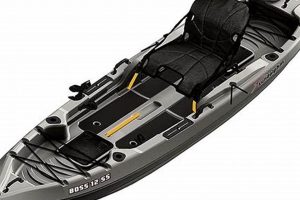
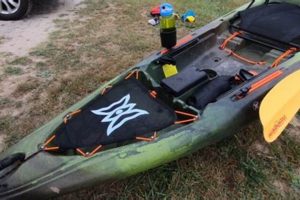
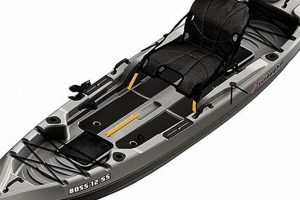
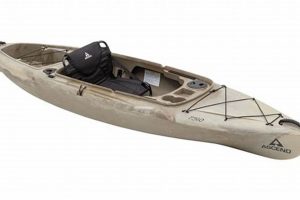
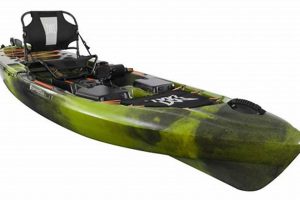
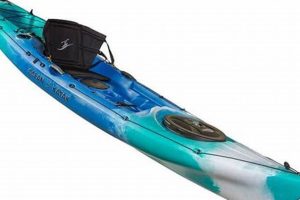
Tandem kayaks designed for angling offer shared fishing experiences and increased stability on the water. These vessels typically feature specialized seating arrangements with ample space for two individuals, along with integrated rod holders, gear storage compartments, and other fishing-specific amenities. An example would be a molded plastic hull with two adjustable seats, each equipped with a swiveling rod holder and footrests, along with a central hatch for storing tackle and equipment.
Sharing a fishing excursion provides companionship and can enhance safety. The wider beam of these kayaks contributes to stability, a significant advantage in various water conditions, especially for anglers casting lines or landing fish. Historically, tandem kayaks were used for general recreation and transportation. The adaptation for fishing arose from a growing demand for specialized watercraft catering to angling enthusiasts. This development has broadened access to diverse waterways and fishing techniques for pairs of anglers.
This discussion will now delve into key factors influencing the selection process, including hull design, material construction, and essential features for maximizing comfort and efficiency on the water.
Tips for Tandem Kayak Fishing
Optimizing a tandem fishing kayak experience requires careful consideration of several key factors. These tips address essential aspects of preparation and execution for successful outings.
Tip 1: Distribute Weight Evenly: Balanced weight distribution is crucial for stability and efficient paddling. Gear should be distributed evenly throughout the kayak, avoiding concentration at either end or side.
Tip 2: Coordinate Paddling Strokes: Synchronized paddling maximizes speed and minimizes wasted effort. Practicing paddling rhythms prior to fishing trips improves coordination.
Tip 3: Establish Clear Communication: Open communication between anglers is essential for navigation and safety. Agree on hand signals or verbal cues before embarking.
Tip 4: Select Appropriate Paddles: Paddle length and blade shape influence paddling efficiency. Choosing paddles suited to individual physiques and paddling styles enhances comfort and performance.
Tip 5: Utilize Anchor or Stake-Out Pole: Maintaining position in desired fishing locations necessitates an anchor or stake-out pole. This allows anglers to focus on fishing rather than maintaining position against currents or wind.
Tip 6: Prioritize Safety Equipment: Life vests and essential safety gear should always be worn and readily accessible. A first-aid kit and communication devices contribute to preparedness for unforeseen circumstances.
Tip 7: Respect Wildlife and the Environment: Practicing Leave No Trace principles ensures preservation of natural environments. Proper disposal of fishing line and respect for wildlife contribute to responsible angling.
Adherence to these guidelines enhances safety, efficiency, and overall enjoyment of tandem kayak fishing experiences. Careful planning and execution contribute significantly to successful outings.
These considerations set the stage for a fulfilling and productive fishing adventure.
1. Stability

Stability forms a cornerstone of effective tandem fishing kayak design. A stable platform is essential for casting, retrieving, and landing fish, particularly with two anglers sharing a limited space. Factors influencing stability include hull design, width, and weight distribution. A wider hull generally provides greater initial stability, resisting tipping, while a longer, narrower hull may offer superior secondary stability, recovering more readily from significant tilting. Weight distribution plays a crucial role; uneven loading can compromise stability, increasing the risk of capsizing. For example, concentrating weight at one end or side significantly impacts balance. Tandem kayaks designed for fishing often feature wider beams and flatter bottoms to enhance stability compared to recreational models. This design choice prioritizes a stable fishing platform over speed and maneuverability, particularly crucial when anglers are moving around, casting, or reeling in fish.
Consider the scenario of two anglers fishing in moderately choppy conditions. A stable kayak allows them to confidently cast and retrieve without excessive concern for balance, even when dealing with a struggling fish. Conversely, an unstable kayak would hinder their fishing efforts, demanding constant attention to balance and potentially compromising safety. Further, consider the act of entering and exiting the kayak. A stable platform significantly simplifies this process, reducing the risk of capsizing, particularly in challenging environments such as shallow water with uneven footing. The ability to stand and fish in certain tandem kayaks, while dependent on design and individual skill, underscores the importance of stability in providing a versatile and effective fishing platform.
Understanding the factors contributing to kayak stability is crucial for anglers selecting a tandem fishing kayak. Prioritizing stability enhances not only fishing effectiveness but also safety on the water. While factors like hull design and width are inherent to the kayak, proper weight distribution provides a controllable element significantly impacting stability. Recognizing the interplay of these factors empowers informed decision-making and promotes safer, more productive fishing experiences.
2. Capacity

Capacity, in the context of tandem fishing kayaks, signifies the maximum weight the vessel can safely support. This encompasses the combined weight of passengers, gear, and any additional equipment. Manufacturers specify weight capacity based on design and construction. Exceeding this limit compromises stability and safety, increasing the risk of capsizing or structural damage. Capacity directly influences functionality. A higher capacity allows for more gear, essential for longer expeditions or specialized fishing styles. For instance, anglers carrying substantial tackle, camping gear, or larger coolers require a kayak with sufficient capacity. Conversely, anglers prioritizing lightweight portability might opt for a lower capacity model. Understanding capacity limitations is crucial for safe and effective kayak usage.
Consider two anglers planning an overnight fishing trip. They intend to bring camping gear, provisions, and specialized fishing equipment. Choosing a kayak with inadequate capacity would necessitate leaving essential items behind, potentially jeopardizing comfort or safety. In contrast, selecting a kayak with ample capacity accommodates all necessary gear, ensuring a well-prepared and enjoyable excursion. Alternatively, consider two anglers fishing in a local pond. They require minimal gear, prioritizing ease of transport and maneuverability. A lower capacity kayak, lighter and easier to handle, aligns better with their needs. Capacity influences not only safety but also the practicality of different fishing scenarios.
Capacity serves as a critical factor influencing kayak selection. Balancing capacity requirements with other considerations, like stability and maneuverability, is essential for choosing the optimal vessel. Practical application of capacity knowledge translates directly into safer and more efficient fishing experiences. Neglecting capacity limitations jeopardizes safety and compromises the overall functionality of the tandem fishing kayak.
3. Comfort

Comfort significantly impacts the enjoyment and effectiveness of tandem kayak fishing excursions. Extended periods on the water necessitate ergonomic design and adjustable features to mitigate fatigue and enhance focus on fishing. Discomfort can detract from the experience, hindering performance and potentially curtailing outings. Several key facets contribute to overall comfort in a tandem fishing kayak.
- Seating
Seat design plays a pivotal role in comfort. Adjustable seating systems accommodate varying physiques and preferences. Features like padded seats, adjustable backrests, and ample legroom contribute to sustained comfort during long hours on the water. Inadequate seating can lead to back pain, leg cramps, and overall discomfort, negatively impacting fishing effectiveness and enjoyment. High-end kayaks often feature ergonomic seating designed for optimal support and pressure distribution.
- Legroom and Positioning
Sufficient legroom and adjustable footrests allow anglers to maintain comfortable positions, crucial for both paddling efficiency and overall comfort. Cramped legroom restricts movement and can cause discomfort, particularly during extended trips. Adjustable footrests accommodate varying leg lengths, optimizing paddling posture and reducing strain. The ability to stretch and shift position contributes to long-term comfort.
- Stability and Smooth Ride
Kayak stability directly influences comfort. A stable platform minimizes rocking and swaying, reducing anxiety and promoting a more comfortable experience, particularly in challenging conditions. Hull design and weight distribution contribute to stability. A smooth ride, influenced by hull shape and water conditions, minimizes jarring impacts, enhancing comfort and reducing fatigue. A stable, smooth ride allows anglers to focus on fishing rather than constantly adjusting to maintain balance.
- Accessibility and Ease of Entry/Exit
Ease of entry and exit contributes to overall comfort and convenience, particularly for individuals with mobility limitations. Features like strategically placed handles and wider cockpits facilitate access. Well-designed seating systems further aid entry and exit. Difficult entry and exit can be physically demanding and potentially hazardous, especially in challenging environments.
These facets of comfort collectively influence the overall experience in a tandem fishing kayak. Prioritizing comfort enhances enjoyment, reduces fatigue, and promotes sustained focus on fishing. Investing in a kayak designed with these comfort features contributes to more productive and satisfying fishing excursions. While personal preferences vary, understanding these elements empowers informed decision-making and ensures a comfortable and enjoyable experience on the water.
4. Maneuverability

Maneuverability in a two-person fishing kayak dictates its responsiveness and ease of directional control. This characteristic significantly influences navigation through various water conditions, from navigating tight creeks and rivers to positioning effectively in open water. Optimal maneuverability contributes to efficient paddling, precise boat control for fishing, and overall enjoyment on the water. Several factors interplay to determine a tandem kayak’s maneuverability.
- Hull Design
Hull design plays a pivotal role in maneuverability. Shorter, wider hulls generally offer greater initial stability but sacrifice maneuverability. Longer, narrower hulls, while potentially less stable, tend to track straighter and glide more efficiently, enhancing maneuverability in open water. A kayak’s rocker, the curvature of the hull from bow to stern, also influences turning performance. A higher rocker facilitates tighter turns, while a lower rocker promotes straight-line tracking. Specific hull designs, such as those incorporating keels or fins, can enhance tracking and directional stability but may compromise turning agility.
- Length and Width
Length and width directly impact maneuverability. Longer kayaks typically track better in a straight line, while shorter kayaks turn more readily. Wider kayaks provide increased stability but often require more effort to turn, whereas narrower kayaks offer greater maneuverability but may be less stable. The length-to-width ratio contributes significantly to a kayak’s overall performance characteristics, balancing stability and maneuverability.
- Weight and Distribution
The overall weight of the kayak, including passengers and gear, influences maneuverability. Heavier kayaks require more effort to accelerate and decelerate, impacting turning performance. Weight distribution also plays a crucial role. Uneven weight distribution can create drag and hinder maneuverability. Proper weight distribution enhances both stability and responsiveness.
- Water Conditions
Water conditions, such as current and wind, significantly impact maneuverability. Strong currents or winds can challenge even the most maneuverable kayaks, requiring increased paddling effort and precise boat control. Understanding how a kayak performs in various conditions is crucial for safe and efficient navigation. Kayaks designed for specific water conditions, such as those optimized for river running or ocean paddling, often incorporate design features that enhance maneuverability in their intended environment.
These interconnected factors collectively determine a tandem fishing kayak’s maneuverability. Balancing stability, tracking, and turning performance is crucial for selecting a kayak suited to specific fishing environments and preferences. Consideration of these elements empowers informed decision-making and contributes to safer, more efficient, and enjoyable fishing experiences. Choosing a kayak with appropriate maneuverability enhances an anglers ability to navigate diverse waterways, position effectively for fishing, and ultimately, maximize their time on the water.
5. Storage

Ample and well-designed storage is a critical feature in tandem fishing kayaks, directly impacting organization, efficiency, and overall fishing success. Efficient storage solutions facilitate access to essential gear, minimize clutter, and contribute to a more streamlined and enjoyable fishing experience. Limited or poorly designed storage can hinder access to equipment, compromise safety, and detract from the overall fishing experience. Several key facets contribute to effective storage in these specialized kayaks.
- Types of Storage
Tandem fishing kayaks typically incorporate various storage compartments designed for specific purposes. These may include hatches for larger items like tackle boxes and safety gear, smaller compartments for quick access to lures and tools, and bungee cords for securing items on deck. Specialized storage options, such as rod holders and fish finders, further enhance organization and functionality. The type and location of storage compartments directly influence accessibility and efficiency on the water.
- Capacity and Accessibility
Storage capacity dictates the amount of gear that can be comfortably and safely accommodated within the kayak. Sufficient capacity is essential for longer trips or specialized fishing styles requiring more equipment. Easy access to stored items is crucial for maintaining efficient workflow and minimizing disruption during fishing. Difficult-to-reach compartments can compromise both efficiency and safety. Balancing capacity and accessibility is key to optimizing storage effectiveness.
- Dry Storage vs. Wet Storage
Distinguishing between dry and wet storage is essential for protecting sensitive items from water damage. Dry storage compartments, typically sealed hatches or bags, safeguard electronics, clothing, and other items requiring protection from moisture. Wet storage areas, often located behind the seats or in open compartments, accommodate items that can tolerate exposure to water, such as paddles and fishing nets. Proper utilization of dry and wet storage compartments contributes to equipment longevity and overall preparedness.
- Weight Distribution and Balance
Proper weight distribution within storage compartments directly influences kayak stability and performance. Distributing weight evenly throughout the kayak, avoiding concentration at either end or side, optimizes balance and tracking. Overloading specific compartments can compromise stability and negatively impact paddling efficiency. Mindful loading and distribution of gear contribute to a safer and more efficient fishing experience.
These facets of storage collectively influence the functionality and enjoyment of tandem fishing kayaks. Effective storage solutions contribute to a more organized, efficient, and ultimately, more successful fishing experience. Careful consideration of storage options empowers informed decision-making and enhances the overall experience on the water. Prioritizing storage needs ensures anglers can readily access essential gear, maintain a clutter-free environment, and fully focus on the task at hand: fishing.
6. Specialization
Specialization differentiates tandem fishing kayaks from recreational models, optimizing them for angling pursuits. This targeted design philosophy integrates features enhancing fishing effectiveness, efficiency, and overall experience. Specialized features directly influence angler success and enjoyment on the water. Cause and effect relationships exist between specialized features and fishing outcomes. For example, integrated rod holders facilitate hands-free fishing, increasing responsiveness to bites and minimizing lost opportunities. Similarly, strategically placed mounting points for fish finders enhance underwater awareness, leading to improved fish location and catch rates. Specialization transforms a general-purpose vessel into a dedicated fishing platform.
Consider two scenarios: a standard recreational tandem kayak versus a specialized fishing model. The recreational kayak lacks dedicated features, requiring anglers to improvise rod placement and fish finding strategies. This compromises efficiency and can detract from the fishing experience. Conversely, the specialized fishing kayak seamlessly integrates rod holders, fish finder mounts, and often specialized storage for tackle and gear. This dedicated design enhances focus on fishing, maximizing time and effort. Real-world examples include kayaks equipped with pedal-powered propulsion systems, freeing hands for fishing, and live wells for maintaining caught fish in optimal condition. These specialized features directly contribute to a more productive and satisfying fishing experience. The practical significance of specialization translates to increased catch rates, enhanced comfort, and a more streamlined angling process.
Specialization within tandem fishing kayak design elevates functionality and effectiveness. Understanding the connection between specialized features and fishing outcomes empowers informed purchasing decisions and maximizes on-the-water success. Challenges include balancing specialization with cost and versatility. Highly specialized kayaks excel in specific fishing scenarios but may lack adaptability for diverse environments or fishing styles. Integrating specialized features, however, remains crucial for optimizing tandem kayaks for dedicated angling pursuits.
Frequently Asked Questions
This section addresses common inquiries regarding tandem fishing kayaks, providing concise and informative responses.
Question 1: What are the key advantages of a tandem fishing kayak over two single kayaks?
Tandem kayaks offer increased stability, particularly beneficial when casting or landing fish. They also promote collaborative fishing and often provide greater storage capacity. Cost-effectiveness can be another advantage, as purchasing one tandem kayak is typically less expensive than two singles.
Question 2: How is weight capacity determined, and why is it crucial?
Manufacturers determine weight capacity through rigorous testing. Adhering to the specified limit is critical for maintaining stability and preventing potential capsizing or structural damage. Exceeding the limit compromises safety and can lead to equipment loss.
Question 3: What hull materials are commonly used in tandem fishing kayaks, and how do they differ?
Common materials include high-density polyethylene (HDPE), fiberglass, and rotomolded plastic. HDPE offers durability and affordability. Fiberglass provides lighter weight and enhanced performance but often comes at a higher cost. Rotomolded plastic offers a balance of durability and affordability, though it may be heavier than fiberglass.
Question 4: What features should one prioritize when selecting a tandem fishing kayak for specific fishing styles, such as offshore angling versus river fishing?
Offshore angling necessitates a kayak prioritizing stability and seaworthiness, potentially with features like scupper holes and rudder systems. River fishing benefits from maneuverability and durability, often favoring shorter kayaks with higher rockers. Specific fishing styles influence feature prioritization.
Question 5: How does paddling a tandem kayak differ from paddling a single kayak, and what adjustments are necessary?
Tandem kayaking requires synchronized paddling and effective communication between paddlers. Adjustments include coordinating paddling strokes and establishing clear communication signals. Weight distribution also influences paddling dynamics in a tandem kayak.
Question 6: What safety precautions are essential for tandem kayak fishing?
Essential precautions include wearing personal flotation devices (PFDs), carrying a first-aid kit, informing someone of the trip plan, and checking weather conditions prior to departure. Proper safety equipment and preparedness are crucial for mitigating risks.
Understanding these fundamental aspects of tandem fishing kayaks empowers informed decision-making and contributes to safer and more rewarding fishing experiences.
This concludes the frequently asked questions section. The following section will discuss
Conclusion
Tandem fishing kayaks offer distinct advantages for shared angling experiences. Careful consideration of factors like stability, capacity, comfort, maneuverability, storage, and specialized features ensures appropriate selection for diverse fishing styles and environments. Understanding these elements optimizes both on-the-water performance and overall enjoyment.
Investing in a well-equipped tandem fishing kayak opens avenues for collaborative angling adventures. Informed decision-making, coupled with adherence to safety guidelines, empowers anglers to maximize the potential of these specialized vessels. The evolution of kayak design continues to refine the balance between performance, comfort, and specialized functionality, promising further enhancements to shared fishing experiences.