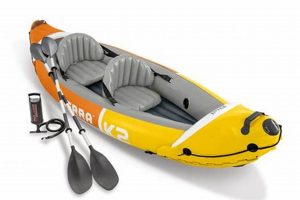
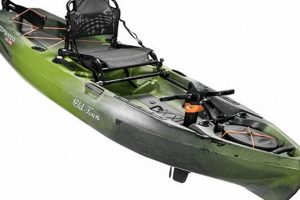
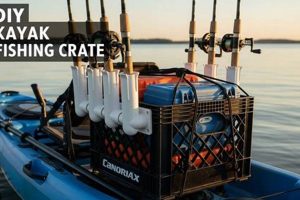
Retailer Meijer offers a selection of kayaks suitable for angling. These typically include features designed for fishing, such as rod holders, storage compartments, and comfortable seating. These vessels provide a stable platform for casting lines and reeling in catches, often at a more accessible price point than specialized angling kayaks from premium brands. A hypothetical example might be a sit-on-top style kayak constructed of durable, lightweight plastic with integrated rod holders and a spacious rear cargo area.
Affordable access to water-based recreation is a key benefit of purchasing a fishing-oriented kayak from a large retailer. This allows more individuals to experience the sport of angling. Historically, fishing from small, human-powered watercraft has been a common practice across cultures. Modern materials and manufacturing techniques have made kayaks increasingly durable and accessible, expanding the popularity of this fishing method. Retailers like Meijer play a role in distributing these products to a wider consumer base.
This article will further explore various aspects related to selecting, outfitting, and safely operating a kayak for fishing purposes, regardless of where it is purchased. Topics covered will include choosing the right kayak based on fishing style and water conditions, essential safety equipment, and responsible angling practices.
Tips for Kayak Fishing
Careful preparation contributes significantly to a successful and enjoyable fishing experience from a kayak. These tips offer guidance for maximizing both safety and effectiveness on the water.
Tip 1: Understand Local Regulations. Research and adhere to all licensing requirements and catch limits for the intended fishing area. Regulations can vary significantly by location and species.
Tip 2: Prioritize Safety Equipment. A personal flotation device (PFD) is essential. A whistle, signaling device, and first-aid kit should also be readily accessible. Inform someone of the fishing plan and estimated return time.
Tip 3: Choose Appropriate Attire. Dress in layers for changing weather conditions. Quick-drying fabrics are recommended. Consider polarized sunglasses for reduced glare and improved visibility in the water.
Tip 4: Organize Tackle and Gear. A well-organized tackle box or bag minimizes time spent searching for equipment. Use waterproof containers to protect essential items. Secure loose items to prevent loss in case of capsizing.
Tip 5: Practice Basic Kayak Maneuvers. Familiarity with paddling techniques and turning the kayak improves control and maneuverability on the water, particularly in currents or wind. Practice launching and landing in calm conditions before venturing into more challenging environments.
Tip 6: Respect the Environment. Pack out all trash and fishing line. Avoid disturbing wildlife and vegetation. Practice catch-and-release whenever possible or adhere strictly to catch limits.
Tip 7: Check Weather Conditions. Avoid fishing in inclement weather, especially strong winds, lightning storms, or fog. Be aware of changing weather patterns and have a plan for returning to shore quickly if necessary.
Adhering to these guidelines enhances both safety and enjoyment while fishing from a kayak, allowing for a more productive and rewarding experience on the water. These tips offer a starting point for anglers of all experience levels.
This article concludes with a summary of key considerations for selecting and using a fishing kayak, empowering readers to make informed decisions and maximize their time on the water.
1. Affordability

Cost considerations frequently play a significant role in recreational purchases. Affordability is a key factor for consumers exploring kayak fishing, and contributes to the appeal of retailers like Meijer. Examining the components of affordability within this context provides valuable insight for prospective kayak anglers.
- Initial Purchase Price
The upfront cost of the kayak itself represents a significant portion of the overall investment. Meijer often positions its kayaks at a competitive price point compared to specialized sporting goods retailers or premium brands. This lower initial cost can make kayak fishing accessible to a broader range of consumers.
- Required Accessories
Beyond the kayak itself, essential accessories like paddles, life vests, and fishing gear contribute to the overall expense. Evaluating the combined cost of these necessary additions alongside the kayak’s price provides a more realistic assessment of affordability. Meijer’s one-stop-shop model can simplify this process and potentially offer cost savings on bundled purchases.
- Maintenance and Storage
Long-term costs associated with kayak ownership include maintenance, repairs, and storage. Kayaks from retailers like Meijer, often constructed from durable, low-maintenance materials, generally require minimal upkeep. Storage solutions, ranging from simple racks to dedicated facilities, vary in cost and should be factored into the overall affordability assessment.
- Transportation
Transporting the kayak to and from fishing locations represents another cost consideration. Roof racks, trailers, or other transportation methods may be necessary, adding to the overall expenditure. The size and weight of kayaks available at Meijer can influence the ease and cost of transportation.
Understanding these facets of affordability provides a comprehensive perspective on the financial implications of purchasing a fishing kayak from a retailer like Meijer. By carefully evaluating these components, consumers can make informed decisions aligned with their budget and long-term fishing goals. This cost-conscious approach enables more individuals to enjoy the sport of kayak fishing without undue financial strain.
2. Accessibility

Accessibility, in the context of Meijer fishing kayaks, encompasses several key factors contributing to ease of purchase and use. These factors influence the likelihood of individuals engaging in the sport of kayak fishing. A primary aspect of accessibility relates to retail presence. Meijer’s widespread network of stores across the Midwest makes acquiring a fishing kayak geographically convenient for a substantial population. This contrasts with specialized outfitters or online retailers that may require significant travel or shipping arrangements. Furthermore, Meijer stores generally maintain ample stock, reducing wait times and facilitating immediate purchase decisions. For example, an individual motivated to begin kayak fishing after observing others enjoying the sport can readily acquire the necessary equipment at a local Meijer, reducing barriers to entry.
Beyond physical access to the product, financial accessibility plays a crucial role. Meijer typically offers fishing kayaks at price points lower than those found at specialty retailers. This cost-effectiveness expands the potential user base by making kayak fishing feasible for individuals with budget constraints. The availability of various kayak models at different price points further enhances affordability. For instance, an angler primarily interested in calm-water fishing might opt for a basic sit-on-top model, while someone venturing into more challenging conditions could choose a slightly more expensive, feature-rich design. This tiered pricing strategy caters to diverse needs and budgets. The ability to purchase essential accessories, such as paddles and life vests, within the same store further streamlines the acquisition process and contributes to overall convenience.
In summary, accessibility in the context of Meijer fishing kayaks comprises both physical and financial components. The widespread availability of these kayaks combined with competitive pricing removes significant barriers to entry for aspiring kayak anglers. This democratizing effect broadens participation in the sport and enables more individuals to experience the enjoyment of fishing from a kayak. Addressing these accessibility factors positively impacts participation rates and contributes to the growth of recreational fishing.
3. Stability

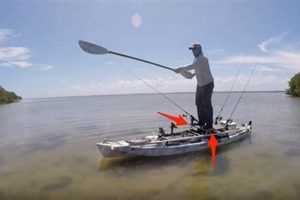
Stability is a critical factor influencing the performance and safety of a fishing kayak, especially those offered at retailers like Meijer, which often cater to a wide range of experience levels. A stable kayak provides a secure platform for casting, reeling, and landing fish, enhancing both effectiveness and angler confidence. This stability is influenced by several interacting design elements that merit careful consideration.
- Hull Design
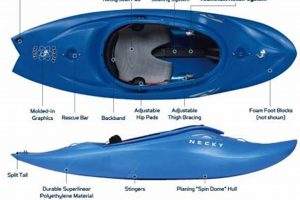
The hull design fundamentally affects a kayak’s stability. Wider, flatter hulls generally offer greater primary stability (resistance to initial tipping), making them suitable for calmer waters and activities like still fishing. Conversely, narrower, more V-shaped hulls prioritize secondary stability (the ability to resist capsizing after tipping), which is advantageous in rougher conditions but may feel less stable initially. Kayaks sold at retailers like Meijer often feature wider, flatter hulls to cater to a broader audience, including beginners.
- Kayak Width and Length
Width directly correlates with stability. Wider kayaks are inherently more stable than narrower ones. Length also influences stability; longer kayaks tend to track straighter but can be less maneuverable. Meijer typically offers kayaks within a specific length and width range, balancing stability and maneuverability for their target market. A shorter, wider kayak, for example, offers increased stability for novice anglers fishing in ponds or lakes.
- Center of Gravity
A lower center of gravity enhances stability. The distribution of weight within the kayak, including the angler, gear, and any catches, affects the center of gravity. Sit-on-top kayaks, commonly found at Meijer, typically have a higher center of gravity than sit-inside kayaks, but their open design allows for easier recovery in case of a capsize. Maintaining a balanced load distribution is crucial for optimal stability in any kayak.
- Water Conditions
Environmental factors, such as wind, currents, and waves, significantly impact stability. Even the most stable kayak can become challenging to control in adverse conditions. Understanding the intended use environment for a Meijer fishing kayak is essential. Kayaks designed for calm lakes and rivers may be unsuitable for ocean fishing or navigating strong currents.
By considering these factors, prospective kayak anglers can choose a Meijer fishing kayak offering a suitable level of stability for their intended fishing environment and experience level. Prioritizing stability enhances safety and enjoyment on the water, allowing anglers to focus on fishing rather than constantly managing balance. This careful selection process contributes to a positive and productive fishing experience.
4. Storage Capacity

Adequate storage capacity is a crucial factor influencing the practicality and enjoyment of fishing kayaks, particularly those offered by retailers like Meijer, which often cater to anglers seeking convenience and functionality. Sufficient storage allows for organized transport of essential fishing gear, safety equipment, and personal items, contributing to a more efficient and comfortable fishing experience. Understanding the various facets of storage capacity empowers informed purchasing decisions.
- Types of Storage
Fishing kayaks offer diverse storage solutions, each with specific advantages. Common types include open rear wells for larger items, sealed hatches for protecting valuables from water, and smaller compartments for tackle and tools. Meijer kayaks frequently incorporate a combination of these storage options to accommodate various gear needs. An open well might hold a tackle crate and cooler, while a sealed hatch secures electronics and personal items.
- Storage Capacity and Kayak Size
Storage capacity often correlates with kayak size. Longer kayaks generally offer more storage space than shorter models. However, larger kayaks can be more challenging to transport and maneuver. Meijer offers a range of kayak sizes, allowing anglers to select a model balancing storage capacity with portability. A shorter kayak might suffice for a brief fishing trip with minimal gear, while a longer kayak accommodates extended outings or larger equipment.
- Weight Capacity Considerations
The kayak’s overall weight capacity limits the combined weight of the angler, gear, and any catches. This weight limit directly influences storage decisions. Exceeding the weight capacity can compromise stability and safety. Meijer provides weight capacity specifications for each kayak model. Anglers should consider their typical gear load and personal weight when evaluating storage capacity in relation to the overall weight limit. A heavier angler with substantial gear requires a kayak with both ample storage and a higher weight capacity.
- Organization and Accessibility
Effective organization within the storage compartments enhances efficiency on the water. Features like integrated organizers, dividers, and bungee cords facilitate secure storage and easy access to essential items. Meijer kayaks often incorporate such features to improve organization and minimize time spent searching for gear. A well-organized tackle box within a readily accessible storage compartment allows for quick lure changes without disrupting the fishing flow.
By carefully considering these aspects of storage capacity, anglers can choose a Meijer fishing kayak suited to their specific needs and fishing style. Prioritizing adequate and well-organized storage contributes significantly to a more enjoyable and productive experience on the water. This focus on practicality ensures that anglers have the necessary gear readily available while maintaining a safe and efficient fishing platform.
5. Fishing Features
Specialized features designed for angling significantly differentiate fishing kayaks from recreational models. These features directly impact functionality and user experience, particularly within the context of Meijer fishing kayaks, which frequently aim to provide a balance of affordability and specialized capability. Understanding the role and implications of these features is essential for informed purchasing decisions.
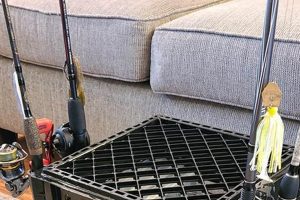
Common fishing features include integrated rod holders, often flush-mounted or adjustable, enabling hands-free fishing and convenient rod storage. Specialized kayaks may offer multiple rod holders accommodating various fishing techniques. Recessed tackle storage compartments, frequently incorporated into the kayak’s deck, provide organized storage for lures, hooks, and other small essentials, minimizing clutter and maximizing efficiency. These compartments may feature waterproof seals or closures to protect contents from splashes or submersion. Many fishing kayaks offer integrated mounting platforms or tracks for accessories like fish finders, GPS units, or camera mounts, enhancing angling capabilities and situational awareness. Some models include paddle parks or clips, securing the paddle during fishing and preventing accidental loss. These features, while often integrated into the kayak’s design, may also be added as aftermarket accessories.
Consider a hypothetical scenario: an angler targets bass in a heavily vegetated lake. A Meijer fishing kayak equipped with flush-mounted rod holders allows trolling multiple lines simultaneously, increasing the chance of a strike. Integrated tackle storage keeps lures organized and accessible, minimizing time spent searching for the right bait. A mounting platform accommodates a fish finder, aiding in locating submerged structure likely to hold bass. Collectively, these features contribute to a more efficient and successful fishing experience. The integration of such features within affordable kayaks available at Meijer expands access to specialized equipment, enabling a broader range of anglers to enhance their fishing capabilities. The choice to prioritize or forgo certain features depends on individual fishing styles, target species, and budgetary considerations. Careful consideration of these factors ensures a kayak well-suited to specific angling needs and maximizes the return on investment.
6. Material Durability
Material durability significantly influences the lifespan and overall value of a fishing kayak, especially for those purchased from retailers like Meijer, where affordability often intersects with practicality. A durable kayak withstands regular use, transportation, and exposure to various environmental conditions, ensuring long-term performance and minimizing the need for frequent repairs or replacement. Understanding the factors contributing to material durability is essential for making informed purchasing decisions.
- Resistance to Impact and Abrasion
Kayaks frequently encounter impacts from rocks, logs, and other obstacles in the water, as well as abrasion from transport and storage. Durable materials, such as high-density polyethylene (HDPE) or rotomolded plastic, resist these impacts and maintain structural integrity over time. A kayak constructed with durable materials withstands minor collisions without sustaining significant damage, extending its usable lifespan. For example, an HDPE kayak dragged across a rocky shoreline experiences less wear and tear compared to a kayak made from a less robust material.
- UV Resistance
Prolonged exposure to sunlight can degrade certain materials, leading to fading, cracking, and reduced structural integrity. UV-resistant materials protect against sun damage, maintaining the kayak’s appearance and performance over extended periods. A kayak stored outdoors benefits significantly from UV resistance, retaining its color and strength despite constant sun exposure. UV-stabilized plastics, commonly used in Meijer kayaks, offer this crucial protection, ensuring long-term durability.
- Temperature Resistance
Kayaks experience temperature fluctuations during storage and use, potentially affecting material properties. Durable materials resist warping or cracking due to temperature changes, maintaining structural integrity across varying climates. A kayak stored in a garage during winter or exposed to direct sunlight in summer retains its shape and strength if constructed from temperature-resistant materials. HDPE and other robust plastics demonstrate excellent temperature resistance, preserving the kayak’s structural integrity in diverse climates.
- Maintenance Requirements
Durable materials typically require minimal maintenance, reducing the time and expense associated with upkeep. Easy-to-clean surfaces and resistance to staining simplify cleaning processes. Kayaks constructed from durable materials like HDPE require less frequent cleaning and maintenance, freeing up time for fishing. A simple rinse with fresh water after each use often suffices, minimizing the need for extensive cleaning or specialized treatments.
Selecting a Meijer fishing kayak constructed from durable materials ensures a reliable and long-lasting investment. By prioritizing material durability, anglers minimize potential repair costs and maximize the kayak’s usable lifespan. This focus on durability contributes to a more cost-effective and enjoyable fishing experience, allowing anglers to concentrate on their passion rather than equipment maintenance. Investing in a durable kayak ultimately enhances long-term value and satisfaction.
Frequently Asked Questions
This section addresses common inquiries regarding fishing kayaks available at Meijer, providing concise and informative responses to facilitate informed purchasing decisions.
Question 1: What types of fishing kayaks does Meijer typically offer?
Meijer generally offers a selection of sit-on-top kayaks designed for recreational fishing. These kayaks prioritize stability and ease of use, often featuring wider hulls and ample storage. Specific models and availability may vary by location.
Question 2: What is the typical price range for fishing kayaks at Meijer?
Fishing kayaks at Meijer generally occupy a lower price range compared to specialized retailers or premium brands. This affordability aims to make kayak fishing accessible to a broader consumer base. Exact pricing varies based on specific models and features.
Question 3: Are Meijer fishing kayaks suitable for ocean use?
While some Meijer fishing kayaks might be suitable for calm coastal waters or protected bays, they are generally designed for use in lakes, rivers, and ponds. It is essential to carefully consider the kayak’s specifications and intended use environment before venturing into open ocean conditions. Consult product descriptions or contact Meijer staff for specific model recommendations for ocean use.
Question 4: What weight capacity can I expect from a Meijer fishing kayak?
Weight capacity varies depending on the specific kayak model. Meijer provides weight capacity specifications for each kayak, encompassing the combined weight of the angler, gear, and any potential catches. It is crucial to adhere to these weight limits to ensure safe and stable operation.
Question 5: What essential accessories should I consider purchasing alongside a fishing kayak from Meijer?
Essential accessories include a properly fitting personal flotation device (PFD), a paddle appropriate for the kayak’s size and design, and a method for transporting the kayak to and from fishing locations. Additional accessories like rod holders, tackle boxes, and anchor systems can enhance the fishing experience. Meijer often stocks these accessories in proximity to the kayaks, offering convenient one-stop shopping.
Question 6: What warranty or return policy applies to fishing kayaks purchased at Meijer?
Warranty and return policies for kayaks may vary. Consulting Meijer’s official website, contacting customer service, or inquiring directly with store personnel provides accurate and up-to-date information regarding specific warranty terms and return procedures.
Understanding these frequently asked questions equips prospective buyers with the necessary knowledge to navigate the selection process and choose a Meijer fishing kayak appropriate for their individual needs and intended use. Careful consideration of these factors ensures a satisfying and productive fishing experience.
This concludes the FAQ section. The following sections will delve deeper into specific aspects of kayak fishing and equipment selection.
Conclusion
This exploration of kayaks suitable for fishing, available at retailer Meijer, has encompassed various facets crucial for informed purchasing decisions. Affordability and accessibility, combined with features tailored for angling, position these kayaks as viable options for individuals seeking entry into the sport. Considerations regarding stability, storage capacity, specialized fishing features, and material durability contribute significantly to selecting a kayak aligned with individual needs and intended use environments. Understanding these elements empowers consumers to maximize their investment and enhance their on-the-water experience.
The increasing popularity of kayak fishing underscores the demand for accessible and functional equipment. Careful consideration of the factors discussed herein, combined with thorough product research and an understanding of personal fishing preferences, enables informed choices, fostering positive experiences and promoting responsible engagement with the sport. This informed approach benefits both individual anglers and the broader angling community.