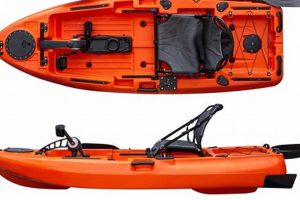
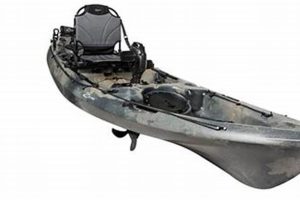
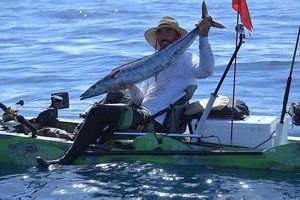
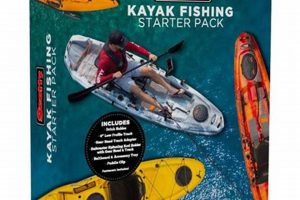
A kayak outfitted with all necessary gear and equipment for a fishing excursion represents a self-contained and mobile angling platform. This typically includes rods, reels, tackle, safety equipment like a personal flotation device (PFD), and often specialized accessories such as fish finders, rod holders, and anchors. An example might be a sit-on-top kayak equipped with a GPS-enabled fish finder, two mounted rod holders, a tackle crate secured in the tank well, and an anchor trolley system.
The comprehensive nature of a well-equipped fishing kayak allows anglers to access diverse fishing locations, from secluded coves and shallow flats to open water, with all essential tools readily at hand. This prepared approach enhances efficiency, reduces time spent searching for equipment, and maximizes fishing time. Historically, anglers were limited by shoreline access or larger, less maneuverable boats. The development and refinement of specialized fishing kayaks offer significantly greater mobility and access to previously difficult-to-reach fishing grounds. This has broadened the possibilities for anglers and contributed to the growing popularity of kayak fishing.
Understanding the components of a comprehensive fishing kayak setup is crucial for both safety and angling success. The subsequent sections will explore key equipment choices, safety considerations, and best practices for organizing and utilizing a fishing kayak’s features effectively.
Essential Tips for Kayak Fishing Preparedness
Careful preparation is crucial for a successful and safe kayak fishing experience. These tips offer guidance on essential aspects to consider before embarking on any fishing trip.
Tip 1: Balance and Stability: Weight distribution significantly impacts kayak stability. Gear should be distributed evenly, with heavier items placed low and centrally. Practice entering and exiting the kayak in shallow water to understand its balance characteristics.
Tip 2: Safety First: A personal flotation device (PFD) is non-negotiable. Carry a whistle, signaling mirror, and communication device for emergencies. Inform someone of the intended fishing location and estimated return time.
Tip 3: Essential Gear Selection: Choose appropriate rods, reels, and tackle based on the target species. A well-organized tackle box optimizes efficiency. Pack essential tools, including pliers, line cutters, and a knife.
Tip 4: Navigation and Electronics: A GPS unit or chartplotter can assist with navigation, especially in unfamiliar waters. A fish finder enhances the ability to locate fish. Ensure electronic devices are charged and waterproofed.
Tip 5: Anchor and Drift Control: An anchor or drift chute allows anglers to maintain position in desired areas, particularly in current or wind. Learn how to deploy and retrieve these effectively.
Tip 6: Weather Awareness: Check weather forecasts before departing and monitor conditions throughout the trip. Be prepared to adjust plans or return to shore if necessary. Dress in layers to adapt to changing temperatures.
Tip 7: Respect the Environment: Practice Leave No Trace principles. Pack out all trash and avoid disturbing wildlife or sensitive habitats.
By adhering to these guidelines, anglers can significantly enhance their safety, efficiency, and overall enjoyment on the water. Proper preparation promotes a focused and productive fishing experience while minimizing potential risks.
Considering these essential tips will ensure a well-prepared and enjoyable fishing expedition.
1. Kayak Selection

Appropriate kayak selection forms the foundation of a fully loaded fishing kayak setup. The vessel’s characteristics significantly influence capacity, stability, and overall fishing effectiveness. Choosing the right kayak is paramount for a successful and enjoyable experience.
- Hull Design:
Hull design directly impacts stability and maneuverability. A wider, flatter hull offers greater initial stability, beneficial for stand-up fishing or tackling larger fish. A narrower, V-shaped hull provides better tracking and speed, suited for covering longer distances. Pontoon hulls maximize stability but compromise maneuverability. Choosing a hull design aligned with the intended fishing environment and style is essential.
- Length and Width:
Longer kayaks generally track better and offer higher speed, while shorter kayaks enhance maneuverability in tight spaces. Wider kayaks provide increased stability but may be slower, while narrower kayaks prioritize speed over stability. Balancing length and width based on fishing conditions and personal preferences is crucial.
- Weight Capacity:
Weight capacity dictates the total load a kayak can safely carry, including the angler, gear, and any potential catch. Exceeding the weight capacity compromises stability and safety. Accurately estimating the total weight of all intended items ensures safe and efficient operation.
- Storage Options:
Ample storage space is crucial for accommodating fishing gear, safety equipment, and personal belongings. Dedicated compartments, tank wells, and storage hatches facilitate organization and accessibility. Evaluating storage options in relation to anticipated gear requirements optimizes functionality.
Careful consideration of these facets during kayak selection contributes significantly to a well-balanced and effective fully loaded fishing kayak. A properly chosen kayak provides a stable and efficient platform for maximizing angling success and enjoyment on the water.
2. Safety Equipment

Safety equipment is paramount for a fully loaded fishing kayak, transforming it from a recreational vessel into a secure and responsible angling platform. Prioritizing safety ensures not only a positive experience but also mitigates potential risks inherent in the aquatic environment. Understanding and implementing appropriate safety measures are non-negotiable aspects of responsible kayak fishing.
- Personal Flotation Device (PFD):
A properly fitted PFD is the most crucial piece of safety equipment. It provides buoyancy in the event of capsizing or accidental immersion, significantly increasing survival chances. A Type III PFD, designed for calm, inland waters with readily available rescue, is generally suitable for kayak fishing. Selecting a comfortable, well-fitting PFD encourages consistent wear and enhances safety.
- Signaling Devices:
Signaling devices enable communication in emergencies. A whistle alerts nearby boaters or individuals to distress situations. A waterproof flashlight or headlamp aids visibility in low-light conditions. A signaling mirror reflects sunlight to attract attention from long distances. These devices are crucial for attracting assistance should the need arise.
- Communication Equipment:
A waterproof, handheld VHF radio allows direct communication with the Coast Guard and other boaters. A charged mobile phone in a waterproof case provides an additional communication option. Communicating planned fishing locations and estimated return times with someone on shore enhances safety protocols. Regular communication updates, if feasible, further strengthen safety measures.
- First-Aid Kit:
A compact, waterproof first-aid kit containing essential supplies addresses minor injuries and provides immediate care in emergencies. Items like bandages, antiseptic wipes, pain relievers, and motion sickness medication are valuable additions. Tailoring the kit’s contents to potential environment-specific hazards optimizes preparedness.
Integrating these safety components elevates a fully loaded fishing kayak beyond mere convenience. It reflects a commitment to responsible angling practices. Thorough preparation and a proactive approach to safety significantly enhance the overall fishing experience, allowing anglers to focus on their passion with peace of mind.
3. Fishing Gear

Fishing gear forms the core of a fully loaded fishing kayak, directly influencing angling effectiveness and overall success. Understanding the essential components and their respective functions is crucial for optimizing the kayak fishing experience. Strategic gear selection and organization contribute significantly to a productive and enjoyable outing.
- Rods and Reels:
Rod and reel combinations should align with target species and fishing techniques. A medium-power spinning rod paired with a 2500-size reel offers versatility for various species and lures. A heavier baitcasting setup might be preferred for larger fish or specific techniques like bottom fishing. Selecting appropriate rod and reel combinations based on the intended fishing style maximizes effectiveness.
- Tackle Selection:
Tackle selection should encompass a variety of lures and baits appropriate for the target species and fishing environment. A selection of soft plastic lures, topwater plugs, and jigs offers versatility for different fish and conditions. Including live bait options like worms or minnows expands angling possibilities. Organizing tackle in a readily accessible and waterproof container enhances efficiency.
- Line and Leaders:
Fishing line and leader selection should complement the target species and fishing techniques. Braided line offers high sensitivity and strength, suitable for detecting subtle bites and handling larger fish. Fluorocarbon leader material provides near-invisibility and abrasion resistance, crucial for targeting wary fish. Choosing appropriate line and leader combinations optimizes fishing effectiveness.
- Tools and Accessories:
Essential tools like pliers, line cutters, and a knife facilitate hook removal, line management, and other fishing tasks. A lip gripper aids in handling fish safely. A measuring device allows for accurate catch assessment. Organizing these tools in a readily accessible location enhances efficiency and preparedness.
The careful selection and organization of fishing gear transforms a fully loaded fishing kayak into a purpose-built angling platform. Each component contributes to the overall effectiveness and efficiency of the fishing experience. Proper gear selection, combined with a well-organized approach, maximizes fishing success and enjoyment on the water.

Navigation tools are integral to a fully loaded fishing kayak, extending its capabilities beyond simple angling and transforming it into a vessel capable of safe and efficient exploration. These tools empower anglers to venture further with confidence, accessing remote fishing grounds and navigating complex waterways. The integration of navigation tools enhances both safety and fishing success, representing a significant advancement in modern kayak angling.
A GPS unit or chartplotter provides precise location information, enabling anglers to navigate unfamiliar waters, mark productive fishing spots, and track their movements. This is particularly crucial in expansive bodies of water or areas with limited landmarks. Real-time location awareness contributes significantly to safety, allowing anglers to return to their launch point efficiently, even in challenging conditions like fog or darkness. Furthermore, the ability to mark waypoints for productive fishing areas maximizes efficiency on subsequent trips, optimizing time spent on the water. For example, an angler might mark a submerged reef or drop-off identified as a fish-holding structure, allowing for precise return visits without time-consuming searches.
Integrating navigation tools into a fully loaded fishing kayak represents a paradigm shift in angling strategy. It allows for targeted exploration of previously inaccessible areas, expanding fishing opportunities. The enhanced safety provided by precise navigation contributes to a more confident and enjoyable experience. While the initial investment in navigation tools may represent a financial consideration, the long-term benefits in terms of enhanced fishing success and improved safety significantly outweigh the costs. Understanding the functionality and effective utilization of these tools are crucial aspects of maximizing their potential and transforming a fully loaded fishing kayak into a true angling and exploration platform. This knowledge empowers anglers to navigate safely and efficiently, expanding their reach and enhancing their overall fishing experience.
5. Storage Solutions

Storage solutions are integral to the functionality of a fully loaded fishing kayak. Efficient organization and accessibility of gear directly impact both angling success and overall safety. A well-designed storage system maximizes available space, minimizes clutter, and ensures essential items are readily available when needed. Effective storage solutions transform a kayak from simply a vessel into a well-equipped and organized fishing platform.
- Tackle Management:
Tackle storage systems range from simple waterproof boxes to specialized tackle bags designed for kayak use. Modular systems with adjustable compartments allow anglers to customize storage based on specific tackle needs. For example, a dedicated compartment for soft plastic lures prevents tangling and facilitates quick retrieval. Efficient tackle organization streamlines lure changes, maximizing fishing time and minimizing disruptions. A readily accessible tackle system contributes significantly to a productive and enjoyable fishing experience.
- Rod Storage:
Secure rod storage is essential for preventing damage and maintaining easy access. Flush-mounted rod holders keep rods readily available while minimizing the risk of entanglement. Adjustable rod holders accommodate different rod lengths and angling styles. For example, a kayak angler might position rods horizontally for trolling or vertically for jigging. Secure and accessible rod storage enhances safety and efficiency on the water.
- Dry Storage Compartments:
Waterproof compartments safeguard essential items like electronics, wallets, and keys from water damage. These compartments maintain the integrity of sensitive equipment, preventing costly replacements. Dry bags provide an additional layer of protection for clothing and other personal items. Keeping essential gear dry enhances safety and ensures a more comfortable and enjoyable fishing trip. For instance, dry storage ensures access to communication devices in case of emergency, regardless of weather conditions.
- Gear Placement Strategy:
Strategic gear placement optimizes kayak balance and stability. Heavier items should be positioned low and centrally to maintain a stable center of gravity. Frequently accessed items should be placed within easy reach. For example, placing a tackle box within arm’s reach minimizes unnecessary movement and maintains kayak stability. Distributing weight evenly prevents tipping and enhances overall kayak control. A well-planned gear placement strategy contributes significantly to both safety and efficient angling practices.
Effective storage solutions are fundamental to a fully loaded fishing kayaks functionality. Optimizing storage maximizes space utilization, enhances safety, and promotes efficient angling practices. A well-organized kayak allows anglers to focus on fishing, minimizing distractions and maximizing time on the water. The strategic implementation of storage solutions transforms a kayak from a simple vessel into a highly effective and organized fishing platform, contributing significantly to a successful and enjoyable angling experience.
6. Comfort Enhancements
Comfort enhancements transform a fully loaded fishing kayak from a functional vessel into a personalized angling platform optimized for extended trips. Prioritizing comfort allows anglers to maintain focus and stamina throughout the fishing day, directly contributing to overall success and enjoyment. Addressing comfort factors mitigates fatigue and enhances the overall experience, promoting sustained engagement and maximizing time spent on the water. These enhancements, while sometimes viewed as secondary considerations, play a crucial role in transforming a standard kayak into a personalized and high-performance fishing machine.
- Seating Adjustments:
Adjustable seating systems allow anglers to customize back support, seat height, and legroom to accommodate individual body types and preferences. High-back seats with lumbar support mitigate fatigue during long hours on the water. Adjustable footrests further enhance postural support and comfort. Proper seating significantly impacts long-term comfort and reduces the risk of back strain, allowing anglers to remain focused and energized throughout their fishing trip.
- Paddle Ergonomics:
Ergonomically designed paddles with adjustable feathering angles and lightweight shafts reduce strain on wrists and shoulders. Paddle grips tailored to hand size and shape enhance control and comfort. Proper paddling technique, combined with ergonomic equipment, minimizes fatigue and maximizes paddling efficiency. This allows anglers to cover greater distances with less effort, expanding their reach and accessing more remote fishing locations.
- Deck Padding and Footrests:
Deck padding provides a non-slip surface for secure footing and added comfort when standing or repositioning within the kayak. Adjustable footrests offer crucial support and leverage while paddling, enhancing efficiency and reducing leg fatigue. These features contribute to both comfort and stability, allowing anglers to maintain balance and focus while fishing.
- Sun and Weather Protection:
Protecting oneself from the elements is crucial for maintaining comfort and preventing health issues. Wearing appropriate clothing, including a wide-brimmed hat, sunglasses, and sunscreen, shields against harmful UV rays. A lightweight, waterproof jacket and pants provide protection from rain and spray. Proper sun and weather protection allows anglers to remain comfortable and focused on fishing, regardless of changing weather conditions.
Comfort enhancements are integral to the fully loaded fishing kayak concept. These modifications significantly impact the overall angling experience, enhancing both enjoyment and effectiveness. By prioritizing comfort, anglers can extend their time on the water, minimize fatigue, and maximize their fishing potential. A comfortable angler is a more focused and successful angler. Investing in comfort enhancements transforms a functional fishing kayak into a personalized and high-performance angling platform, optimized for extended trips and enhanced fishing success.
7. Personalization

Personalization distinguishes a fully loaded fishing kayak from a generic setup. It reflects an angler’s individual fishing style, target species, and specific needs, transforming a standard kayak into a purpose-built angling platform. This customization optimizes functionality and enhances the overall fishing experience. Cause and effect are directly linked; personalized choices directly impact fishing effectiveness and enjoyment. For example, an angler targeting bass in heavily vegetated areas might prioritize a kayak with a higher seating position for improved visibility and casting angles. Conversely, an angler focused on trolling open water might prioritize a kayak designed for speed and tracking, equipped with rod holders specifically designed for trolling. The importance of personalization as a component of a fully loaded fishing kayak lies in its capacity to maximize efficiency and cater to specific angling preferences. A personalized setup allows anglers to focus on fishing, minimizing distractions and maximizing success.
Real-life examples further illustrate the practical significance of personalization. An angler specializing in fly fishing might equip their kayak with specialized fly rod holders, stripping baskets, and storage solutions for fly boxes and lines. An angler focused on kayak tournaments might integrate electronics like livewell systems and tournament-style measuring boards. These personalized modifications reflect specific angling disciplines and demonstrate the practical application of customization. Understanding the importance of personalization empowers anglers to tailor their kayaks to specific needs and preferences. This tailored approach enhances both efficiency and enjoyment, transforming a standard kayak into a high-performance fishing platform. A personalized setup reflects an angler’s unique approach to fishing, maximizing their potential on the water.
Personalization is a crucial element of a fully loaded fishing kayak, distinguishing it from a generic setup and transforming it into a personalized angling platform. This customization optimizes functionality, enhances efficiency, and maximizes enjoyment. Challenges may include balancing personalization with weight capacity and maintaining kayak stability. However, the practical significance of personalization, as evidenced by real-world examples and its direct impact on fishing success, underscores its importance as a key component of a fully loaded fishing kayak. This understanding empowers anglers to refine their setups, optimizing their kayaks for specific angling styles and maximizing their potential on the water.
Frequently Asked Questions
Addressing common inquiries regarding fully equipped fishing kayaks clarifies key aspects and assists anglers in making informed decisions. Understanding these points enhances safety and promotes responsible angling practices.
Question 1: What is the typical cost of a fully equipped fishing kayak?
Costs vary significantly based on kayak selection, gear choices, and included accessories. A basic setup can range from approximately $1,000 to $3,000, while high-end configurations can exceed $5,000. Careful budgeting and prioritizing essential equipment allows anglers to tailor expenses to individual needs.
Question 2: How does one choose the right kayak for a fully loaded setup?
Kayak selection should consider factors such as hull design, weight capacity, storage options, and intended fishing environment. Prioritizing stability, maneuverability, and ample storage space ensures a balanced and effective platform.
Question 3: What essential safety gear should be included on a fully loaded fishing kayak?
Essential safety equipment includes a personal flotation device (PFD), signaling devices (whistle, mirror, light), communication equipment (VHF radio, mobile phone), and a first-aid kit. Prioritizing safety enhances preparedness and mitigates potential risks.
Question 4: How can one maximize storage space on a fully loaded fishing kayak?
Utilizing specialized storage solutions, such as tackle boxes, rod holders, and dry bags, optimizes space management. Strategic gear placement enhances balance and accessibility. Prioritizing organization maximizes efficiency on the water.
Question 5: What are the benefits of personalizing a fully loaded fishing kayak?
Personalization tailors the kayak to individual fishing styles and target species. Customizing rod holders, seating arrangements, and other accessories enhances comfort and efficiency, optimizing the angling experience.
Question 6: How does one maintain and care for a fully loaded fishing kayak?
Regular cleaning, proper storage, and routine maintenance of gear ensure longevity and optimal performance. Protecting the kayak from UV exposure and extreme temperatures extends its lifespan. Proper care preserves the investment and ensures continued enjoyment on the water.
Careful consideration of these frequently asked questions empowers anglers to make informed decisions regarding fully equipped fishing kayaks. Understanding these aspects enhances safety, optimizes functionality, and promotes responsible angling practices.
Further exploration of specific kayak fishing techniques and strategies will provide additional insights for optimizing angling success.
Conclusion
A fully loaded fishing kayak represents a culmination of preparation, strategy, and a deep understanding of angling principles. This comprehensive approach encompasses careful kayak selection, strategic gear organization, prioritization of safety equipment, integration of navigation tools, and personalized modifications. Each element contributes to a synergistic whole, transforming a standard kayak into a purpose-built, highly efficient fishing platform. The exploration of these key components underscores the importance of a holistic approach to kayak fishing, emphasizing the interconnectedness of each element in maximizing angling success and overall enjoyment.
The evolution of the fully loaded fishing kayak reflects a continuous refinement of angling practices, driven by innovation and a desire for enhanced efficiency and access. As technology advances and angling techniques evolve, the concept of the fully loaded fishing kayak will continue to adapt and improve, offering ever-greater opportunities for anglers to connect with the aquatic environment and pursue their passion. The commitment to preparedness and a thorough understanding of the principles outlined herein will remain paramount for maximizing success and ensuring responsible enjoyment of this dynamic and rewarding pursuit.