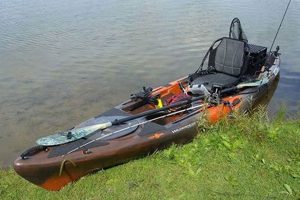
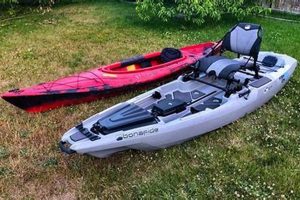
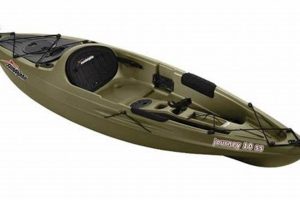
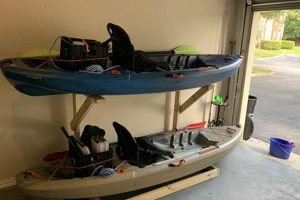
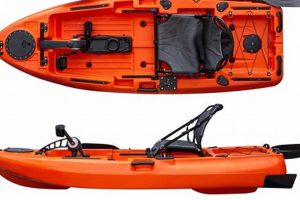
An ideal vessel for angling combines stability, maneuverability, and specialized features. A well-designed hull provides a stable platform for casting and reeling, while a compact size allows for navigation in shallow water and tight spaces. Integrated rod holders, tackle storage, and comfortable seating enhance the fishing experience. For example, a shorter, wider kayak offers greater stability for stand-up fishing, whereas a longer, narrower design prioritizes speed and tracking across open water. The choice depends on individual angler preferences and the target fishing environment.
Choosing the right watercraft significantly impacts fishing success and enjoyment. A properly outfitted and appropriately sized boat enhances safety and allows anglers to reach prime fishing spots efficiently. Historically, kayaks have been used for fishing and transportation for millennia, evolving from simple designs crafted from natural materials to the technologically advanced models available today. Modern advancements in materials and design cater to specific fishing styles, from freshwater angling in rivers and lakes to saltwater pursuits in the ocean.
This article will explore the key factors to consider when selecting an optimal fishing kayak, including hull design, features, materials, and propulsion systems. It will also provide guidance on matching specific kayak types to different fishing environments and styles.
Tips for Choosing an Ideal Fishing Kayak
Selecting the right fishing kayak requires careful consideration of several factors. These tips offer guidance on identifying a vessel optimized for individual needs and target fishing environments.
Tip 1: Consider Hull Design: Hull shape significantly impacts stability and maneuverability. Wider, flatter hulls offer superior stability, ideal for stand-up fishing, while longer, narrower hulls excel in speed and tracking, suited for covering larger distances.
Tip 2: Evaluate Features: Essential features include rod holders, tackle storage compartments, and comfortable seating. Additional features like anchor trolleys, live wells, and rudders can further enhance the angling experience.
Tip 3: Choose Appropriate Materials: Kayaks are commonly constructed from polyethylene, fiberglass, or composites. Polyethylene offers durability and affordability, while fiberglass and composites provide lighter weight and improved performance.
Tip 4: Assess Propulsion Options: Paddle kayaks offer excellent exercise and control, while pedal-powered kayaks allow hands-free fishing and increased speed. Motorized kayaks provide the greatest range and speed.
Tip 5: Match Kayak to Fishing Environment: Consider the intended fishing location. Shorter kayaks are better suited for navigating small rivers and creeks, while longer kayaks excel in larger lakes and open water.
Tip 6: Think About Fishing Style: Different fishing styles necessitate different kayak features. Anglers targeting larger fish may prefer kayaks with greater stability and ample storage, while those pursuing smaller species may prioritize maneuverability.
Tip 7: Establish a Budget: Kayaks range in price based on materials, features, and propulsion systems. Establishing a budget beforehand helps narrow down the options.
By considering these factors, anglers can select a kayak that maximizes their fishing success and overall experience. A well-chosen vessel enhances safety, efficiency, and enjoyment on the water.
This information provides a foundation for informed decision-making. The following sections will delve deeper into specific kayak types and features.
1. Stability

Stability forms a cornerstone of a successful fishing experience. A stable platform is essential for casting, reeling, and landing fish, especially in challenging conditions. This critical attribute directly impacts angler safety and confidence, allowing for focused fishing without the constant worry of capsizing. The following facets explore the components and implications of stability within the context of fishing kayaks.
- Primary Stability
Primary stability refers to a kayak’s initial resistance to tipping. A wider, flatter hull design typically exhibits higher primary stability, providing a secure feeling at rest. This is crucial for activities like stand-up fishing or casting in rough water. Anglers fishing in calm, protected waters may prioritize other attributes over maximum primary stability.
- Secondary Stability
Secondary stability describes a kayak’s ability to resist capsizing when leaned. This characteristic comes into play during turning maneuvers or when encountering waves. Kayaks with rounded or flared hulls often offer superior secondary stability, inspiring confidence when leaning into a turn or bracing against waves. Anglers fishing in open water or challenging conditions benefit from higher secondary stability.
- Center of Gravity
The center of gravity plays a crucial role in overall stability. Lowering the center of gravity by sitting closer to the waterline or strategically positioning gear enhances stability. Proper weight distribution within the kayak minimizes the risk of tipping. Anglers should be mindful of their own body weight and how it interacts with the kayak’s design to maintain optimal balance.
- Impact of Water Conditions
External factors, such as wind, waves, and currents, significantly affect stability. Kayaks designed for calm water may exhibit decreased stability in rough conditions. Anglers should choose a kayak appropriate for the intended fishing environment and consider how changing conditions may impact stability. Planning ahead and adjusting fishing techniques according to the water conditions contributes to a safer and more successful experience.
Understanding these elements of stability is essential for selecting a fishing kayak suited to individual needs and preferences. Balancing stability with other important characteristics, such as maneuverability and speed, optimizes performance on the water. Choosing a kayak with appropriate stability enhances safety, comfort, and ultimately, fishing success.
2. Maneuverability
Maneuverability represents a critical attribute in the pursuit of the optimal fishing kayak. The ability to navigate efficiently through diverse water conditions directly impacts an angler’s effectiveness and overall fishing experience. Whether navigating tight quarters in mangrove forests, swiftly changing directions in pursuit of a fish, or precisely positioning the vessel in a current, maneuverability plays a pivotal role. A highly maneuverable kayak allows anglers to access secluded fishing spots often unreachable by larger, less agile boats. This advantage opens up opportunities for targeting specific species and exploring diverse ecosystems. For instance, a shorter kayak with a rockered hull excels in navigating narrow creeks and rivers, while a longer, sleeker kayak may be less responsive in such environments but offers superior tracking in open water. The degree of maneuverability required often depends on the target fishing environment and the angler’s specific needs.
Several factors influence a kayak’s maneuverability. Hull design plays a significant role; shorter kayaks with a more pronounced rocker (upward curve at the bow and stern) typically turn more easily, while longer kayaks with flatter hulls prioritize tracking and speed. The kayak’s width also contributes to its turning radius, with narrower kayaks generally exhibiting greater agility. Furthermore, features like rudders and skegs can enhance tracking and directional control, particularly in windy or challenging conditions. Consider the practical implications: navigating a winding river demands a highly maneuverable kayak capable of sharp turns, while trolling in open water requires a kayak that tracks straight and resists excessive turning. Matching the kayak’s maneuverability characteristics to the anticipated fishing environment is crucial for maximizing performance and enjoyment on the water.
In summary, maneuverability, as a key component of a well-suited fishing kayak, contributes significantly to angling success. Careful consideration of hull design, kayak dimensions, and additional features like rudders and skegs allows anglers to select a vessel optimized for their specific needs. Understanding the relationship between maneuverability and fishing environment empowers informed decision-making, ultimately enhancing on-the-water efficiency and overall fishing experience. The subsequent discussion will explore storage capacity, another vital consideration for the serious angler.
3. Storage Capacity

Adequate storage capacity is paramount in a fishing kayak, directly impacting organization, efficiency, and overall angling success. A well-designed storage system allows anglers to carry essential gear, including tackle boxes, rods, safety equipment, and personal items, contributing to a streamlined and productive fishing experience. Insufficient storage can lead to clutter, hindering access to essential equipment and potentially compromising safety. The following facets explore the essential components and considerations related to storage capacity in the context of fishing kayaks.
- Types of Storage
Fishing kayaks offer various storage solutions, including hatches, tank wells, and dedicated compartments. Hatches provide secure, waterproof storage for sensitive items like electronics and wallets. Tank wells, typically located behind the seat, offer open storage for larger items such as crates or coolers. Dedicated compartments often incorporate specialized features like tackle organizers or rod holders. Understanding the advantages and limitations of each storage type allows anglers to select a kayak equipped to handle their specific gear requirements. For instance, a kayak angler targeting large game fish may prioritize a large tank well for a cooler and a dedicated compartment for gaffs and other specialized tools, while an angler focused on lighter tackle may prefer multiple smaller hatches and compartments for organized tackle storage.
- Accessibility and Organization
Ease of access to stored gear is crucial, particularly when on the water. Well-placed hatches and compartments allow anglers to retrieve items quickly and efficiently without disrupting their fishing flow. Features like integrated tackle organizers and removable storage bins further enhance organization and accessibility. Consider the scenario of needing a specific lure quickly; a well-organized storage system allows for immediate retrieval, minimizing disruption and maximizing fishing time. Conversely, a cluttered and poorly designed storage setup can lead to frustration and lost opportunities. Prioritizing accessible and organized storage contributes to a more seamless and productive fishing experience.
- Capacity and Weight Distribution
The overall storage capacity should align with the angler’s typical gear load and fishing style. Kayaks designed for longer expeditions or multi-day trips require greater storage capacity than those intended for shorter excursions. Proper weight distribution within the kayak is also essential for maintaining stability and performance. Overloading a kayak or unevenly distributing weight can negatively impact stability and maneuverability. Experienced anglers often strategically distribute gear to optimize balance and performance. For example, heavier items are typically placed lower in the kayak and near the center, while lighter items can be stored in elevated compartments. Thoughtful weight management enhances safety and overall kayak performance.
- Material and Durability
Storage compartments and hatches should be constructed from durable, weather-resistant materials capable of withstanding the rigors of the marine environment. High-quality hardware and robust construction ensure long-lasting performance and protect stored gear from the elements. Features like waterproof seals and latches safeguard against water intrusion, preserving sensitive items. Consider the impact of saltwater exposure or prolonged UV radiation on inferior materials; investing in a kayak with durable and well-designed storage components ensures long-term reliability and protects valuable gear from damage. Prioritizing quality materials and construction safeguards against premature wear and tear, providing peace of mind on the water.
In conclusion, adequate and well-designed storage is integral to a successful fishing kayak experience. Carefully considering storage type, accessibility, capacity, and material durability allows anglers to choose a kayak tailored to their specific needs and fishing style. A well-organized and accessible storage system enhances efficiency, reduces clutter, and maximizes time spent fishing. This organized approach to gear management directly translates to a more productive and enjoyable time on the water. Next, comfort features, essential for extended fishing trips, will be explored.
4. Comfort Features
Comfort features represent a critical aspect of the perfect fishing kayak, significantly impacting angler endurance, focus, and overall enjoyment. Extended periods on the water necessitate a comfortable and supportive seating system, minimizing fatigue and maximizing fishing time. A well-designed seat reduces pressure points, provides adequate back support, and allows for adjustments to accommodate individual preferences. An uncomfortable seating arrangement can lead to premature fatigue, discomfort, and a shortened fishing trip. Conversely, a comfortable and supportive seat allows anglers to maintain focus and energy throughout the day, maximizing their time on the water and increasing the likelihood of success. For example, an angler targeting offshore species might spend hours paddling and waiting for a bite; a comfortable, adjustable seat becomes crucial for maintaining alertness and effectively fighting a fish when it strikes.
Beyond the seat, other comfort features contribute significantly to the overall fishing experience. Adjustable footrests allow for proper leg positioning and leverage while paddling, further reducing fatigue and promoting efficient power transfer. Features like padded backrests and armrests enhance support and comfort, particularly during long fishing sessions. Consider the scenario of an angler fishing in cold weather; integrated thigh pads or a heated seat can significantly improve comfort and extend fishing time. Similarly, ample deck space allows for comfortable movement and easy access to gear, contributing to a more seamless and enjoyable experience. The cumulative effect of these comfort features transforms a fishing trip from a potentially tiring ordeal into a relaxing and productive pursuit.
In summary, comfort features are integral to the concept of the perfect fishing kayak. A comfortable and supportive seating system, coupled with adjustable footrests, backrests, and ample deck space, allows anglers to maintain focus and energy throughout their fishing trip. Prioritizing comfort enhances endurance, reduces fatigue, and ultimately contributes to a more successful and enjoyable experience on the water. This attention to angler well-being underscores the importance of holistic design in crafting the ideal fishing platform. The subsequent discussion will address the critical role of the propulsion system in achieving peak performance.
5. Propulsion System

The propulsion system represents a defining characteristic of a fishing kayak, significantly influencing its performance, versatility, and suitability for specific fishing environments. The chosen propulsion method directly impacts speed, range, maneuverability, and hands-free fishing capability. Selecting the appropriate propulsion system is paramount for maximizing efficiency and enjoyment on the water. The following facets explore the diverse propulsion options available and their implications for the perfect fishing kayak.
- Paddle Propulsion
Traditional paddle kayaks offer excellent control, affordability, and a full-body workout. Paddle propulsion allows for precise maneuvering in tight spaces, shallow water, and areas with dense vegetation. This method requires physical exertion but provides anglers with direct control over speed and direction. Paddle kayaks are well-suited for anglers prioritizing exercise, affordability, and navigating intricate waterways. However, paddling can limit casting opportunities and may become tiring during long fishing trips.
- Pedal Propulsion
Pedal-powered kayaks utilize either propeller or fin systems, offering hands-free fishing and increased speed compared to paddling. This propulsion method allows anglers to maintain a consistent speed while simultaneously casting and reeling, enhancing fishing efficiency. Pedal kayaks are ideal for covering larger distances or fishing in areas with currents. The hands-free aspect is particularly advantageous when trolling or sight fishing. However, pedal kayaks are typically more expensive than paddle kayaks and may be less maneuverable in very shallow water or confined spaces.
- Motorized Propulsion
Motorized kayaks provide the greatest speed and range, allowing anglers to cover vast distances with minimal physical exertion. Electric motors offer quiet operation and environmental friendliness, while gasoline motors provide greater power and range. Motorized kayaks are ideal for exploring large lakes, reservoirs, and coastal areas. The enhanced speed allows anglers to reach distant fishing spots quickly and efficiently. However, motorized kayaks are typically the most expensive option and may be subject to regulations regarding motor size and usage in specific areas. Additionally, the added weight of the motor can impact maneuverability.
- Choosing the Right System
The optimal propulsion system depends on individual angler preferences, fishing style, target environment, and budget. Anglers prioritizing affordability and exercise may prefer paddle kayaks. Those seeking hands-free fishing and increased speed should consider pedal kayaks. Anglers requiring maximum range and speed might opt for motorized kayaks. Carefully evaluating these factors ensures selecting a propulsion system that aligns with individual needs and maximizes enjoyment on the water.
The propulsion system, as a fundamental component of a fishing kayak, significantly influences its performance and suitability for various fishing scenarios. Understanding the advantages and limitations of each propulsion method empowers anglers to make informed decisions and select the ideal kayak for their specific needs. Choosing the right propulsion system enhances efficiency, expands fishing opportunities, and ultimately, contributes to a more rewarding experience on the water. This detailed consideration of propulsion sets the stage for informed decision-making and reinforces the concept of a truly perfected fishing kayak.
Frequently Asked Questions
This section addresses common inquiries regarding the selection and use of fishing kayaks, providing concise and informative responses to facilitate informed decision-making.
Question 1: What hull design is most suitable for ocean fishing?
Longer kayaks with a pronounced V-shaped hull generally perform best in ocean conditions. This design provides enhanced stability in waves and tracks efficiently, facilitating longer-distance paddling.
Question 2: What are the essential safety features to consider?
Essential safety features include a personal flotation device (PFD), a whistle, a signaling device such as a mirror or flare, and a bilge pump. Navigation lights are also crucial for low-light conditions.
Question 3: How does kayak weight impact transportation and handling?
Kayak weight significantly affects portability. Lighter kayaks are easier to transport and launch, especially for individuals without assistance or specialized loading equipment. Heavier kayaks, while often more stable, may require additional effort for transport and handling.
Question 4: What factors influence the price range of fishing kayaks?
Kayak prices vary based on material, features, size, and propulsion system. Entry-level kayaks constructed from polyethylene tend to be more affordable, while high-end models incorporating advanced materials and features command higher prices.
Question 5: How does one maintain a fishing kayak properly?
Proper maintenance involves rinsing the kayak with fresh water after each use, especially after exposure to saltwater. Regularly inspecting and lubricating moving parts, such as hatches and rudder systems, ensures optimal performance and longevity.
Question 6: What considerations apply when choosing a paddle length?
Appropriate paddle length depends on factors including the paddler’s height, kayak width, and paddling style. A paddle that is too short or too long can lead to inefficient paddling and increased fatigue. Consulting a kayak specialist can assist in determining the correct paddle length.
Understanding these frequently asked questions empowers potential kayak anglers to make informed decisions. Addressing these common concerns clarifies key aspects of kayak selection, safety, and maintenance. A well-chosen kayak, coupled with appropriate safety precautions and regular maintenance, ensures a rewarding and safe fishing experience.
This comprehensive guide has explored various aspects of selecting and utilizing the perfect fishing kayak. The following sections will provide specific product recommendations and reviews to further assist in the decision-making process.
Conclusion
The pursuit of the ideal fishing kayak involves careful consideration of various factors, each contributing to on-the-water performance, angler comfort, and overall fishing success. Hull design, stability, maneuverability, storage capacity, comfort features, and propulsion systems all play crucial roles in defining the optimal vessel. Matching these attributes to individual angler needs, fishing styles, and target environments is paramount. Prioritizing stability ensures a secure platform for casting and reeling, while maneuverability allows for efficient navigation through diverse water conditions. Adequate storage capacity accommodates essential gear, and well-designed comfort features minimize fatigue during long fishing trips. The chosen propulsion system dictates speed, range, and hands-free fishing capabilities, significantly impacting overall efficiency. Careful consideration of these interconnected elements empowers informed decision-making, leading to the selection of a kayak optimized for individual requirements.
Ultimately, the “perfect fishing kayak” represents a personalized concept, tailored to the unique needs and preferences of each angler. A thorough understanding of these key elements empowers informed choices, leading to enhanced fishing experiences, increased success on the water, and a deeper connection with the aquatic environment. This pursuit of the ideal vessel underscores the dedication and passion inherent in the sport of fishing, where the right equipment can significantly enhance enjoyment and connection with nature.